
 Worksheets
APWH unit 5
Total questions: 154
Worksheet time: 1hrs 11mins
A philosophical movement which started in Europe in the 1700's and spread to the colonies. It emphasized reason and the scientific method. Writers of this movement tended to focus on government, ethics, and science, rather than on imagination, emotions, or religion.
Enlightenment
Protestant Reformation
Industrial Revolution
Columbian Exchange
A political ideology that emphasizes the civil rights of citizens, representative government, and the protection of private property. This ideology, derived from the Enlightenment, was especially popular among the property-owning middle classes.
Liberalism
Feminism
Capitalism
Socialism
A strong feeling of pride in and devotion to one's country; it further aims to build and maintain a single national identity—based on shared social characteristics such as culture, language, religion, politics, and belief in a shared singular history—and to promote national unity or solidarity.
Nationalism
Liberalism
Capitalism
Socialism
the belief that women should possess the same political and economic rights as men; became popular during the Enlightenment
Feminism
Nationalism
Socialism
Liberalism
A period of rapid growth in the use of machines in manufacturing and production that began in England c. 1750
Industrial Revolution
American Revolution
Enlightenment
Creole Revolution
In 1868, a Japanese state-sponsored industrialization and Westernization effort that also involved the elimination of the Shogunate and power being handed over to the Japanese Emperor, who had previously existed as mere spiritual/symbolic figure.
Meiji Restoration
Industrial Revolution
Creole Revolution
Isolationism
hands off approach to economic development; the government should limit its interference in the economy
Laissez-faire economy
Traditional economy
Command economy
Mixed economy
a political and economic theory of social organization which advocates that the means of production, distribution, and exchange should be owned or regulated by the community as a whole.
Socialism
Nationalism
Liberalism
Feminism
an economic and political system in which a country's trade and industry are controlled by private owners for profit, rather than by the state.
Capitalism
Socialism
Nationalism
Liberalism
What was the main theme of Unit 5 of AP World History?
The Industrial Revolution
The Enlightenment
The Scientific Revolution
The Renaissance
What is the Enlightenment?
A political movement that aimed to establish absolute monarchies.
A religious movement that emphasized the importance of tradition and revelation.
An intellectual movement in the 18th century that advocated the use of reason to reconsider the accepted ideas and social institutions of the time.
A scientific movement that focused on studying natural laws.
What is empiricism?
The idea that reality is discovered through scientific experiments.
The idea that reality is discerned through the senses.
The idea that reality is revealed through religious texts.
The idea that reality is determined by tradition and ancestors.
Who argued for the natural rights of life, liberty, and property?
Mary Wollstonecraft
Francis Bacon
John Locke
Adam Smith
What is the social contract according to John Locke?
An agreement between individuals and the government to protect natural rights.
An agreement between individuals to establish a monarchy.
An agreement between individuals to establish a communist society.
An agreement between individuals to establish anarchy.
What is nationalism?
A strong belief in tradition and the shunning of ideology.
A movement advocating for the rights of women.
A political system based on the principles of laissez-faire economics.
A strong identification with a group of people who share an ethnic identity and language.
What did Adam Smith argue for in his book 'The Wealth of Nations'?
The benefits of socialism and collective ownership.
The idea of laissez-faire economics and individual economic choices.
The establishment of mercantilist economies.
The importance of government intervention in the economy.
What is Deism?
The belief in divine intervention in history.
The belief in the power of tradition and revelation.
The belief in the importance of scientific experiments to understand God.
The belief in the contemplation of natural laws to understand God.
What did Mary Wollstonecraft argue for in her book 'A Vindication of the Rights of Women'?
The importance of women's exclusion from politics and professional society.
The importance of women's dependence on their husbands for property and income.
The importance of women's education and their ability to succeed in all endeavors.
The importance of women's submission to traditional gender roles.
What was the impact of the Enlightenment on slavery and serfdom?
The Enlightenment supported and justified the continuation of slavery and serfdom.
The Enlightenment had no impact on slavery and serfdom.
The Enlightenment led to the expansion of slavery and serfdom.
The Enlightenment led to the abolition of slavery and serfdom.
How did the Industrial Revolution impact society and the economy?
It caused a decrease in urbanization and the decline of capitalism
It led to significant changes in society and the economy, including the rise of factories, urbanization, and the growth of capitalism.
It resulted in the disappearance of factories and the rise of agrarian society
It had no impact on society or the economy
What were the main reasons for the American Revolution?
Taxation without representation, restrictions on trade, and lack of political rights
High taxation with representation, open trade, and extensive political rights
Lack of taxation, unrestricted trade, and full political rights
Excessive taxation with representation, free trade, and abundant political rights
What were the key events leading to the American Revolution?
The Boston Marathon, the invention of the light bulb, and the signing of the Magna Carta
The War of 1812, the Mexican-American War, and the Civil War
The key events leading to the American Revolution include the Stamp Act, Boston Tea Party, Intolerable Acts, and the Declaration of Independence.
The Louisiana Purchase, the Battle of Gettysburg, and the Emancipation Proclamation
What were the social and economic conditions that led to the Haitian Revolution?
The peaceful coexistence between the different social classes, the lack of political oppression, and the absence of slavery.
The strong leadership of the French government, the absence of racial tensions, and the equal distribution of wealth.
The harsh treatment of enslaved Africans, influence of Enlightenment ideas, and economic disparity between the white elite and the enslaved population.
The abundance of natural resources, lack of foreign influence, and high literacy rates.
How did the Haitian Revolution impact the Caribbean and the world?
It led to the colonization of Haiti by a more powerful nation
It had no impact on the Caribbean or the world
It caused an increase in slavery in the Caribbean
It led to the abolition of slavery in Haiti and inspired other anti-colonial movements in the Caribbean and beyond.
Who was Simon Bolivar and what role did he play in the Latin American Revolutions?
Simon Bolivar was a French philosopher who had no involvement in the Latin American Revolutions
Simon Bolivar was a Spanish conquistador who oppressed the people of South America
Simon Bolivar was a Portuguese explorer who discovered South America
Simon Bolivar was a Venezuelan military and political leader who played a key role in the Latin American Revolutions by leading the struggle for independence from Spanish rule in several South American countries.
What were the outcomes of the Bolivar Revolutions in Latin America?
Annexation of Latin American countries by Spain
Continuation of Spanish colonial rule in Latin America
Formation of a single unified Latin American country
Independence of several countries from Spanish colonial rule
What were the main ideas of the Enlightenment?
Superstition, conformity, regression
Faith, collectivism, gullibility
Reason, individualism, skepticism, and progress
Ignorance, tradition, stagnation
How did the Enlightenment influence political and social change in Europe and the Americas?
The Enlightenment had no impact on political and social change in Europe and the Americas.
The Enlightenment led to the rise of absolute monarchies and the suppression of individual rights.
The Enlightenment resulted in the strengthening of feudalism and the restriction of freedom of speech.
The Enlightenment promoted ideas of individual rights, freedom of speech, and the separation of powers.
The Enlightenment emphasized ____ over tradition and ____ over community values.
reason; individualism
religion; inspiration
philosophy; New World influences
social science; independence
feeling of intense loyalty to others who share one's language and culture
nationalism
empiricism
conservatism
socialism
deism
What were the two main goals of the revolutions caused by new ideas?
independence from colonial power
constitutional representation
equality of all people
increased trade
belief that knowledge comes from sensed experience
nationalism
empiricism
conservatism
socialism
deism
Thomas Hobbes
people couldn't be trusted, they were nasty
people had natural rights
government should have separate branches
argued for religious and civil liberty
John Locke
people couldn't be trusted, they were nasty
people had natural rights
government should have separate branches
argued for religious and civil liberty
Montesquieu
people couldn't be trusted, they were nasty
people had natural rights
government should have separate branches
argued for religious and civil liberty
belief that a divinity set the universe in motion but does not interfere
nationalism
empiricism
conservatism
socialism
deism
Otto von Bismarck used realpolitik to unify
Germany
Italy
Spain
France
Poverty in Italy led to
immigration to the US and Argentina
a new unified government
the Italian government dissolving into regional states
The decline of Ottoman power in Southeastern Europe (the Balkans) led to
people rallying around language, traditions, and religion
greater unity
the rise of the Sith
Crop rotation and the seed drill led to
increased food production.
the use of machinery in production.
the economic collapse in British agriculture.
allowed more than one thread to be spun at a time
spinning jenny
water frame
flying shuttle
What system created by Eli Whitney allowed for industrial machines to be repaired and serviced more easily?
interchangeable parts
assembly line
division of labor
In the 20th century Henry Ford improved the division of labor in factories when he introduced
the assembly line.
interchangeable parts.
the water frame.
Which of the following was NOT a reason that Britain led the world in industrialization?
mineral resources in Britain and resources from colonies
a large slave labor force
abundant rivers for transportation
growing population and urbanization
a government that protected private property
Which of the following was NOT an industrial power in the second wave of industrialization?
France
Germany
the United States
Japan
the Mughal Empire
What had the largest impact on Russian success in industrialization?
Trans-Siberian Railroad
end of serfdom
unification of fragmented small states
British rule and control led to the decline of which THREE industries in India?
ship-building
mining
cotton cloth
tea
spices
Besides India, what other country saw its textile industry devastated by European (especially English) production?
Egypt
Japan
Russia
the United States
What was the result of the improvement in agriculture during the Industrial Revolution?
C. Urbanization
B. Increase in food scarcity
A. Decrease in population
D. Decrease in urban areas
What was the main benefit of England's global empire in relation to the Industrial Revolution?
A. Access to foreign resources
B. Access to advanced technology
D. Access to cheap labor
C. Access to skilled labor
Who invented the water frame, a key invention in the Industrial Revolution?
A. James Hargraves
D. Thomas Edison
B. Eli Whitney
C. Richard Arkwright
What did the advent of the factory system change in terms of labor?
C. Increased reliance on machines
B. Focus on whole products
A. Increased reliance on skilled laborers
D. Focus on individual parts of products
Who invented the steam engine?
Samuel Morse
James Watt
Alexander Graham Bell
Thomas Edison
What was the major natural resource that got the Industrial Revolution under way?
Water
Natural Gas
Coal
Oil
Who invented the telegraph in 1837?
Samuel Morse
Alexander Graham Bell
James Watt
Thomas Edison
What was the major player in the second Industrial Revolution?
United States
India
China
France
What was the new process introduced for refining steel during the second Industrial Revolution?
The Bell Process
The Bessemer Process
The Tesla Process
The Edison Process
What was the major player when it comes to technology in the first Industrial Revolution?
Germany
United States
Great Britain
France
Which two modes of transportation had the greatest impact on developed industrial economies?
Railroads
Steamships
Factories
Electric Railways
What was the main reason for the decline of the Indian iron industry in the early 1800s?
Lack of skilled labor
Competition from other industrialized nations
Decreased demand for iron products
Imposition of steep tariffs by the British

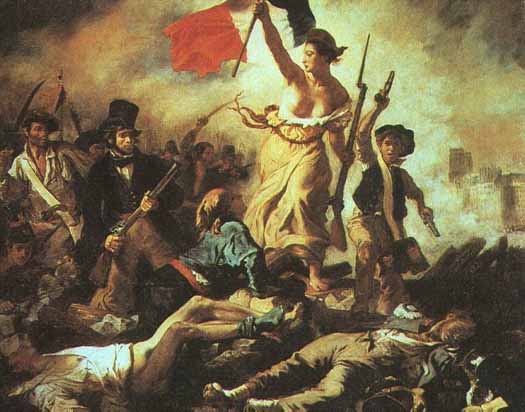
The Haitian Revolution was influenced mainly by which revolution?
French
American
Spanish American
Russian
Which of the following wars helped to inspire the French Revolution?
The American Civil War
The French and Indian War
American Revolution
The Seven Years War
Which document articulated the progressive demands of the National Assembly? ________________The National Assembly consulted with ________________ when writing it.
Declaration of the Rights of Man and the Citizen , Thomas Jefferson
Declaration of the Rights of Man and the Citizen , John Locke
Constitution of the French Republic , Thomas Jefferson
Constitution of the French Republic , John Locke


[p6] What important document did the National Assembly adopt on August 26, 1789?
Declaration of the Rights of Man and the Citizen
French Constitution
Declaration of Independence
Tennis Court Oath
Which of the following would best describe a "nationalist"?
A citizen who always votes
An employee of the federal government
A person who fights to establish an independent government for their nation
A person who wants to preserve a strong economy for their country
What did Equiano’s narrative help abolish?
the slave trade
slavery
cruelty from slave owners
none of the above
What year did the slave trade end in the British Territories
1787
1807
1833
1776
Which abolitionist gave a first hand account of his experience on the Middle Passage?
William Wilberforce
Granville Sharp
Olaudah Equiano
Thomas Clarkson


Elizabeth Cady Stanton wrote the Declaration of Sentiments which was presented at the First Women's Convention in Seneca Falls. Stanton changed the words in this document to say that
" all men are created equal"
"all men and women are created equal"
"all men and women can attend conventions from this day forward"
"all women have the right to vote"

Where was the first Women's Rights Convention held in 1848?
Dallas, Texas
Seneca Falls, New York
Philadelphia, Pennsylvania
Nashville, Tennessee
Elizabeth Cady Stanton wrote the ___ , which outlined the rights women should have as citizens.
Declaration of Independence
Seneca Falls Convention
Declaration of Sentiments
Underground Railroad
Father Jose Maria Morelos
took over leadership of the Mexican revolution when Hidalgo was executed
liberated Chile and Peru
lead the Italian revolutionaries
The Haitian Revolution was influenced mainly by which revolution?
French
American
Spanish American
Russian

"The aim of every political association is the preservation of the natural and imprescriptible rights of man. These rights are liberty, property, security and resistance to oppression."
-Declaration of the rights of Man and of the Citizen, 1789
Which philosopher best upholds the ideas expressed in the document above?
Montesquieu
Wollstonecraft
Locke
Hobbes
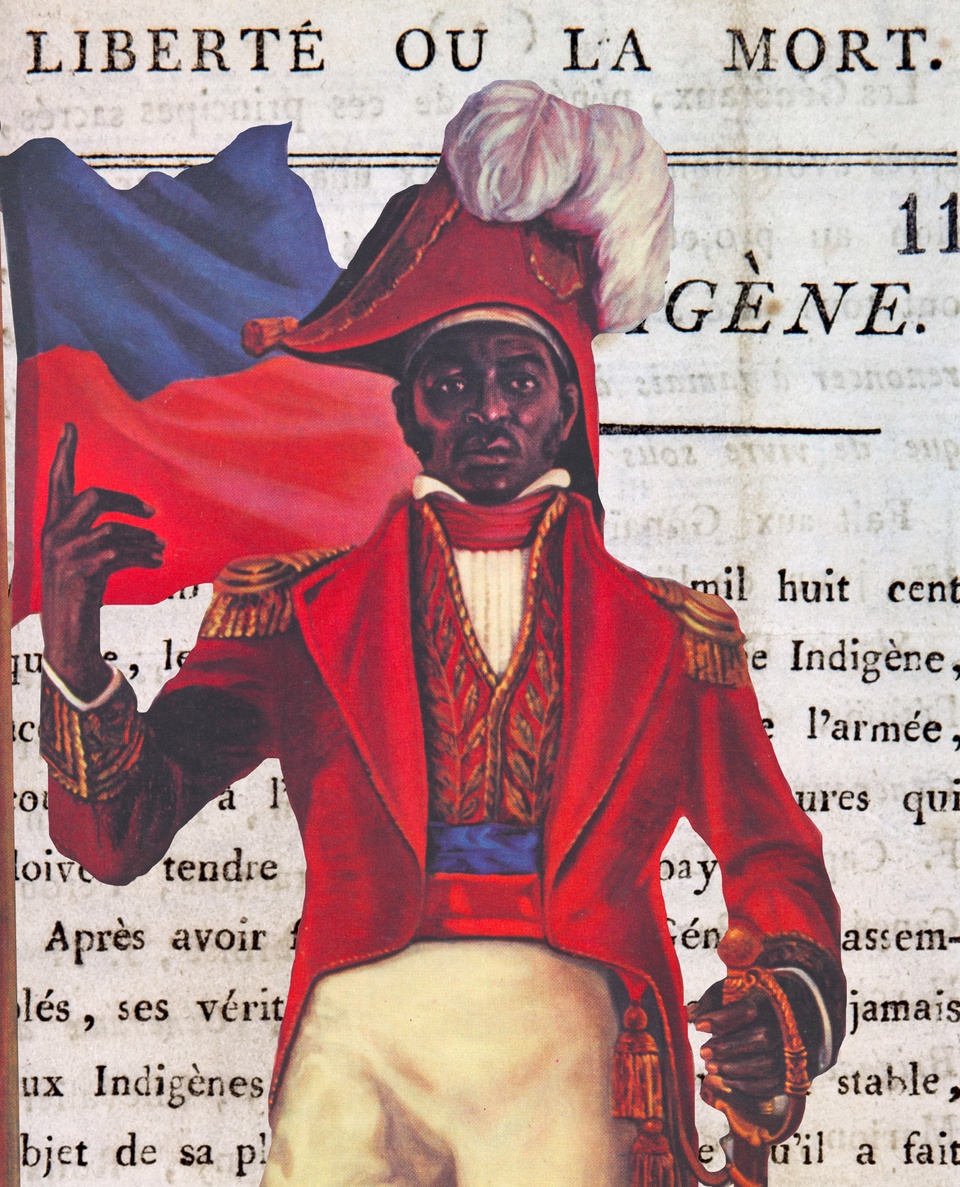
As a result of the Haitian Revolution, Haiti created the first ever
black monarchy
black dictatorship
black republic
black oligarchy
Locke argued that we had 3 main natural rights. What are they? (Select 3)
Life
Liberty
Pursuit of Happiness
Property
John Locke believed that all people had:
Natural Rights
Individual rights
Some rights
Man is born free and everywhere he is in chains.
Rousseau
Locke
Hobbes
Smith
"I may not agree with what you say, but will defend to the death your right to say it."
Voltaire
Montesquieu
John Locke
Rousseau
System of checks and balances should limit the governments power.
John Locke
Montesquieu
Rousseau
Voltaire
Power in the government should be divided so no one person or group gains too much power.
Voltaire
Montesquieu
Rousseau
John Locke

Who led the successful slave revolt on the island of Haiti in beginning in 1791 ending in 1804?
Toussaint L’Overture
Jose de San Martin
Father Miguel Hidalgo
Simon Bolivar
What was Simon Bolivar's nickname
The Colonizer
The Conquerer
The Liberator
The Freedom Fighter
writing which had the purpose of outlining Bolivar's philosophical and political ideals for Latin America
Jamaica Letter
Tanzimat Reforms
Franco Letter
Declaration of the Rights of Man and Citizen
Proclamation of 1763
What economic system is characterized by private ownership of the means of production and the pursuit of profit?
Socialism
Communism
Capitalism
Conservatism
Which philosopher advocated for the separation of powers in government to prevent tyranny and ensure liberty?
John Locke
Thomas Hobbes
Mary Wollstonecraft
Baron von Montesquieu
What term, coined by Karl Marx, describes the social class of merchants, traders, and professionals, positioned between the aristocracy and the working class?
Proletariat
Bourgeoisie
Peasantry
Peninsulares
Who wrote "The Wealth of Nations," a foundational work in economics advocating for free market principles?
Karl Marx
Adam Smith
John Locke
Voltaire
What economic system allows for minimal government interference in the marketplace and emphasizes free trade and competition?
Command Economics
Laissez-Faire
Socialism
Conservatism
Which political ideology advocates for the abolition of private property and the establishment of a classless society?
Liberalism
Conservatism
Communism
Feminism
What term refers to the system of manufacturing in which production is decentralized and conducted in workers' homes?
Factory System
Industrial Revolution
Cottage Industry
Second Industrial Revolution
Who authored the "Declaration of the Rights of Woman and of the Female Citizen," advocating for gender equality during the French Revolution?
Mary Wollstonecraft
Olympe de Gouges
Simon Bolivar
Toussaint L'Ouverture
What technological innovation powered the machinery of the Industrial Revolution and facilitated mass production?
Spinning Jenny
Telegraph
Steam Engine
Seed Drill
Which movement sought to restore imperial power in China through modernization and Westernization in the 19th century?
Meiji Restoration
Self-Strengthening Movement
Tanzimat Reforms
Young Turks
What political philosophy asserts that government legitimacy arises from the consent of the governed and the protection of their natural rights?
Realpolitik
Social Contract Theory
Laissez-Faire
Conservatism
Who led the successful slave revolt in Haiti against French colonial rule?
Simon Bolivar
Muhammad Ali
Toussaint L'Ouverture
Otto von Bismarck
What term refers to the rapid growth of cities and the migration of people from rural to urban areas?
Urbanization
Capitalism
Industrialization
The Great Migration
Which Enlightenment philosopher is known for his defense of religious tolerance and freedom of speech?
Thomas Hobbes
Voltaire
John Locke
Baron von Montesquieu
What document proclaimed the natural rights of man and the principles of liberty, equality, and fraternity during the French Revolution?
Declaration of Independence
Declaration of the Rights of Man and Citizen
Declaration of the Rights of Women
Jamaica Letter
What economist is often referred to as the "father of capitalism" for his advocacy of free markets and the idea of the invisible hand?
Karl Marx
Adam Smith
John Locke
Thomas Hobbes
Which economic system is characterized by central planning and government control over the means of production and distribution?
Free Market Economics
Socialism
Conservatism
Command Economics
Which political ideology emphasizes tradition, hierarchy, and resistance to change?
Liberalism
Conservatism
Socialism
Feminism
Who were the descendants of European settlers in Latin America, often born in the colonies?
Peninsulares
Creoles
Proletariat
Bourgeoisie
Which social and political movement advocates for the equality of the sexes and the empowerment of women?
Feminism
Conservatism
Socialism
Liberalism
What economic system is based on voluntary exchange, competition, and minimal government intervention in the marketplace?
Command Economics
Socialism
Free Market Economics
Capitalism
Which principle, enshrined in many modern democratic societies, guarantees individuals the right to express their beliefs and opinions without censorship or persecution?
Freedom of Speech and Religion
Separation of Power
Natural Rights
Suffrage
What period began rapid industrial and technological change that transformed societies from agrarian to industrial economies?
Enlightenment
Industrial Revolution
Meiji Restoration
Second Industrial Revolution
What social class emerged during the Industrial Revolution, consisting of factory workers and laborers?
Bourgeoisie
Industrial Working Class
Middle class
Creoles
What document, written by a political figure during exile, called for Latin American colonies to achieve independence from Spanish rule?
Jamaica Letter
Declaration of Independence
Communist Manifesto
Emancipation Proclamation
Which Enlightenment philosopher argued that individuals have natural rights to life, liberty, and property?
Thomas Hobbes
John Locke
Baron von Montesquieu
Jean-Jacques Rousseau
Who co-authored "The Communist Manifesto" and laid the foundations for modern communism?
Adam Smith
Karl Marx
John Locke
Mary Wollstonecraft
What organization represents the collective interests of workers and negotiates with employers for better wages, benefits, and working conditions?
Labor Union
Community
Political Party
Advocacy Group
Which political ideology emphasizes individual freedom, civil liberties, and limited government intervention in the economy?
Conservatism
Liberalism
Socialism
Feminism
Who wrote "A Vindication of the Rights of Woman," advocating for women's rights and education during the Enlightenment?
Mary Wollstonecraft
Olympe de Gouges
Simone de Beauvoir
Emily Davison
What period marked Japan's rapid modernization and industrialization in the late 19th century?
Meiji Restoration
Industrial Revolution
Second Industrial Revolution
Tanzimat Reforms
What social class emerged during the Industrial Revolution, consisting of skilled workers, professionals, and entrepreneurs?
Bourgeoisie
Middle Class
Proletariat
Peninsulares
Who is known as the "father of modern Egypt" for his ambitious reforms and modernization efforts in the 19th century?
Muhammad Ali
Otto von Bismarck
Simon Bolivar
Toussaint L'Ouverture
What ideology prioritizes the interests and culture of a particular nation, often seeking self-determination and independence?
Conservatism
Nationalism
Liberalism
Socialism
Which concept asserts that individuals are inherently entitled to certain rights, such as life, liberty, and property?
Social Contract Theory
Natural Rights
Freedom of Speech and Religion
Separation of Power
Who was the architect of German unification through his policy of "blood and iron" and realpolitik?
Karl Marx
Otto von Bismarck
Adam Smith
John Locke
Who were Spanish-born individuals who held the highest positions in the colonial administrations of Latin America?
Peninsulares
Creoles
Proletariat
Bourgeoisie
Who were the intellectuals of the Enlightenment who promoted reason, science, and tolerance?
Philosophes
Socialists
Conservatives
Feminists
What term, coined by Karl Marx, refers to the working class, who sell their labor for wages and do not own the means of production?
Bourgeoisie
Proletariat
Creoles
Peninsulares
What term refers to a pragmatic approach to politics based on practical rather than ideological considerations?
Conservatism
Liberalism
Realpolitik
Social Contract Theory
What period of the French Revolution was characterized by mass executions of perceived enemies of the revolution?
Reign of Terror
The Great Dying
The Second French Revolution
The Bastille
During which period did rapid industrialization occur in the late 19th and early 20th centuries, marked by advancements in steel production, electricity, and communication technology?
First Industrial Revolution
Meiji Restoration
Second Industrial Revolution
Tanzimat Reforms
What invention revolutionized agriculture by planting seeds in rows at precise depths, increasing efficiency and crop yields?
Seed Drill
Spinning Jenny
Telegraph
Steam Engine
What principle, advocated by Montesquieu, divides government authority into distinct branches to prevent tyranny?
Separation of Power
Realpolitik
Social Contract Theory
Laissez-Faire
Who led the independence movements in South America, earning the title of "The Liberator" and authored the famous "Jamaica Letter"?
Simon Bolivar
Toussaint L'Ouverture
Miguel Hidalgo
Jose Marti
Which economic system advocates for collective ownership of the means of production and the distribution of wealth?
Capitalism
Socialism
Command Economics
Laissez-Faire
What invention revolutionized textile production by allowing a single worker to operate multiple spinning machines?
Spinning Jenny
Seed Drill
Telegraph
Steam Engine
What term refers to the right to vote in political elections, particularly emphasizing the extension of this right to previously disenfranchised groups?
Women's Rights
Freedom of Speech and Religion
Suffrage
Natural Rights
What period marked the Ottoman Empire's efforts to modernize and westernize in the 19th century?
Meiji Restoration
Ottomanization
Tanzimat Reforms
Young Turk Movement
What invention revolutionized long-distance communication by transmitting messages over wires using electrical signals?
Steam Engine
Telegraph
Spinning Jenny
Seed Drill
Which philosopher argued that humans are inherently selfish and violent, and that an absolute monarchy is necessary to maintain order and prevent chaos?
John Locke
Thomas Hobbes
Mary Wollstonecraft
Baron von Montesquieu
What intellectual movement of the 18th century emphasized reason, science, and individualism?
The Enlightenment
The Renaissance
The Meiji Restoration
The Reformation
Who led the successful slave revolt in Haiti against French colonial rule?
Toussaint L'Ouverture
Simon Bolivar
Muhammad Ali
Otto von Bismarck
What term refers to corporations and enterprises that operate across national borders?
Transnational Business
Enclosure Movement
Industrial Revolution
Second Industrial Revolution
What book by Adam Smith is considered one of the foundational works of modern economics?
Wealth of Nations
Communist Manifesto
Das Kapital
The Republic
What term refers to the social and political movement advocating for legal and social equality for women?
Feminism
Women’s Rights
Suffrage
Geneva Convention
Who were the reformist members of the Ottoman Empire who sought to modernize the state in the late 19th and early 20th centuries?
Young Turks
Young Ottomans
Young Arabs
Young Tanzimats
What principle, enshrined in many modern democratic societies, guarantees individuals the right to express their beliefs and opinions without censorship or persecution?
Freedom of Speech and Religion
Separation of Power
Natural Rights
Suffrage

