
 Worksheets
Physical Science Unit 3 Review (HONORS)
Total questions: 95
Worksheet time: 5hrs 28mins
Which scientist is given credit for discovering the electron?
Bohr
Dalton
Thomson
Rutherford
Who discovered that electrons travel in specific orbitals or energy levels around the nucleus?
Bohr
Schrodinger
Democritus
Rutherford
Whose model of the atom is known as the "plum pudding " model?
Rutherford
Schrodinger
Dalton
Thomson
Whose gold foil experiment led to his conclusion that the nucleus of an atom contained protons?
Rutherford
Bohr
Thomson
Dalton
Who developed the idea that electrons are found in a cloud?
Bohr
Dalton
Schrodinger
Rutherford

Whose model of the atom is represented in the image?
Thomson
Bohr
Dalton
Rutherford
Whose model is the most modern interpretation of an atom?
Dalton
Democritus
Rutherford
Schrodinger
What is the center of an atom called?
nucleus
neutron
proton
photon center
What is the neutral particle found in the nucleus called?
proton
neutron
electron
quark
What is a particle with one positive charge called?
proton
electron
neutron
quark
Before Thomson published his discoveries, the smallest particle of an element was thought to be a/an
Nucleus
electron
proton
atom
What is a particle with one negative charge called?
electron
proton
quark
neutron
Which scientist discovered that the nucleus contained neutrons?
bohr
Rutherford
Dalton
Chadwick
Bohr discovered that electrons are located in
the nucleus
inside protons
electron cloud
circular orbits around the nucleus
Rutherford and his students did experiments that showed
quark
nucleus
proton
electron
Which scientist discovered the electrons?
Dalton
Thomson
Atristotle
Bohr
Which one of the following discoveries came first?
electrons
neutrons
quarks
atoms
Which one of the following is the correct order of scientific contribution of the atom?
Chadwick, Dalton, Bohr, Rutherford, Democritus,Thomson
Thomson, Democritus,Rutherford, Bohr, Dalton ,Chadwick
Dalton, Chadwick ,Bohr, Rutherford, Democritus,Thomson
Democritus, Dalton, Thomson, Rutherford, Bohr, Chadwick
Which one of the following parts of the atom is the smallest?
proton
electron cloud
nucleus

This picture best represents ___________________ atomic model.
Thomson's
Dalton's
Bohr's
Chadwick's
Who was the first person to come up with the Atomic Theory which included four parts.
John Dalton
Democritus
Ernest Rutherford
Niels Bohr
Worked with Rutherford to discover particles with no charge -- called neutrons.
James Chadwick
Niels Bohr
Democritus
Thomson
Used the word "atomos" to decsribe the uncuttable (indivisible) atom.
Democritus
Thomson
Bohr
Dalton
All matter is made of
energy
atoms
electrons
compounds
Who was the Greek philosopher who called the smallest particle of matter an "atom"?
Democritus
Aristotle
J.J Thompson
Einstein
Which of the following is/are conclusions based on Rutherford’s gold foil experiment?
Atom is mostly empty space
The nucleus is positively charged
The atom has a small dense nucleus
All answers are correct
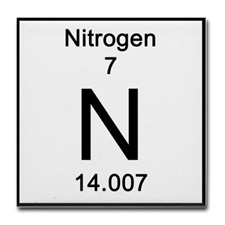


The majority of an atom's mass exists where?
In the nucleus
In the electron cloud
In the space between the nucleus and the electrons
In the neutrons
The discovery of the electron led directly to the development of which atomic model?
Planetary Model
Bohr Model
Solid Sphere Model
Plum-Pudding Model
Most of the mass of the atom is found ___.
In the cloud
In the nucleus
Who determined that the atom is mostly EMPTY SPACE?
JJ Thomson
Ernest Rutherford
John Dalton
Heisenberg and Schrodinger
The nucleus is comprised of ___
Protons and Electrons
Protons and Neutrons
Neutrons and Electrons
Just Protons

The Cathode Ray Tube experiment led to this model that was developed by ___.
JJ Thomson
John Dalton
Ernest Rutherford
Democritus

Who developed the solid-sphere model of the atom?
JJ Thomson
Ernest Rutherford
Neils Bohr
John Dalton

Who discovered the nucleus after conducting the famous Gold Foil experiment?
Ernest Rutherford
Neils Bohr
JJ Thomson
John Dalton
Who furthered the idea that all matter is made of earth, air, fire, and water?
Thales
Democritus
Aristotle
Eratothenes
Which philosopher is credited with developing the idea of the atom (atomos)?
Aristotle
Democritus
Thales
Anaximander
What is the atomic number?
the number of protons in the nucleus
the number of protons and neutrons in the nucleus
the number of neutrons in the nucleus
the number of protons in the energy levels
What is the mass number?
the number of protons in the nucleus
the number of protons and neutrons in the nucleus
the number of neutrons in the nucleus
the number of protons and electrons in the atom
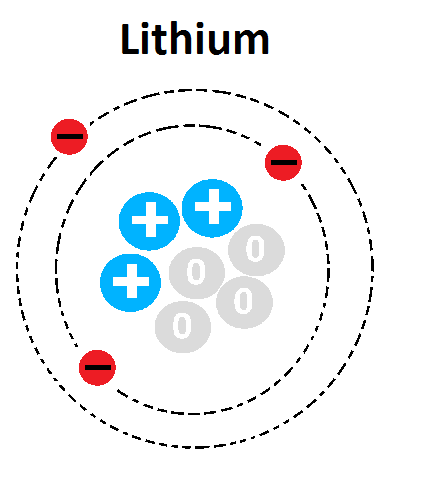
What is the atomic number of this atom?
1
3
4
7
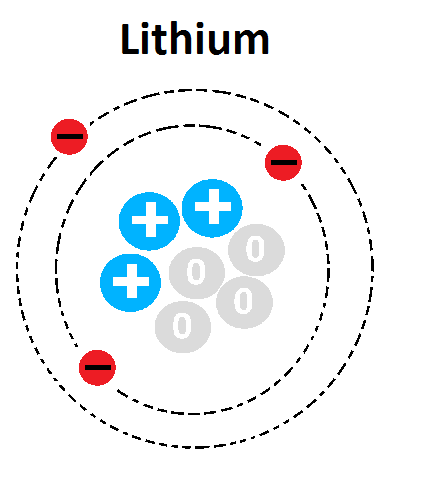
What is the mass number of this atom?
1
3
4
7
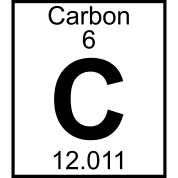

What does the 6 represent?
Atomic mass
atomic number
chemical symbol
element name
An atom has 10 protons, 15 neutrons and 10 electrons what is its mass number.
20
10
35
25
Which of the following determines the identity of an element?
number of protons
atomic mass
number of neutrons
number of shells

The vertical (up and down) columns in the Periodic Table are called
groups or families
towers
periods
atomic numbers

What are the horizontal rows (left and right) in the periodic table called?
Families
Groups
Periods
Orbitals

All the elements that are blue and to the left of the staircase are called...
metals
nonmetals
metalloids
noble gases
All the elements that are yellow and to the right of the staircase are called...
metals
nonmetals
metalloids
noble gases

All the elements that are in red and that make up the staircase are called...
metals
nonmetals
metalloids
noble gases

Which of the following elements is in group or family 2?
K
Cs
O
Ca
Which of the following elements is in period 2?
K
H
O
Ca

The elements in the vertical column #18 are called
Halogens
Noble Gases
Alkali Metals
Alkaline Earth Metals

All of the noble gases have similar properties. Which element has similar chemical properties of the noble gas Argon (Ar)?
Iodine
Oxygen
Fluorine
Xenon

Halogens are in group...
16
17
18
15
Which of the following elements are Halogens? (Select all that apply)
Iodine (I)
Fluorine (F)
Chlorine (Cl)
Sodium (Na)
Potassium (K)

Which of the following elements are Group 1 Alkali Metals? (Select all that apply)
Iodine (I)
Fluorine (F)
Chlorine (Cl)
Sodium (Na)
Potassium (K)

How many valence electrons do all of the Group 2 Alkaline Earth Metals have?
1
2
5
7
8
The periodic table is arranged by ______
Atomic Mass
Number of Electrons
Atomic Number
Atomic Weight
The electronegativity of an element is defined as…
The ability of an atom to gain or attract additional electrons.
The energy required to remove an electron from an atom.
The ability of an element to chemically react with other elements or compounds.
The size of an atom of a particular element.
Which element will have the largest atomic radius?
Ne
Li
Cs
Rn

The symbols W, X, and Z represent four elements shown on the outline of a periodic table.
Which element has the highest electronegativity?
What is the difference between ionization energy and electronegativity?
Ionization energy is the ability to attract a valence electron while, electronegativity is the energy needed to remove a valence electron.
Ionization energy is the energy needed to remove a valence electron while, electronegativity is the ability to attract a valence electron.
Ionization energy is the level of attraction between electrons and the nucleus while, electronegativity is the sharing of pairs of electrons.
What is the difference between electronegativity and atomic radius?
electronegativity is the level of attraction between electrons and the nucleus while, atomic radius is the energy needed to remove electrons.
electronegativity is the energy needed to remove electrons while, atomic radius is the level of attraction between electrons and the nucleus.
electronegativity is the level of attraction between electrons and the nucleus while, atomic radius is the size of the atom
What is the average mass of this element?
Calculate the average atomic mass of the element iron (Fe) using the following data:
[Isotope / % abundance]
[Iron 54 / 6% ] [Iron 56 / 92% ] [ Iron 57 / 2% ]
53.7 amu
54.9 amu
5592.0 amu
55.9 amu

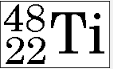
I. 7735X II. 7733X III. 8137X IV. 8135 X
What does the atomic number of an element represent?
The number of protons in the nucleus
The number of neutrons in the nucleus
The total number of protons and neutrons in the nucleus
The total number of protons and electrons in an atom
How can you determine the number of neutrons in an atom if you know its atomic number and mass number?
Subtract the atomic number from the mass number
Add the atomic number to the mass number
Multiply the atomic number by the mass number
Divide the mass number by the atomic number
Which of the following is true about isotopes?
They have different atomic numbers but the same mass number
They have the same atomic number but different mass numbers
They have different numbers of electrons but the same number of protons
They are always ions
What is the relationship between atomic number and the number of protons in an atom?
They are equal
Atomic number is double the number of protons
Atomic number is half the number of protons
There is no relationship
What is the term for atoms of the same element with different numbers of neutrons?
Ions
Isotopes
Molecules
Compounds
Which of the following elements is most likely to undergo radioactive decay?
Helium
Uranium
Oxygen
Nitrogen

