
 Worksheets
ICP Chem Final
Total questions: 100
Worksheet time: 25hrs 0mins
What is the name of group number 1?
halogens
noble gases
alkali metals
alkaline earth metals
What is the name of group number 2?
transition metals
halogens
metaloids
alkaline earth metals
What group number are the halogens found?
18 (8A)
1
2
17 (7A)
a row on the Periodic Table of Elements
family
period
row
isotope

How is the MODERN periodic table arranged left to right?
Increasing number of neutrons
Decreasing number of protons
Increasing atomic mass
Increasing number of protons
Which elements will have similar properties?
H, He, Li
B, C, N
N, P, As
Al, Zn, Ag
Which elements are in the same family or group?
F, S, As
Mg, K, Sr
Be, Mg, Ca
B, Si, As
What is the atomic number of Fe?
62
56
65
26
A vertical column in the periodic table, also known as a family of elements.
Period
Group
Atomic Number
Row
A count of the number of protons in the atomic nucleus
Atomic Number
Atomic Mass
Atomic Symbol
Mass Number
A horizontal row in the periodic table
Period
Group
Atomic Number
Column
The total number of protons and neutrons within an isotope.
Atomic Number
Mass Number
Atomic Symbol
Atomic Nucleus
If an atom has a charge of zero and a total mass of 1 AMU, how many NEUTRONS does it have?
1
0
2
1-
What is the mass of an atom containing: 1 protons, 1 neutron, and 2 electrons?
1-
2
3
1
What is the mass of an atom containing: 4 protons, 5 neutrons, and 4 electrons?
8
9
0
1+
What is the mass of an atom containing: 2 protons, 2 neutrons, and 2 electrons?
0
2
4
6
Which particle(s) resides in the nucleus?
Protons
Neutrons
Electrons
Protons and Neutrons
What particle exists outside of the nucleus?
proton
neutron
electron
none of the above
Match the charge to each subatomic particle.
Positive
Proton
Neutral
Neutron
Negative
Electron
Match the location of the atom to each subatomic particle
Nucleus
Proton
Nucleus
Neutron
Cloud outside of nucleus
Electron
Match the terms to each definition.
Abbreviation of element name
Chemical Symbol
Sum of protons and neutrons
Mass Number
Atom identity equal to number of protons
Atomic Number
Equal to the atomic number
Proton
Added to protons to get mass number
Neutron
If an atom has 4 protons, a mass of 12, and charge of +2, how many neutrons does it have?
6
8
4
2
What is the charge of an atom containing: 1 protons, 1 neutron, and 2 electrons?
2
3
0
1-
What is the charge of an atom containing: 5 protons, 7 neutrons, and 7 electrons?
2-
12
0
2+
If an atom has 4 protons, a mass of 12, and charge of +2, how many neutrons does it have?
6
8
4
2

This image shows some of the colored flames we will see in the fire lab. The color of light can show us which emission has the most energy released by the electrons. Which compound's electrons had the largest change in energy levels?
Strontium
Calcium
Potassium
Copper

Which of the jumps in energy levels would create a photon emission with the most energy?
n=1 to n=2
n=2 to n=3
n=2 to n=4
n=1 to n=4

Which has more energy?
An electron in an excited state
An electron at the ground state
An electron in energy level n=1
An electron that is not a valence electron
In the diagram on the left, a photon is being emitted. What must have just occurred in the atom for the photon to be released?
Energy was absorbed.
The electron lost energy and fell an energy level.
The electron jumped up to a higher energy level
The electron is in the excited state.

Which energy level would have electrons with the highest amount of energy?
E1
E2
E3
E4
When an electron emits light
the electron gets "excited" and "jumps out" away from the nucleus
the electron gets "excited" and "drops back down" closer to the nucleus
the electron "calms down" and "jumps out" away from the nucleus
the electron "calms down" and "drops back down" closer to the nucleus
How many valence electrons are most stable for an element in a compound (except hydrogen)?
(a)
A covalent bond is made of the 2 following kinds of elements:
Metal and metal
Nonmetal and nonmetal
Metalloid and Metalloid
Metal and nonmetal
Ionic compounds are made of the two following kinds of elements:
Metal and metal
Nonmetal and nonmetal
Metalloid and metalloid
Nonmetal and metal

What does electronegativity do as you go across a period?
decrease
no pattern
stay the same
increase
Which of the following describes a valence electron?
Outermost from nucleus
Most energetic
Determines chemical properties and bonding
All options
Which of the following would have 2 valence electrons
Alkali metals
Alkaline earth metals
Halogens
Noble Gasses
Which of the following elements will have 5 valence electrons?
In
Ge
Sb
Rn
Cs

This could be a Lewis structure of which element?
Li
Al
C
Be

A
B
C
D
Match the ions to the correct compound name
Na+ S2-
sodium sulfide
Be2+ Cl-
beryllium chloride
Na+ Se2-
sodium selenide
B3+ Br-
boron bromide
Ba2+ Cl-
barium chloride
Match each cation to the correct name.
Sn2+
tin (II)
Sn4+
tin (IV)
Ti2+
titanium (II)
Ti3+
titanium (III)
Sb5+
antimony (V)
Match the ions to the correct compound name
Fe2+ S2-
iron (II) sulfide
In3+ Cl-
indium (III) chloride
Sm7+ S2-
samarium (VII) sulfide
Os6+ Br-
osmium (VI) bromide
Mo4+ Cl-
molybdenum (IV) chloride
Match the compound names to the correct set of ions.
cobalt (III) sulfite
Co3+ SO32-
cobalt (III) sulfate
Co3+ SO42-
chromium (II) hypochlorite
Cr2+ ClO-
chromium (II) chlorite
Cr2+ ClO2-
carbon carbonate
C4+ CO32-
Match each set of ions to the correct compound name
K+ MnO4-
potassium permanganate
Ba2+ ClO4-
barium perchlorate
Pd2+ SO32-
palladium (II) sulfite
Be2+ CrO42-
beryllium chromate
Cu2+ Cr2O72-
copper (II) dichromate

Match the following reactions with their types:
Decomposition Reaction
AB → A + B
Single Displacement Reaction
A + BC → AC + B
Double Displacement Reaction
AB + CD → AD + CB
Synthesis Reaction
A + B → AB
Match the unique identifier to the reaction type
Synthesis
A single product
Decomposition
A single reactant
Single Replacement
An element by itself on BOTH sides
Double Replacement
All ions. No single compounds or elements
Combustion
O2 reactant. CO2 and H2O products only
Label the parts of a chemical equation.
Balance this reaction and choose the answer with the correct coefficients
____ Na3PO4 + ____ KOH ---> ____ NaOH + ____ K3PO4
1,3,3,1
1,3,2,1
2,3,3,1
1,1,3,1
Balance this reaction and choose the answer with the correct coefficients
____ RbNO3 + ____ BeF2 ----> ____ Be(NO3)2 + ____ RbF
1,1,1,1
1,2,1,1
2,1,1,2
2,1,2,1
Balance the following and select the response with the correct coefficients
____ Fe + ____ Cl2 → ____ FeCl3
1,1,2
1,3,1
2,2,3
2,3,2
Endothermic
Energy is entering the system, something is getting warmer
Exothermic
Energy is exiting the system, something is getting colder
Equilibrium
Warmer and cooler temperatures balance out to be the same temperature
Endothermic is when heat is (a) ; exothermic is when heat is (b)
Which of the following best describes temperature?
a measure of the average kinetic energy of the particles in a sample of matter
heat absorbed or released in a chemical or physical change
heat energy
energy of change
The higher the kinetic energy of the particles in a sample of matter,
the lower the temperature will be.
temperature is not affected.
the higher the temperature will be.
What is defined as the heat required to raise the temperature of 1 g of a substance by 1 °C ?
heat energy
heat of formation
specific heat
heat capacity

Match the letter in the picture with the word
A
all solid
B
melting/
freezing
C
all liquid
D
vaporizing/
condensing
E
all gas

Where on the graph is the kinetic energy remaining constant?
A to B
B to C
C to D
D to E
E to F
During a phase change, kinetic energy will _____ while potential energy will _____?
stay the same, stay the same
change, stay the same
Stay the same, change
label
gas
liquid
solid
heat lost
melting
freezing
condenstation
vaporization
heat added
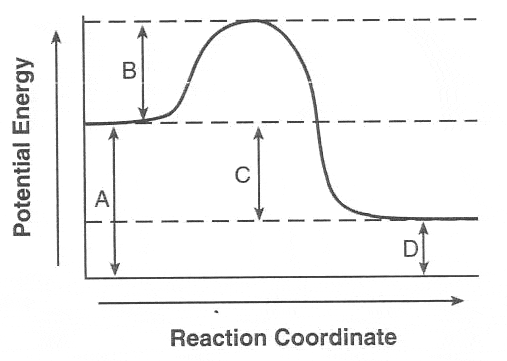

Match the arrow to the description.
energy of activated complex or transition state
B
activation energy of forward reaction
A
activation energy of reverse reaction
D
energy of products
C
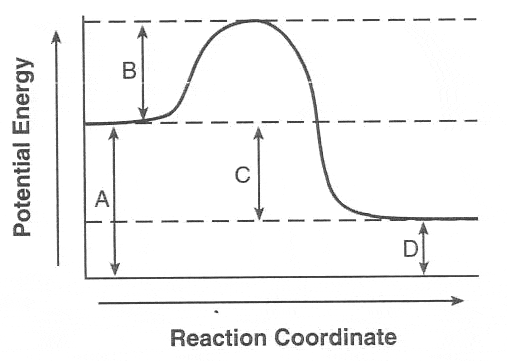
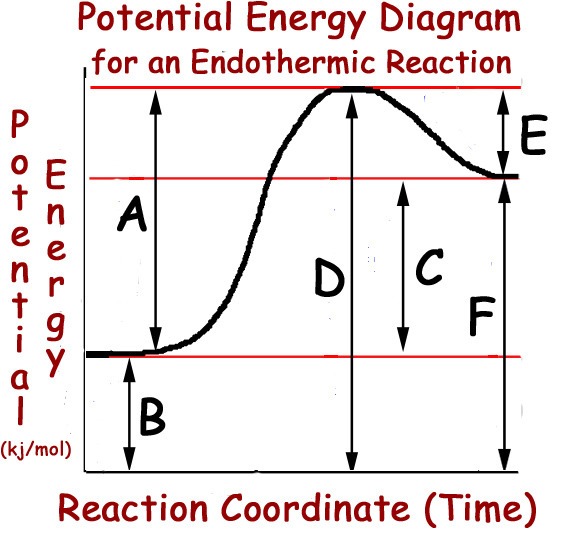
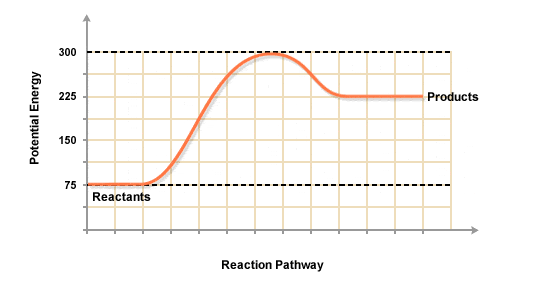
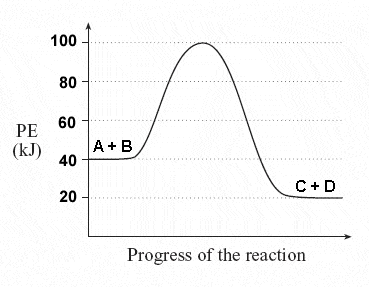
What is the change of the heat of the reaction (ΔH)?
-40 kJ
-20 kJ
100 kJ
60 kJ
Match the force with the object they act upon
Gravity
planets, stars, and very large objects
Electromagnetic
protons and electrons
Weak Nuclear
quarks
Strong Nuclear
protons and neutrons
Label the diagram with the attributes of the fundamental forces
As the distance between particles increases, what happens to the strength of the nuclear force?
decreases
increases
remains unchanged
Match each particle to the correct arrow showing what stops the particle.
During (a) decay, a transformation takes place. A (b) turns into a (c) producing a/n (d) . The mass number does not change, but the (e) number increases turning the atom into a new element.
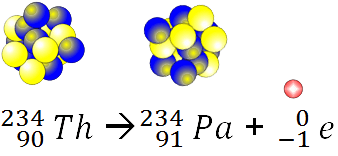

This is the correct equation for U-238 decay.
true
false

Which of the following is needed to balance the nuclear equation seen?
Pb-212
Pb-216
Rn-216
Rn-220
6027Co = ___ + 0-1e
_____→137 56 Ba + 0 −1 e
Match each nuclear reaction equation to the type of nuclear decay
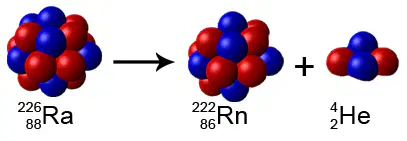
alpha decay

beta decay

positron emission
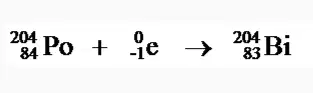
electron capture
Fill in the gaps and define each type of nuclear reaction.
Organize these options into the right categories
Atoms combining into a larger atom
Atom splitting into smaller atoms
Releases lots of energy
Requires high temperatures and pressures to begin
Must force atoms to overcome electromagnetic force
Can become uncontrollable
Started by a neutron
Fueled by Uranium
Fueled by hydrogen
Can create nuclear fallout
Produces radioactive waste
Produces Helium
Process of current nuclear power plants
Process of the sun
Process of atomic bombs
Requires control rods
Controlled by magnets and lasers
Heats water into steam to produce electricity
Transforms fuel into a new element
Source of clean energy to replace fossil fuels
What is Avogadro's number?
6.02 x 10²³
1 mole
600 million
6.02
A mole is:
The SI unit for mass
The SI unit for the amount of a substance
The SI unit for volume
The SI unit for area
Which has the most particles?
1 mole H2
1 mole Na1+
1 mole Al(OH)3
These are all the same
Place the steps of determining an empirical formula in order.
Change % to grams
Convert grams to moles
Divide all moles by lowest mole
Use 2,3,4 rule if mole ratio is not all whole numbers
Mole ratio is subscripts of empirical formula
Identify the components of the conversion from grams to moles as it is used in empirical formula determination.
When calculating empirical formula, we convert grams of each element into moles. Which amount of moles should we divide all moles by?
Label the components of the calculation of a molecular formula.
Empirical Formula = CF2
Molecular formula mass = 192 g/mol
Molecular Formula = ?
C4F8
C8F4
C3F6
C2F4
Match the following

Noble Gasses

Halogens

Transition Metals

Alkali Metals

Alkaline Earth Metals

