wayground logo

Free Printable Worksheets

Font size

S
M
L
XL
Worksheets

End of Module 2 Test

Total questions: 100

Worksheet time: 2hrs 3mins

Name
Class
Date
1.

What is a physical property?

a)

can be observed or measured without changing the composition of matter

b)

characteristic of a substance that may be observed when it participates in a chemical reaction

c)

flammability, toxicity, chemical stability, and heat of combustion

d)

a chemical reaction

2.

What is a chemical property?

a)

characteristic of a substance that may be observed when it participates in a chemical reaction

b)

can be observed or measured without changing the composition of matter

c)

States of matter include liquid, solid, and gaseous states.

d)

odor, boiling point, ability to conduct heat, ability to conduct electricity, ability to dissolve in other substances

3.

Which is an example of a physical change?

a)

A chemical going from solid to liquid

b)

Formation of bubbles when two chemicals are put together

c)

A piece of copper grows a coat of silver when put into a solution

d)

A substance catching fire

4.

Which is an example of a chemical change?

a)

A chemical going form a liquid to a solid

b)

A chemical going from a solid to a gas

c)

Bending a piece of wire until it breaks

d)

The formation of bubbles when two chemicals are put together.

5.

Which state of matter has both a definite volume and definite shape?

a)

Solid

b)

Liquid

c)

Gas

d)

Plasma

6.

Which state of matter has a definite volume and no definite shape?

a)

Solid

b)

Liquid

c)

Gas

d)

Plasma

7.

Which state of matter has no definite volume and no definite shape?

a)

Solid

b)

Liquid

c)

Gas

d)

Plasma

8.

Which of the following does NOT describe a pure substance?

a)

has a fixed composition

b)

distinct properties

c)

contain only one type of matter

d)

each substance retains its own properties

9.

Which two describes an element?

a)

Cannot be broken down into simpler substances

b)

Composed of only one type of atom

c)

Does not have same composition throughout

d)

Can be seperate by physical means

10.

A mixture that does not have same composition throughout the mixture.

a)

Heterogeneous

b)

Homogeneous

c)

Elements

d)

Compounds

11.

Which mixture type can also be called a solution?

a)

Heterogeneous

b)

Homogeneous

c)

Elements

d)

Compounds

12.

The first letter of an element symbol is always.....

a)

lower case

b)

capitalized

c)

small

d)

starts with a vowel

13.

Water is a compound and not an element or mixture because....

a)

Can be decomposed into the elements and it has its own unique properties

b)

Because it can be separated by physical means

c)

Because all the components keep their own properties and do not change

d)

Because it is heterogeneous

14.

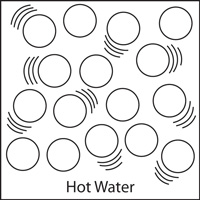
At higher temperatures,particles in an object ____________ .

a)

have low kinetic energy

b)

move slower than at lower temperature

c)

move at a very low speed

d)

have higher energy than at lower temperature
15.

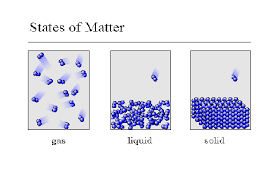
A gas has ___________________ .

a)

definite shape but no definite volume

b)

definite volume but no definite shape

c)

fast moving particles

d)

slow-moving particles

16.
Freezing
a)
Solid to gas
b)
Liquid to solid
c)
Gas to solid
d)
Liquid to gas
17.

Particles in a ______________________ have less energy than the other states of matter.

a)

gas

b)

solid

c)

liquid

d)

plasma

18.

The speed of molecules determines the _____________.

a)

volume

b)

density

c)

pressure

d)

temperature

19.

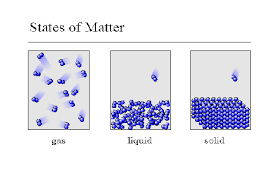
The molecules in the picture are tightly held together with little movement. The picture represents a ___________ subtance.

a)

solid

b)

liquid

c)

gas

d)

plasma

20.
When the temperature of matter decreases the particles ...
a)
speed up and move farther apart
b)
speed up and move closer together
c)
slow down and move farther apart
d)
slow down and move closer together
21.

If the tops were removed from the cylinders, the _______________ would fly out of the container.

a)

solid

b)

liquid

c)

gas

d)

none of the above

22.
What does this picture represent? 
a)
solid
b)
liquid 
c)
gas
d)
plasma
23.

Which of the following is a physical change?

a)

Rotting Wood

b)

Boiling Water

c)

Burning Food

d)

Baking a Cake

24.

Which is the most dense state of matter?

a)

solid

b)

liquid

c)

gas

d)

plasma

25.
What is the definition of a chemical change?
a)
Characteristics that describe how a substance behaves under different conditions
b)
Alteration in the physical state of matter without changing its chemical composition
c)
Transformation that results in the creation of new substances
d)
Inherent characteristics that help us identify and describe matter
26.
Which of the following is an example of a chemical property?
a)
Melting point
b)
Density
c)
Color
d)
Ability to react with acid
27.
What is the definition of physical changes?
a)
changes that describe how a substance behaves under different conditions
b)
characteristics that describe how a substance interacts with other substances
c)
changes that alter the form or appearance of a substance, but not its chemical composition
d)
changes that lead to the formation of new substances with different chemical properties
28.
What is the definition of a physical change?
a)
Alteration in the physical state of matter without changing its chemical composition
b)
Inherent characteristics that help us identify and describe matter
c)
Characteristics that describe how a substance behaves under different conditions
d)
Transformation that results in the creation of new substances
29.
What type of change occurs when a substance reacts with an acid?
a)
physical change
b)
neither physical nor chemical change
c)
chemical change
d)
both physical and chemical change
30.
What is the definition of chemical changes?
a)
changes that lead to the formation of new substances with different chemical properties
b)
characteristics that describe how a substance interacts with other substances
c)
changes that describe how a substance behaves under different conditions
d)
changes that alter the form or appearance of a substance, but not its chemical composition
31.

Which of the following is an example of a physical change?

a)
rusting iron
b)
burning wood
c)
melting ice
d)
cooking an egg
32.

Which set of properties, intensive or extensive, are based on the size of a sample?

a)

intensive

b)

extensive

33.

What kind of physical property is this? Color

a)

intensive

b)

extensive

34.

What kind of physical property is this? Hardness

a)

intensive

b)

extensive

35.

What kind of physical property is this? Density

a)

intensive

b)

extensive

36.

What kind of physical property is this? Odor

a)

intensive

b)

extensive

37.

What kind of physical property is this? Volume

a)

intensive

b)

extensive

38.

What kind of physical property is this? Mass

a)

intensive

b)

extensive

39.

anything that has mass and takes up space

a)

Compressibility

b)

Malleability

c)

Reactivity

d)

Matter

40.

a physical property that depends on the amount of matter present

a)

chemical property

b)

physical property

c)

intensive property

d)

extensive property

41.

How many Sulfur's are in Al₂(SO₄)₃

a)

4

b)

3

c)

7

d)

12

42.

How many Nitrogen atoms are in the in H3C2ON5?

a)

2

b)

3

c)

4

d)

5

43.
How many atoms of Oxygen are in Fe(NO3)3 ?
a)
6
b)
3
c)
9
d)
1
44.

What elements are represented in this chemical formula? Fe2O3Fe_2O_3  

a)

Iron, Oxygen

b)

Francium, Europium, Oxygen

c)

Ferrium, Oxygen

d)

Berylium, Oxygen

45.

Which element has the greatest number of atoms? AgNO3AgNO_3  

a)

Silver

b)

Gold

c)

Nitrogen

d)

Oxygen

46.

Cs2SO4

a)

361.9

b)

261.8

c)

313.9

d)

180

47.

Pr(OH)3

a)

191.9

b)

157.1

c)

160.9

d)

180.9

48.

C2H6

a)

60.3

b)

30.1

c)

48.2

d)

110.2

49.

MgF2

a)

62.3

b)

43.3

c)

73.9

d)

92.9

50.

Fe3(PO4)2

a)

357.5

b)

330.2

c)

150.9

d)

206.8

51.

Calculate the formula mass of AlN3O9.

a)

213

b)

89

c)

41

d)

150.9

52.
What is the percent composition of Nitrogen in NO2? (rounded)
a)
30%
b)
40%
c)
50%
d)
60%
53.
What is the percent composition on Oxygen in NO2? (rounded)
a)
40%
b)
50%
c)
60%
d)
70%
54.
What is the percent by mass of oxygen in MgO?
a)
20%
b)
40%
c)
50%
d)
60%
55.
What is the percent by mass of magnesium in MgO?
a)
20%
b)
40%
c)
50%
d)
60%
56.
What is the percent composition by mass of sulfur in the compound MgSO4 (gram formula mass = 120 g/mol)?
a)
20%
b)
27%
c)
46%
d)
53%
57.
What is the percent composition by mass of oxygen in the compound MgSO4 (gram formula mass = 120 g/mol)?
a)
20%
b)
27%
c)
46%
d)
53%
58.
Contains only one kind of atom.
a)
Element
b)
Compund
c)
Mixture
59.

Contains two or more atoms chemically combined together.

a)
Elements
b)
Compounds
c)
Mixtures
60.
The air is a _________. 
a)
element 
b)
mixture 
c)
compound 
d)
energy 
61.
Elements can be broken down into simpler substances. 
a)
false 
b)
true 
c)
sometimes 
62.
Examples are milk and gasoline.
a)
elements
b)
mixtures
c)
compounds
63.
Which of the following is not a compound?
a)
HCl
b)
Cl
c)
NaCl
d)
CO2
64.

diagram "a" is an example of a(n)

a)

element

b)

compound

c)

mixture

65.

What does this illustrate

a)

Elements

b)

Compunds

c)

Mixture of Elements and Compunds

d)

Mixture of Compounds

66.

Which is an example of a solution?

a)

Salt and Sugar

b)

Salt Water

c)

Jelly beans

d)

Concrete

67.
Cookies and cream ice cream would be classified as
a)
A homogenous mixture
b)
A heterogenous mixture
c)
An element
d)
A compound
68.

The three types of mixtures are..

a)

solutions, solutes, solvents

b)

solutions, colloids, suspensions

c)

solutions, colloids, sediments

d)

concentrates, dilutes, dissolvers

69.

Fog

a)

Solution

b)

Colloid

c)

Suspension

70.

Sand in water

a)

colloid

b)

solution

c)

suspension

71.
Which of the following is not a method of separating substances?
a)
Filtration
b)
Distillation
c)
Chromatography
d)
Boiling
e)
Crystallisation
72.
Which method is used to separate insoluble materials from solutions?
a)
Filtration
b)
Distillation
c)
Chromatography
d)
Boiling
e)
Crystallisation
73.
Which one of the following would you use to separate sand from iron filings?
a)
a bar magnet
b)
filter paper
c)
chromatography paper
d)
alum
74.
To separate a mixture of soil and water what separation method is used?
a)
Filtration
b)
Distillation
c)
Chromatography
d)
Evaporation
75.
Two or more substances mingled together, but not chemically combined are known as a
a)
residue
b)
solution
c)
distillate
d)
mixture
76.

What kind of mixture is a combination of substances that has uniform composition and appearance?

a)

colloid

b)

heteregenous

c)

homogeneous

d)

suspension

77.

Which statement describes a heterogeneous mixture?

a)

A chemical reaction takes place.

b)

It has a uniform composition and appearance.

c)

It does not have a uniform composition and appearance.

d)

No answer

78.

This technique is based on the differences of the boiling point of the substance in the mixture.

a)

decantation

b)

distillation

c)

filtration

d)

chromatography

79.

How would you separate a solution that contains two colorless liquids?

a)

Filtration

b)

Distillation

c)

Chromatography

d)

You can not separated a solution by physical means

80.

solute + solvent =

a)

solution

b)

equation

81.
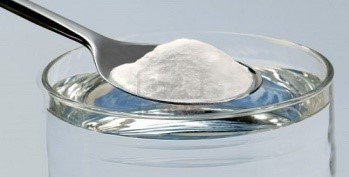
In this mixture, which of the following will be the solute?
a)
The water in the glass
b)
The glass that holds the final mixture
c)
The solution containing both powder and water
d)
The powder on the spoon
82.

Identify the solvent in salt solution

a)

Water

b)

Salt

c)

Sugar

83.

Soda

a)

Colloid

b)

Solution

c)

suspension

84.

Sunscreen

a)

Colloid

b)

Solution

c)

Suspension

85.

Milk

a)

Colloid

b)

Solution

c)

Suspension

86.

Snow globe

a)

Colloid

b)

Solution

c)

Suspension

87.

Vinegar

a)

Colloid

b)

Solution

c)

Suspension

88.

Brass

a)

Homogenous

b)

Heterogeneous

89.

Italian dressing

a)

Homogeneous

b)

Heterogeneous

90.
The amount of space that matter takes up is its _______.
a)
atom
b)
volume
c)
matter
d)
weight
91.
When a solid is turned into a liquid, the solid _______________.
a)
melts
b)
freezes
c)
turns into a gas
d)
floats
92.
The amount of matter something contains is its ______________.
a)
gas
b)
solid
c)
weight
d)
mass
93.

This picture represents which of the following?

a)

one element only

b)

mixture of compounds

c)

mixture of elements

d)

One compound only

94.
This picture represents which of the following?
a)
element
b)
compound
c)
mixture
95.
Rank the states of matter from slowest to fastest particle speed.
a)
solid, liquid, gas
b)
liquid, solid, gas
c)
gas, liquid, solid
d)
solid, gas, liquid
96.
What is the name of the phase change when a gas becomes a liquid?
a)
melting
b)
condensation
c)
freezing
d)
evaporation
97.
The average kinetic energy is
a)
heat
b)
energy
c)
temperature
d)
potential energy
98.

The temperature at which a liquid turns to a gas is called the _____ point.

a)

boiling

b)

freezing

c)

amorphous

d)

crystalline

99.

When you open a solid room air freshener, the solid slowly loses mass and volume as the solid turns into a gas as the room freshener's particles escape and mix with the air in the room. This process is known as ______.

a)

Sublimation

b)

boiling

c)

freezing

d)

condensation

100.
When a gas forms directly from a solid, skipping the liquid phase. it is called
a)
deposition
b)
sublimation
c)
evaporation
d)
condensation