
 Worksheets
Unit 7 - Properties and Changes Test Review
Total questions: 55
Worksheet time: 28mins
What does the term "luster" refer to when classifying materials?
The ability of a material to be stretched into a wire
The ability of a material to conduct electricity
The way a material reflects light from its surface
The ability of a material to be hammered into thin sheets
Which property is associated with a material's ability to be hammered into thin sheets without breaking?
Luster
Ductility
Malleability
Conductivity
What is a conductor?
A material that does not conduct electricity well
A material that reflects light very well
A material that can be easily stretched into a wire
A material that conducts electricity well
What is an insulator?
A material that conducts electricity well
A material that does not conduct electricity well
A material that can be hammered into thin sheets
A material that has a shiny appearance
How would you classify a substance that is silvery and shiny, bends easily in your hands, and can cause a light bulb to light up when placed in a circuit?
metal
nonmetal
metalloid
How would you classify a substance that is dark in color but shiny, conducts electricity only at very high temperatures, and shatters when struck with a hammer?
metal
nonmetal
metalloid
How would you classify a substance that is dull and dark in color, does not conduct electricity well, and shatters when struck with a hammer?
metal
nonmetal
metalloid
What term is used to describe the formation of a new substance by using the evidence of a possible chemical change such as production of a gas, change in temperature, production of a precipitate, or color change?
Physical reaction
Chemical reaction
Precipitation
Chemical change
Which of the following is an example of a chemical change?
Melting snowman
Breaking a pencil
Baking cookies
Cutting an apple
Which of the following is not evidence that a chemical reaction has taken place?
Production of a gas
Change in temperature
Production of a precipitate
Change in shape


Which of these is a physical property of an object?
Texture
Color
Shape
All of the above
Substances that can be hammered into thin sheets are:
metals
nonmetals
both metals and nonmetals

Sulfur is considered:
malleable
brittle
ductile
a good conductor

An element is shiny, malleable, and conducts electricity. WHERE would it be found in the periodic table?
An element is dull, brittle, and a poor conductor. WHERE would it be found in the periodic table?


A property of matter that involves hammering a substance into thin sheets.
solubility
state
malleability
density
Which of the following is a physical characteristic of a metalloid?
texture
malleable
semi-conductor
Elizabeth was examining elements and their physical properties. She described an element is her science journal as having no shine, an insulator, and very brittle. What would this element be a metal, nonmetal, or metalloid?

Using the table above, what can you infer about this element?
It is most likely a liquid metal.
It is most likely a solid metal.
It is a metalloid.
It is a non-metal.
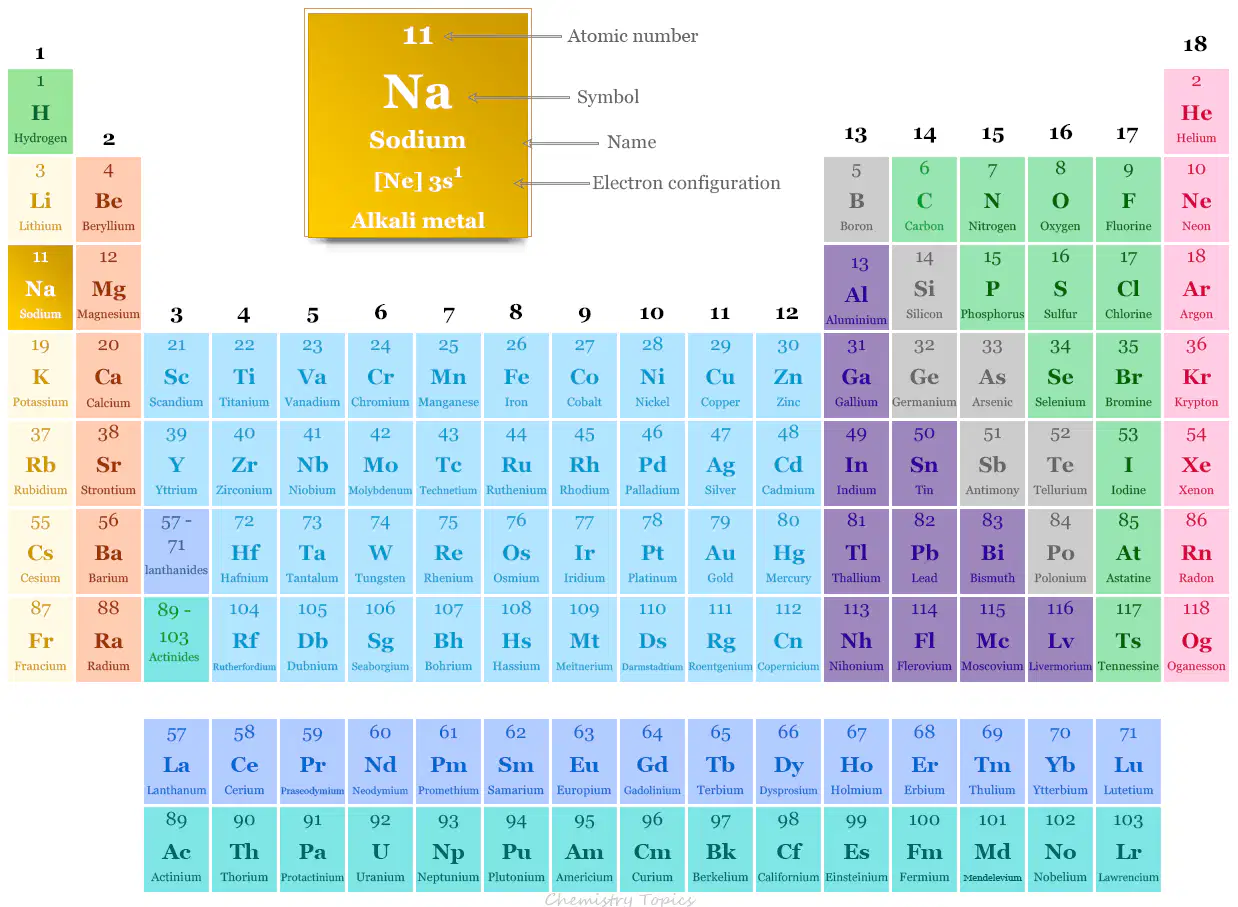
Find Sodium (Na) on the periodic table. How is it classified?
Metal
Nonmetal
Metalloid

Hydrogen (H) is a gas. How is it classified?
Metal
Nonmetal
Metalloid
Which Physical property do most metals share?
Low melting point
Malleable
Brittle
Poor conductor of heat and electricity
Nonmetals are found on the_________of the periodic table
left side
right side
the zigzag line
bottom

The elements along the staircase are called
metals
nonmetals
metalloids
noble gases


When adding baking soda and vinegar together, it fizzes and bubbles. Why?
A new substance, CO2 is formed.
A physical change takes place.
Vinegar has gas bubbles inside.
We are boiling the baking soda.

precipitate formed
light produced
bubbles released
a solution getting hotter
crystals dissolving
What is the difference between a chemical change and a physical change?
A physical change creates a new substance, a chemical change does not.
A chemical change creates a new substance, a physical change does not.
A chemical change makes the substance look different but a physical change does not.
A physical change makes the substance change color where a chemical change does not.

A granular substance is added to a liquid. Which of the following would provide evidence to suggest a chemical change has taken place?
The liquid gives off heat.
The granules dissolve completely.
The volume of the liquid increases.
The granules seem to get smaller.
Which of the following is an example of a precipitate?
liquid evaporating into gas
a solid formed from a frozen liquid
a chunky solid formed from two liquids combining
a liquid solution that contains two substances
Bethany had a beaker with a small amount of baking soda. She added a few drops of pickle juice to the baking soda and observed fizzing and bubbling. Based on her observation, which of these can Bethany determine about the new substance formed by mixing the baking soda and pickle juice?
A chemical reaction produced a solid.
A chemical reaction produced a gas.
No chemical reaction took place.
Only a physical change happened.
When two liquids are mixed and a solid forms as a result of a reaction, the solid is called a
nonmetal
metal
element
precipitate

a substance that has the same properties
a metal

A student creates a circuit as shown here. For the lightbulb to light up, the wire must be made of a:
metal
nonmetal

