
 Worksheets
7th Grade Final Benchmark Review
Total questions: 56
Worksheet time: 27mins
Which organelle from the plant cell is primarily responsible for converting sunlight to energy?
Mitochondria
Nucleus
Vacuole
Chloroplast
The reactants (raw materials) of photosynthesis are...
sunlight and chlorophyll
carbon dioxide and water
glucose and oxygen
sunlight and water
What is the name of the sugars (food) a plant produces after photosynthesis
Glucose
ATP
Sugar
Oxygen
What do we call the process by which glucose is broken down and energy is released?
breathing
photosynthesis
cellular respiration
perspiration
What two gases do cellular respiration and photosynthesis keep constant in our atmosphere?
water vapor and carbon dioxide
oxygen and water vapor
carbon dioxide and oxygen
air and oxygen
Which organisms perform cellular respiration?
only plants
only animals
both plants and animals
only unicellular organsism

What is produced as a result of photosynthesis?
Glucose and Chlorophyll
Glucose and Oxygen
Water and Light energy
Carbon dioxide and Water
What is produced as a result of photosynthesis?
Glucose and Chlorophyll
Glucose and Oxygen
Water and Light energy
Carbon dioxide and Water
What are the reactants of cellular respiration?
glucose & carbon dioxide
water & oxygen
glucose & oxygen
water & carbon dioxide
What are the products in cellular respiration?
ATP energy, glucose, & carbon dioxide
ATP energy, water, & oxygen
ATP energy, glucose, & oxygen
ATP energy, water, & carbon dioxide
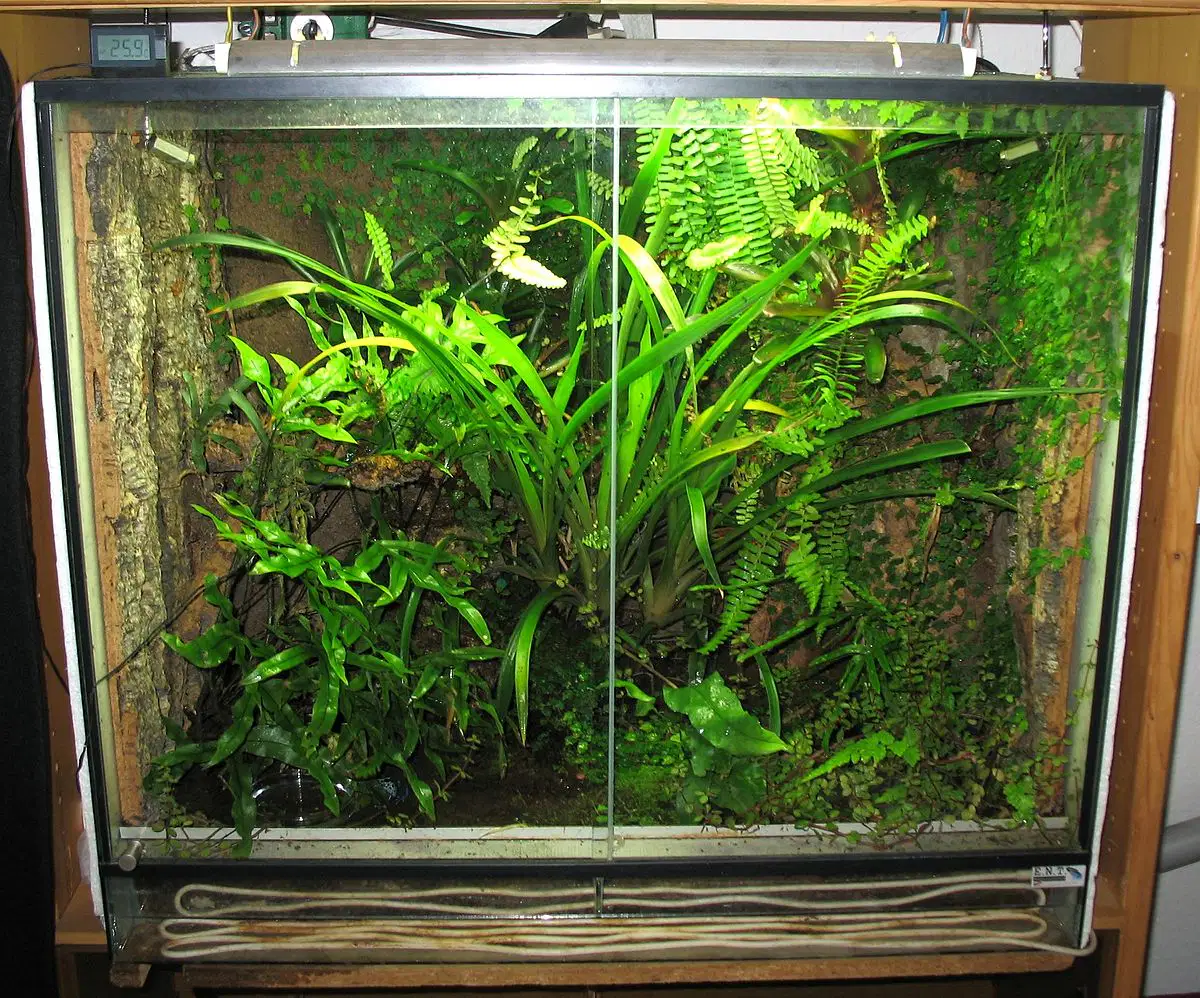
The class decided to have a terrarium. The teacher says it is important to include both plants and animals. Why is it necessary to include both plants and animals?
plants provide food for the animals and animals provide water for the plants
plants provide carbon dioxide for the animals and animals provide oxygen for the plants
plants provide oxygen for animals and the animals provide carbon dioxide for the plants
plants provide water for the animals and animals provide food for the plants
Pure substances are divided into two categories
elements and mixtures
compounds and mixtures
elements and compounds
compounds and pure substances
Which of the following answer choices is NOT a compound?
NaCl
Si
HMg
PbSO
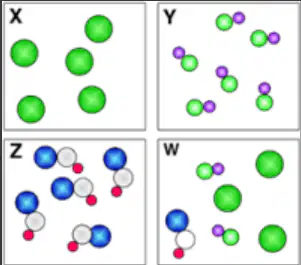
Which answer choice is NOT a pure substance?
X
Y
Z
W
The faster the molecules are moving
the higher the temperature
particle movement does not relate to temperature
the lower the temperature will be
none of the above apply
A piece of metal feels colder than a piece of wood at the same temperature. Which explains this phenomenon?
Wood is a poor insulator and metals have more atoms that move more slowly than wood.
The difference is hand temperature, not the wood or metal.
Metals are colder than wood.
Metals in general are good conductors while wood is an insulator.
Which state of matter is described below?
1. Particles are packed closely together
2. Particles vibrate
3. Strong molecular attraction between particles
solid
liquid
gas
plasma
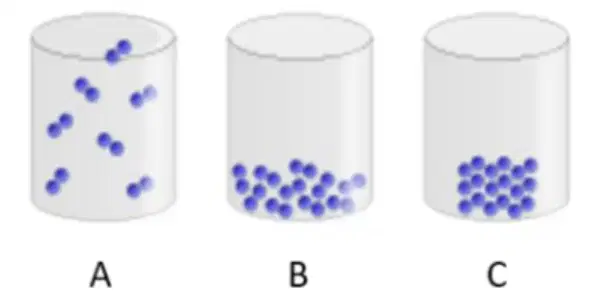
Consider the diagrams representing particle arrangements. Which correctly matches the diagrams with the three phases of matter?
A, solid; B, liquid; C, gas
A, gas; B, liquid; C, solid
A, gas; B, solid; C, liquid
D, solid; B, gas; C, liquid
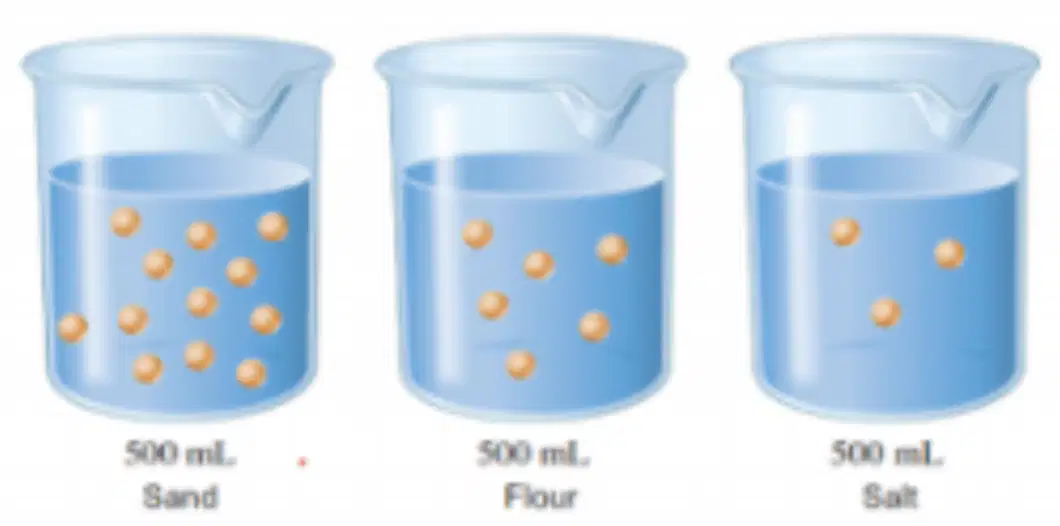
Ashley wants to compare the solubility (how it dissolves in water) of three materials: salt, sand, and flour. She fills three beakers with 500 mL of water each. She then adds the same amount of each solute to the beaker. The picture shows the particles left after mixing.
Based on Ashley’s observations, what statement can she make about the solubility of the three materials?
Sand is more soluble than salt and flour.
Sand is the least soluble when compared to flour and salt.
Flour is more soluble than salt and sand.
Salt is the least soluble when compared to flour and sand.
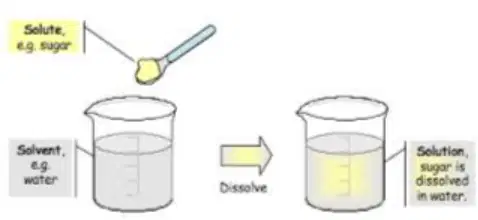
The ability of sugar to dissolve in water is called....
Malleability
Ductility
Density
Solubility
The law of conservation of mass says substances can neither be _______ nor ___________.
built; torn down
created; destroyed
blended together; separated
condensed; extracted
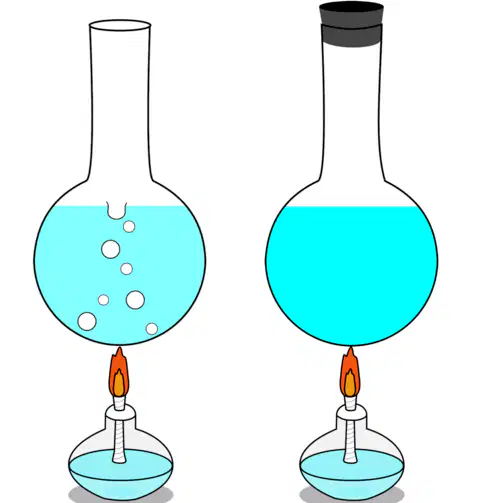
The beaker on the right is sealed with a cork, which prevents matter from being able to go in or our of the beaker. This is called a(n)....
Open System
Closed System
The beaker on the left is not corked at the top, which allows matter to escape and move into the surrounding air. This is an example of a(n)...
Open System
Closed System

If AB is 18 grams and reacts in a closed system, which of the following could be the grams of A and B?
A is 13 grams and B is 2 grams
A is 9 grams and B is 11 grams
A is 18 grams and B is 5 grams
A is 12 grams and B is 6 grams
4 grams of hydrogen and 32 grams of oxygen will combine to form:
36 grams of water
32 grams of oxygen
28 grams of hydroxide
36 grams of carbon dioxide
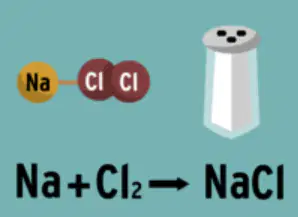
In a chemical reaction, 4 grams of sodium must combine with how many grams of chlorine to produce 10 grams of table salt?
4 grams
8 grams
6 grams
10 grams
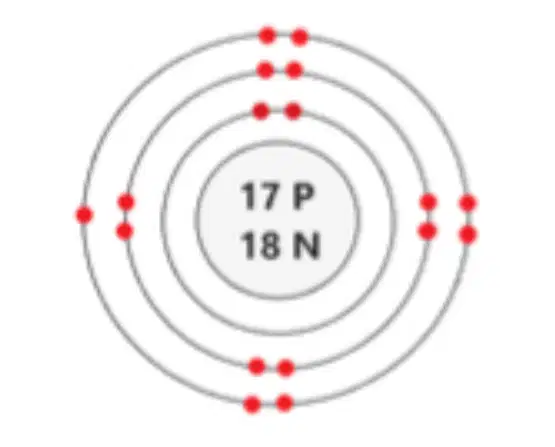
What is the mass number of this element?
17
18
35
7
An element’s reactivity and other chemical properties are determined by the number of...
energy levels
valence electrons
neutrons
protons
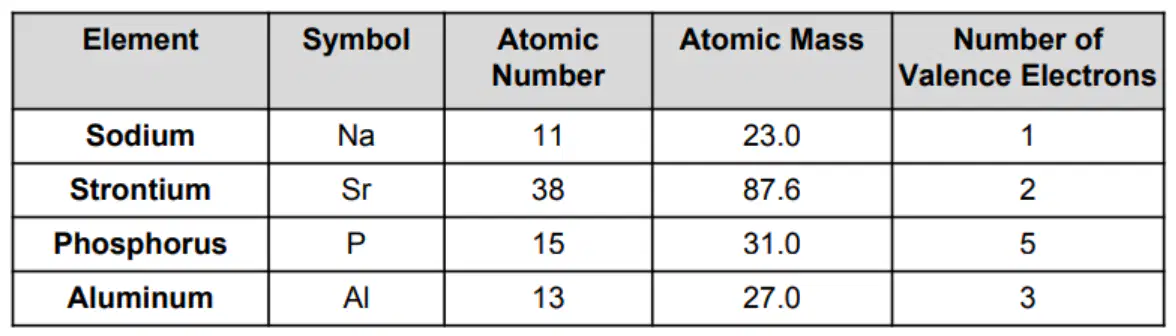
The table provides information on four different elements. Based on the information provided, it can be concluded that –
sodium is the most reactive
phosphorus is the least stable
strontium is the best conductor
aluminum has the most protons
What is the mass of an atom with seven protons, seven neutrons, and eight electrons?
7
14
15
22
Which of the following lists the two subatomic particles that contribute the most to the mass of an atom?
protons and electrons
neutrons and electrons
protons and neutrons
electrons and ions
The process by which living things try to keep their internal conditions relatively stable (or balanced) is called...
homeostasis
osmosis
cellular respiration
diffusion
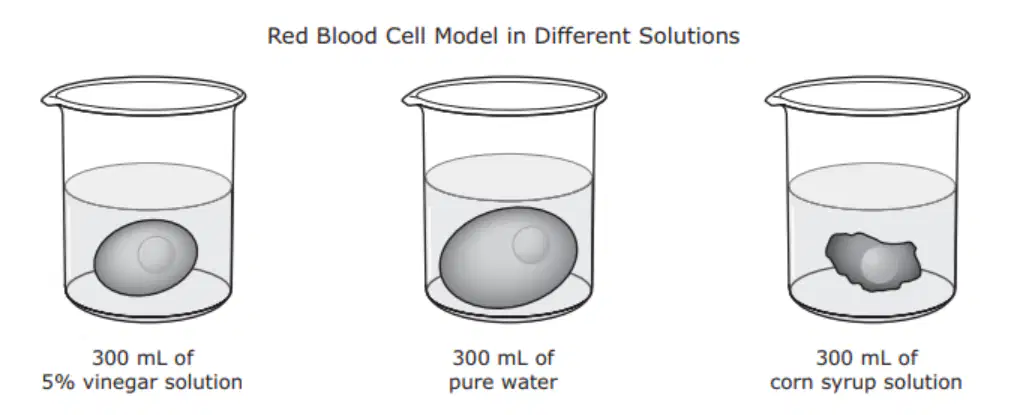
Which statement best describes the role of the cell membrane in this model?
The cell membrane removes solutes from the environment.
The cell membrane is an impermeable barrier that prevents water from entering the cell.
The cell membrane allows solutes to enter the cell, which causes the cell to shrink.
The cell membrane allows water to enter and leave the cell.
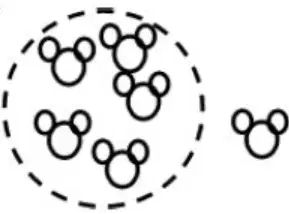
Which way will the water molecules move during osmosis?
Out of the cell, so the cell shrinks.
Into the cell, so the cell shrinks.
Out of the cell, so the cell swells.
Into the cell, so the cell swells.
Which characteristic of a cell membrane allows it to control materials entering and leaving a cell?
A cell membrane is surrounded by fluid.
A cell membrane holds organelles in place.
A cell membrane is semi-permeable.
A cell membrane is found in plant and animal cells.
A group of tissues that perform a similar function is called_____. (Examples include the heart, lungs or stomach)
cells
organs
tissues
organ system
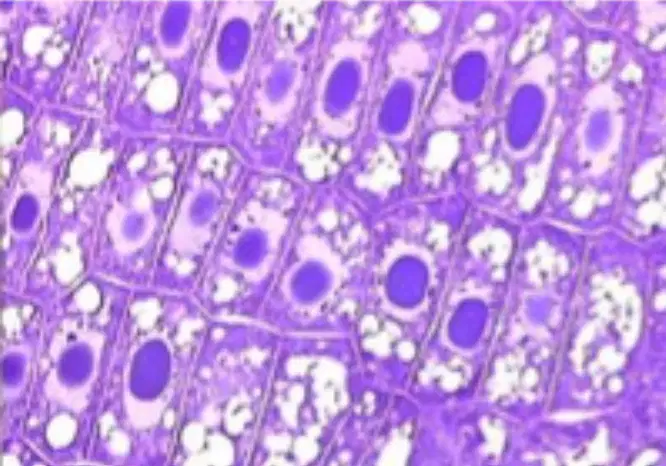
This is a example of ...
cell
organ
tissue
organ system
What is the difference between a cell and a tissue?
cell is basic unit of life; tissue is groups of different cells
cell is group of tissues; tissue is basic unit of life
cell is basic unit of life; tissue is group of cells that work as one
cell is group of organs; tissue is group of different cells
The main difference between a prokaryotic cell and a eukaryotic cell is that ...
the eukaryotic cell has no nucleus.
the prokaryotic cell has no nucleus.
the prokaryotic cell has a cell wall.
the eukaryotic cell has a cell wall.
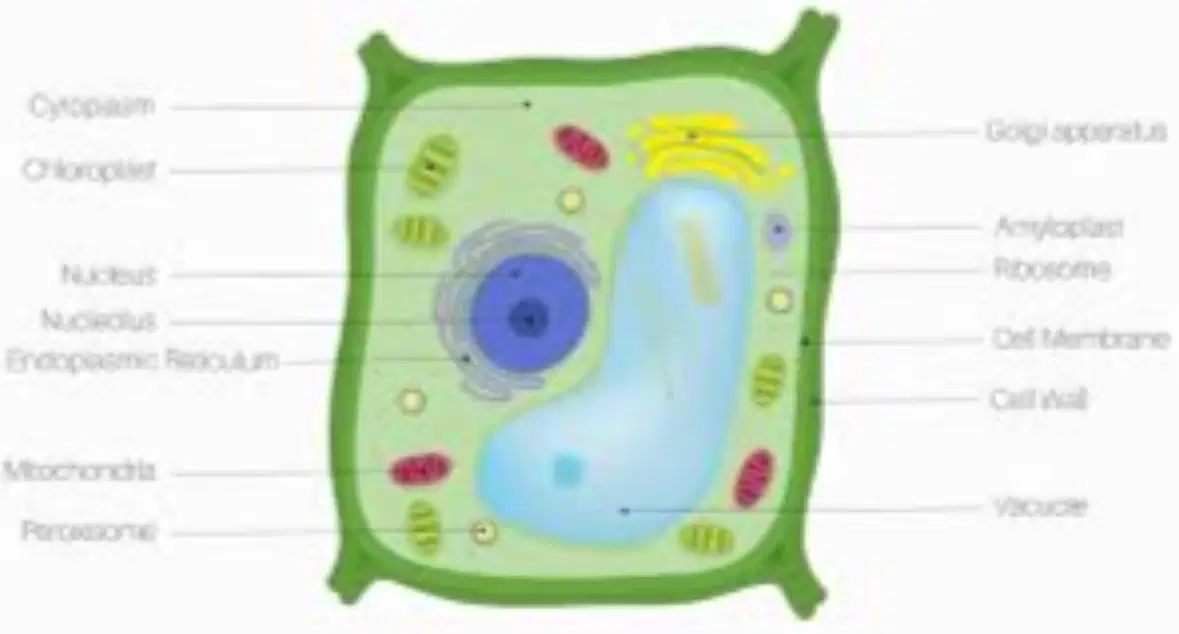
The cell shown here has a cell wall, chloroplasts and a vacuole. It must be a _____ cell.
animal
bacteria
plant
virus
The nucleus is responsible for...
making proteins.
packaging and sorting materials.
controlling most of the cellular functions and containing the genetic material.
breaking down sugars for the cell.
The mitochondria is responsible for...
making proteins.
packaging and sorting materials.
controlling most of the cellular functions and containing the genetic material.
breaking down sugars for the cell.
G = green, g = yellow
The genotype for a yellow plant is...
GG
gg
Gg
all of the choices result in yellow
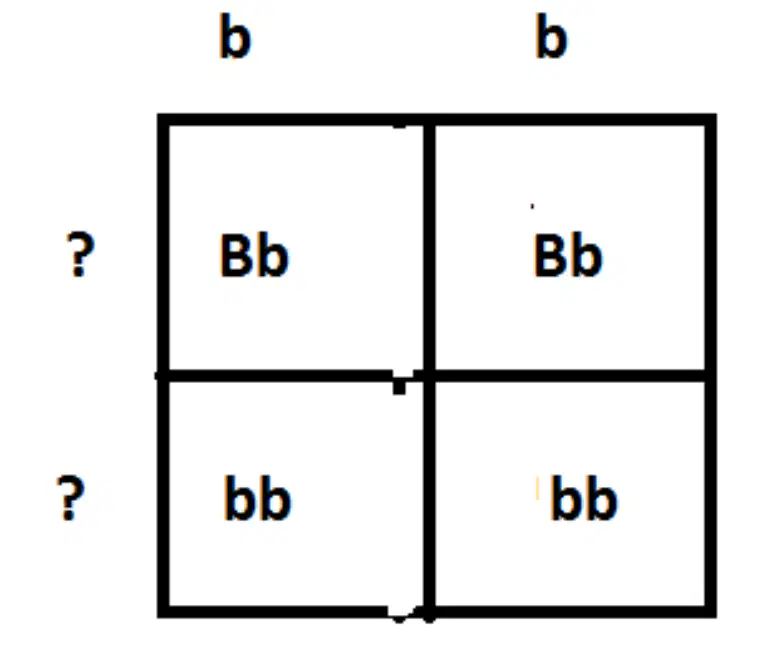
B = brown fur b = white fur
In the Punnett square, what is the probability for white fur?
0%
25%
50%
75%
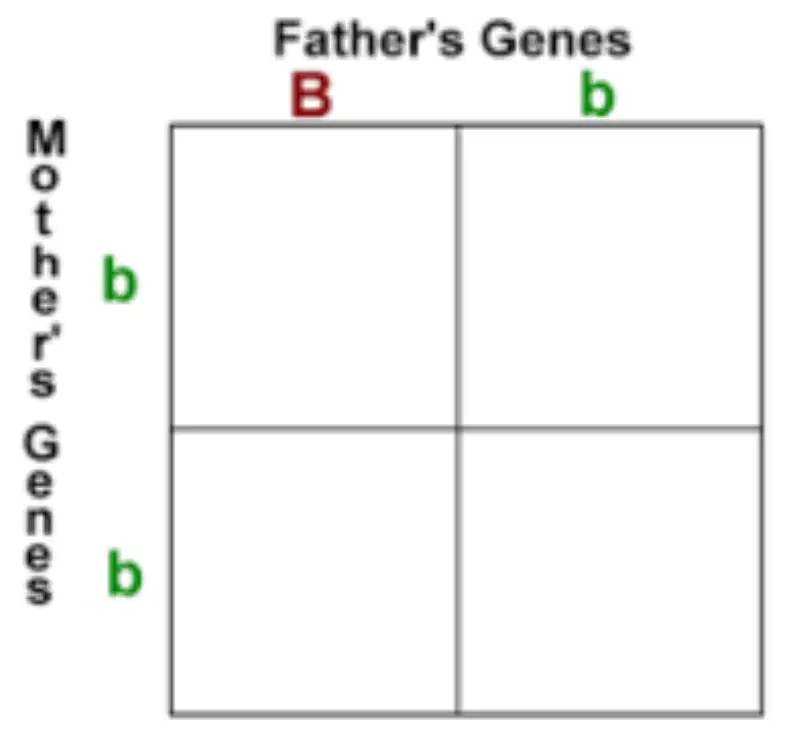
Brown eyes are dominant (D) over blue eyes (d). What is the probability that the offspring will have brown eyes in this cross? Complete the Punnett square for help
25%
50%
75%
100%
In plants, tall (T) is dominant to short (t). Perform the following cross: a homozygous dominate plant with heterozygous plant. What is the probability of producing a short plant? Complete a Punnett square for help.
0%
25%
75%
100%
Aa, DD, Ba, and yy are all examples of ...
genotypes
phenotypes
A heterozygous long-tusked elephant is crossed with a homozygous recessive short-tusked elephant. What is the probability of the offspring having short tusks? Complete a Punnett square for help.
0%
25%
50%
75%
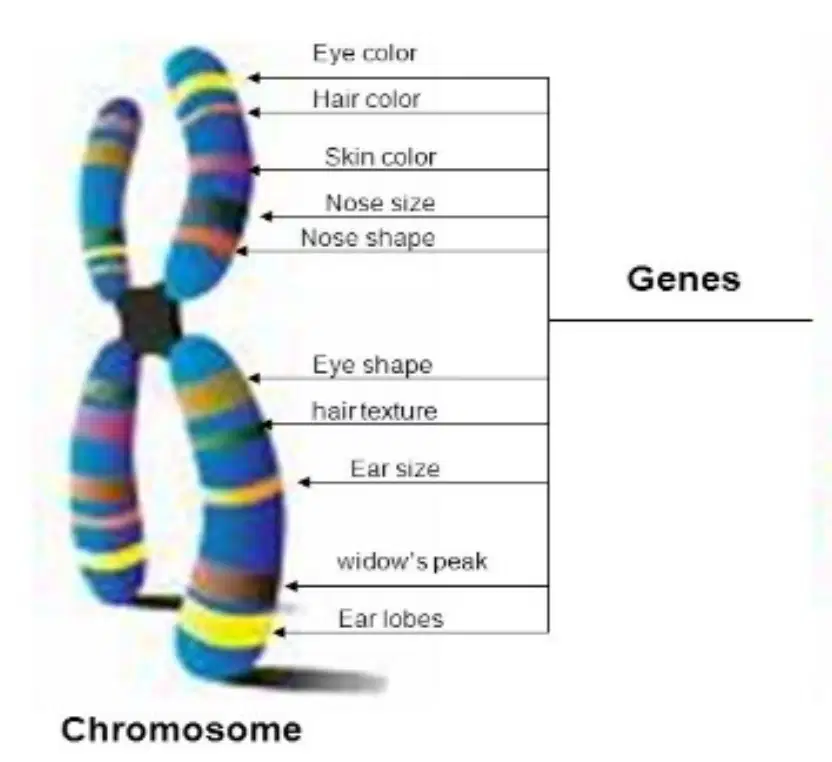
The traits of an organism are passed to its offspring on small coded strands of DNA material called
meiosis
genes
chromosomes
alleles
As you move down the periodic table atoms get bigger. This is because ____________.
The atoms have more mass.
The atoms have more protons.
The atoms have more energy levels.
The atoms have more neutrons.
As you move across the periodic table atoms tend to get smaller because, ______________.
the atoms have more mass.
the atoms have less mass.
the atoms have more protons.
the atoms have less electrons.
The more protons there are, the ____ .
weaker the pull
stronger the pull
smaller the electrons
bigger the electrons
When you move a from left to right cross the periodic table, the atomic radius ____. When you move down the table, the atomic radius ____.
Decreases, Increases
Increases, Increases
Increases, Decreases
Decreases, Decreases
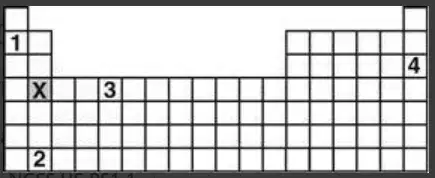
Based on their locations in the periodic table, which element has chemical properties most similar to those of element X?
1
2
3
4
Which level of organization is listed correctly from simple to complex?
organelle, organ, organ system, tissue, cell
organism, organ system, organ, tissue, cell
cell, tissue, organ, organ system, organism
cell, tissue, organ system, organ, organelle
The process by which an organism's internal environment is kept stable in spite of changes in the external environment is called ____.
growth
osmosis
balance
homeostasis

