wayground logo

Free Printable Worksheets

Font size

S
M
L
XL
Worksheets

Periodic Table

Total questions: 55

Worksheet time: 3600secs

Name
Class
Date
1.
Which of the following is an Alkaline Earth Metal? 
a)
Calcium
b)
Lithium
c)
Phosphorus
d)
Copper 
2.
Which of the following is an Alkali Metal? 
a)
Magnesium
b)
Chromium
c)
Sodium
d)
Fluorine 
3.
Which of the following is a transition metal? 
a)
Iron
b)
Oxygen
c)
Neon
d)
Barium
4.
Which of the following is a Halogen? 
a)
Bromine
b)
Rubidium
c)
Argon
d)
Beryllium
5.
Which of the following is a Noble Gas? 
a)
Krypton
b)
Chlorine
c)
Radium
d)
Gallium
6.
Which of the following is the most reactive group of metals? 
a)
Alkali
b)
Alkaline Earth
c)
Halogen
d)
Transition Metals
7.
Which of the following is the most reactive group of non-metals? 
a)
Alkali
b)
Alkali Earth
c)
Halogen
d)
Noble Gas
8.
Which of the following groups is inert? 
a)
Alkali
b)
Transition Metals
c)
Halogens
d)
Noble Gas
9.
How many valence electrons does an alkaline earth metal have? 
a)
1
b)
2
c)
7
d)
8
10.
How many valence electrons does a halogen have? 
a)
1
b)
2
c)
7
d)
8
11.

Which color on the image of the periodic table corresponds with the metalloids.

a)

bright yellow

b)

gold

c)

teal

d)

light blue

12.

Has 8 valence electrons and a stable electron configuration

a)

Alkali metals

b)

Alkaline Earth metals

c)

Halogens

d)

Noble gases

e)

Oxygen group

13.

Has a +2 charge

a)

Alkali metals

b)

Alkaline Earth metals

c)

Halogens

d)

Noble gases

e)

Oxygen group

14.

Has 6 valence electrons

a)

Alkali metals

b)

Alkaline Earth metals

c)

Halogens

d)

Noble gases

e)

Oxygen group

15.

This type of element is dull, brittle solids and gases, insulators, poor conductors of heat and electricity, as well as having low melting points.

a)

metals

b)

metalloids

c)

nonmetals

16.

The is family has properties of both metals and nonmetals.

a)

Alkali

b)

Halogens

c)

Nonmetals

d)

Metalloids

17.
Which of the following is the most reactive group of non-metals? 
a)
Alkali
b)
Alkali Earth
c)
Halogen
d)
Noble Gas
18.

The elements in this family are soft, silvery, and very reactive with water.

a)

Alkaline Earth Metals

b)

Alkali Metals

c)

Transition Metals

d)

Lanthanides

19.
What group on the Periodic Table contains the elements of the alkaline earth family?
a)
1
b)
2
c)
17
d)
18
20.
What group on the Periodic Table contains the elements of the alkaline earth family?
a)
1
b)
2
c)
17
d)
18
21.
Which group of elements occur only as compounds in nature because they are extremely reactive?
a)
1
b)
18
c)
11
d)
16
22.
Which element is a halogen?
a)
iron
b)
neon
c)
iodine
d)
nitrogen
23.

What are the three main groups of the periodic table?

a)

groups

b)

metal

c)

nonmetals

d)

metalloids

e)

periods

24.

What are the vertical columns on the periodic called?

a)

groups

b)

periods

c)

nonmetals

d)

metals

e)

metalloids

25.

What do the vertical columns on the periodic table tell us?

a)

The number of orbitals

b)

The number of valence electrons (electrons on the outer most shell)

26.

What are the horizontal rows on the periodic table called?

a)

periods

b)

groups

c)

metals

d)

nonmetals

e)

metalloids

27.

What is the name of the element? (Periodic table will be needed)

a)

sodium

b)

magnesium

c)

vanadium

28.

What group and period does this element belong in? *

a)

period 1 and group 3

b)

period 3 and group 1

c)

period 2 and group 3

d)

period 3 and group 2

29.

How many valence electrons does the element have?

a)

1

b)

2

c)

3

d)

4

30.

How many protons and electrons does nickel have?

a)

28

b)

58.69

31.

What is the atomic mass?

a)

58.693

b)

28

32.

Who discovered the nucleus?

a)

Rutherford

b)

Bohr

c)

Thomson

d)

Dalton

33.
The Modern Periodic Table of Elements is arranged by
a)
atomic mass
b)
atomic number
c)
valence electrons
d)
number of isotopes
34.
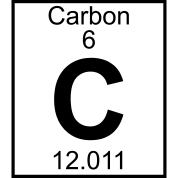
What does the 6 represent?
a)
atomic mass
b)
atomic number
c)
element name
d)
chemical symbol 
35.
These are found on the Periodic Table.
a)
Compounds
b)
Elements
c)
Mixtures
36.
Most of the mass of an atom is found it its _____.
a)
electron cloud
b)
nucleus
c)
atomic number
d)
empty space
37.

The periodic table is mostly comprised of what type of element?

a)

Metals

b)

Nonmetals

c)

Metalloids

38.

Which elements are to the LEFT of the zigzag?

a)

metals

b)

nonmetals

c)

metalloids

39.

Which elements are colored red?

a)

nonmetals

b)

metals

c)

metalloids

40.
All of these properties describe metals except...
a)
malleable
b)
conductors
c)
brittle 
d)
shiny
41.
How many protons are in this element?
a)
79
b)
196
c)
117
d)
Cannot be determined
42.
What does the C represent?
a)
atomic mass
b)
atomic number
c)
element name
d)
chemical symbol 
43.
The atomic number of this pictured element is
a)
28
b)
58.6934
c)
Ni
d)
Nickel
44.
What is the atomic mass of Neon?
a)
10
b)
30
c)
10.18
d)
20.18
45.

Which scientist created the Periodic Table and arranged elements in increasing atomic mass?

a)

Rutherford

b)

Thomson

c)

Mendeleev

d)

Moseley

46.

Elements in the same group or family have _____________.

a)

the same number of valence electrons and different properties.

b)

the same number of valence electrons and similar properties

c)

different number of valence electrons and similar properties.

d)

different number of valence electrons and different properties.

47.

Which class of elements are malleable, ductile, shiny when clean and polished, good conductors of heat and electricity, and reacts with acids to form hydrogen gas?

a)

metals

b)

nonmetals

c)

metalloids

d)

ions

48.

What is the name of the elements that are unreactive and have a full octet?

a)

Halogens

b)

Noble Gases

c)

Alkali Metals

d)

Transition Metals

49.
What is the symbol for Potassium?
a)
P
b)
K
c)
Pb
d)
Pd
50.
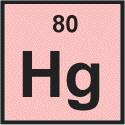
What is the name of this element?
a)
Helium
b)
Rubidium
c)
Hydrogen
d)
Mercury
51.
Which one of these is not a noble gas?
a)
Helium
b)
Radon
c)
Iodine
d)
Krypton
52.
What is the atomic number of Oxygen?
a)
6
b)
7
c)
8
d)
9
53.
Which one of these is the symbol for lead?
a)
Rb
b)
Pb
c)
Li
d)
Au
54.
What family is Sodium a part of?
a)
Transition Metals
b)
Halogens
c)
Alkali Metals
d)
Alkaline Earth Metals
55.
What family is Cadmium a part of?
a)
Noble Gases
b)
Metalloids
c)
Transition Metals
d)
Actinoids