
 Worksheets
Evolution Test
Total questions: 59
Worksheet time: 50mins
What dinosaurs still live among us today?
herbivores like Apatosaurus
carnivores like Tyrannosaurus rex
birds
reptiles
A human arm and a whale fin have similar bone structure but the whale fin is used for swimming and the arm is used for reaching and grabbing. What type of structures are these?
Homologous structures
Analogous structures
Vestigial structures
Fossil structures

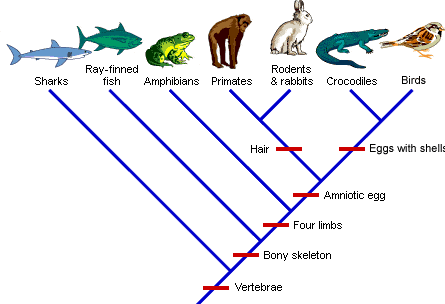
The similarities of bone structure in the diagram provide evidence of what?
The organisms probably use there forelimbs for the same thing.
The organisms evolved from a common ancestor.
The organisms have the same DNA.
All vertebrate species have identical forelimbs.

Who is the most closely related?
fist and bird
bird and lizard
rat and bird

Which rock layer contains the newest fossils?
F
E
B
C


Endosymbiotic Theory is the idea that ______ cells could have evolved from_____cells
prokaryotic, eukaryotic
eukaryotic, animal
prokaryotic, plant
eukaryotic, prokaryotic
Prokaryotic cells do not have
cell wall
nucleus
cytoplasm
ribosomes
How did one type of prokaryote get inside of another type of prokaryote
Acts as a ligand
One engulfed the other
Fused in as a vesicle
snuck in as a retrovirus
Symbiosis means
Feeding off of something
Using something for its ATP
Living in harmony
Producing sugars
Early bacteria that could make its own energy evolved into
Mitochondria
Chloroplast
ATP
ADP
Early bacteria that could perform photosynthesis evolved into
Mitochondria
Chloroplast
ATP
ADP
Eukaryotic cells can have
Only chloroplast
Only mitochondria
both mitochondria and chloroplast
neither chloroplast nor mitochondria
Evidence for endosymbiosis includes
Mitochondria and Chloroplast are the same color
Mitochondria and Chloroplast are the same size
Mitochondria and Chloroplast are the same structure
Mitochondria and Chloroplast have the same pH
Evidence for endosymbiosis includes
Mitochondria and chloroplast have their own Lysosomes
Mitochondria and chloroplast have their own vesicles
Mitochondria and chloroplast have their own RNA
Mitochondria and chloroplast have their own DNA
Mitochondria and Chloroplast are similar to prokaryotic cells like bacteria in what way?
They have the same lifespan
They divide the same way
They are the same color
They have the same shape
Mitochondria and Chloroplast are similar to prokaryotic cells like bacteria in what way?
Their DNAs are copies of each other
Their DNAs both have uracil
Their DNAs are circular
Their DNAs both have short lifespans
Which of the following is one of the 3 domains?
Animals
Bacteria
Prokaryote
Fungi
Which domain has organisms that live in harsh environments?
Bacteria
Archaea
Both
Where can you find DNA (genetic material) inside a prokaryote?
Nucleus
Free Floating
Mitochondria
Endoplasmic Reticulum
Are archaea prokaryotes or eukaryotes?
Prokaryotes
Eukaryotes
Fossils or organisms that demonstrate traits between an ancestral group and its descendants
Intrusive species
Transitional species
Index fossil
Trace fossil
Which evidence show patterns of change in organisms from early life to modern life?
homologous structures
transitional fossils
vestigial structures
proteins

Which species' DNA is most similar to the DNA of the toothed whale?
Mutations are important because they produce:
death of the organism in which they develop.
new traits that help natural selection occur.
benefits for the individual, not for the population.
Hardey-Weinberg equilibrium within a population.

Fossils form when dead organisms are:
completely decomposed
rapidly buried under sediments
eaten by scavengers
reincarnated
When organisms are better adapted to their environment they will survive and reproduce more successfully than organisms less adapted. This process is called what?
Selective breeding
Natural Selection
Cloning
Evolution of all species
The whale shares a common ancestor with a:
Sturgeon fish
Pot belly pig
Hippopottamus
Camel
Define pentadactyl.
Five digits
Four digits
Both 1 and 2
Two digits
Cichlid fishes in lakes of the East African Rift. The lakes in this area are believed to support and sustain about 2,000 different species of these fish, each with different ecological and morphological characteristics such as body size. These lakes form a fragmented landscape that bio-geographically isolates the different species of cichlid fish from one another, allowing them, and many of the organisms they live with, to evolve separately.
Phyletic Speciation
Adaptive Radiation
Convergent Evoltion
Divergent Evoltuion
Co-evolution
Process in which organisms diversify rapidly into a multitude of new forms, particularly when a change in the environment makes new resources available, creates new challenges, or opens new environmental niches
Adaptive Radiation
Geographical Isolation
Diversification through domination
Recessive Isolation
Scientists are studying a particular protein found in blood cells. Based on this, which animals are most closely related?
Dog: ARG - LYS - HIS - TYR
Rabbit: ARG - LYS - TYR - TYR
Elk: ARG - PRO - TYR - ARG
Dog & Rabbit
Rabbit & Elk
Dog & Elk
What are tusks?
Long teeth that help elephants dig and fight
Long teeth that help elephants eat other animals
Long teeth that don't help elephants at all
What is tusklessness?
When an elephant has its tusks taken away
When an elephant is born without tusks
When an elephant has tusks
When an elephant dies
What does survival of the fittest mean?
Animals with the most muscle live
Animals that live in groups live
Animals that are fit for their environment are more likely to survive and reproduce
Animals that workout are more likely to survive and reproduce
Why did the percentage of elephants that were tuskless increase over time?
More elephants decided to be tuskless
The tuskless elephants were able to reproduce and pass the trait down
More elephants had their tusks fall off
The tuskless elephants all died
Why is being tuskless an advantage?
Elephants don't need their tusks so it doesn't matter
There is no advantage to being tuskless
Elephants don't have to worry about brushing their teeth
Elephants won't be targeted by human poachers because they don't have ivory (tusks)
Why is being tuskless a disadvantage?
Elephants don't need their tusks so there is no disadvantage
Elephants won't be able to protect themselves without them
Elephants won't look cool without tusks
Elephants have to clean their tusks
Why did the percentage of elephants that were tuskless increase over time during the civil war in Uganda?
More elephants decided to remove their own tusks
The tuskless elephants were able to reproduce and pass the trait down
More elephants had their tusks fall off as they aged
The tuskless elephants all died at this time
Where else have high levels of tusklessness been observed?
Gorilla habitats
Bird sanctuaries
Lion populations
Other heavily poached areas
What is the BEST explanation for why males are not born without tusks?
Tusks are necessary for battling with other males in African Elephants.
The tuskless gene is a dominant gene located on the X-chromosome. The gene is lethal if an organism only gets one copy as males do.
The tuskless gene is only expressed in the presence of estrogen.
They have adapted to producing tusks even though they don't have the gene.
Evolution
Natural Selection
Extinction
Artifical Selection
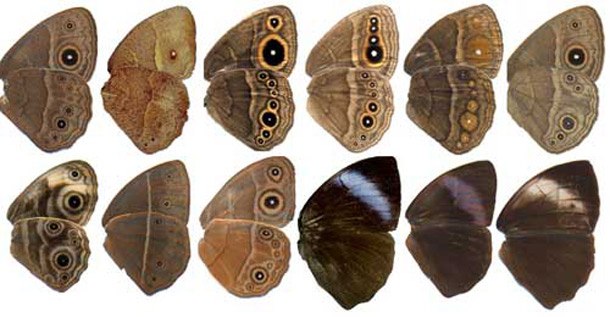
Natural Selection
Variation
Homeostasis
Extinction
Changes in genetic material are called _____________
Mutations
RNA
Genes

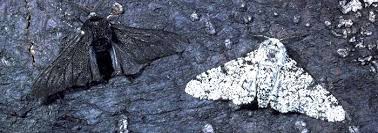
Birds are eating all the green beetles. Because the brown beetles are surviving they reproduce more and make more brown beetles. This is called ___________
Artificial Selection
The Theory on the Origin of Species
Natural Selection
Mutation

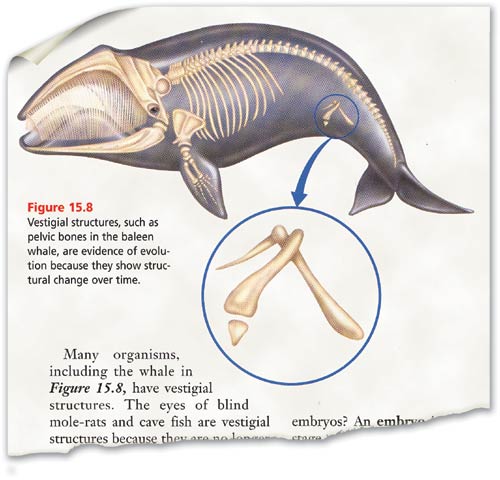
When we examine this whale fossil, we can see that the whale has a pelvic bone that doesn't seem to be used by the whale. What do scientists infer?
The whale had an ancestor with legs
The whale must use the pelvis for an unknown reason
The whale was born with an extra bone and has a disorder
The whale had an ancestor with wings
Which of the following is the correct way to summarize natural selection?
overproduction, competition, variations, fitness, survive and reproduce
overproduction, variations, competition, fitness, survive and reproduce
competition, fitness, survive and reproduce
variations, competition, fitness, survive and reproduce


