
 Worksheets
5. Benelux countries
Total questions: 68
Worksheet time: 59mins
"Benelux" is an
(a)
When was Benelux born?
1948
1945
1957
1942
Why was Benelux created?
to collaborate with close countries
for lack of raw materials after World War II
people and goods move freely from one country to the other
to make war to other countries
Choose the countries touched by the sea:
Belgium
Netherlands
Luxembourg
The land of Benelux is mostly made of
plains
mountains
Mountains are
along the coast
in the south-east of Belgium and in Luxembourg
in the north-west of the Netherlands
in the central part of Belgium
What is the highest mountain?
(a)
How high is the highest mountain?
323 metres
694 metres
786 metres
The most important rivers are:
Rhine
Scheldt
Thames
Meuse
Elbe
The Rhine ends in a ... (type of mouth)
(a)
What sea is there near the Benelux countries?
(a)
What important archipelago is there in the Netherlands?
(a)
The artificial lake in the north of the Netherlands is:
(a)
The main towns of the Netherlands are:
Amsterdam
Rotterdam
The Hague
Maastricht
Antwerp
The main towns of Belgium are:
Brussels
Bruges
Liège
Antwerp
Maastricht
The capital city of the Netherlands:
(a)
The Netherlands also include the (a) Netherlands (ex-colonies).
The population of the Netherlands is:
18 million people
12 million people
675 thousand people
In the Netherlands they speak:
Dutch and Frisian
Dutch and French
French and German
Dutch and Luxembourgish
The highest point of the Netherlands is:
Signal de Botrange
Ardennes mountains
Vaalserberg
The name “Netherlands” means "low lands": ... of the land is below the
sea level.
one third
two thirds
a half

In the Netherlands they grow a lot of:
(a)
In the Netherlands, there are more than 1,000 ...
windmills
canals
houseboats
tulips
Belgium is a ... country.
(a)
The capital city of Belgium:
(a)
The "capital" of the EU is
(a)
The population of Belgium is
18 million people
12 million people
675 thousand people
Choose the regions of Belgium:
Flanders
Wallonia
Brussels-Capital
Frisland
Holland
In Belgium they speak:
French and Dutch
German and French
Dutch, German and French
Frisian, French and Dutch
Choose the three main natural regions of Belgium:
coastal plains
central plateau
Ardennes mountains
central plain
Alps
Luxembourg is a ... country: it is the ... in Europe for size.
7th
big
small
2nd
The official name of Luxembourg is
(a)
The capital city of Luxembourg:
(a)
There is only one legislative house in the Parliament of Luxembourg.
True
False
In Luxembourg people speak:
French, German and Luxembourgish
Luxembourgish, Dutch and French
French, Frisian and Luxembourgish
German, Luxembourgish and Dutch
The population of Luxembourg is:
675 thousand people
12 million people
18 million people
In Luxembourg, most people are
bilingual
trilingual
polyglot
Luxembourg is a very poor country.
True
False
Luxembourg is rich in history: there are over 70 ... in this country!
castles
windmills
polders
museums
There is a constitutional monarchy in
Belgium
the Netherlands
Luxembourg
The population density of the Benelux countries is
(a)
The members of the EU are
Belgium
the Netherlands
Luxembourg
The currency of the Benelux countries is
(a)
Colour the flag of Luxembourg:

Colour the flag of the Netherlands:
Colour the flag of Belgium:

There is an Atlantic climate
along the coast of the Netherlands and Belgium
in the Ardenne region
in the inland of Belgium and the Netherlands
in Luxembourg
There is a Continental climate
along the coast of the Netherlands and Belgium
in the Ardenne region
in the inland of Belgium and the Netherlands
in Luxembourg
The economy of the Benelux countries is based on the
primary sector
secondary sector
tertiary sector
The Benelux countries' economy is very rich.
True
False
Choose the most important crops of the Benelux countries:
cereals, tulips, potatoes, sugar beet, fruit and vegetables, vineyards
cereals, roses, tomatoes, sugar cane, fruit and vegetables, vineyards
corn, tulips, potatoes, sugar cane, fruit and vegetables, barley
cereals, poppies, potatoes, sugar beet, tomatoes, cattle
Choose the most important industries of the Benelux countries:
food, chemical and metallurgical, mechanic, electronics, textile, diamond industry
fishing, pharmaceutical, mechanic, technology, textile, gold industry
food, car, aerospace, electronics, textile industry
fishing, cosmetics, technology, textile, bank and finance
Transports (ports, watercourses, airports, railways) are underdeveloped (= sottosviluppati) in the economy of the Benelux countries.
True
False
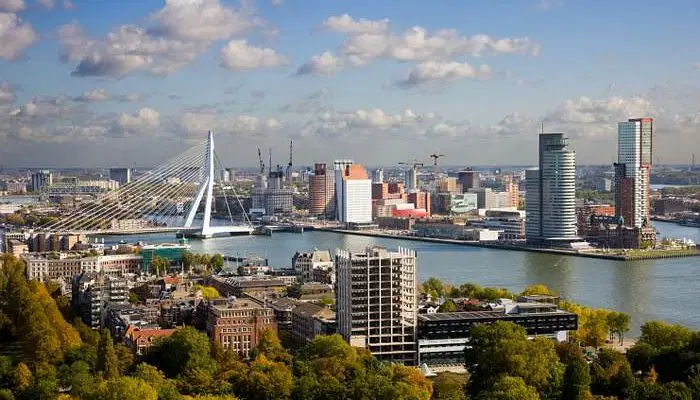
The largest and most modern port in Europe is
(a)
Bank and finance are very important in:
Belgium
Luxembourg
Netherlands

They were first brought from Turkey in the 1630s. They have their own celebration: the 3rd Saturday of January:
(a)
They are dams: they are used to reclaim land from the sea and create polders.
(a)
It is a fertile land that used to be seabed, but has been artificially dried thanks to dams and pumps.
(a)

They are waterways. They are used to drain wet land, for travelling and irrigation.
(a)

They are used to generate wind-energy to pump water.
(a)

Many people live in them on canals: they are flat-bottomed boats.
(a)
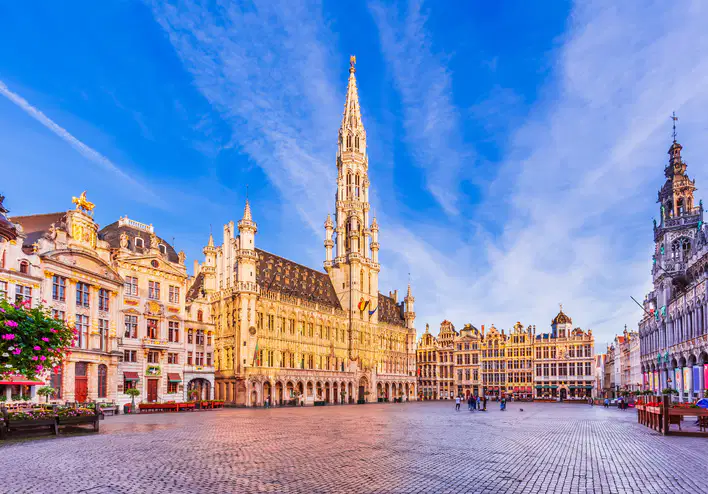
It is a large square in the centre of Brussels which dates from medieval times.
(a)

They became important in the 16th century thanks to artisans who moved from Antwerp when Spain took over the town.
(a)

It is the administrative capital: the Dutch royal family lives here!
(a)
It is the finest and most famous product from this country: every year, it is tasted by people from all over the world!
(a)
It was a very big problem, but in 2020 it was solved by making public transports free!
(a)

Farmers and fishermen started using them in the 13th century to protect their feet against sharp objects and to give stability on uneven ground. Then, they became part of the traditional clothes!
(a)

It is known as the “Venice of the north” and it is famous for its lace production, which started in the 16th century.
(a)

