
Font size
 Worksheets
Chemistry Review
Total questions: 45
Worksheet time: 47mins
Which of the following is a reactant in the following equation?
O2 + C6H12O6 > CO2 + H2O
CO2
H2O
O2
Which of the following is a product in the following equation?
O2 + C6H12O6 > CO2 + H2O
CO2
C6H12O6
O2
4Ca(OH)2
2Al +____ HCl → 2AlCl3 + 3H2
Why is iron (II) carbonate insoluble?
Iron is always insoluble
Carbonate is insoluble and iron is not an exception
Carbonate is soluble, but iron is an exception
Transition metals are always insoluble
Why is NaNO3 soluble?
Nitrates are soluble
Group 1 ions are soluble
Nitrate ions are never soluble, but this is an exception
Group 1 ions are never soluble, but this is an exception
What best describes a substance that is insoluble?
A substance that does not dissolve in another substance.
A substance that dissolves in another substance.
Covalent bonding is between a
nonmetal and nonmetal
metal and nonmetal
metal and metal
It depends on the situation
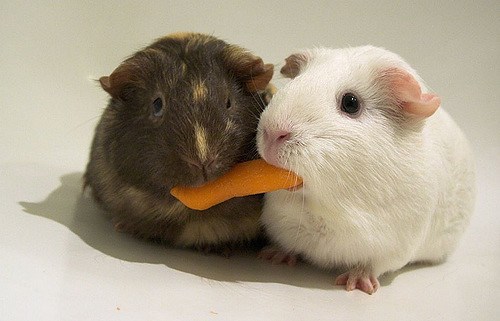
Which bond does this picture best represent?
Metallic bond
ionic bond
covalent bond
James Bond
What do positive ions tend to do?
lose electrons
gain electrons
lose protons
gain protons
What happens when magnesium loses 2 electrons?
It stabilizes to a net charge of 0
It turns into an atom
It becomes negatively charged
It becomes positively charged
Predict the bond between Mg and Cl
covalent
ionic
metallic
none of the above
What is the ionic formula for a bond between Calcium and Phosphorus?
Ca2P3
Ca3P2
Ca2P5
P5Ca2
What category of element usually forms a positive ion?
Metals
Nonmetals
metalloids
Noble gases
Which category of elements usually form negative ions?
metals
nonmetals
metalloids
noble gases
In a ___________change, a substance changes into a different substance.
Physical
Chemical
What are reactants?
The chemicals that start the reaction.
The chemicals that the reaction produced.
The chemicals that are on the right side of the arrow.
What are products?
The chemicals that start the reaction.
The chemicals that the reaction produced.
The chemicals that are on the left side of the arrow.
The metal ions in two compounds switch.
Synthesis
Combustion
Single Replacement
Double Replacement
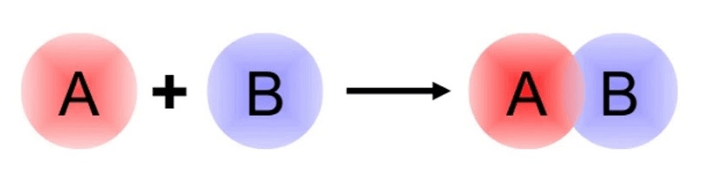
What is the type of reaction shown above?
Synthesis
Decomposition
Single Replacement
Double Replacement
Identify the reaction type:
C2H6 + O2 --> CO2 + H2O
Double replacement
Synthesis
Acid base
Combustion
Identify the reaction type for the following equation:
K + F2 --> KF
Double replacement
Single Replacement
Synthesis
Decomposition
Identify the reaction type:
NaCl + KOH --> KCl + NaOH
Double replacement
Combustion
Synthesis
Decomposition
Which of the following is an acid-base reaction?
2Na + Cl2 → 2NaCl
CH4 + 2O2 → CO2 + 2H2O
HCl + KOH → KCl + H2O
CaCO3 → CO2 + CaO
Which of the following general formulas represents a single-replacement reaction?
AB → A + B
A + B → AB
A + BC → AC + B
AB + CD → AD + CB

The Law of Conservation of Mass states that the total mass of the reactants should be
More than the mass of the products
Equal to the mass of the products
Ignored during the reaction
Less than the mass of the products

When balancing equations, the rule is that you can only add, change, and remove ____________
Coefficients
Mass
Subscripts
Elements

Balance this equation.
_CF4 + _Br2 -- _CBr4 + _F2
2,1,2,1
1,2,2,1
1,2,1,2
2,2,2,2
Metals have positive ions in a ‘sea of electrons’. Which metal atom provides the most electrons for the sea?
Aluminium
Sodium
Calcium
Magnesium

The diagram shows metallic bonding.
Which labels are correct?
X: atomic nucleus
Y: outer electron
X: metal atom
Y: mobile electron
X: metal cation
Y: mobile electron
X: positive ion
Y: negative ion
X is a solid at room temperature.
X has a high melting point.
Solid X conducts electricity.
Which diagram shows how the particles are arranged in solid X?


Why does the melting point of metals increase across period 3, from Sodium (Na) to Aluminium (AI)?
Size of atoms gets smaller
Attraction force between nuclei and free electron increases
Increased space between the valence electrons in the "sea"
Increased number of valence electrons contributed to the "sea"

