
 Worksheets
Quarterly Test Recap 3/14/24
Total questions: 180
Worksheet time: 2hrs 23mins
The _______ is on the outside of an atom.
Proton
Neutron
Electron
The atomic number for oxygen is ______.
6
8
16
An element is __________.
Large
1 kind of atom
a molecule
Is Iron (Fe) an atom or a molecule?
Atom
Molecule

What is the Coefficient?
4
3
1
0
How many elements are there: K2HPO4
(a)
How many atoms are there: C6H12O6
3
6
12
24
Determine the number of Hydrogen (H) atoms are in the following chemical formula: 3H2O
4
3
2
6

How many Phosphorous atoms are in the molecule?
2
4
1
8

How many Oxygen atoms are in the compound?
8
4
16
6

How many elements are in C6H12O6?
24
432
3
1
three hydrogen (H)
one sulfur (S)
four oxygen (O)
Which of the following is a molecule of a compound?
H2
Cl2
H2O
F2
What does the subscript in a chemical formula tell you?
How many molecules are present
How many atoms are present
How many elements are present
How many neutrons are present
A ______ is a number written in front of a chemical formula.
Coefficient
Subscript
Exponent
Coordinator


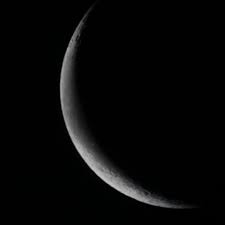
What causes day and night?
Earth's rotation
Earth's tilted axis
The moon
How long does it take for Earth to rotate once on its axis?
8 hours
24 hours
one week
one month
Which of the following causes seasons?
Earth's rotation
Earth's revolution around the sun
About how long does it take for Earth to revolve around the sun?
One day
One Week
One month
One year

What season would it be in the Northern Hemisphere?
Summer
Winter
Spring
Fall
What season would it be in the Southern Hemisphere?
Summer
Winter
Spring
Fall
What happens during the summer solstice?
Day and night are an equal length
It is the longest day of the year.
It is the longest night of the year.
When do the solstices happen?
March and September
June and July
June and December
January and February
What happens during the equinoxes?
It is the longest day of the year.
Day and night are about equal in length
It is the longest night of the year.
When do the equinoxes happen?
January and February
June and December
July and August
March and September
What causes Earth to have seasons?
What causes the moon to have phases?
Earth's Rotation and Revolving
Sun's Rotation and Revolving
Moon's Rotation and Revolving
All of the above
What happens during a Solar Eclipse?
Moon blocks the sun
Earth blocks the Sun
Happens during the day
Happens during the night
Happens during full moon.
What causes the tides on Earth?
What happens during a Solar Eclipse?
Moon blocks the sun
Earth blocks the Sun
Happens during the day
Happens during the night
Happens during full moon.
What causes the moon to have phases?
Earth's Rotation and Revolving
Sun's Rotation and Revolving
Moon's Rotation and Revolving
All of the above
What causes Earth to have seasons?
Which of the following is a renewable resource?
Oil
Solar
Coal
Natural Gas
Which of the following is considered the main energy source in our society?
Cual de las siguientes opciones es considereda la fuente primaria de energia en nuestra sociedad?
Fossil Fuels
Solar power
Wind Power
Hydroelectric plants
Which of the following is considered the main energy source in our society?
Cual de las siguientes opciones es considereda la fuente primaria de energia en nuestra sociedad?
Fossil Fuels
Solar power
Wind Power
Hydroelectric plants
Which of the following is a renewable resource?
Oil
Solar
Coal
Natural Gas

Natural Gas is a __________ energy resource.
Renewable
Non-renewable

Oil is a __________ energy resource.
Renewable
Non-renewable
Why are fossil fuels considered non-renewable resources if they are still forming beneath the surface today?
They are being formed as a type of methane which we cannot use.
They are being formed too far beneath the surface.
We are depleting the fossil fuels much faster than they can form.
One ADVANTAGE of using fossil fuels is that:
They are better for the environment.
They can produce extremely high amounts of energy.
They contribute to the greenhouse effect.
They will never run out.
What is one DISADVANTAGE of using fossil fuels?
Fossil fuels will never run out.
Fossil fuels are very efficient forms of energy and are readily available, making them cheaper.
Burning fossil fuels contributes to the greenhouse effect which causes global warming.
Fossil fuels are better for the environment.
What is one ADVANTAGE of using renewable resources?
They will never run out.
They are more expensive.
They are bad for the environment.
What is one DISADVANTAGE of using renewable resources?
They are not as efficient as burning fossil fuels.
They will eventually run out.
They are cheaper and better for the environment.
Is wind renewable or non-renewable?
Renewable
Non-renewable
Which of these is classified as a renewable resource?
Natural gas
Minerals
Plants
Crude oil
One example of a natural resource could be:
Sunlight is a _________ resource
Renewable
Nonrenewable
Sunlight is a _________ resource
Renewable
Nonrenewable
Select all the renewables.
Air
Natural Gas
Wind
Rocks and Minerals
Fish
Which of the following is a renewable resource?
solar power
coal
oil
natural gas
Which of the following is NOT a Natural Resource?
Trees
Oil
Wind
Electricity
All of the following are nonrenewable resources EXCEPT
Coal
Oil
Natural Gas
Wood
A farmer decides that he is going to produce his own energy on the farm by using a type of renewable energy. The renewable energy could come from--
setting up wind turbines
using natural gas
having a coal furnace
burning oil
Some factories that burn coal produce smoke with harmful chemicals, such as sulfur. Scrubbers are devices that are attached to the smokestacks to reduce the amount of sulfur put into the atmosphere. To evaluate the effectiveness of these devices, what data would need to be collected?
The average amount of sulfur in a certain amount of coal
The increase in the use of scrubbers by factories that burn coal
The amount of sulfur emitted (produced) by a smokestack before and after the scrubber is attached
The amount of coal a factory burns each year and how much sulfur it emits (produces)
What is the significance of energy to us humans?

What type of energy is coal gas?
Renewable gas
Non-renewable gas

What type of energy is hydroelectric dam?
Renewable energy
Non-renewable energy
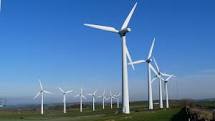

Mark all the organisms that are considered producers


Giraffes have long necks that help them reach leaves high up in trees. They get all the energy they need from plants such as this. What type of consumer are giraffes.
carnivore
omnivore
herbivore
decomposer
Mushrooms often grow around dead plants such as decomposing trees. They break down these dead organisms and put energy that stores in the plant back into the ground for other plants to use. What type of consumer are mushrooms?
carnivore
omnivore
herbivore
decomposer
What does the arrow in a food chain represent?
What is the difference between heterotroph and autotroph?
What is another word for a producer?
Animal
Heterotroph
Autotroph
Bug
Which of these is an autotroph?


What is another word for a consumer?
heterotoph
plant
producer
autotroph
Which of these is a heterotroph?


What's another word for trophic?
warm weather
biome
energy
joules
How much energy gets moved to the next trophic level?
100%
10%
90%
.1%

In the following food chain, how much energy would the snake get if the grass's trophic level started with 50,000 kcal?
5,000 kcal
500 kcal
50 kcal
5 kcal
Which of these terms are you still unsure about?
Autotroph/Heterotroph
Producer/Consumer
10% Rule
Energy pyramid
Herbivore / Omnivore / Carnivore

What do all the organisms have in common? How do you read a food chain?

Looking at this food chain, how is the energy flowing?
Starts with the snake and ends with the Mongoose
Starts with the leaf and ends with the snake
Starts with the Chameleon and ends with the leaf
Starts with the leaf and ends with the mongoose

How are the food chain different from the food web?

How many organisms get energy from the tomato plant?
1
2
3
4

How many organisms get energy from the rat?
1
2
3
4

How many organisms does the owl get energy from?
1
2
3
4

How many organisms does the lion get energy from?
1
2
3
4
Which of the following is the best definition for matter?
anything that has mass and volume
the amount of space a substance occupies
how much something weighs on earth
True or False:
Atoms are the basic building blocks of most of the matter around you.
true
false
Which of the following make up parts of an atom?
neutron
proton
electron
ultron
Which of the following parts of an atom are positively charged?
neutron
proton
electron
nucleus
Which of the following parts of an atom can absorb or release energy in the form of heat, light, etc?
Proton
Neutron
Electron
What measure does the Atomic Number show?
(a)
A charged atom is called a(n)...
electron.
ion.
proton.
acid.
Which of the following best describes atomic mass?
the total mass of protons, neutrons, and electrons in an atom
the code used to represent an element
matter that is made up of the same chemical compostition and cannot be separated into parts by physical means
True or False:
A chemical symbol is a code used to represent each element.
True
False
How comfortable to you feel in your understanding of atoms and elements after this lesson?
Very comfortable. I could pass the test today.
Pretty comfortable, but I could use some more practice.
Ok. I need some more study and practice.
Not good. I am completely lost with this topic.
Which is a mixture of substances?
Cl2(g)
H2O(l)
MgCl2(s)
KNO3(aq)
Which is true of a KCl solution?
It is composed of substances that are chemically combined.
It is composed of substances that are physically combined.
It is composed of substances with the same atomic number.
It is a pure substance.

Which are elements?
A
B
C & D
C
When NaNO3(s) is dissolved in water, the resulting solution is classified as a
heterogenous compound
homogeneous compound
heterogeneous mixture
homogeneous mixture
One similarity between all mixtures and compounds is that both
are heterogeneous
are homogeneous
combine in definite ratio
consist of two or more substances

What is the charge of a proton
+1
0
-1

What is the charge of a Neutron?
+1
-1
0

Where is the electron located?
The nucleus
The orbitals of the atom
Inside a neutron

What is the atomic number of Cu?
63.546
29
2
34

What is the Atomic Mass of Sodium?
11
22.989
23
12

What is the mass number of Neon?
20.180
20
10
How Many Protons does Calcium have?
(a)
How many Neutrons does Sodium have?
(a)
How many electrons does Lithium have?
(a)

What is the Identity of this element
(a)

How many Valance Electrons does the following element have?
(a)
The innermost 1st energy level has a maximum of how many electrons?
1
2
6
8
How many electrons can go in the Second energy level?
2
8
18
32
How would you draw a Lewis dot diagram for Magnesium?


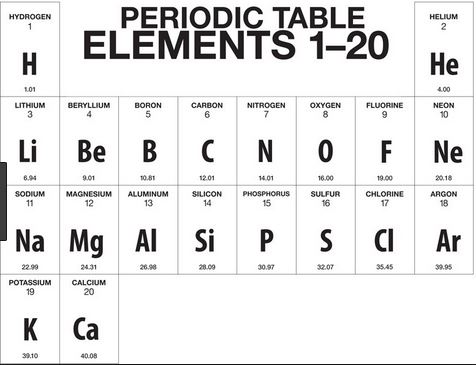
How many valence electrons does Aluminum Have?
1 Valence electron
2 Valence electron
3 Valence electron
4 Valence electron
5 Valence electron
Valence electrons are the...
Innermost electrons
Middle electrons
Outermost electrons
Any electrons


The Moon orbits Earth in a ________________ direction
clockwise
counterclockwise
upwards
downwards

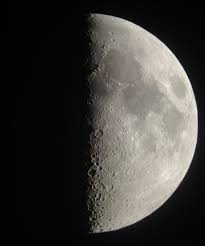
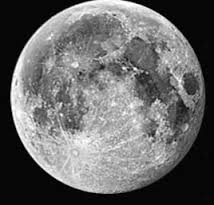
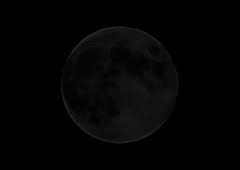
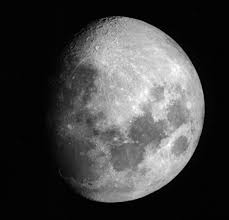
What is the name of the moon phase in the diagram?
New Moon
Full Moon

What is the name of the moon phase in the diagram?
1st Quarter Moon
3rd Quarter Moon

What is the name of the moon phase in the diagram?
New Moon
Full Moon
In order to have an eclipse, the Moon, Sun and Earth have to be?
Below each other
Above each other
In alignment


What appears blocked during a lunar eclipse?
moon
sun
During which moon phase does a lunar eclipse occur?
new moon
full moon
first quarter
third quarter
During which moon phase does a solar eclipse occur?
new moon
full moon
first quarter
third quarter
Which has the greatest effect on tides?
sun
moon

Which two sides are experiencing high tide in this picture?
A
B
C
D

What tide occurs at this image?
spring
neap
During which moon phases does a spring tide occur?
first quarter and third quarter
new moon and full moon
waxing gibbous and waning crescent
waning gibbous and waxing gibbous

What season is it in the northern hemisphere in picture A?
summer
winter
spring
fall

What season is it in the northern hemisphere in picture 2?
summer
winter
spring
fall

What do we call the darker part of the shadow?
Umbra
Penumbra
Thanos
Darth

___________ is the lighter part on the edges of the shadow.
Umbra
Penumbra
Opaque object
Screen

Light ________ pass through an opaque object.
Can
Will
Cannot
Must

The size of the shadow changes according to the ___________ between the object and the light source.
Distance
Brightness
Orientation
Screen

What happens during a SOLAR eclipse?

A _________ is the blocking of the Sun's light that occurs during a new moon when the moon's shadow falls on earth.
solar eclipse
lunar eclipse
umbra
penumbra

A solar eclipse only happens during the day.
True
False

The moon phase for a solar eclipse is a full moon.
True
False

For a solar eclipse to occur, the alignment must be ?
none of the above
Sun, moon, Earth
Earth, sun, moon
sun, Earth, moon

What type of eclipse is this an example of?
Lunar Eclipse
Solar Eclipse

The moon's orbit is tilted about _____ degrees relative to Earth's orbit around the sun.
5
23.5
27.3
29.5

A total solar eclipse is visible from
only within the moon's penumbra.
only within the moon's umbra.
only the dark side of Earth.
all over Earth.

What happens during a LUNAR eclipse?

What type of eclipse is this an example of?
Lunar Eclipse
Solar Eclipse
What happens during a LUNAR eclipse?
What happens during a SOLAR eclipse?

