
 Worksheets
Weekend workshop Combined Y11 & Y13 Revision Quiz
Total questions: 142
Worksheet time: 2hrs 55mins
_______________ resources are materials that come from nature.
Special
Natural
Human
Capital
The good or service that you give up when you make an economic choice is called _____________________.
opportunity cost
economic choice
economic interdependence
economic specialization
Two or more people depending on each other for goods and services is called __________________________.
economic specialization
scarcity
economic choices
economic interdependence
Being an expert in one job, product, or service is called ___________________.
economic interdependence
economic specialization
opportunity cost
scarcity

What do economists mean by the term "scarcity"?
Having too few or too little of resources
Having too many resources
Having just enough resources
Having the correct amount of resources

Which choice best describes the economic problem of scarcity in the world?
People have limited wants there is an unlimited amount of resources.
People have unlimited wants but there is a limited amount of resources
People have no wants so resources don't matter

Which type of economy allows the government to determine what to produce, how to produce it, and who gets it?
Command Economy
Market Economy
Traditional Economy

Which two countries would likely trade with each other?
Two countries that are located far away from each other
Two countries that both have the same population.
Two countries who people both speak the same language.
Two countries that each specialize in producing different goods.
The buildings, machines, and tools that companies use to make products
capital resources
human resources
natural resources
entrepreneurs
Increasing the money supply too quickly > currency loses value > prices increase
What is a free market economy?
An economy based on supply and demand with little or no government control
The international exchange of goods
An economy in which decisions are made by the government
An economy that is communist
What type of economy does the United States have?
traditional
mixed
command
market
What is Gross Domestic Product?
Goods, services, and intermediate products bought by people in other countries.
the total value of goods produced and services provided in a country during one year
The amount of output the average worker can produce in an hour.

Price elasticity of demand measures:
the responsiveness of the quantity demanded of a good to a change in income
the responsiveness of the quantity demanded of a good to a change in consumers’ preferences
the responsiveness of the quantity demanded of a good to a one per cent change in price
the reduction in the quantity demanded of a good when the price is reduced
the responsiveness of the quantity demanded of a good to a change in the price of other goods
Using the midpoint formula, what would be the price elasticity of demand for a basketball if the number of basketballs fell from 7000 to 4000 per week after its price increased from $60 to $150?
0.254
1.250
0.801
0.636
2.540
Suppose the price of a bus ticket rises from $2.75 to $3 and the number of tickets sold falls from 10 000 to 8500. The price elasticity of demand is:
elastic
unitary elastic
perfectly elastic
inelastic
perfectly inelastic
Suppose that the price of a bus ticket rises from $2.75 to $3.75 and the number of tickets sold falls from 9000 to 7800. The price elasticity of demand, in absolute term, is
0.464
1.000
–0.527
–1.000
zero
The price elasticity of demand for a vertical demand curve is:
perfectly elastic
perfectly inelastic
unitary elastic
elastic
inelastic
If demand is ELASTIC,
it reacts a lot to price changes
it doesn't react to price changes
price change leads to an equal change in demand
Unitary Elastic Demand
demand reacts a lot to price changes
change in price leads to an equal change in demand
demand doesn't react to price changes
Select a Unitary Elastic product
bread
electricity bill
make up
Which of the following is an example of inelastic demand?
Jason wants the most expensive cellphone. He decides to get a cheaper model.
Priya wants to go to the season-opening game. Tickets to another game cost less, but she still buys tickets for the opener.
Tianna wants to try out a new, expensive restaurant. She goes to another restaurant whose food is excellent and costs less.
Shawn wants to buy a house in one neighborhood. But after searching, he decides to buy a house elsewhere instead.
How does elasticity affect potential revenue for a firm?
If demand for a good is inelastic, lowering the price could raise revenue.
If demand for a good is inelastic, raising the price could reduce revenue.
If demand for a good is elastic, raising the price must increase revenue.
If demand for a good is elastic, raising the price could reduce revenue.
Which of the following describes the relative elasticity in demand for toothpaste?
Demand is inelastic because it is a luxury item
Demand is elastic because there are no substitutes
Demand is inelastic because it makes up a large share of most people’s budget
Demand is inelastic because it is a low-cost necessity
A family consumes more goods and services by specializing in the production of only one good
Principle 3: Rational people think at the margin
Principle 5: Trade can make everyone better off
Principle 1: People face tradeoffs
Principle 9: Prices rise when the government prints too much money
A t-shirt that Katie really wants is on sale for 10% off. She wouldn't have bought it at its original price, but now that it is 10% off she buys it.
Principle 1: People face tradeoffs
Principles 9: Prices rise when the government prints too much money
Principle 3: Rational people think at the margin
Principle 4: People respond to incentives
The United States is more productive than Australia, which means that the United States is a wealthier country.
Principle 1: People face tradeoffs
Principle 7: Governments can sometimes improve market outcomes
Principle 8: A country's standard of living depends on its ability to produce goods and services
Principle 9: Prices rise when the government prints too much money
The Scottish government decides to print more money, and the price of milk rices from $1 a gallon to $4 a gallon
Principle 5: Trade can make everyone better off
Principle 2: The cost of something is what you give up to get it
Principle 4: People respond to incentives
Principle 9: Prices rise when the government prints too much money
The government prints more money to stimulate the economy and create more jobs, but the price of milk increases from $1 to $4.
Principle 9: Prices rise when the government prints too much money
Principle 5: Trade can make everyone better off
Principle 10: Society faces a short run tradeoff between inflation and unemployment
Principle 3: Rational people think at the margin
What do you call to the payment for the use of land?
rent
spending
income
capital
It refers to the lowest wage permitted by law below which if paid by employer will subject him to penalty from the government.
minimum wage
maximum salary
maximum wage
minimum salary
It is the rate of conversion of the Philippine peso to a foreign currency such as the US dollar.
foreign dollar exchange rate
foreign exchange rate
domestic peso exchange rate
domestic exchange rate
1.How many approaches in calculating national income?
4
3
2
1
In a circular flow of income in a closed economy with government intervention, leakage consists of _________________.
Investment and savings
Savings only
Savings and taxes
Savings, taxes and imports
Disposable income can be written as ___.
C = S + I
Y = C + I
Y = C + I + G
Y - T
In the circular flow of income, government spending and exports are ___.
injections and leakages, respectively.
leakage and injections, respectively.
components of aggregate supply
injections
In order to help the economy grow, the government can
increase spending
decrease spending
lower taxes
raise taxes
The action by the Bank Negara to adjust the size of the money supply, and to adjust interest rates in order to keep prices down and employment high refers to
fiscal policy
monetary policy
How does the federal government borrow money?
asks members of congress to fork over some of their salaries
raises taxes
sells treasury bonds
asks people on welfare for food stamps
Who among the following would be considered as unemployed?
A graduating student of legal age to work
An entrepreneur in the process of starting a new business
A secretary who has resigned from work & looking at job ads
A housewife running 2 internet shops at the same time
Over-production in developed countries may be released into the markets of developing nations, which undercuts domestic prices and domestic producers may be forced to leave the market. This is called....
Dumping
Quota
Tariffs
Embargo
The Consumer Price Index (CPI) can be defined as
The market value of all final goods and services
A measure of inflation based on the cost of a fixed “market basket”
All of these are functions of money EXCEPT
Medium of exchange
Store of value
Commodity money
unit of measurement

The percentage of a deposit that a bank must hold on to is called the ______.
Reserve Requirement
Credit
Macroeconomics approaches the study of economics from the viewpoints of
individual firms
individual consumers
government units
the entire economy
The three major macroeconomic goals do not include
full employment
price level stability
sustained economic growth
high levels of environmental quality
Economic growth would most likely be stimulated by
higher unemployment rates
faster rates of technological progress
increases in membership of labour unions
consumption of more consumer goods
____ means total of real production of final goods and services available in the country.
Aggregate demand
Aggregate supply
Inflation
Aggregate output
Which of the following is related to macroeconomics?
An empirical analysis of general price levels and unemployment rates since 1999.
A study of how hiring more foreign workers affect the construction sector.
An investigation of petrol price increases and the impact on Malaysians.
An examination of the income of IT graduates.
Equilibrium in macroeconomics refers to ___.
total value of output being produced more than total value of expenditure.
aggregate supply being greater than aggregate demand
aggregate demand being greater than aggregate supply
aggregate demand being equal to aggregate supply
The ____ slopes upwards because higher price levels will raise domestic output.
aggregate demand curve
aggregate supply curve
demand curve
none of the above
Which of the following is the most appropriate fiscal policy for recession?
Decreases in government spending
Increases in interest rate
Decreases in tax rate
Increases in tax rate
The effect of expansionary monetary policy is a /n___.
increase in interest rate
decrease in interest rate
increase in government spending
decrease in government spending
In expansionary monetary policy, government will ___.
Sell securities, higher legal cash reserves requirement and increase bank rate
Decrease government expenditure, increase taxes.
Increase government expenditure, decrease taxes
Purchase securities, lower legal cash reserves requirement, decrease bank rate
Which of the following is a macroeconomic statement?
The gross profit of all Malaysian Business were RM 10 billion last year.
The price of beef declined by 1% last year
General motors' profits increased in the year 2003
The productivity of steel works increased by 1% in the year 2003
three-country trade agreement negotiated by the governments of Canada, Mexico, and the United States
The UN
NAFTA
NATO
IMF
The growing interdependence of the world’s economies, cultures, and populations, brought about by cross-border trade in goods and services, technology, and flows of investment, people, and information is the...
Multiculturalism
International Trade
Globalization
Ecommerce
Which of the following scenarios show frictional unemployment?
John got laid-off from work since the company is not making enough money.
Jeff cannot find work since most blue collar jobs are already filled.
Ramon quit his jobs to move to Canada for a better job offer.
Alberto works as a call center agent after graduating nursing
It is the total market value of all the final goods and services in a given period of time by the country's citizens.
Gross National Product
Gross Domestic Product
Consumer Price Index
Market Basket of Goods

Solve the GDP using the Expenditure method.
420 M
423 M
425 M
427 M

What is the nominal GNP growth rate from 2016-2017?
12.20%
9.37%
14.49%
5.37%
Which type of unemployment is caused by employee skills that are obsolete and no longer needed?
structural
seasonal
frictional
cyclical
What type of unemployment is caused by contractions in the business cycle?
structural
seasonal
cyclical
frictional

Point A on the graph is:
trough
period of contraction
peak
recovery

Point D on the graph is a period of:
contraction
expansion
recession
decline
The Phillips curve shows the relationship between inflation and what?
Unemployment
GDP
Price level
The proportion of any change in income that is spent rather than saved is
the multiplier
income determinants
marginal propensity to consume
macroeconomic equilibrium
An economy is in macroeconomic equilibrium. If Y = 200, C =100, I =30, G=40 and M =30, what is the value of exports?
60
40
90
80
Which of the following is an macroeconomics statement?
The price of iPad increase about 8.5%.
The inflation rate of Malaysia is 3.1% in 2019.
FELDA profit increases every year
The price of chicken increasing during Chinese New Year
High levels of GDP per capita indicates
higher levels of happiness
higher standard of living
equal levels of wealth
self-sufficient communities
Which of the following is not a part of current account?
Export of goods
Imports of services
Grants and gifts
FDI
The sale of a Mercedes-Benz from Germany to France would be recorded as a merchandise export in the ________ account of Germany's balance of payments.
Capital
Current
Official reserves
Export
The smallest fraction of bank deposits a bank is required by the central bank to hold
reserve ratio
capital requirement
deposit assurance
mortgage insurance
"The economy must operates at maximum capacity" refers to _________.
full employment
price stability
economic growth
equitable distribution of income
What are possible NEGATIVE EFFECTS society may face due to unemployment?
Social problems : population lose sources of income, ends up become thefts and distrupts social peace
Lower standards of living : products consume by population may be less than what is during full employment
Relationship problems ; Couples lose feelings to each other due to physical appearance
Natural disasters ; flood occurs, earthquakes
Name the index used to measure the rate of inflation (without 'the' and comma)
(a)
Which of the following situation refers to HYPERINFLATION?
Price increases in a controlled way and is less than 10% per annum whereas it's not a serious economic problem
Prices increases at a very high rate (1000% per ammum) and paper money almost becomes worthless
The spending power and value of money decreases continuously & it is not caused by the rise in prices but demand blockade & government involvement
How much is MPS in an economy when MPC is .8?
.2
3
1.6
.8

The federal government decreases spending by $44 billion dollars. This would cause a shift from
AD 1 to AD 2
AD 1 to AD 3
AD 2 to AD 3
What would be the effect of an increase in imports?
Increase AD
Decrease AD
When income is $200 consumption is $140, and when income is $250 consumption is $180. The marginal propensity to save is
0.80
0.75
0.25
0.20
The idea of government intervention to help in a financial crisis was proposed by which economist?
Keynes
Maslow
Friedman
Adam Smith
If the Fed sells government securites, this ____________ the money supply.
increases/expands
decreases/contracts
does not affect
is in spite of
An example of a regressive tax is:
Income tax
property tax
sales tax
licensing fees
When foreign interest rate higher than domestic interest rate, what is the consequences?
Domestic residents will buy foreign assets.
Foreign residents will buy domestic assets.
Domestic residents will buy domestic assets.
Foreign residents will buy assets.
Increase in interest rate will causes:
Capital outflows
Increase in exchange rate
Capital inflows
Increase in export
In fixed exchange rate, when Ringgit currency is overvalued, central bank will be:
sell foreign exchange by using foreign reserve asset in foreign
buy foreign exchange by using foreign reserve asset in Malaysia
buy foreign exchange by increasing the money supply
sell foreign exchange by using foreign reserve asset in Malaysia
Under the North American Free Trade Agreement (NAFTA), the last restrictions on U.S.–Mexican agricultural trade were removed in 2008. Between 2007 and 2008, the value of agricultural exports to Mexico increased by 23%, and the value of imports from Mexico increased by 26% for the main commodities that had been subject to those restrictions.
What is the effect of a tariff on Producer Surplus?
Increases
Decreases
Unchanged
Disappears
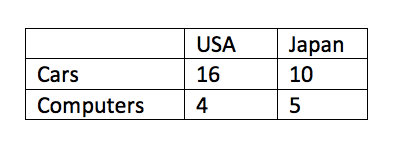

Which country has the absolute advantage in producing airplanes?

What is the opportunity cost of producing a car in the U.S.?
0.5 tools
0.5 cars
0.75 cars
1.3 tools

Which perspective supports the views on international trade as shown in the image?
A. Liberalism
B. Mercantilism
C. Structuralism
D. Postmodernism
Which of the following best describes the term balance of trade?
A.
A trade agreement between two countries
B.
Trade among countries is equally beneficial for
all of the countries involved
C.
Countries are only allowed to import the same value of goods that they export
D.
The value of a country’s exports equals the country’s imports
Choose the best answer about the relation between inflation rate and exchange rate
A. a country with a consistently lower inflation rate exhibits a depreciating currency value
B. lower inflation rate contribute to lower purchasing power
C. countries experiencing high inflation tend to also see their currencies weaken relative to other currencies
D. an appreciation in the exchange rate will tend to increase inflation
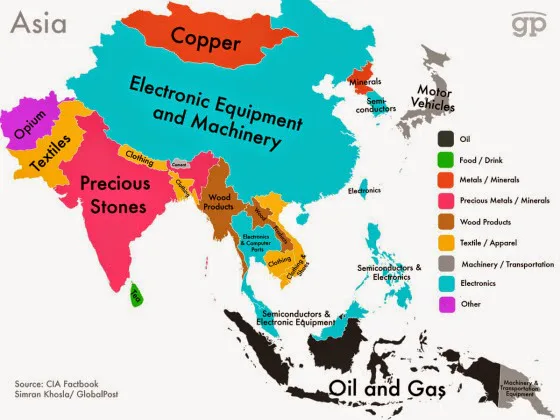
Click on the 3 Asian countries that specialize in natural resources that are non-renewable
concentrate on and become expert in producing particular goods
based on resources or products which one country needs and another can provide
A country decides that they would rather import a clothes instead of producing it
A country decides that it will concentrate on its labor market on the production of oil
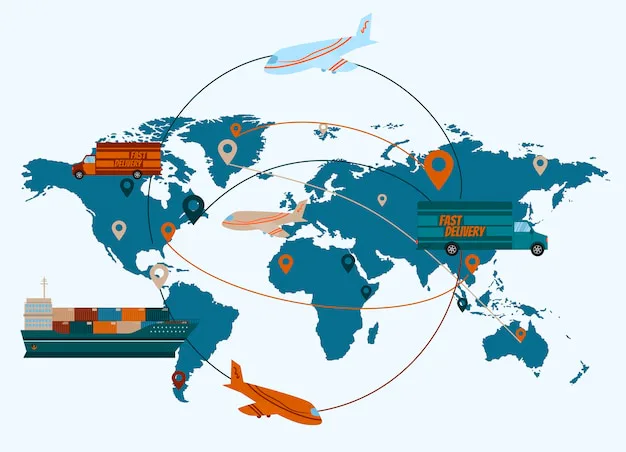
What is the main reason for the Infant Industry Argument?
To protect jobs and industries
To protect national security
To help develop a viable competitive position
To boost the overall wealth of a nation
What is the main concern regarding Government Intervention in international trade?
Protecting human rights
Furthering foreign policy objectives
Retaliation and Trade War
Protecting national security
Which country has been banned from doing business with the United States?
Jamacia
Canada
Cuba
Atlanta
With (a) nothing hinders or gets in the way of two nations trading with each other.
Quotas encourages people to buy (a) products, rather than foreign goods therefore boosting the country’s economy
A North American agreement formed to promote trade between Canada, the United States, and Mexico. Just renamed recently.
World Trade Organization
United Nations
World Bank
NAFTA-USMCA
An international organization based in Geneva that monitors and enforces rules governing global trade.
World Trade Organization
United Nations
World Bank
NAFTA-USMCA
An international bank that offers low-interest loans, advice, and information to developing nations; an agency of the United Nations.
World Trade Organization
United Nations
World Bank
NAFTA-USMCA
Mercantilism is an economic philosophy advocating that countries should simultaneously encourage imports and discourage exports.
True
False
Economies of Scale are the unit cost reductions associated with a small scale of output.
True
False
Protectionism is similar to mercantilism as they both advocated _____.
dividing the nations of the world into three categories based on its innovation capabilities
developing comparative advantages based on a nation’s locally abundant factors
specializing in economic activities in which a nation can have an absolute advantage
government involvement in international trade

According to the table, what is the Euro equivalent of 1 USD?
1.32 Euros
0.53 Euros
.76 Euros
1.59 Euros
How does inflation rate affect currency value/exchange rate?
Higher inflation leads to depreciating currency & vice versa
Increasing inflation leads to more favourable exchange rates
Higher inflation leads to currency appreciation
Lower inflation leads to more favourable exchange rate
If the Mexican Peso depreciates in relation to the Chinese Yuan, how is Mexico affected?
Mexico has less purchasing power in Chinese currency
Mexico benefits from increased purchasing power
Mexico would have more Chinese investors
They would be invaded by China
What does it mean when an economist says a currency is stronger?
It can be exchanged for more of a lesser foreign currency
It can be converted to prices in any currency
There a few things it could buy
It will buy fewer foreign goods
If the exchange rate is £1 = $1.25, what is $2250 equivalent to in £ pounds?
£1800
£2813
£2250
None of the answers
£1700
What type of exchange rate system do most countries operate under?
Flexible
Floating
Fictitious
Fixed
What is the difference between a fixed rate exchange system and a floating rate system?
Government sets rate vs market sets rate
Doesn't exist vs does exist
Never changing vs always changing
Currency never appreciates vs can appreciate
The currency exchange rate of the South African rand for the Botswana pula fell by 5.7% between August 2014 and August 2015. What would be the immediate effect of this?
Botswana’s level of protection would fall.
Botswana’s tourists travelling to South Africa would find it less expensive
South Africa’s imports would be cheaper.
South Africa’s tourists travelling to Botswana would receive more pula per rand
When the US$ exchange rate falls it will usually
help to reduce a US trade deficit.
increase the foreign price of US exports.
reduce the price of US imports.
reduce US inflation
a state of limited competition, in which a market is shared by a small number of producers or sellers.
(a)

What could cause the shift from D1 to D2?
A change in preferences
A change in price
A change in quantity demanded
A change in quantity supplied

If the supply curve on this graph represents iPhones, what would cause the change from S to S1 (red to purple line)?
An increase in computer chips
An increase in the cost of producing an iPhone
Employees figure out a way to work more efficiently
The price of iPhones increases
Mr. Sherman goes to the ticket booth to buy tickets for a Lakers game. Mr. Sherman is told that the game is sold out and no tickets are available. Which best explains why there are no basketball tickets available?
What is likely to happen to the price of the sneakers over the next several weeks?
The supply curve is also known as ________
Marginal benefit
Consumer surplus
Producer surplus
Marginal cost
A _________ is a legislated maximum price that sellers are allowed to charge in the market.
Equilibrium price
Price ceiling
Price floor
Deadweight loss
A price ceiling results in ________
A surplus because Qs exceeds Qd
A shortage because Qd exceeds Qs
A shortage because Qs exceeds Qd
A surplus because Qd exceeds Qs

After the price ceiling is introduced, what is the effect?
Producers sell less at a lower price
Producers sell more at a lower price
Decrease in economic welfare
Increase in economic welfare

Using the diagram, a price floor might do what?
Consumer surplus and producer surplus decrease by the same amount
Consumer surplus increase by more than producer surplus decreases, causing a deadweight loss.
Consumer surplus decreases by more than producer surplus increases, causing a deadweight loss.
Consumer surplus and producer surplus increase by the same amount

