
 Worksheets
Protein Synthesis & Mutations Review Quiz
Total questions: 72
Worksheet time: 45mins
What is the role of mRNA
Carry an amino acid to the ribosome
Copy the instructions from DNA and carry it out of the nucleus
Make up the ribosomes
Where does Transcription occur
Nucleus
Ribosome
ER
Mitochondria
What is the mRNA for the following DNA strand?
TAC GTA
GCT AGC
ATG CAT
AUG CAU
Where does Translation occur?
Nucleus
Ribosome
ER
Chloroplast
What is the end product of translation?
mRNA that can leave the nucleus
Amino acid chain
monosaccharide chain
Anticodon
What is an anticodon?
rRNA
an amino acid
Three nucleotide sequence found on mRNA
Three nucleotide sequence found on tRNA
Which of the following are differences in the structure between RNA and DNA
DNA uses deoxyribose sugar, RNA uses sugar ribose
DNA pairs Adenine with Uracil, RNA pairs Adenine with Thymine
DNA is a double helix, RNA is a single helix
DNA pairs Adenine with Thymine, RNA pairs Adenine with Uracil
When these bond together, they form a protein
Amino Acids
Peptide Bonds
Ribose
Nucleotides
These building blocks consist of a sugar, phosphate, and nitrogen base.
Ribose
Nucleotide
Gene
Protein
During translation, this type of ribonucleic acid is responsible for delivering amino acids to help make a protein.
mRNA
rRNA
tRNA
dRNA

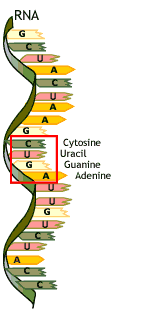

Which organelle is the location where protein is made?
Ribosome
Nucleus
Cytoplasm
Nucleotide
During transcription, this type of ribonucleic acid is responsible for copying the DNA and brining it out of the nucleus.
tRNA
mRNA
rRNA
dRNA

mRNA is made during this process
Translation
Transcription
Replication
Delivery
Which of the following is the complementary mRNA sequence to this DNA strand: AACTGAA
UUGACUU
TTGACTT
AACTGAA
AACUGAA

What brings the amino acids to the ribosome to assemble a protein?
DNA
How many nucleotides code for 1 amino acid?
1
2
3
4

Assembling proteins via instructions from DNA.
Replication
Mutations
Protein synthesis
Homeostasis

Double stranded DNA is unzipped, and one strand is used as a template to form Messenger RNA.
Translation
Transcription
Replication
Mitosis

The enzyme that codes mRNA from DNA instructions.
DNA Polymerase
RNA Polymerase
Helicase
Lipase

A chart that shows the relationship between
codons and the amino acids they code for.
Homeostasis chart
Anticodon
Codon Chart
EKG Chart
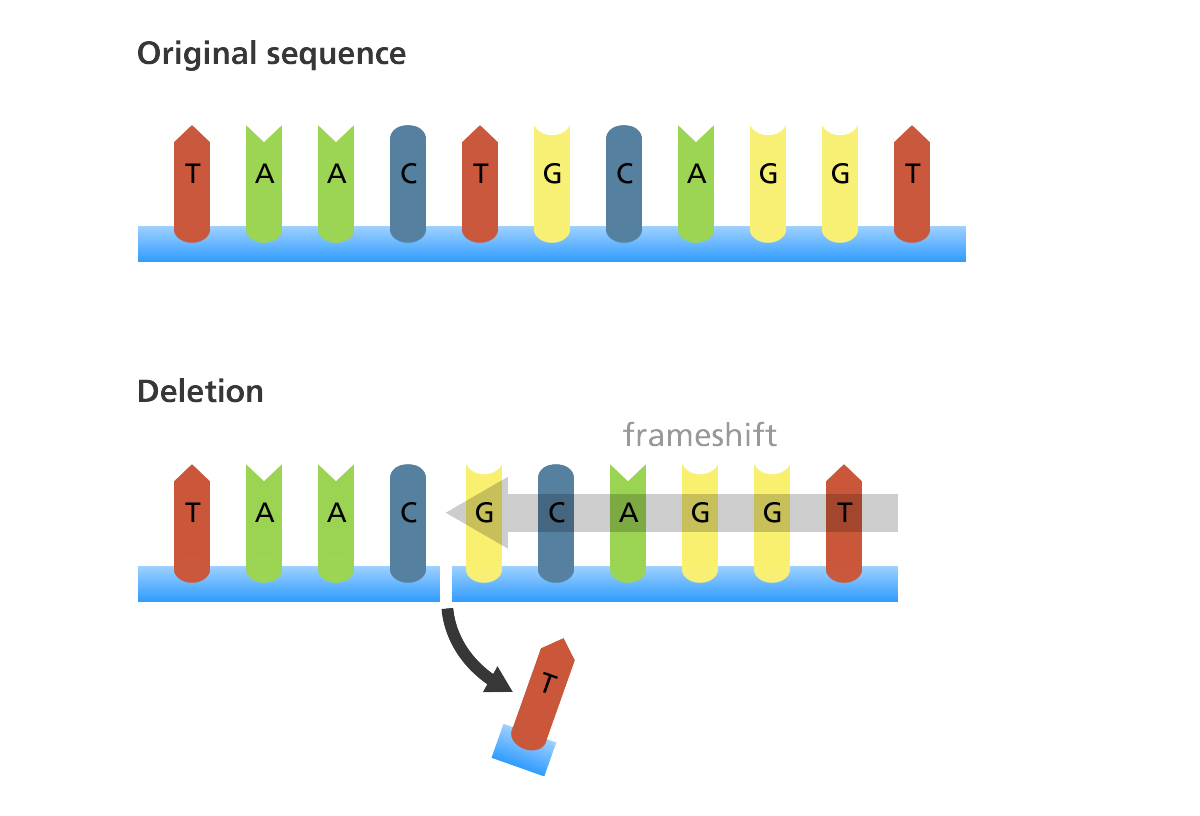
ATG CCA AAT
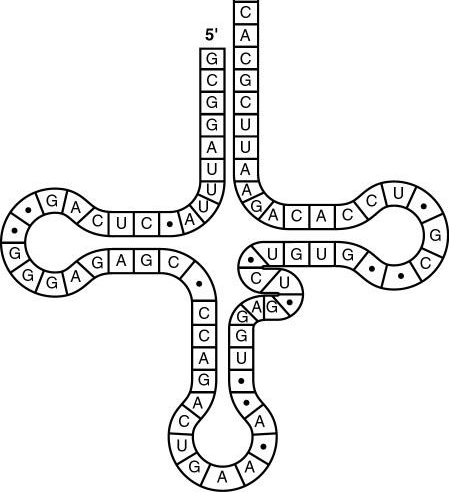

__________________ regulates the synthesis of mRNA.
RNA Polymerase
DNA Polymerase
Ozaki Fragments
Introns

The coding sequences that remain in the final mRNA sequences are called ___________________.
Introns
Exons
Ozaki Fragments
tRNA

A ____________________ is a permanent change in DNA.
Correlation
Mutation
Genetic Reading
Genetic Alteration

The idea that Cytosine goes with Guanine is called:
Base Pairing
Matching of nucleotides
Chargaff's Rule
Polymerase
A point mutation is usually what type of mutation
Frameshift
Insertion
Deletion
Substitution
A frameshift mutation is which of the following?
Point mutation
Insertion
Deletion
Subtitution
Which mutation would be more harmful for an organism?
Point mutation (substitution)
Frameshift (insertion/Deletion)
Why would a frameshift be more harmful?
It changes all the code downstream
Only one nucleotide is changing
All mutations are harmful
It can't correct iself
Which of the following units are repeatedly joined together to form a strand of DNA?
Amino Acids
Nucleotides
Fatty Acids
Polysaccharides
The process of DNA replication is called semi conservative because it results in
none of these
Two DNA molecules. One original molecule and one with two new strands
two exact copies with new strands
two DNA molecules, each with 1 original strand and one new.
Nitrogen bases are joined by which type of bond?
polar bonds
hydrogen bonds
phosphate bonds
deoxyribose bonds
Cytosine bonds with ____
Adenine
Thymine
Guanine
Uracil
What does DNA stand for?
Deoxyribonucleic acid
Denitrogenous acid
Deribonucleic acid
Diribonucleic acid
What is needed for DNA replication to unzip at the hydrogen bonds?
phosphates
enzymes
deoxyribose (sugar)
hydrogen
If a person suffered from a disorder where their DNA fragments were unable to fill in the missing slots in between the fragments of the lagging strand, they would most likely have a disorder that affected which enzyme?
DNA Helicase
DNA Ligase
DNA polyermase
RNA Polymerase
Which is the first step?
DNA Helicase unwinds original DNA strand
RNA Primase lays down RNA primer for new nucleotide bases.
DNA polymerase builds new strands by bring in new nucleotide bases.
Ligase knits together fragments on lagging strand
Which is the second step?
DNA Helicase unwinds original DNA strand
RNA Primase lays down RNA primer for new nucleotide bases.
DNA polymerase builds new strands by bring in new nucleotide bases.
Ligase knits together fragments on lagging strand
Which is the third step?
DNA Helicase unwinds original DNA strand
RNA Primase lays down RNA primer for new nucleotide bases.
DNA polymerase builds new strands by bring in new nucleotide bases.
Ligase knits together fragments on lagging strand
Which enzyme is responsible for adding the free nucleotides to the replicating DNA?
DNA Helicase
DNA Ligase
DNA polyermase
RNA Polymerase

The picture below shows an enzyme unwinding and unzipping DNA.
What is the name of this enzyme?
DNA Helicase
DNA Ligase
DNA polyermase
RNA Polymerase

The picture below shows the steps of DNA replication beginning with step one and ending with step three.
Because you are reusing the old, or parent, DNA strand DNA replication is said to be
Semi- Conservative
Semi-discontinuous
Continuous
Fully-Conserveative
I have the sugar deoxyribose.
DNA
RNA
In RNA, adenine goes with __________.
adenine
cytosine
thymine
uracil

Identify.
DNA
mRNA
rRNA
tRNA

Identify.
DNA
mRNA
tRNA
rRNA
Carries the amino acid used to make a protein
mRNA
rRNA
tRNA

