wayground logo

Free Printable Worksheets

Font size

S
M
L
XL
Worksheets

Scavanger Hunt

Total questions: 38

Worksheet time: 35mins

Name
Class
Date
1.

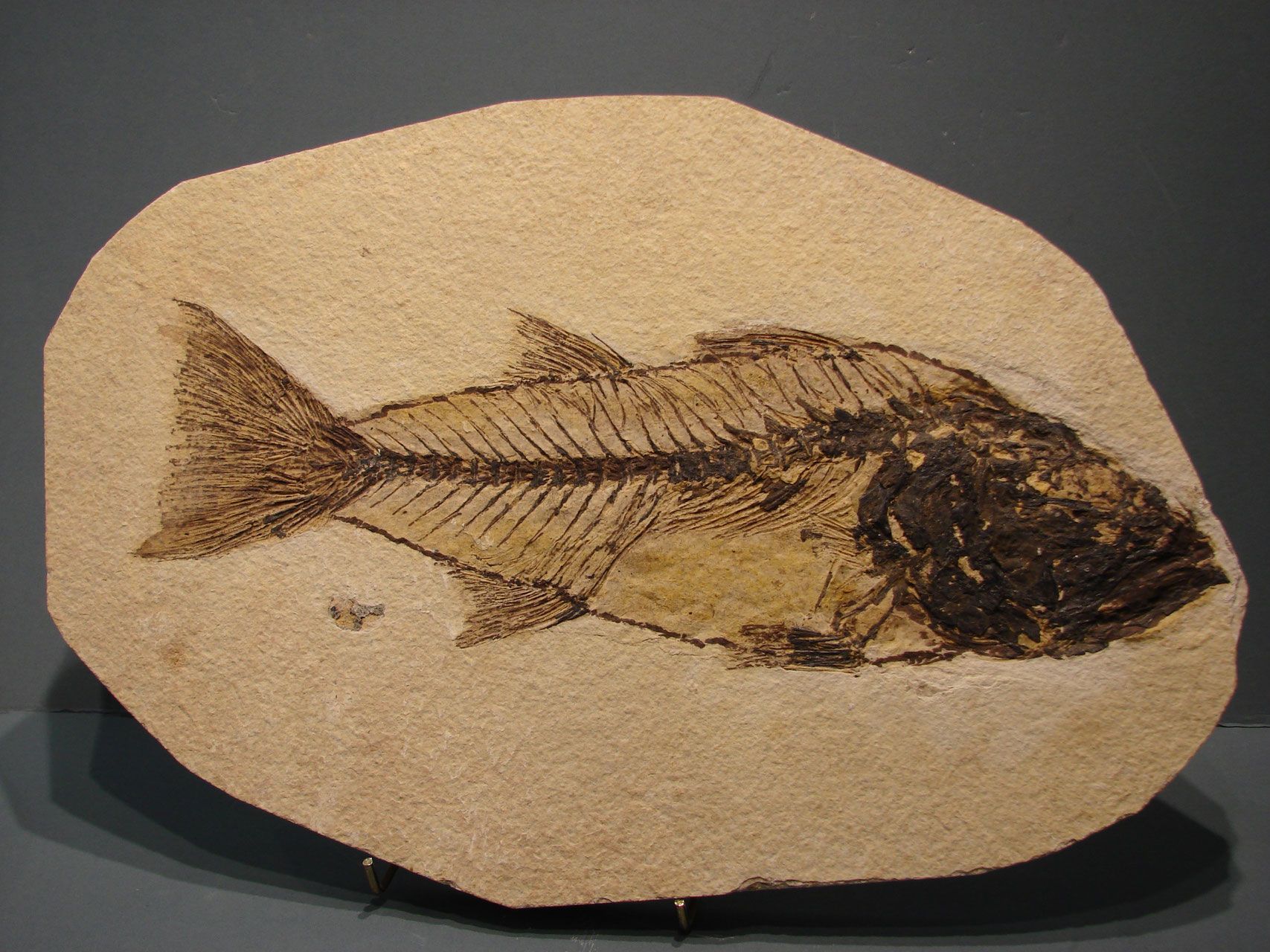
How long does it take for a fossil to form?

a)

Less than a year

b)

A few years.

c)

A few hundred years

d)

Thousands to millions of years.

2.
Why don't we know what many ancient plants looked like
a)
They had too many soft parts.
b)
They were all eaten by dinosaurs.
c)
There weren't ancient plants.
d)
They had too many hard parts.
3.
Which of the following is NOT something you could learn from a fossil?
a)
The size of the animal
b)
What the animal ate
c)
The color of the animal
d)
Where the animal lived
4.
Which of the following is NOT an example of a fossil?
a)
a petrified dinosaur bone
b)
a footprint captured in mud
c)
a seashell found on the beach
d)
an insect stuck in amber
5.
What is the correct order of the rock layers from oldest to youngest?
a)
F, E, C, B, A, D
b)
A, B, C, D, E, F
c)
F, E, D, C, B, A
d)
D, F, E, C, B, A
6.
What is the correct order of the rock layers from oldest to youngest?
a)
B, C, D, E, A
b)
A, B, C, D, E
c)
E, D, C, B, A
d)
B, C, D, A, E
7.
What type of fossil is this?
a)
Mold 
b)
Cast
c)
Preserved remains
d)
Petrified
8.
What type of fossil is this?
a)
Trace fossil
b)
Mold
c)
Cast
d)
Carbon film
9.
What type of fossil is this?
a)
Mold
b)
Cast
c)
Preserved remains
d)
Trace fossil
10.

The gradual change in living things over time is..

a)

transition

b)

evolution

c)

age

d)

revolution

11.

A fossil of sea shells were found in the Arctic... this most likely means...

a)

the Arctic was once under water

b)

A shell was dropped off by a bird in the Arctic

c)

Shells now form in the Arctic

d)

Wind carried the shell to the Arctic

12.

Which of these can often cause extinction of a species? Check all that apply.

a)

Disease

b)

Over-hunting

c)

Invasive Species

d)

Loss of habitat

e)

Lack of food resources

13.

What does the Law of Superposition tell us?

a)

The most superior rock is the top layer of rock

b)

The oldest rock is the most top layer of rock

c)

The youngest rock is the most top layer of rock

d)

The strongest rock is the most top layer of rock

14.

Which part of an organism's body typically fossilizes?

a)

Cartilage

b)

Skin and muscles

c)

Teeth and bones

d)

Hair and organs

15.

Scientist study the ____________________ to learn about the history of life, past environments on Earth, and how different groups of organisms have changed over time.

a)

fossil record

b)

animal record

c)

historical record

d)

Earth record

16.
Which fossil layer is the youngest? 
a)
A. Layer A
b)
B. Layer B
c)
C. Layer C
d)
D. Layer D
17.
The diagram shows layers of sedimentary rock and examples of the fossils each layer contains, Which layer contains the oldest fossils? 
a)
A. Layer 2
b)
B. Layer 4
c)
C. Layer 1
d)
D. Layer 3
18.

What needs to happen SECOND for a fossil to form?

a)

A plant or animal must be covered by sediment.

b)

A plant or animal must die and decompose.

c)

Sediments fill a a mold to form a cast.

d)

An earthquake shifts the land up.

19.

What needs to happen FIRST for a fossil to form?

a)

A plant or animal must be covered by sediment.

b)

A plant or animal must die and decompose.

c)

Sediments fill a a mold to form a cast.

d)

An earthquake shifts the land up.

20.

If a scientist found a fish fossil in the desert, what can they infer?

a)

An animal ate the fish.

b)

The water covered the area long ago.

c)

Today's fish looks the same

d)

The fish is endangered.

21.

Describes a group of living things that are no longer living.

a)

fossil

b)

extinct

c)

endangered

d)

dinosaur

22.

Which type of rock are most fossils found?

a)

sedimentary rock

b)

metamorphic rock

c)

igneous rock

d)

fossils

23.
The liquid layer below the Earth's crust is the
a)
core
b)
lava
c)
magma
d)
mantle
24.
The outer layer of the Earth is called the __________.
a)
core
b)
crust
c)
mantle
d)
plates
25.
What is the name of the area where one crust slides underneath another
a)
Transform zone
b)
subduction zone
c)
Divergent zone
d)
School zone
26.
 A land feature that is produced at a convergent boundary is
a)
a valley
b)
an ocean
c)
a canyon
d)
a volcano
27.
This is the driving force behind the movement of tectonic plates.
a)
Mantle convection currents
b)
Oceanic convection currents
c)
Atmospheric convection currents
d)
Solar convection currents
28.
What was the name given to all the continents when they were joined as one super continent?
a)
Supreme Continent
b)
Eurasia
c)
Plate tectonics
d)
Pangea
29.
Mountains form from....
a)
Tectonic plates sliding past one another
b)
Collision of tectonic plates
c)
Tectonic plates moving away from each other
d)
Tectonic plates disappearing
30.

What type of boundary is shown in the diagram?

a)

Divergent

b)

Convergent

c)

Slide/Transform

31.

What type of boundary is shown in the diagram?

a)

Divergent

b)

Convergent

c)

Slide/Transform

32.

What type of boundary is shown in the diagram?

a)

Divergent

b)

Convergent

c)

Transform

33.
What are the puzzle pieces of the Earth's surface called?
a)
Tectonic plates
b)
Puzzles
c)
Earthquakes
34.
According to the law of superposition, the oldest fossils are found 
a)
At the top of the rock layers
b)
Near the bottom of the rock layers
c)
In the middle of the rock layers
d)
Somewhat near the surface
35.

The Law of Superposition helps scientists to determine what?

a)

The absolute age of rock layers

b)

The age of fossils

c)

The relative age of rock layers

d)

the super powers of squirrels

36.
Which of these rock layers is relatively the newest?
a)
Kaibab formation
b)
Zoraster Granite
c)
Redwall limestone
d)
Unkar group
37.
Which of the following orders the rock layers accurately from youngest to oldest?
a)
1, 2, 3, 4, 5
b)
5, 4, 3, 2, 1
c)
2, 3, 4, 5, 1
d)
1, 2, 3, 5, 4
38.
Which of the following orders the rock layers accurately from oldest to youngest?
a)
A, B, C, D, E, F, G, H
b)
B, F, G, C, D, H, A, E
c)
B, G, C, D, E, H, A, F
d)
F, A, H, E, D, C, G, B