
Font size
 Worksheets
Year 7 science midterm
Total questions: 144
Worksheet time: 1hrs 29mins
The most basic level of organization in the human body
tissue
cell
organ
organ system
In most animals, combinations of various tissues make up functional units called
epithelial cells
organs
organ systems
populations
The stomach helps break down food for digestion. Which BEST describes the stomach?
It is part of a cell with a fuction
It is a single cell that performs a life function
Made up of a small number of cells that perform a single function
Composed of millions of cells of different types working together to perform a function

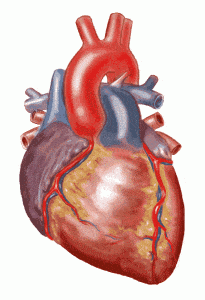
This picture represents which of the levels of organization?
atom
organ
organelle
cell

This picture represents which of the levels of organization?
tissue
organism
organ
organ system
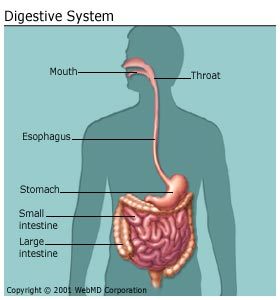
This system allows things to move within the body.
muscular
digestive
circulatory
respiratory

Which of the following statements is true about the organ system shown in the picture?
It provides structure to the body and protect internal organ
It transports oxygen, nutrients and other substances and carry away wastes.
It breaks down food and absorbs nutrients.
It supports the body and allows it to move.

Which of the following statements best describes about these cells?
These cells are basic unit of living organisms.
These cells can be found in both animal and plants.
Some of these cells have the same function.
These cells have special features that allow them to perform their functions effectively.
Which of the following shows the correct sequence of air passage into the lungs?
trachea → larynx → air sacs → bronchi
larynx → trachea → bronchi → air sacs
air sacs → larynx → trachea → bronchi
larynx → bronchi → trachea → air sacs
The exhaled air from our body consists mostly of
carbon dioxide.
nitrogen.
oxygen.
water vapour.

Gas exchange is needed to supply _____________ to cells and remove __________________
carbon dioxide; oxygen
oxygen; food
oxygen; carbon dioxide
carbon dioxide; water
What is the main function of the respiratory system?
to provide oxygen and remove carbon dioxide from the body
to bring oxygen to the body
to break down food and absorb nutrients
to remove oxygen from the body and deliver carbon dioxide


The air sacs that are covered with capillaries where gas exchange takes place.
Bronchi
Trachea
Oxygen
Alveoli

The exhaled air from our body consists mostly of__________ Check all boxes that apply
carbon dioxide.
nitrogen.
oxygen.
water vapour.
What is the process of breathing in also called?
Respiration
Exhalation
Combustion
Inhalation
What is the process of breathing out also called?
Respiration
Exhalation
Combustion
Inhalation

The diagram shows a section through the human thorax. Which part is the ribcage?
A
B
C
D

What occurs during inhalation?
A
B
C
D

The diagram shows parts of the respiratory system.
Which two labelled parts move to cause inhalation?
W and X
W and Z
X and Y
X and Z

Which movements take place inside the chest when a person breathes out?
A
B
C
D


Blood cells are produced in the bone marrow found in long bones.

Which is not a function of skeletal system?
Protection
Gas exchange
Movement
Shape and support
What is a joint?
The place where 2 or more bones meet.
A thin membrane that covers the surface of a bone.
A band of tissue that holds the bones together
Connective tissue
Name the joint that makes up elbow, knee and fingers
Ball-and-socket joints
Hinge joints
Pivot joints
Gliding joints
What is the function of the bone marrow?
To make protein
To make red blood cells and white blood cells
reduce friction
to hold bones together
What are the ends of bones covered with that helps reduce friction when to bones are rubbed together.
Sternum
tendon
ligament
cartilage
A tough band of tissue that holds bone together at the joints are called?
tendons
ligaments
cartilage
4. Which of the following is generally called a Sprain?
Hairline fracture
Greenstick fracture
Pulling of the ligament
Muscle tear
Which of the following is a Ball and Socket joint
Ankle joint
Elbow joint
Shoulder joint
Thumb joint

Choose the correct stament
A muscle is rigid and flexible.
A muscle is rigid and hard.
A muscle is flexible and hard.
A muscle is soft and flexible.

Tendons connect...
bones to joints.
muscles to bones.
bones to bones.
muscles to muscles.

All the bones together form...
the tendons.
the joints.
the skeleton.
the musculoskeletal system.
Which help you bend your body.
Skeleton
Joints
Muscles

What is the function of the skeleton?
Support and shape
Movement
Protection
All of the above

Joints - A place where
1 bone meets
2 or more bones meet
No bones meet

Hip and shoulder have examples of this type of joint
ball and socket
Fixed
hinge
What is an example of a fixed joint?
Vertebrae
Elbow
Skull

The knee joint is
Hinge
fixed
Ball and socket
True or False: you have joints in different parts of your body.
True
False

True or False: muscles and bones work together to move your body.
True
False

They cover your skeleton
Bones
Muscles
Tendons
Joints
Muscles are formed from tissues that contract and relax, producing movement.
False
True.

Name the highlighted muscle
triceps
biceps

Which type of joint gives you the largest range of motion?
Fixed joint
Ball-and-socket joint
Hinge joint
The main purpose of synovial fluid is:
Keeping bones moist
Lubrication
Strengthening tendons and cartilage
Protecting the spinal cord

What is the slippery surface that cover the bones?
synovial membrane
synovial fluid
ligament
cartilage
The process by which one or more substances change to produce one or more different substances
Chemical Process
Reactant
Chemical Reaction

Is a copper penny turning greenish after a few years a chemical or physical change?
Chemical Change
Physical Change
the reaction to take place.
H2O


Identify the product(s) in this word equation
Sodium
Sodium chloride
Sodium and Chlorine
Sodium and sodium chloride
In a word equation the REACTANTS
Are written on the right hand side of the arrow
Are produced in a chemical reaction
Are always the same
Are the substances that react together

The products in this reaction are?
Two solids
One solid and one gas
Three solids and a gas
Two solids and a gas
The new substances formed in a chemical reaction are called
Reactants
Atoms
Products
Reagents

What are the reactants in this word equation?
Carbon dioxide and oxygen
Carbon dioxide and water
Oxygen and glucose
Oxygen and water
In a chemical reaction...
New atoms are created
Atoms rearrange
Atoms are destroyed
Nothing Happens

In this chemical reaction zinc is a...
Product
Reactant
Neither

Magneisum reacts with oxygen to form magnesium oxide. The correct word equation is...
A
B
C
D

Sodium reacts with chlorine to produce sodium chloride. Choose the correct word equation.
sodium chloride → chlorine + sodium
sodium + carbon dioxide → sodium carbonate
sodium + chlorine → sodium chloride

Iron reacts with sulfur to produce iron(II) sulfide. Choose the correct word equation.
iron + solid → iron sulfide
iron + sulfur → iron sulfide
iron sulfide + iron→ sulfur
sulfur + iron sulfide → iron
Choose 3 words or phrases that could be used to translate the (aq) symbol
water
aqueous
dissolved in water
liquid
solution

What state of matter is this substance?
solid
liquid
gas
aqueous

What state of matter is this substance?
solid precipitate
dissolved in water
released as a gas
liquid

According to the chemical equation, which compound would form a precipitate?
Co(NO3)2
NaOH
NaNO3
Co(OH)2

What does the symbol inside the circle mean?
"yields, or produces"
"dissolved in water"
"forms a precipitate"
"released as a gas"
In a word equation, what should be used when writing the reactants and products?
Words only
A mixture of words and chemical symbols
Chemical symbols only
Iron (a grey metal) reacts with sulfur (a smelly yellow solid) to produce iron sulfide (a black solid).
iron + sulfur → iron sulfide
iron + sulfur → iron sulfur
iron + sulfide → iron sulfide
iron + sulfur → iron sulfite
Magnesium (a grey metal) can be burned in air to produce magnesium oxide (a white powder). Which is the correct word equation for the reaction that happens?
magnesium + oxygen → iron oxide
magnesium + air gases → magnesium oxide
magnesium + oxygen → magnesium oxide
magnesium + air gases → white powder
Nitrogen and hydrogen react together to form ammonia. Give the word equation for the reaction.
Ammonia → Nitrogen + Hydrogen
Nitrogen + hydrogen → Ammonia
Nitrogen → Ammonia + Hydrogen
Hydrogen + Ammonia → Nitrogen

Which symbol shows a chemical reaction has occured?
A
B
C
D
A physical change is the same as a chemical change
TRUE
FALSE
Identify the product(s) in this word equation
Sodium
Sodium chloride
Sodium and Chlorine
Sodium and sodium chloride
In a word equation the REACTANTS
Are written on the right hand side of the arrow
Are produced in a chemical reaction
Are always the same
Are the substances that react together
The products in this reaction are?
Two solids
One solid and one gas
Three solids and a gas
Two solids and a gas
The new substances formed in a chemical reaction are called
Reactants
Atoms
Products
Reagents
What are the reactants in this word equation?
Carbon dioxide and oxygen
Carbon dioxide and water
Oxygen and glucose
Oxygen and water
In a chemical reaction...
New atoms are created
Atoms rearrange
Atoms are destroyed
Nothing Happens
In this chemical reaction zinc is a...
Product
Reactant
Neither
Magneisum reacts with oxygen to form magnesium oxide. The correct word equation is...
A
B
C
D
Iron reacts with sulfur to produce iron(II) sulfide. Choose the correct word equation.
iron + solid → iron sulfide
iron + sulfur → iron sulfide
iron sulfide + iron→ sulfur
sulfur + iron sulfide → iron
Sodium reacts with chlorine to produce sodium chloride. Choose the correct word equation.
sodium chloride → chlorine + sodium
sodium + carbon dioxide → sodium carbonate
sodium + chlorine → sodium chloride
What is another name for burning?
Neutralisation
Combustion
Thermal decomposition
Displacement
What is produced in complete combustion of a fuel?
Carbon
Carbon monoxide
Carbon monoxide and water
Carbon dioxide and water
During incomplete combustion, a toxic gas called (a) is produced (give the name).
Which of these gases cause acid rain?
Carbon monoxide
Water vapour
Nitrogen dioxide
Sulfur dioxide
What environmental problem is caused by carbon dioxide?
Greenhouse effect
Acid rain
Breathing problems
Smog
The test for carbon dioxide gas is to bubble it through (a) .
How much carbon dioxide is made when 12g of carbon react with 32g of oxygen?
20g
12g
44g
88g
Why does incomplete combustion happen?
Because there isn't enough oxygen
Because there isn't enough carbon dioxide
Because there isn't enough fuel
Because carbon is made
Can humans see carbon dioxide with their eyes?
Yes. Carbon Dioxide is a gray colored gas.
Yes, but only if the lighting is just right.
Usually no. Carbon Dioxide gas is only visible in high concentrations.
No. Carbon Dioxide is an invisible gas.
What is the correct name for 'natural gas'?
Oxygen
Petroleum
Methane
Carbon dioxide
Which of these fuels will completely combust (burn) to form water only (and is therefore unlikely to increase global warming)?
C4H10
Fuel oil (a fraction from oil used to power ships)
Pure carbon (e.g. graphite)
Pure hydrogen (H2)
Methane

What does the "thermal" in thermal decomposition mean?
sulfur
catalyst
heat
oven
What does the "thermal" in thermal decomposition mean?
sulfur
catalyst
heat
oven
What colour is copper(II)carbonate
white
blue
colourless
green
copper(II)carbonate → ___________ + carbon dioxide
copper(I) oxide
copper(II) oxide
copper oxide
copper(III) oxide
What happens when CO2 is bubbled through limewater
It changes from pink to blue
It goes pop
It goes cloudy
It gets hot
What colour is copper (II) oxide
white
green
blue
black
______________ (+ heat) → zinc oxide + carbon dioxide
zinc carbonate
zinc oxide
zinc dioxide
zinc hydrogen carbonate
Why does thermal decomposition need heat energy
to make magic
to break bonds
to make water
to work as a catalyst
metal hydroxide (+ heat) → ____________ + _________
metal carbonate + water
metal oxide + carbon dioxide
carbon dioxide + water
metal oxide + water

