Wayground logo

Free Printable Worksheets

Font size

S
M
L
XL
Worksheets

Chem Unit 3a- Reactions

Total questions: 60

Worksheet time: 3hrs 3mins

Name
Class
Date
1.
Two Reactants and One Product
a)
Decomposition
b)
Synthesis
c)
Combustion
d)
Single Replacement
2.
Always starts with a Hydrocarbon that reacts with oxygen and produces carbon dioxide and water. 
a)
Decomposition
b)
Synthesis
c)
Combustion
d)
Single Replacement
3.
One reactant into several products.
a)
Decomposition
b)
Synthesis
c)
Combustion
d)
Single Replacement
4.
One element replaces another in a compound.
a)
Synthesis
b)
Combustion
c)
Single Replacement
d)
Double Replacement
5.
Ions in two compounds switch. 
a)
Synthesis
b)
Combustion
c)
Single Replacement
d)
Double Replacement
6.
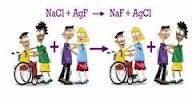
What is the type of reaction shown at the top?
a)
Synthesis
b)
Decomposition
c)
Single Replacement
d)
Double Replacement
7.
This pictures simulates what type of reaction?
a)
Synthesis
b)
Decomposition
c)
Single Replacement
d)
Double Replacement
8.
What does (l) mean when seen in a reaction equation?
a)
Light
b)
Liquid
c)
Laugh
d)
Long
9.
What type a reaction is taking place in this picture?
a)
Synthesis
b)
Decomposition
c)
Single Replacement
d)
Double Replacement
10.
What does aq mean in a chemical reaction?
a)
aqua dancing
b)
aqua lungs
c)
aqualirious
d)
aqueous
11.

Identify the reaction type:

C2H6 + O2 --> CO2 + H2O

a)

Double displacement

b)

Synthesis

c)

Acid base

d)

Combustion

12.

Identify the reaction type for the following equation:

K + F2 --> KF

a)

Double displacement

b)

Single Replacement

c)

Synthesis

d)

Decomposition

13.

Identify the type of reaction:

ZnCl2 + Mg --> Zn + MgCl2

a)

Precipitate

b)

Single Replacement

c)

Double Displacement

d)

Decomposition

14.

Identify the reaction type:

NaCl + KOH --> KCl + NaOH

a)

Double displacement

b)

Combustion

c)

Redox

d)

Precipitate

15.

Identify the reaction type:

H2O2 --> H2O + O2

a)

Decomposition

b)

Synthesis

c)

Combustion

d)

Acid Base

16.

What are reactants?

a)

The chemicals that start the reaction.

b)

The chemicals that the reaction produced.

c)

The chemicals that are on the right side of the arrow.

17.

What are products?

a)

The chemicals that start the reaction.

b)

The chemicals that the reaction produced.

c)

The chemicals that are on the left side of the arrow.

18.

The products are on the right side of the chemical equation.

a)

True

b)

False

19.
_AgNO3 + _Cu →_Cu(NO3)2 + _Ag
a)
2 AgNO3 + 2 Cu → 3 Cu(NO3)2 + 1 Ag
b)
2 AgNO3 + 1 Cu → 1 Cu(NO3)2 + 2 Ag
c)
1 AgNO3 + 2 Cu → 2 Cu(NO3)2 + 1 Ag
d)
3 AgNO3 + 2 Cu → 3 Cu(NO3)2 + 2 Ag
20.
_P4+_O2 →  _P2O3
a)
3 P4+1 O2 → 2 P2O3
b)
1 P4+1 O2 → 2 P2O3
c)
1 P4+ 3 O2 → 2 P2O3
d)
1 P4+ 2 O2 → 3 P2O3
21.
_Al + _HCl →_H2 + _AlCl3
a)
2 Al + 2 HCl → 2 H2 + 6 AlCl3
b)
3 Al + 3 HCl → 6 H2 + 2 AlCl3
c)
1 Al + 1 HCl → 3 H2 + 1 AlCl3
d)
2 Al + 6 HCl → 3 H2 + 2 AlCl3
22.
_K + _Cl2 →_KCl
a)
2 K + 16 Cl2 → 8 KCl
b)
2 K + 1 Cl2 → 2 KCl
c)
3 K + 4 Cl2 → 3 KCl
d)
1 K + 1 Cl2 →1 KCl
23.
Balance this equation,            Al2O3 ---> Al + O2 
a)
Cannot be balanced
b)
2Al2O3 ---> 2Al + 3O2 
c)
2Al2O3 ---> 4Al + 3O2 
d)
3Al2O3 ---> 2Al + O2 
24.
Balance this equation:  H2 + N2 → NH3
a)
 H2 + 4N2 → NH3
b)
 H2 + 3N2 → 2NH3
c)
 3H2 + N2 → 2NH3
d)
 2H2 + 2N2 → 2NH3
25.

Balance this reaction:

____ Na3PO4 + ____ KOH ---> ____ NaOH + ____ K3PO4

a)

1,3,3,1

b)

1,3,2,1

c)

2,3,3,1

d)

1,1,3,1

26.

Balancing this reaction:

____ CH4 + ____ O2 ---> ___ CO2 + ____ H2O

a)

2,1,3,1

b)

1,2,1,2

c)

1,2,2,1

d)

2,1,1,2

27.
_AgNO3 + _Cu →_Cu(NO3)2 + _Ag
a)

2 AgNO3 + 2 Cu → 3 Cu(NO3)2 + Ag

b)

2 AgNO3 + Cu → Cu(NO3)2 + 2 Ag

c)

AgNO3 + 2 Cu → 2 Cu(NO3)2 + Ag

d)
3 AgNO3 + 2 Cu → 3 Cu(NO3)2 + 2 Ag
28.
Fill in the blanks with coefficient:
PCl5+_ H2O→_ HCl+H3PO4
a)
4, 5
b)
1, 6
c)
3, 8
d)
2,2
29.

This unbalanced equation represents a chemical reaction:

Pb(NO3)2 + NaI → NaNO3 + PbI2

What is the coefficient for NaI once the equation is balanced?

a)

1

b)

2

c)

3

d)

4

30.

Which of the following is the balanced chemical equation that represents the chemical reaction of potassium and oxygen to produce potassium oxide?

a)
b)
c)
d)
31.
Balance this equation.
_Mg + _Cl2 --> _MgCl2
a)
1, 2,1
b)
already balanced
c)
2,1,1
d)
1,1,2
32.
Which problem is balanced?
a)
PbO2 + 2H2
b)
SO2 + H20 --> H2SO4
c)
2Na + 2H2O --> 2NaOH + H2
33.

Balance the following chemical reaction:

SnO2 + H2 --> Sn + H2O

a)

2 SnO2 + 2 H2 --> 2 Sn + 2 H2O

b)

SnO2 + 2 H2 --> Sn + 2 H2O

c)

2 SnO2 + 3 H2 --> 1 Sn + 2 H2O

d)

SnO2 + H2 --> Sn + H2O

34.
___C3H8 +___O2 --> ___CO2 + ___H2O
a)
1,5,3,4
b)
2,10,6,8
c)
already balanced
d)
1,5,5,4
35.
__Al + __Fe3N2 -->__AlN + __Fe
a)
already balanced
b)
4,2,4,6
c)
2,1,2,3
d)
1,2,1,3
36.

Balance this reaction:

____ Na3PO4 + ____ KOH ---> ____ NaOH + ____ K3PO4

a)

1,3,3,1

b)

1,3,2,1

c)

2,3,3,1

d)

1,1,3,1

37.
__Na + __Cl2 --> __NaCl
a)
1,1,2
b)
2,1,2
c)
2,1,1
d)
already balanced
38.
Which problem is balanced?
a)
PbO2 + 2H2
b)
SO2 + H20 --> H2SO4
c)
2Na + 2H2O --> 2NaOH + H2
39.

If an element is diatomic it should have a subscript of___

a)

1, always

b)

2, only when it is an element

c)

it shouldn't have a subscript, it should have a coefficent

d)

2, when bonded in a compound

40.

What is the charge of Iron in this compound. (Hint: think swap drop method):

Fe3(PO4)2

a)

3+

b)

2+

c)

1+

d)

6+

41.

The symbol for a substance dissolved in solution is ______

a)

(s)

b)

(l)

c)

(aq)

d)

(g)

42.

Fill in the blank. (Copper has a charge of 2+)

Cu+ AgNO3 → Ag + _____

a)

Cu(NO3)2

b)

CuNO3

c)

CuAg

d)

Cu

43.

Predict the products of this synthesis reaction: H2 + Cl2 →

a)

HCl

b)

H2Cl2

c)

H2Cl

d)

HCl2

44.

What type of reaction is this?

2 C6H14 + 19 O2 → 12 CO2 + 14 H2O

a)

Single Replacement

b)

Double Replacement

c)

Combustion

d)

Decomposition

45.

Predict the products for the this Single Replacement reaction:

K + HCl →

a)

KCl + H2

b)

KHCl

c)

KH + Cl2

d)

HCl + K2

46.

Predict the products for the this Double Replacement reaction:

AgNO3 + KCl →

a)

AgCl + KNO3

b)

AgK + ClNO3

c)

KAg + NO3Cl

d)

AgCl + 3 KNO

47.

Complete the balanced equation for this Double Replacement reaction.

3 NaOH + Fe(NO3)3 →

a)

NaFe + OH(NO3)3

b)

NaNO3 + Fe(OH)3

c)

3 NaNO3 + Fe(OH)3

d)

3 NaFe + 3 (OH)NO3

48.

Predict the product of this synthesis reaction:

Al + S₈ →

a)

AlS

b)

AlS8

c)

Al2S

d)

Al2S3

49.

Predict the products for the decomposition of aluminum oxide, Al2O3 →

a)

Al + O2

b)

O + Al2

c)

Al2 + O3

d)

Al + O

50.

Predict the products for the this Single Replacement reaction: (Copper has a charge of 1+)

Mg + CuCl →

a)

MgCl2 + Cu

b)

Mg + Cu

c)

MgCu + Cl2

d)

MgCl + Cu2

51.

What are the products of this reaction:

C2H4 + O2 →

a)

C2O2 + H4

b)

CO2 + H2 + O2

c)

CO + H

d)

CO2 + H2O

52.

Predict the products of this single replacement reaction: Na + H2O →

a)

NaO + H2

b)

NaOH + H2

c)

NaH + O2

d)

ONaH

53.
Write a balanced reaction for this SR Reaction
Zn(s) + H2SO4(aq) -->
a)
Zn(SO4)2 + H
b)
ZnSO4 + H2
c)
NR
d)
Zn2SO4 + H2
54.
Write a balanced reaction for this SR reaction
Sn(s) + NaNO3(aq) -->
a)
NaSn + NO3
b)
SnNO3 + Na
c)
NR
d)
SnN3O3 + Na
55.
Write a balanced equation for this DR reactions
NaOH + Fe(NO3)3 -->
a)
NaFe + OH(NO3)3
b)
2NaNO3 + 3Fe(OH)3
c)
NR
d)
3NaNO3 + Fe(OH)3
56.
Write a balanced equation for this DR reaction
KOH(aq) + H3PO4(aq) --> 
a)
K3PO4 + 3HOH
b)
KH3 + OHPO4
c)
NR
d)
KPO4 + H3OH
57.
Write a Balanced Equation for this reaction:
C2H4 + 2 O2 -->
a)
C2O2 + H4
b)
CO2 + HOH
c)
NR
d)
2 CO2 + 2H2O
58.

In a combustion reaction, one of the reactants is ____.

a)

carbon

b)

oxygen

c)

hydrogen

d)

nitrogen

59.

The equation H3PO4 + 3KOH --> K3PO4 + 3H2O is an example of which type of reaction?

a)

combustion

b)

decomposition

c)

single replacement

d)

double replacement

e)

synthesis

60.

Magnesium Oxide reacts with Water to produce Magnesium Hydroxide. What type of reaction is this?

a)

Decomposition

b)

Synthesis

c)

Single Replacement

d)

Combustion

e)

Double Replacement