
 Worksheets
Gr3-4 Q3 Exam 2024
Total questions: 74
Worksheet time: 1hrs 14mins

Most fossils form when living things die and are buried by _______________ that hardens into rock over time.
cement
sediment
ants
people

An organism is ______________ if it no longer exits and will never live again on Earth.
missing
extinct
rare
plentiful

A ______________________ is a scientist who studies fossils.
chemist
paleontologist
astronomer
biologist

Scientist study the ____________________ to learn about the history of life, past environments on Earth, and how different groups of organisms have changed over time.
Earth record
fossil record
animal record
historical record

In which kind of rock do we usually find a fossil?
metamorphic rock
igneous rock
sedimentary rock

Where can the oldest layer be found?
The bottom layer
The top layer
The middle layer
They are all the same age
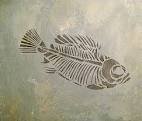
If scientists found this fossil, what could they infer?
that water once covered the area
what fish are like today
what kind of animal ate this fish
that this fish lacked oxygen

Which animal part would most likely form a fossil?
Bone
Muscle
Fur
Lung

The remains of an organism studied by scientists is called a ____________.
dinosaur
fossil
shark
paleontologist

Which would be an example of a fossil?
Rotting Log
Oyster Pearl
Dinosaur Footprint
Sedimentary Rock

Which type of fossil is created when an organism gets trapped in tree resin?
Cast
Amber
Mold/Imprint
Trace

Which is NOT a way an organism could become a fossil?
It can be left out in the sun to decompose.
It can be quickly buried in sediment after death.
It can be frozen in ice.
It can be trapped in the resin of a tree.

An organism should be buried quickly after it dies if it has a chance of becoming a fossil
False
True

How do scientists learn about dinosaurs?
by visiting Jurassic Park
by studying fossils
by reading about them
by watching movies

What conclusions could you make about the environment where the animal that made this fossil lived in?
It could fly and live in trees because it has wings.
It was under water because it has fins.
It might have been a grassland because it has 4 legs.
Why do bones and teeth remain as part of some fossils?
bones decay easily
the parts are hard
they are white
bones are large
Describes a group of living things that are no longer living.
endangered
dinosaur
fossil
extinct

An animal has sharp, pointy teeth, what can we infer about this animal?
The animal only ate plants.
The animal is a carnivore.
The animal lived in the water
The animal lived near the beach.
What statement is true about fossils?
Some living things have not really changed in millions of years.
All living organisms leave behind fossils.
Plant fossils have never changed.
Fossils show that camels never change.
What needs to happen FIRST for a fossil to form?
An earthquake shifts the land up.
A plant or animal must die and decompose.
A plant or animal must be covered by sediment.
Sediments fill a a mold to form a cast.
Turtles look much like they did millions of years ago. What can we infer about turtle fossils?
Turtles went extinct.
They did not change over time.
Turtles were never endangered.
The turtle survived the ice age.
Which is NOT a reason scientists study fossils?
Fossils tell scientists the types of environments that organisms lived in.
How organisms communicated with each other.
They tell us how long a species existed on Earth.
To learn how organisms are related to each other.
Which is NOT a step in the process an organism goes through to become a fossil?
An organism becomes extinct.
Layers of sediment build up on the buried body.
A organism dies and is buried quickly.
Minerals fill the spaces of the decaying bone.

What are most fossils made out of?
minerals
plants
bones
skin
Natural Resources are
Resources that cannot be replaced quickly enough to keep from running out.
Materials that are found on Earth that people use.
Rocks that contain metal
Resources that are continually being replaced and will not run out.
Non renewable resources are
Resources that cannot be replaced quickly enough to keep from running out.
Materials that are found on Earth that people use.
Fuels that formed from the remains of things that lived millions of years ago
Rock that contains metal
Renewable resources are:
Resources that are constantly being replaced and will not run out.
Materials that are found on Earth that people use
Rock that contains metal
Fuels that formed from the remains of things that lived millions of years ago.
Which is a Natural Resource
Cars
Roofs
Sunlight
Computers
Which is a renewable Resource
Crops
Coal
Gasoline
Ore

Anything from nature that living things use is called a ______________.
natural resource
energy
food
pollution

Only a small amount of _______ on Earth's surface can be used by humans.
dirt
water
sand
air
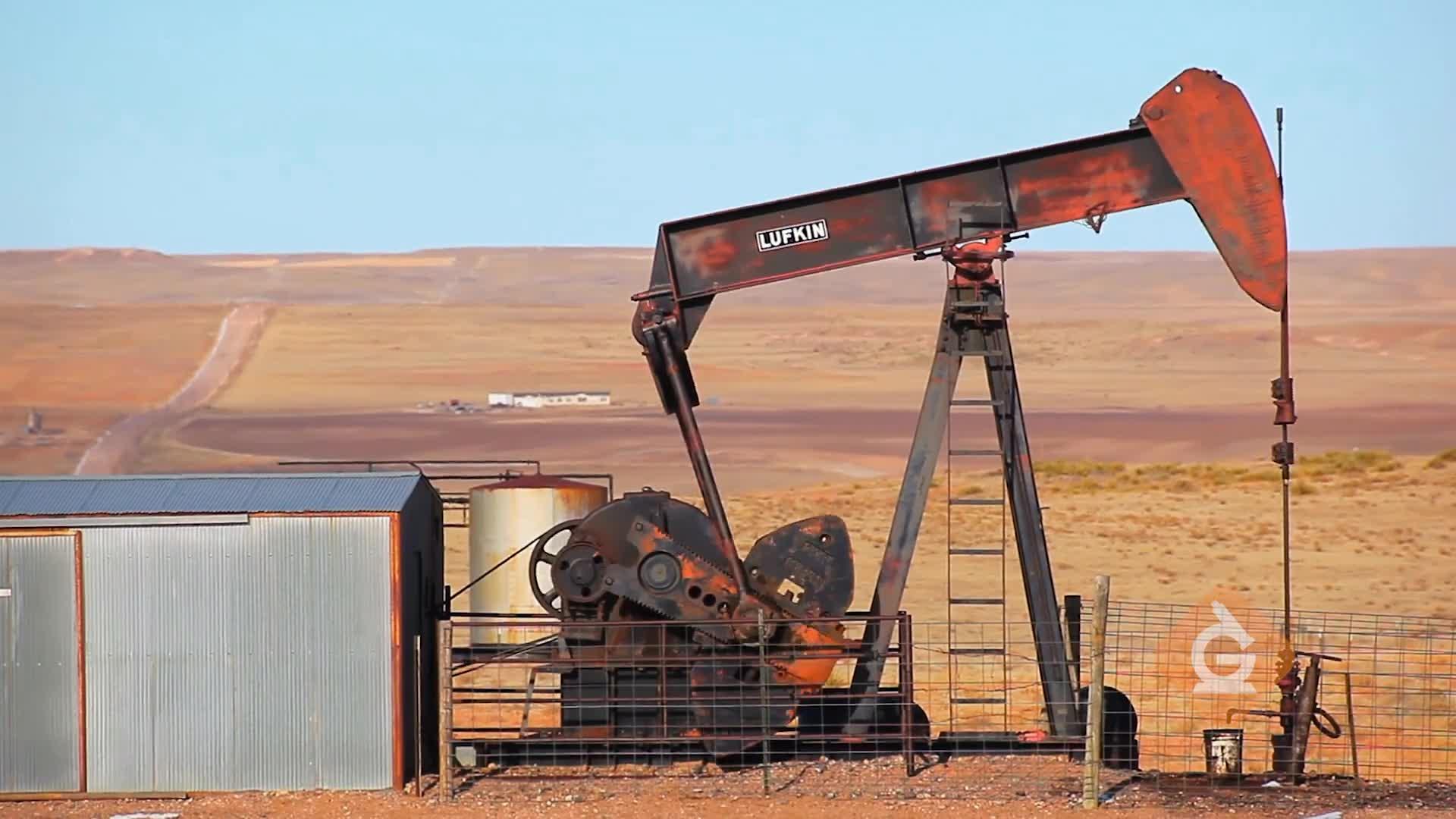
Which are ways we use fossil fuels?
cars and heat
eating and drinking
paper and building
drinking and bathing

Which of these are ways that humans use wood?
eating and drinking
paper and building houses
drinking and bathing
cars and heat

Which is a way we can protect our natural resources?
contaminate
recycle
litter
pollute
A resource that is not easily replaced...
Nonrenewable
Renewable
Which group includes ALL renewable resources?
Water, wind, sun, plants
Coal, trees, water, oil
Minerals, sun, natural gas, water
Which of the following natural resources are nonrenewable?
Natural gas
Water
Wind
Animals
Which one is not a natural resource?
Air
Play dough
Water
Plants
Fossil fuels are nonrenewable because...
they can be found underground
they take a long time to form
they are used to produce heat
What does conserving resources mean?
Protecting the resource so it does not run out
Use as much of the resources as you can
Only use the resources at school
Which of the following is a way a person could conserve natural resources?
using rechargeable batteries
recycling waste materials like plastic, glass, paper, and aluminum
limiting water use when showering, brushing teeth, and shaving
all of the above are good conservation practices
What does conserving resources mean?
Protecting the resource so it does not run out
Use as much of the resources as you can
Only use the resources at school
Astronomers wanted to get better measurements of the positions of the stars. This was not only important for science but also for __________.
culture
navigation
math
history
The only planet known to support life.
Mars
Earth
Mercury
Venus
The largest planet in the solar system.
Earth
Jupiter
Mercury
Uranus
Which space equipment transports humans into space from Earth?
satellite
space shuttle
space prove
A tool for viewing and observing
space shuttle
telescope
Gravity on the moon is _____ than that on the Earth.
non existent
less
greater
the same
The force that keeps planets on there orbit...
gravity
stars
orbit
planets
What is the name of the most recent Mars rover?
Ingenuity
Perseverance
Curiosity
Wonder
The whole universe outside the Earth surface is called _________
Galaxy
Sun
Mars
Space
The path of an object in space around another object is a(n)
orbit.
axis.
rotation.
revolution.
It takes about _____ for the earth to complete one rotation.
28 days
24 hours
365 hours
365 days


Outer planets are farther to the sun than inner planets are. Outer planets have a longer orbit around the sun. The table shows orbit data for four planets.
Which planets from the table are most likely outer planets?
Planet 1 and Planet 2
Planet 1 and Planet 4
Planet 3 and Planet 2
Planet 3 and Planet 4
____________ is closer to the sun and usually hotter.
Saturn
Mercury
Jupiter
Neptune
Mars is also known as the ________ because of its color.
Red Planet
Blue Planet
Yellow Planet
Purple Planet
Earth has a shorter year than Jupiter because Earth ___________.
is farther from the Sun
spins faster as it rotates
has shorter days
is closer to the Sun
Which planets have similar rocky surfaces to Mercury’s? Choose TWO
Earth
Saturn
Jupiter
Venus
The asteroid belt is between which two planets? Choose TWO
Mars
Jupiter
Venus
Neptune

The diagram shows the first five planets in the solar system with Earth labeled. Which planet is represented by the letter P?
Mercury
Venus
Jupiter
Neptune
How many moons does Earth have?
1
0
2
23
Which planet will have the longest orbit around the Sun?
the planet closest to the Sun
the planet with the most moons
the planet farthest away from the sun
the hottest planet in the solar system
Which planet orbits between Venus and Mars?
Jupiter
Earth
Saturn
Neptune
If Venus were to move farther away from the Sun, what effect would most likely occur?
Venus would create a new moon.
Venus' climate would be colder.
Venus' climate would be hotter.
Venus would turn into a ball of fire.
If Saturn were to move closer to the Sun, what effect would most likely occur?
Saturn's climate would be colder.
Saturn would become a frozen ball of ice.
Saturn's climate would be hotter.
Saturn would lose all its moons.

The table shows some facts about Earth and Mars.
What can be concluded from the data in the table?
Mars is closer to the sun.
Earth has more moons.
Mars takes shorter to orbit the sun.
Earth's climate is warmer.
Which sequence shows the correct order of the inner planets?
Saturn, Venus, Neptune, Mars
Mercury, Jupiter, Mars, Venus
Mercury, Venus, Earth, Mars
Uranus, Mars, Pluto, Venus
Which sequence shows the correct order of the outer planets?
Mars, Jupiter, Saturn, Neptune
Jupiter, Saturn, Uranus, Neptune
Mars, Jupiter, Earth, Neptune
Venus, Jupiter, Saturn, Uranus
How do Mars rovers generate electricity?
solar panels
gas generators
nuclear power plants
wind turbines



