
 Worksheets
Chemistry Review
Total questions: 98
Worksheet time: 49mins
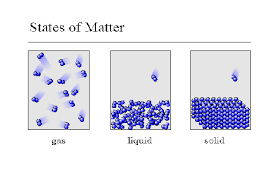
At higher temperatures
particles in an object have less energy
particles in an object move faster
a gas contracts
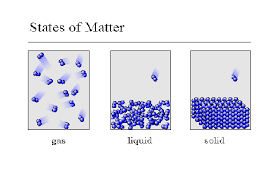
A gas
has a definite shape but no definite volume
has a definite volume but no definite shape
has fast-moving particles

Freezing
Solid to gas
Liquid to solid
Gas to solid

Boiling
liquid to gas
gas to solid
gas to liquid

The state of matter that has no definite size or shape is
Solid
Liquid
Gas

Particles in a ______________________ move quickly and are far apart.
gas
solid
liquid

Particles of a liquid
are tightly packed together and stay in a fixed position.
are free to move around one another but still touch.
Solid to Gas
Deposition
Sublimation
Evaporation
What is condensation?
gas to solid
gas to liquid
liquid to solid
The temperature of a substance increases as___.
the substance expands
the average kinetic energy of its particles increases
the substance's volume increases
the substance's mass increases
Liquid to Gas
Condensation
Evaporation
Sublimation
2. A change of state from a liquid to a solid is called....
Melting
Freezing
Evaporation
Phase change going from a Gas to a Liquid...
Sublimation
Deposition
Ionization
Condensation
Phase change going from a Liquid to a Gas...
Vaporization
Deposition
Condensation
Melting
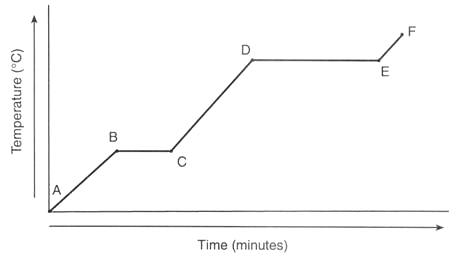
What state/phase is the object likely from points A to B?
Solid
Liquid
Gas
Plasma
What is happening to the particles in the substance between points D and E?
Melting
Freezing
Vaporizing
Sublimating

Where on the graph are phase changes taking place?
1
2
3
4
5
When the temperature of matter increases the particles...
speed up and move closer
speed up and move farther apart
slow down and move closer together
slow down and move farther apart
What are the 3 types of heat transfer? (Check all that apply)
Conduction
Scattering
Greenhouse Effect
Radiation
Convection

The direct transfer of energy by electromagnetic waves; for example, the sun heating a reptile sunbathing.
Radiation
Conduction
Convection
None of these

What type of heat transfer happens when a fluid heats up an object like boiling water for our food?
Radiation
Conduction
Convection
None of these

What type of heat transfer happens when two objects touch like a pot to a stove burner?
Radiation
Conduction
Convection
None of These
The SI unit of heat and energy is the __________.
Celcius
Kelvin
joule
watt
If 200 grams of water is to be heated from 24.0° C to 100.0° C to make a cup of tea, what is the mass and what is the change in temperature?
m=200g
∆t= -76
m=200g
∆t=124
m=200
∆t=100
m=200g
∆t=76
The unit for mass is
g
J
J/gC
°C
The unit for temperature is
°C
J
J/gC
g
Which of the following is true regarding the composition of the lithosphere?
The lithosphere is mostly liquid, with some medium-density materials, such as silicon.
The lithosphere is more plastic and flows slowly compared to the solid crust of Earth.
The lithosphere includes the core and the lower portion of the mantle.
The lithosphere includes the crust and the uppermost portion of the mantle, which is sold and rigid.
What is the correct order (starting from the surface) of Earth's layers?
crust, outer core, inner core, mantle
mantle, outer core, inner core, crust
crust, mantle, outer core, inner core
outer core, inner core, crust, mantle
What causes tectonic plates to move along the Earth's surface?
wind
ocean currents
convection in the mantle
expansion of the Earth
What type of boundary occurs when two plates move away from each other?
transform
subduction
convergent
divergent
What type of boundary occurs when two plates move toward each other?
convergent
divergent
transform
lateral
What is the process in which hot molten rock rises, then cools and sinks back to the core?
plate tectonics
continental drift
convection
divergence
What type of boundary occurs when two plates slide past each other?
divergent
transform
lateral
convergent
The positive particles of an atom are ___________.
electrons
protons
neutrons
The center of an atom where its neutrons and protons are is called the _____________.
nucleus
electron cloud
center
An atom with atomic number 6 would have how many protons?
6
12
3
Particles in an atom that are neutral and have no charge are
protons
electrons
neutrons
A particle that moves around the nucleus is called an _________.
Proton
Neutron
Electron
Quark

What does the 1.00794 stand for?
Hydrogen
atomic number
atomic mass
atomic explosion
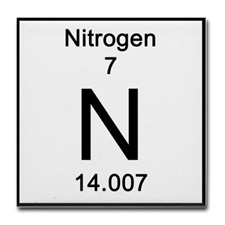
What is the number of protons that the element in this image contain?
14
7
15
18

What is the atomic mass of "F"
9
18
17
19
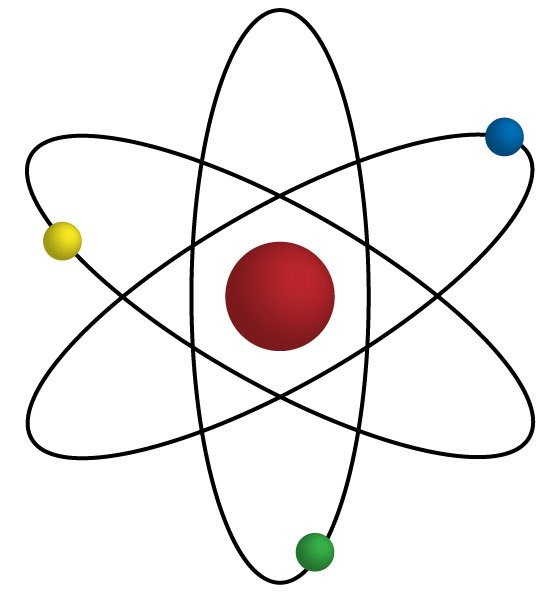
What are the 3 particles that make-up the atom?
protons, neutrons, and isotopes
neutrons, isotopes, and electrons
positives, negatives, and electrons
protons, neutrons, and electrons
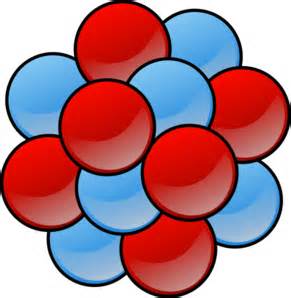
What does the nucleus of an atom contain?
Electrons and neutrons
Protons and neutrons
Neutrinos and positrons
DNA and RN
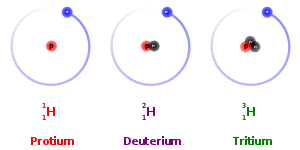
Different isotopes have...
different masses
different protons
different electrons
Isotopes are atoms that have the same number of protons but a different number of _____________.
neutrons
electrons
atoms
Choose all the items that are elements.
NaCl (table salt)
Sulfur
O2
Water
Air
Choose all of the items that are compounds.
NaCl (table salt)
Sulfur
O2
Water
Air
Which choice shows the elements in order from most reactive to least reactive. Sr, K, Cl, P
Sr, K, Cl, P
K, Cl, Sr, P
K,P, Sr, Cl
K, Sr, P, Cl
Students in Mrs. Clark's science class are investigating a substance that has the following properties
-shiny
-bends easily
-hard, not easily broken
Based on these properties how would you classify the substance?
metal
nonmetal
metalloid
Nonmetals (select all that apply)
are found on the right side of the periodic table.
are found on the left side of the periodic table.
are good conductors of heat and electricity.
are brittle.
can be solid, liquids, or gases at room temperature.
Metals (select all that apply)
are found on the right side of the periodic table.
are found on the left side of the periodic table.
are good conductors of heat and electricity.
are brittle.
are malleable and ductile.
A row on the Periodic Table of Elements
family
period
row
isotope
A grouping of elements based on similar chemical properties, arranged by columns in the periodic table; also known as a group
family
period
row
isotope
Na1+ F1-
What kind of Ion does Aluminum form?
Al+3
Al−3
Al−1
Al+2
Anions gain...
Their onions
respect
electrons
binaries
Cations lose
their cats
Their electrons
Their anions
their bonds
Losing electrons makes an atom more
of a loser
positively charged
forgetful
than enough
Gaining electrons make an atom
independently wealthy
negatively charged
atomic
Mrs. Ruberti's favorite
Covalent compounds are formed between
a metal and a nonmetal
two nonmetals
two metals
ions
In covalent compounds, electrons are
lost
gained
shared
stolen
All nonmetals, except Hydrogen and Boron, need ______ valence electrons to become stable.
4
6
8
10
The mass of one mole of an element is equal to
its atomic number from the periodic table, but in amus.
its atomic mass from the periodic table, but in amus.
its atomic mass from the periodic table, but in grams.
its atomic number from the periodic table, but in grams.
N2 + 3H2 → 2NH3
What is the mole ratio between Nitrogen and Ammonium in the above reaction?
1 moles NH3 / 2 moles N2
2 moles NH3 / 1 moles N2
2 moles N2 / 3 moles NH3
1 moles N2 / 3 moles NH3
Balance this equation
_Zn+_HCl-->_ZnCl2 +_H2
1,1,2,1
1,1,1,2
1,2,1,1
2,1,1,1
P4+O2 --> P2O3
All of the carbon in existence is continually recycled in the carbon cycle.
What is the definition of "Greenhouse Effect?"
Gases that increase Earth's temperature
when the gases in Earth’s atmosphere trap heat from the Sun and keep the planet warm
the pattern of weather that occurs over time
When our climate changes
What is the definition of weather?
The condition of the air/atmosphere around the Earth
The pattern of weather over time
Rain and Snow
When water falls from the sky
What is the definition of climate?
The condition of the air around the Earth
The rainforest
The pattern of weather over time
How hot it is in a certain place
What are examples of renewable energy sources?
Solar
Wind
Coal
Gas
What are examples of non-renewable energy sources?
Geothermal
Coal
Oil
Hydro
What are some potential consequences of climate change?
The sea levels will rise putting seaside towns and cities at risk of drowning
The sea levels will drop putting seaside towns and cities at risk of drowning
More extreme weather
Animals will be able to adapt to the changes
Such reactions which continue in both directions are called:
Irreversible reactions
Reversible reactions
Non-reactive reactions
dynamic reactions


