
 Worksheets
GLOBAL LOGISTICS 2025 FINAL THEORETICAL EXAM
Total questions: 130
Worksheet time: 2hrs 32mins

Mark those valid components of Supply Chain Integration Competency
Operation
Macro-Economics
Collaboration
Optimization
Micro-Economics
What is the purpose of Supply Chain Logistics Planning Competency?
Plan for the best Customer Service possible
Plan for the best Financial result possible
Plan for the best Warehouse Inventory possible
Plan for the best Transportation Execution
Plan for the best Preventive Maintenance Strategy
Mark those statements valid for the purpose of the Supply Chain Management Competency
"On Time and Complete" Delivery
Expanding Sales
Safeguarding the Profitability of the Company
Broadening Customers
Amplify Brand Coverage

Mark the statement valid for Systemic Thinking.
Conceiving reality in a linear way
Conceiving reality according to your own perception
Conceiving reality through other people
Conceiving reality as a set of interconnected Systems
Conceiving reality in terms of a Digital Twin

It is a characteristic of Critical Thinking
assertive
Influenced by others
doubtful
conflict oriented
passive
Mark those relevant components to decide the Logistics Network Design in the Mars Business Case
Total Logistics Cost
Business Continuity & Complexity
Marketing for Products
Inventory Levels
Broadening Brand Reach & Coverage

Mark those items valid for the definition of a "Digital Twin"
Digital representation of a Logistics Network
Digital representation of a Business Model
Digital representation of a Supply Chain
A quantum bit
Digital representation of a Transportation Optimization Model
Mark those components valid for the Value Chain Scope
Inbound Logistics
Operations
(Transformation of Raw Materials into Finished Goods)
Marketing & Sales
Outbound Logistics
Aggregating Value in each Step

Mark those steps valid for the Supply Chain
Raw Materials
Consumer
Supplier
Distributor
Manufacturer
What was the most relevant decision criteria for the Logistics Network Design in Mars Business Case?
Network Complexity
Business Continuity
Customer Service Levels
Total Logistics Cost
Warehouse redundancy
It is the output of Step 1 of S&OP (Strategy and Operations Planning) Process
It is the output of S&OP (Strategy and Operations Planning Process) Step 3...
Mark that statement valid for CARMINE
It is a shyntetic dye
It is an organic dye
It is a compound dye
It is a semi-organic dye
Are the Customers you are serving in the Simulator
Modern & Traditional Channel
Manufacturers
Wholesalers and Manufacturers
Wholesalers
D-Commerce Channel
It is the capacity of your Veracruz Warehouse
100,000 Kg
75,000 Kg
85,000 Kg
80,000 Kg
It is the cost you pay if you exceed your Warehouse Capacity and you need to use a Public Warehouse
7 cents of USD
5 cents of USD
10 cents of USD
15 cents of USD
It is your production cost per Kg. of CARMINE
60 cents of USD
50 cents of USD
70 cents of USD
40 cents of USD
55 cents of USD

Mark those valid items for Stock Levels
Inventory Levels
Product quantity at the Warehouse
Financial Statement
Safety Stock
Machinery Maintenance
Mark those statements valid to balance Demand and Supply
Have the right Sales Forecast in place
Have the right Inventory to fulfill Customer Orders
Apply Warehouse expenses to financials
None Apply
Have the right Financial Model
Mark the Topics which are valid for the BEER GAME...
Controlling Inventory
Managing Customer Orders
Ensuring Delivery on Time & Complete to Customers
Managing Inventory Shortages
Executing preventive maintenance for the Trucks
What is the most important principle to design a Logistics Network?
Understand the size of your Warehouses
Understand Transport Availability
Understand the location of your Customers
Understand the Storage & Handling implications
Understand the Brand Compass
in your SIMULATOR Business Case your total Production Capacity is at Maximum Level, due to this you have to IMPORT the CARMINE product from Where to your Warehouse in Veracruz?... in other words where is our Supply Chain coming from?
SOUTH AMERICA
EUROPE
ASIA PACIFIC
MIDDLE EAST
Mark those Statements which are correct regarding the COSTING process in the SIMULATOR
Production Cost is $0.60 USD per Kilogram
Veracruz Warehouse Cost for Storage and Handling is $0.05 USD per Kilogram
Airfreight Cost is between $0.18 and $0.20 USD per Kilogram shipped
Railroad Cost is between $0.05 and $0.08 USD per Kilogram shipped
Veracruz Public Warehouse Cost is $0.08 USD per Kilogram
Mark those statements which are valid for the Outside Storage Location at Veracruz, in other words the Costs and Capacity for the Extra Warehouse that you can activate
Cost per Kilogram is $0.05 USD per Week
Fixed Cost paid as a weekly rent is $800 USD
Capacity is 40,000 Kilograms
Capacity is 95,000 Kilograms
Cost per Kilogram is $0.10 USD per Week
Mark those statements valid for your primary GOALS of using the SIMULATOR...
Maximize Profit
Perfect Customer Service Levels
Minimize Cost
Achieve the Competencies of Global Value Chain and Global Supply Chain Management
Amplify Brand Coverage
Mark those Transportation Lead Times which are correct to play the LABSAG Simulator...
Air Shipment Lead Time is 1 week
Land Transportation (Trucks) Lead Time is 2 weeks
Railroad Transportation Lead Time is 3 weeks
Ocean Cargo (Vapor) Lead Time is 5 weeks
Freight Forwarder Transportation Lead Time is 8 weeks

STRATEGIC PLANNING
What is the meaning of OGSM?

How should you design the metrics linked to initiatives/projects into the OGSM?

Financial Oriented

A task

Qualitative

The Goal is linked to a Task

One size fits all

It is done by guessing
It is done randomly


Mark valid options to make LVMH (Louis Vuitton) grow in Latin America
Expand VIP shopping experiences
Expansion in key Urban Hubs like Mexico City, Sao Paolo, Bogotá, Lima, Santiago de Chile, and Medellín (Colombia)
Highlight LVMH craftsmanship ethos using analogies for Latin America Artisanship
Assume same strategy will work for Mexico, Brazil, Chile, Colombia, and Argentina (one size fits all)
Launch limited edition collections inspired in Latin America Themes (ie. Aztec patterns, Amazonian, Adean/Inca textiles)

LVMH (Louis Vuitton) growth in LATAM was 2024 vs. 2023
+5%
+10%
+3%
+4%
+1%

In which Region/Country Louis Vuitton is growing double digit 2024 vs. 2023?
Latin America
Japan
Canada
Asia
Europe
Mark those Regions in which Louis Vuitton is growing in 2024 vs. 2023..
Europe
Latin America
Japan
Asia
USA
Mark the 3 highest Sales Revenue Product Portfolio Categories of Louis Vuitton in 2024
Watches & Jewerly
Perfumes & Cosmetics
Wines and Spirits
Selective Retailing and Other Activities
Fashion & Leather Goods
Mark the 2 best product lines of Louis Vuitton in terms of ORGANIC GROWTH during 2024...
Watches & Jewerly
Perfumes & Cosmetics
Wines and Spirits
Selective Retailing and Other Activities
Fashion & Leather Goods
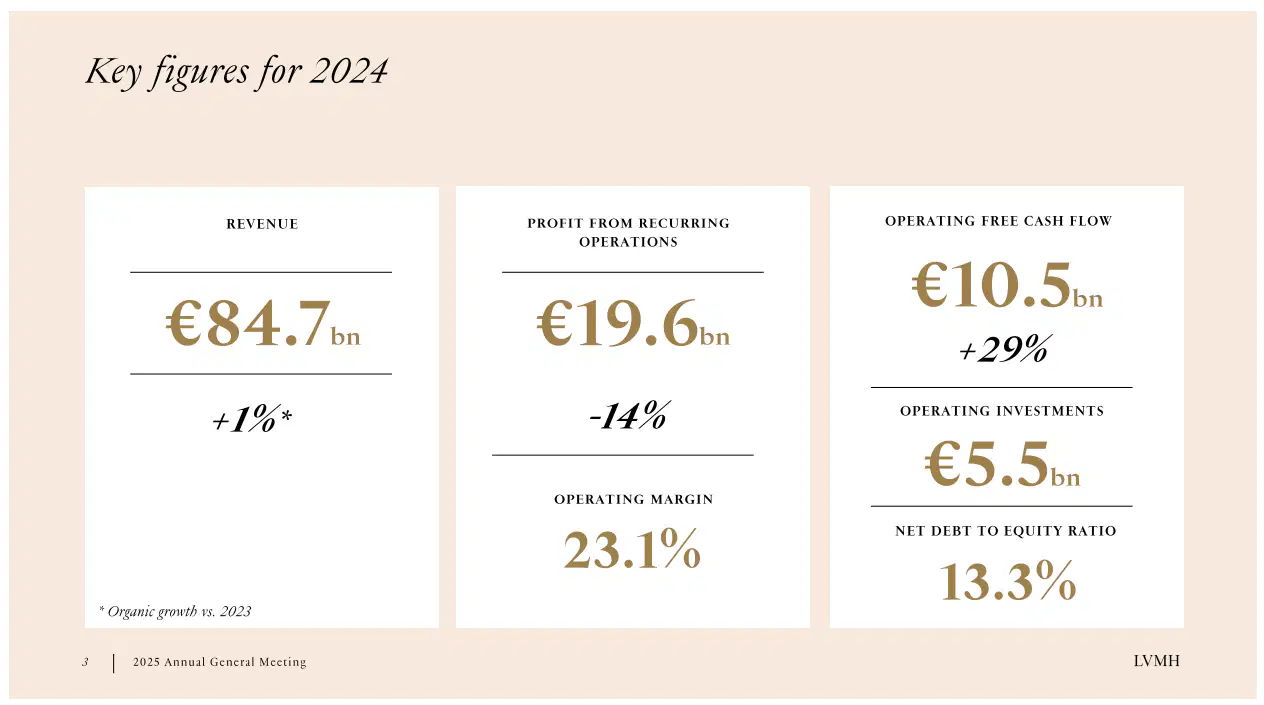
What is the reason of a decrease in profit for Louis Vuitton 2024 vs. 2023?
Exchange Rate Impact
Inflation Impact
Global Macro-Economic Impact
Post-Pandemic issues
Russia & Ukraine War
Mark those elements that will help Louis Vuitton improve the Gross Margin of 2024 (based on Cost of Goods Sold Optimization - COGS Optimization)
Reduce Raw Material Costs
Reduce Sales Expenses
Reduce Logistics Costs
Reduce Marketing Expenses
Reduce Manufacturing Costs

Mark those elements valid for Louis Vuitton Strategy for 2030
Traceability and Transparency ensuring Excellence
Win at the point of Sale Globally
Taking Action for the Climate
Regenerating Biodiversity
Combining Sustainability and Circularity
Mark those valid items to improve Logistics Performance of Louis Vuitton..
Reduce Freight to Customers
Reduce Warehousing Costs (Storage & Handling)
Reduce Freight to Warehouse
Reduce Sales Expenses
Reduce Marketing Expenses
What is a landed cost?
The cost of shipping a product only
The total price of a product once it has arrived at a buyer’s door
The cost of manufacturing a product
The cost of marketing a product
Which of the following is NOT included in the landed cost?
Original price of the product
Marketing expenses
Customs duties
Transportation fees
What does the landed cost include besides the original price of the product?
Only inland transportation fees
Only ocean transportation fees
All transportation fees, customs, duties, taxes, insurance, currency conversion, crating, handling, and payment fees
Only customs and duties

What is the total landed cost?
The sum of all seller costs associated with a product until it reaches the customer's hands.
The cost of manufacturing the product only.
The cost of shipping the product only.
The cost of duties and broker fees only.
What is another term for landed cost?
Manufacturing cost
Landed price
Shipping cost
Retail price
Which of the following is a component of the Total Landed Cost?
Marketing expenses
Container hire
Employee salaries
Office rent
What does the 'Traveling' component of the Total Landed Cost refer to?
Cost of hiring a shipping container
Cost of traveling the container by land, air, or sea
Cost of insuring the goods
Cost of duties payable
Which component of the Total Landed Cost involves insuring the goods during transit?
Taxes
Duties
Insurance
Container

What is the purpose of the 'Duties' component in the Total Landed Cost?
To cover the cost of hiring a container
To pay for insuring the goods
To pay duties to get the goods into the destination country
To cover the cost of traveling the container

Calculate the Total Landed Cost if you are importing a container of $40,000 USD from a Buyer´s perspective applying FOB Incoterm
56,214
56,215
55,814
55,980
55,815

What is the landed cost from a Seller perspective using CPT Incoterm assuming you are selling a Container of $50,000 USD?
$65,398 USD
$65,400 USD
$64,949 USD
$65,239 USD
$65,950 USD

Assuming you are the Seller and exporting a container of $100,000 USD what will be total landed cost using the CIP Incoterm?
$116,399 USD
$115,210 USD
$115,239 USD
$113,880 USD
$115,240 USD
What is the primary purpose of Incoterms?
To provide a universal set of rules for international trade
To regulate domestic trade laws
To establish currency exchange rates
To create new trade agreements
Who issues the International Commercial Terms (Incoterms)?
World Trade Organization (WTO)
International Chamber of Commerce (ICC)
United Nations (UN)
World Bank
How do Incoterms help in foreign trade contracts?
By increasing tariffs
By clarifying the obligations of buyers and sellers
By reducing shipping costs
By setting product standards
What does the term "Ex Works" (EXW) imply in Incoterms 2020?
The seller is responsible for all transport costs and risks.
The buyer assumes all responsibilities once the goods are collected.
The seller delivers the goods to the buyer's location.
The buyer and seller share transport costs equally.
In the context of Ex Works, who is responsible for making the goods available at the seller's warehouse or dock station?
The buyer
The seller
A third-party logistics provider
The shipping company
According to the Ex Works term, what happens once the buyer collects the cargo?
The seller continues to bear all risks.
The buyer assumes all other responsibilities, including transport.
The seller arranges for transport to the destination.
The buyer and seller negotiate new terms.
What does the Ex Works term in Incoterms primarily require the seller to do?
Deliver goods to the buyer's location
Make goods available at their warehouse or dock station
Pay for the main carriage
Handle import formalities and duties

What will be the Total Landed Cost if you are the Buyer and exporting a Container of $100,000 USD using DAP Incoterm?
$101,160 USD
$102,610 USD
$113,789 USD
$102,590 USD
$113,790 USD

What is the total landed cost for the aluminum logistics from Shanghai to Manzanillo using DPU Incoterm (please review Excel file on image)?
$62,139
$58,000
$62,060
$3,792

What will be the Total Landed Cost if you are the Buyer and importing a Container of $80,000 USD using Ex Works Incoterm?
$96,399
$96,00 USD
$94,950 USD
$96,400 USD
$96,401 USD
In the FCA (Free Carrier) Incoterm, who is responsible for export clearance and delivery of goods to the carrier at the named place of delivery?
The buyer (Importer)
The seller (Exporter)
The shipping company
The customs officer

What must the buyer (Importer) specify in the contract of sales of carriage under the FCA Incoterm?
The type of goods being shipped
The precise point of delivery
The cost of shipping
The method of payment
In the FCA (Free Carrier) Incoterm, who is responsible for export clearance and delivery of goods to the carrier at the named place of delivery?
The buyer (Importer)
The seller (Exporter)
The shipping company
The insurance provider
What must the buyer (Importer) specify in the contract of sales of carriage under the FCA Incoterm?
The type of goods being shipped
The precise point of delivery
The cost of insurance
The shipping route

In FOB (Free On Board) terms, who is responsible for export clearance and delivery of goods to the carrier at the named place of delivery?
The Buyer
The Seller
The Shipping Company
The Insurance Provider

At what point does the seller's risk end in FOB terms according to this diagram?
Seller Location
Onboard Ship of Vessel
Delivery at Named Place Port/Terminal
Buyer Location Unloaded

If you are the Buyer and Importing a Container of $150,000 USD what will be the Total Landed Cost using FCA Incoterm?
$165,900 USD
$166,399 USD
$164,530 USD
$164,531 USD
$165,980 USD

What is the total landed cost per ton according to the FCA/FOB Incoterm calculation?
3,700 USD
3,800 USD
3,750 USD
3,790 USD
3,772 USD

What is the percentage increase in cost according to the EXW Incoterm calculation assuming you are the Buyer?
23%
24%
22%
25%
What does CPT stand for in Incoterms 2020?
Carriage Paid To
Cost Paid To
Carrier Paid To
Cargo Paid To
In CPT terms, who incurs the risks and costs associated with delivering goods to a carrier?
The buyer
The seller (Exporter)
The carrier
The insurance company

In CPT (Carriage Paid To), who incurs the risks and costs associated with delivering goods to a named place / port terminal?
The buyer
The seller
The shipping company
The insurance company

What is the best Incoterm for the Seller according to this Spreadsheet?
CIP
DDP
CPT
DPU
FCA

What is the total landed cost for the CPT Incoterm from Shanghai to Manzanillo?
$62,060
$75,849
$58,000
$75,430
$62,059

What is the percentage increase in cost per ton for the CPT Incoterm?
7%
24%
0%
23%


Mark those items valid for the definition of a "Digital Twin"
Digital representation of a Logistics Network
Digital representation of a Business Model
Digital representation of a Supply Chain
A quantum bit
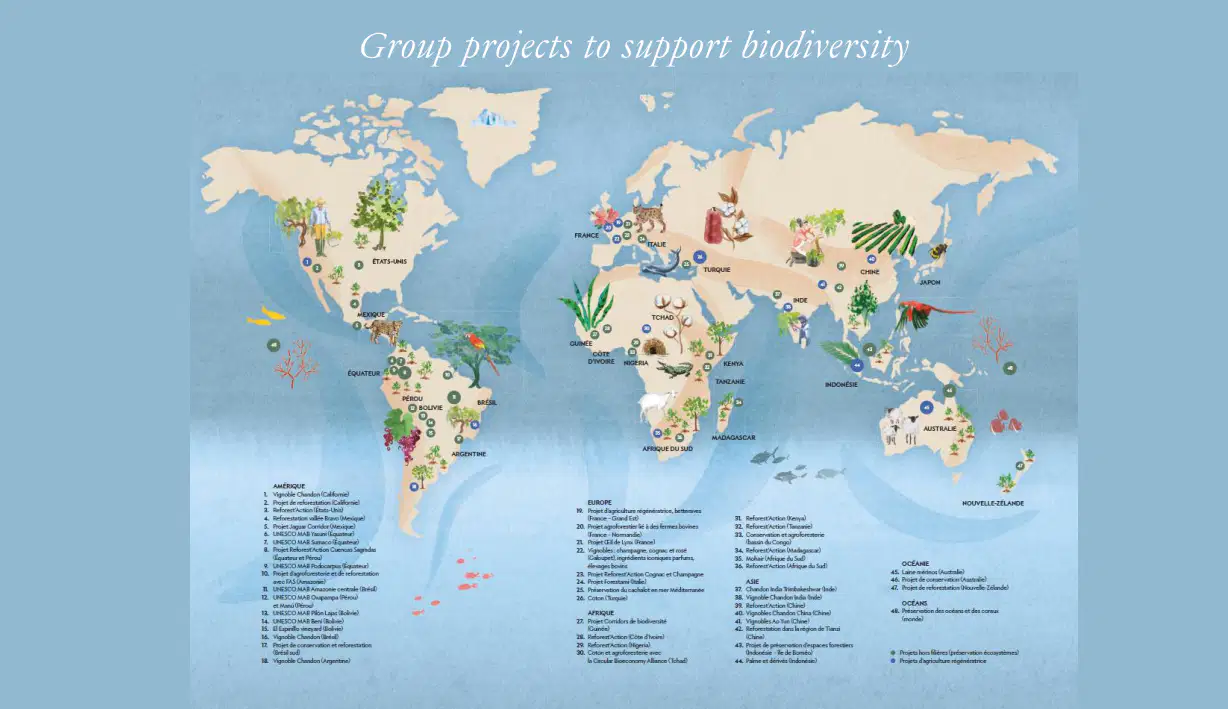
Vertical Integration and Craftsmanship:
To preserve the authenticity and quality of its products, LVMH emphasizes vertical integration. This involves controlling multiple stages of the production process, from sourcing raw materials to final product assembly. For instance, Louis Vuitton has established manufacturing facilities in the United States to better serve the American market while maintaining stringent quality standards.
Mark those valid examples of vertical integration for LVMH (Louis Vuitton) below...
Raw Materials: Owns tanneries for leather goods, vineyards (ie. Dom Perignon) and perfume flower farms
Production: Owns workshops and factories in France, Italy, Spain, and the US for brands like Louis Vuitton, Dior, and Celine
Las Vegas: Owns Super Premium Casinos in the famous "Strip Avenue"
Distribution: Operates dedicated logistics centers and global distribution through LVMH Supply Chain
Owns and operates over 5,600 retail stores ensuring end to end control of Customer Experience
Advanced Inventory Management (AIM):
LVMH (Louis Vuitton) employs advanced inventory management techniques to align supply with demand accurately. For example, LVMH has implemented Demand-Driven Material Requirements Planning (DDMRP) to optimize inventory levels, reduce stockouts, and enhance responsiveness to market fluctuations.
What is the impact that Louis Vuitton is gaining in the P&L driven by AIM?
Sales Increase
Reduced Logistics cost and improved Margin & Profit
Improved Market Share
Improved Consumer Experience
Cost of Goods Sold (COGS) Increase
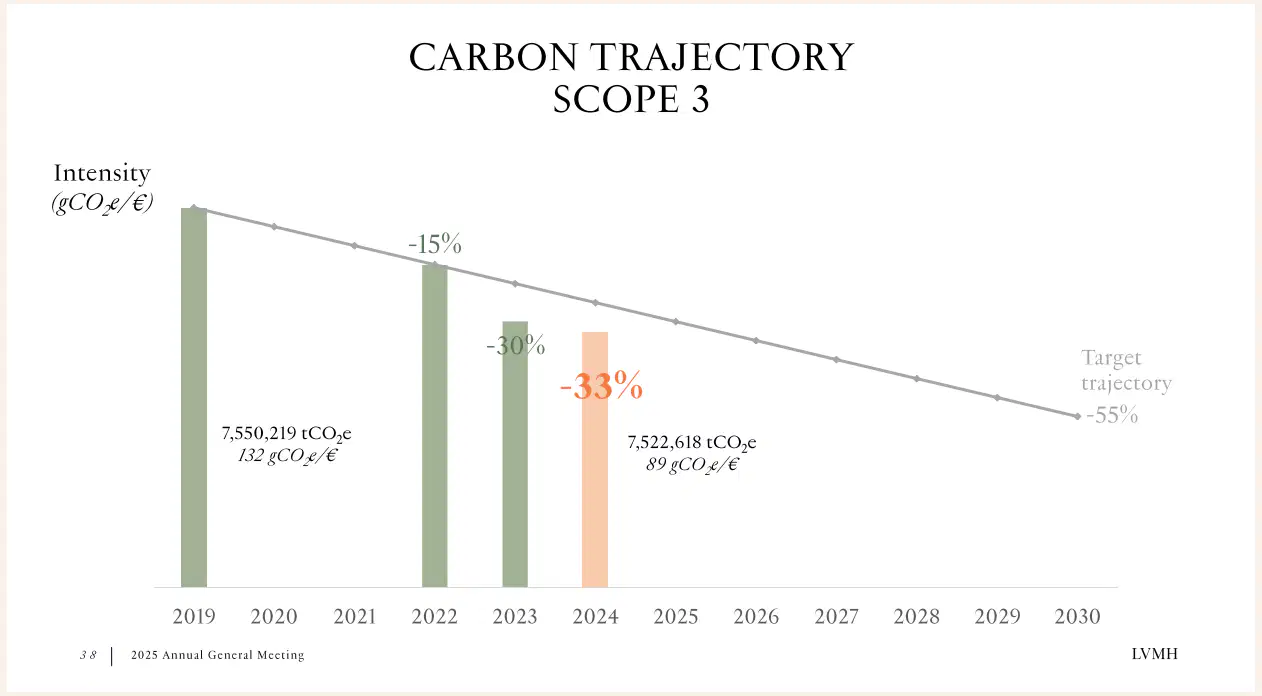
Louis Vuitton Commitment to Sustainability:
Sustainability is a core pillar of LVMH's logistics strategy. The group has launched the LIFE360 program, aiming to eliminate virgin plastics in packaging by 2026 and achieve zero deforestation in its supply chain by 2025. Additionally, LVMH is investing in decarbonizing transportation and promoting repairability to extend product lifespans.
In addition to generate benefits to the Global Communities, what is the positive impact of Sustainability actions in Louis Vuitton P&L?
Increased Market Share
Increased Sales
Improved Margin & Profit driven by Logistics Cost reduction
Increased payout to Shareholders
Talent & Capabilities benefits

Integration of Artificial Intelligence in Louis Vuitton:
To enhance operational efficiency, LVMH is integrating artificial intelligence into its supply chain processes. By leveraging AI for demand forecasting, inventory allocation, and production planning, the group aims to respond more swiftly to consumer needs and reduce environmental impact.
Mark the positive impacts of AI integration of Louis Vuitton in the "End to End" Supply Chain..
Optimized Customer Service Levels and response to Consumer Needs
Optimized Inventory Levels
Optimized Production Planning
Improved Demand Forecasting
Reduction of the Carbon Footprint

Louis Vuitton Talent Development and Expertise:
Recognizing the importance of skilled professionals in maintaining its supply chain excellence, LVMH invests in talent development programs. Initiatives like the Horizons Operations program train individuals in supply chain and logistics roles, fostering a culture of continuous improvement and innovation.
How are this actions helping Louis Vuitton in the Talent Strategy?
Attract and Retain the Best Talent available for Supply Chain
Reduce Costs
Increase Sales
Increase Market Share
Reduce Maintenance Costs

