
Font size
 Worksheets
Unit 1 Test Part 1; The Periodic table (2024)
Total questions: 60
Worksheet time: 46mins
Identify the correct group of soft metals from the following
Sodium, Alluminium and Copper
Sodium, Potassium and Lithium
Copper, Manganese and Magnesium
Zinc, Barium and Lithium


Which of the following is true of all metals?
They react with acids to form Hydrogen
They are denser than water
They conduct electricity
They're silver in colour.
What is just so typical of NON-metals?
They don't know what colours go well together.
Malleable.
Form acidic oxides.
Good conductors of electricity.
High melting points.

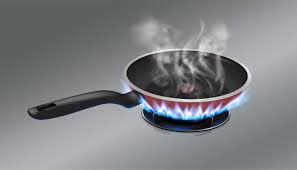
Non-metals are ___ conductors of heat.
Good
Poor / Bad
The handle in this picture is covered in a ___.
metal
non-metal
The property by which metals can be beaten into sheets is known as _________________
ductility
sonority
lusture
malleability
A substance is said to be sonorous if it _________.
conducts heat
conducts electricity
conducts water through metal pipe
produces a ringing sound when beaten
All metals are solids except
Sodium
Calcium
Mercury
Hydrogen
UP and DOWN columns on the periodic table are
groups
periods
SIDE TO SIDE rows on the periodic table are
groups
periods
Which elements have properties in common?
elements in a group
elements in a period
The group number tells you the number of
protons
valence electrons
energy levels
The period number tells you the number of
protons
energy levels
valence electrons

How many protons does Lithium have?
3
4
7

These elements are in a:
group
period

Do these elements have properties in common?
yes
no
Which elements are stable?
Group 1
Group 8
Group 18
Which of these elements is a halogen?
Iodine
argon
silver
boron
Period 6, Group 11
(a)
Period 4, Group 15
(a)

The period for Bromine is ___________.
3
2
4
5


What element is in group 2, period 6?
Sr - Strontium
Ba - Barium
S - Sulfur
O - Oxygen
What are the elements in Group 1 known as?
(a)
Select the elements that are in Group 1.
Potassium
Calcium
Magnesium
Lithium
Sodium
The Group 1 elements are all very ____________.
reactive
unreactive
Select the properties of the Group 1 elements.
Silvery solids
Very hard metals
Very soft metals
High density
Low density
The reactivity of the Group 1 elements ______________ as you go down the group.
decreases
increases
does not change
Sodium is less reactive than which Group 1 elements?
Lithium
Potassium
Rubidium
Caesium
The melting and boiling points of the Group 1 elements ______________ as you go down the group.
decrease
increase
do not change
Melting point (a) as you go down the group of Group 1 elements
P
(a)
Ar
(a)

From the table, Element Z is a ________
Metal
Non-metal
Metalloid
How does Chlorine make water safe to drink?
.....tiny amounts destroy deadly bacteria
.......flavors the water
......gives the water and attractive blue color
......gives the water a nice smell/aroma
Match the group 7 element to its symbol;
Bromine →→→→→→ _____
F
Cl
Br
I
At
Page 66; Which of the following is true of group 7 elements?
They are halogens
They are non-metals
They have low melting points
They do not conduct electricity
They are brittle solids at room temperature

Research; Look up "uses of group 7 elements"
Which of the the group 1 elements are often used as disinfectants for purifying water, swimming pools, sterilizing surfaces.? (3 answers)
Fluoride
Chlorine
Bromine
Iodine
Astatine
A chemical reaction in which a more reactive element displaces a less reactive element from its compound is called a __________
Displacement reaction
Substitution reaction
Replacement reaction
Switching reaction

How many electrons does Cl contain? (click to see image)
17
28
35.45
3

The diagram shows a light bulb.
Why is argon used instead of air in the light bulb?
Argon is a good conductor of electricity.
Argon is more reactive than air.
The filament glows more brightly.
The filament does not react with the argon.
The Halogens are found in which group number?
5
6
7
0
As you go down the group, how does the boiling point of the halogen elements change?
Increases
Decreases
They're all about the same
Which halogens can displace bromide ions to make bromine?
Fluorine and iodine.
Fluorine and bromine.
Fluorine and chlorine
Chlorine and iodine.
As you move down the group, halogens' reactivity...
increases
decreases
doesn't change
shows no trend.
Why was this?

