
 Worksheets
Cell Review
Total questions: 69
Worksheet time: 52mins
Which of the following is a prokaryote?
A cell with no nucleus
A cell with a nucleus
An animal cell
A plant cell
SELECT ALL the parts of the Cell Theory.
All living things are composed of cells
The cell is the smallest unit of structure & function in living things
All cells come from pre-existing cells
Cells have organelles that are considered alive
Which organelle selects what enters and leaves the cell?
Nucleus
Cell membrane
Golgi
Ribosome
___________ are internal structures inside a cell that carry out a specific function.
Organelles
Organs
Lipids
Proteins
Which of the following is an example of a prokaryotic cell?
Bacteria
Animal cell
Plant cell
Red blood cell
What does the chloroplast do?
Makes food for the animal cell
Makes food for the plant cell
Makes lipids
Ships proteins
Where is DNA located in a cell?
Nucleus
Ribosome
Cell Membrane
Mitochondria
Which of the following organelles are in plant cells but NOT in animal cells? SELECT ALL THAT APPLY
Chloroplast
Mitochondria
Cell Wall
Cell membrane
All of the following organisms are made of eukaryotic cells EXCEPT:
Plants
Animals
Bacteria
Fungi
What does the Golgi Apparatus do in the cell?
Packages and ships proteins
Holds the DNA
Makes energy
Does photosynthesis
Which organelle has the very important job of making proteins?
Nulceus
Cell Membrane
Mitochondria
Ribosomes
What does the mitochondria do for the cell?
Converts food into usable energy through cellular respiration
Photosynthesis to make food
Makes proteins
Tells the other organelles what to do
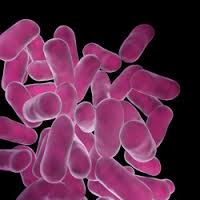
Which organelle acts as the"construction worker" because it assembles amino acids to make proteins?
I am the "cleaner" because I break down and recycle molecules inside cells. Which organelle am I?
Cytoplasm
Provides extra support for the plant cell and gives it shape
chlorophyll
chloroplast
cell wall
vacuole
Lysosomes in the cell work to
get rid of waste
provide protein
store all information
Suppose you were to examine plant and animal cells under a microscope. Which structures would you find in both cell types?
cell wall, endoplasmic reticulum, and Golgi body
cell wall, cytoplasm, and Golgi body
mitochondria, ribosomes, and endoplasmic reticulum
all of the above
builds proteins, each cell contains thousands, found on ER and floating throughout cell
Ribosomes
Nucleus
Vacuole
Golgi Body
moves materials around in the cell, two types: smooth and rough
Cytoplasm
Nucleus
Vacuole
Endoplasmic Reticulum
This is a larger cell and has a nucleus.
Prokaryotic
Eukaryotic
Both
This cell has DNA.
Prokaryotic
Eukaryotic
Both
This cell is a bacterial cell.
Prokaryotic
Eukaryotic
Both
This cell can be a protist, fungi, plant, or animal cell.
Prokaryotic
Eukaryotic
Both
This organelle creates energy for the cell in the form of ATP
Mitochondria
Ribosomes
Golgi Complex
Smooth and Rough ER

Transport important things (like proteins) throughout the cell
Lysosomes
Vacuoles
Nucleus
Vesicles

Makes and stores lipids (fats). Also breaks down toxins.
Rough ER
Smooth ER
Golgi Apparatus
Vacuoles
Which biomolecule comprises both DNA and RNA
Which biomolecule makes up sugars and starches?
Which biomolecule is made of carbon, hydrogen, oxygen and nitrogen?
Nucleic Acids
All of the above
Join together to form biomolecules
Create protiens
Store energy
Split to make more cells
What is a fat molecule that stores energy?
lipid
protein
carbohydrate
What is a type of nucleic acid that is found in ALL cells?
nucleotides
amino acids
DNA
Which biomolecule is used to build and repair body structures and to regulate body processes?
lipid
carbohydrate
protein
What is the function of carbohydrates
short term energy
long term energy
makes up cell membranes
makes up genetic material
which of the following is a good source of carbohydrates?
pasta
red meat
veggies

This biomolecule stores energy for a long time for when the body needs energy and also makes up cell membranes.
nucleic acids
proteins
lipids
carbohydrates

Which biomolecule provides structure for hair, skin, and nails?
nucleic acids
proteins
lipids
carbohydrates


Which of the following are the main elements found in biomolecules?
C, H, O, N, P
Ca, He, Os, Ni, Pt, Si
C, He, O, Mg, Pd, S
C, H, Os, Ma, Ni, Se
How are prokaryotic cells different from eukaryotic cells?
Prokaryotic cells are much larger than eukaryotic cells
Prokaryotic cells are more complex than eukaryotic cells
Prokaryotic cells make up multicellular organisms, whereas eukaryotic cells are only unicellular organisms
Eukaryotic cells have a nucleus, whereas prokaryotic cells never have a nucleus
Which of the following is true of BOTH prokaryotic cells and eukaryotic cells?
Both cells types have a nucleus and organelles
Both cell types have a cell membrane and cytoplasm
Both cell types can make up multicellular organisms
Both cell types are found in plants
Which of the following groups of organisms are composed of prokaryotic cells?
Plants (ex: sunflowers, moss)
Animals (ex: birds, bees)
Protists (ex: ameba, paramecium)
Bacteria (ex: e-coli, streptococcus)
Fungi (ex: mushrooms, mold)
Which type of cell makes up animals?
Prokaryotic Cells
Plant Cells
Bacteria Cells
Eukaryotic Cells
A cell has a nucleus, is complex and large, and has membrane bound organelles. What type of cell is this?
there is not enough information
Prokaryotic
Eukaryotic
Bacteria
Which is Smaller
Prokaryotic
Eukaryotic
A scientist is trying to decide whether an organism is unicellular or multicellular. Which information would help the scientist most to make her decision?
size of the cells of the organism
what the organism eats
how many cells are in the organisms
how fast the organism grows
Typically, larger organisms are...
Multicellular
Unicellular
Which is NOT a role of the cytoskeleton?
Maintain cell shape
Movement of cell parts
Helps make proteins

