wayground logo

Free Printable Worksheets

Font size

S
M
L
XL
Worksheets

Heredity: Inheritance and Variation Test

Total questions: 70

Worksheet time: 1hrs 23mins

Name
Class
Date
1.

Two genetically identical plants were crossed. The genotypic probability of offspring are seen in the Punnett square.


What percent of the offspring should look like the parents?

a)

0%

b)

25%

c)

50%

d)

75%

2.

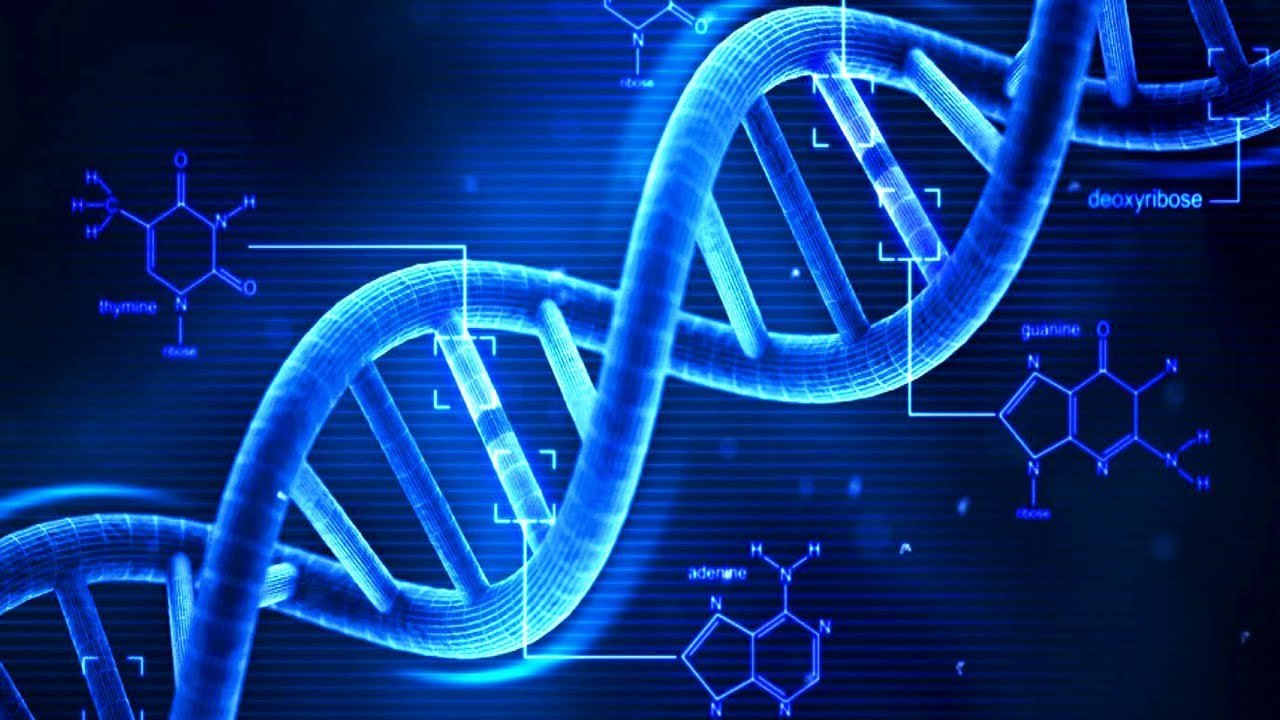
A section of this DNA molecule that codes for a specific inherited trait is called a

a)

chromosome.

b)

codon.

c)

gene.

d)

phenotype.

3.

Freckles are a dominant trait in humans. Both of the girls have the genotype FF for freckles. If either one marries a man with no freckles, what are the chances that their children will have freckles?

a)

0%

b)

50%

c)

75%

d)

100%

4.

coiled strands of DNA

a)

allele

b)

chromosomes

c)

gene

d)

DNA

5.

a segment of DNA on a chromosome that codes for a specific trait

a)

allele

b)

gene

c)

mutation

d)

chromosome

6.

genetic factor that blocks another genetic factor

a)

dominant

b)

recessive

c)

gene

d)

strong

7.

study of how traits pass from parents to offspring

a)

heredity

b)

genes

c)

genetics

d)

genetic engineering

8.

having two different alleles for a trait

a)

heterozygous

b)

homozygous

9.

having two identical alleles for a trait

a)

homozygous

b)

heterozygous

10.

how traits appear or are expressed

a)

genotype

b)

phenotype

c)

gene

d)

allele

11.

a distinguishing characteristic of an organism

a)

trait

b)

gene

c)

chromosome

d)

genetics

12.
The passing of traits from parents to offspring is called _____.
a)
heredity
b)
genetics
c)
traits
d)
genes
13.
What do we call the thread-like structures located inside the nucleus of animal and plant cells that contains the DNA?
a)
chromosomes
b)
DNA
c)
alleles
d)
histones
14.
What do we call an individual if the alleles for a trait are identical or the same?
a)
homozygous
b)
genotype
c)
phenotype
d)
heterozygous
15.
What do we call an individual if the alleles for a trait are different for a particular gene?
a)
heterozygous
b)
homozygous
c)
dominant
d)
recessive
16.
These are alleles that expresses itself and masks the effect of the allele for the same trait.
a)
dominant
b)
haploid
c)
diploid
d)
recessive
17.
These are alleles that are not expressed in the presence of the other allele.
a)
recessive
b)
haploid
c)
diploid
d)
dominant
18.
Chromosomes are found in the ____________ of the cell
a)
Chloroplast
b)
Nucleus
c)
Cytoplasm
d)
Mitochondria
19.
____________________ are used to make predictions about the genotypes and phenotypes of offspring.
a)
Dominant Squares
b)
Punnett Grids
c)
Punnett Squares
d)
Recessive Squares
20.
Which of the following pairs is homozygous dominant?
a)
Hh
b)
pp
c)
HH
d)
aa
21.

What are alleles?

a)

Long strands of DNA that contain lots of genes.

b)

Different versions of a gene.

c)

The basic unit of heredity; controls a specific trait.

d)

A characteristic passed from parent to offspring

e)

The differences that occur from a mixture of genes

22.

What is genetic variation?

a)

Long strands of DNA that contain lots of genes.

b)

Different versions of a gene.

c)

The basic unit of heredity; controls a specific trait.

d)

A characteristic passed from parent to offspring

e)

The differences that occur from a mixture of genes

23.

In sexually reproducing organisms, each parent contributes _____________ of the genes acquired by the offspring.

a)

an eighth

b)

a quarter

c)

a half

d)

three quarters

24.

The difference between genotype and phenotype is :

a)

Genotype shows the combination of alleles that provides the genes for a trait, while phenotype is the expression of the trait, what it will look like.

b)

Phenotype shows the combination of alleles that provides the genes for a trait, while genotype is the expression of the trait, what it will look like.

25.

Why do human siblings look similar, but not always identical if they have the same parents?

a)

The reason that siblings can look similar without being identical is that there is always a mutation in the chromosomes.

b)

The reason that siblings can look similar without being identical is that they have the exact same DNA, but it is in a different order.

c)

The reason that siblings can look similar without being identical is that there are multiple combinations of alleles that code for genes, that express as traits that can be inherited.

26.

A Punnett square showing the cross between two pea plants is shown. In pea plants, the smooth coat allele is (R) the wrinkled coat allele is (r). Which is the dominant allele?

a)

smooth coat (R)

b)

wrinkled coat (r)

27.

A complete Punnett square here shows a cross between two mice with different fur color, agouti (A) and black (a). What is the probability of the recessive phenotype being expressed?

a)

25%

b)

50%

c)

75%

d)

100%

28.

How is it genetically possible for parents with both natural brown hair, a dominant phenotype have an offspring with blonde hair, a recessive phenotype?

a)

Both parents have blonde, but have dyed their hair brown.

b)

Both parents have the allele for blonde hair that they passed down to their offspring.

c)

The offspring is not their child.

29.
What is the definition of heredity?
a)
The passing of traits (genes) from sibling to sibling.
b)
The passing of traits (genes) from one generation to the next
c)
Chromosomes look like the letter "X"
d)
The passing of traits (genes) from mom to dad
30.
The part of the cell that contains the genetic information.
a)
Nucleus
b)
Cytoplasm
c)
Mitochondria
d)
Chloroplast
31.
When comparing the offspring of sexually and asexually reproducing organisms, we would expect the genetic material (DNA) of the sexually reproducing organism to -
a)
contain fewer mutations
b)
be lesser in quantity
c)
be simpler overall
d)
show more variation
32.

Different forms of a gene

a)

chromosomes

b)

genes

c)

alleles

d)

DNA

33.

2 different alleles for a gene or trait

a)

homozygous

b)

heterozyagous

c)

genotype

d)

phenotype

34.

A trait that always shows when present

a)

homozygous

b)

heterozygous

c)

dominant

d)

recessive

35.

An organisms actual genetic allele combination (TT, Tt, tt)

a)

Traits

b)

Genotype

c)

Phenotype

d)

DNA

36.

The traits you see from a genotype (tall plant, red flowers)

a)

Traits

b)

Genotype

c)

Phenotype

d)

Alleles

37.
T - tall and t = short
In the punnett square below, what belongs in the missing square
a)
tt
b)
Tt
c)
Bb
d)
TT
38.
If a heterozygous tall pea plant is crossed with a short pea plant, what are the possible genotypes of the future offspring?
a)
100% Tt
b)
50% Tt, 50% tt
c)
75%Tt, 25%tt
d)
25%TT, 50%Tt, 25%tt
39.
Having two of the SAME alleles for a trait (example HH or hh):
a)
homozygous
b)
heterozygous
c)
recessive
d)
dominant
40.
How can two parents with brown eyes have a child with blue eyes?
a)
The parents may both have recessive genes for blue eyes.
b)
The child was born during the winter
c)
Eye color in humans is not an inherited trait
d)
The child was deprived of oxygen during its birth
41.

Define Alleles

a)

Molecule which contains the genetic information for an organism.

b)

Different versions of the same gene.

c)

all the chromosomes/DNA that code for an individual’s traits.

d)

Condensed DNA that is visible during cell division.

42.

Define a Gene

a)

Condensed DNA that is visible during cell division.

b)

Different versions of the same gene.

c)

A section of DNA that codes for specific proteins/traits.

d)

Molecule which contains the genetic information for an organism.

43.

When Mendel crossed true-breeding tall plants (TT) with true-breeding short plants (tt), all of the offspring were tall because...

a)

The allele for tall plants is recessive.

b)

The allele for short plants is dominant.

c)

The allele for tall plants is dominant

44.

What is the relationship between phenotype and genotype?

a)

The phenotype determines the genotype.

b)

The genotype determines the phenotype.

c)

There is no relationship between phenotype and genotype.

45.

A Punnett square shows all of the following EXCEPT

a)

All possible results of a genetic cross.

b)

The possible genotypes of the offspring.

c)

The alleles in the gametes of each parent.

d)

The actual genotypes of the offspring.

46.

Hybrids are...

a)

homozygous.

b)

organisms that receive different alleles from each parent.

c)

recessive.

d)

dominant.

47.
Two brown eyed parents (Bb) have a baby. What is the chance the baby is blue eyed?
a)
0 %
b)
25%
c)
50%
d)
75%
48.

A nucleotide is composed of

a)

A phosphate, sugar and nitrogenous base

b)

A protein, protein and Guanine

c)

A phosphate, Adenine, and nitrogenous base

d)

A protein, Adenine and nitrogenous base

49.

Which of the following is a base pair?

a)

Adenine - Cytosine

b)

Cytosine - Thymine

c)

Deoxyribose - Cytosine

d)

Cytosine - Guanine

50.

The weak bonds between base pairs is a ___

a)

Covalent Bond

b)

Polar Bond

c)

Non Polar Bond

d)

Hydrogen

51.
Which 2 molecules form the sides (backbone) of the DNA ladder?
a)
deoxyribose sugar and adenine
b)
deoxyribose sugar and a hydrogen bond
c)
deoxyribose sugar and the nucleus
d)
deoxyribose sugar and phosphate
52.
What does DNA stand for?
a)
Deoxyribonucleic acid
b)
Denitrogenous acid
c)
Deribonucleic acid
d)
Diribonucleic acid
53.
Which two scientists are accredited with correctly deducing the double helix model of DNA?
a)
Watson and Crick
b)
Wilkins and Franklin
c)
Wilkins and Crick
d)
Watson and Franklin
54.
Replicate the following strand of DNA: 
AATCATGGA
a)
AATCATGGA
b)
TTAGTACCT
c)
UUAGUACCU
d)
GGATAUCUA
55.

DNA is called the "blueprint of life" because

a)

it is like a fingerprint

b)

it has a blue color

c)

it contains the plans for building an organism

d)

it can relay messages to other molecules

56.
Who were the first guys to build a model of a DNA molecule?
a)
Larry, Moe, and Curley Joe
b)
Watson and Crick
c)
Watson and Holmes
d)
Superman and Batman
57.
What are the four nitrogen bases?
a)
adenine, thymine, guanine, cytosine
b)
adenine, lysine, prolene, guanine
c)
arganine, cytosine, lysine, purine
d)
lysine, cytosine, lucine, guanine
58.

The backbone of a DNA molecule is made from a 5 carbon ______________ and a _______________ group.

a)

lipid, carbon

b)

sugar, phosphate

c)

nitrogen, oxygen

d)

nitrogen, sulfur

59.
The shape of the DNA molecule is a double __________________?
a)
"S"
b)
helix
c)
rope
d)
curve
60.
What are the building blocks for DNA?
a)
carbohydrates
b)
nucleotides
c)
lipids
d)
proteins
61.
In pea plants, the tall allele is dominant to the short allele. What key would demonstrate this?
a)
Tall = T
Short = S
b)
Tall = T
Short = t
c)
Tall = t
Short = T
d)
Tall = TT
Short = tt
62.

A homozygous long-tusked elephant is crossed with a homozygous recessive short-tusked elephant. What is the probability of the offspring having short tusks?

a)

0%

b)

25%

c)

50%

d)

75%

63.

What is the probability of a purple-horned unicorn offspring if a heterozygous pink-horned unicorn is crossed with a heterozygous pink-horned unicorn?

a)

0%

b)

25%

c)

50%

d)

75%

64.
Georgette wants to breed her pet phoenixes, but she isn't sure if the babies will burst into blue flames or red flames. Her documents show that her female phoenix is homozygous dominant for red flames, while her male phoenix is homozygous recessive for blue flames. What color flames will the babies have?
a)
Red
b)
Blue
c)
Purple
d)
50% Red, 50% Blue
65.
Leonardo bet his friend Olivet that two heterozygous green-eyed sea monsters could not have a recessive blue-eyed baby sea monster. Olivet said they can have a blue-eyed sea monster.
Who wins the bet?
a)
Leonardo
b)
Olivet
c)
Both
d)
Neither
66.
Jabba the Hutt has finally decided to settle down and have a family. He has undergone genetic testing and learned that he is heterozygous for Hutt Fungal Syndrome, which is caused by recessive alleles. He is worried that his children might suffer from this syndrome. His Hutt mate has undergone genetic testing and discovered she is homozygous dominant for the syndrome. Should Jabba be worried?
a)
Yes
b)
No
67.
A Jawa notices that his beloved pet desert rat, who has brown fur, just had several rat babies, some of which had white fur and some which had brown fur. Brown fur is the dominant trait. This means his rat must have what genotype?
a)
Homozygous Dominant
b)
Heterozygous
c)
Homozygous Recessive
68.
Bob the abominable snowman lives in the snowy Andes mountains. He has white fur, which blends in nicely. He is therefore dismayed when his mate keeps having red-furred babies. What is Bob's likely genotype?
a)
Homozygous Dominant
b)
Heterozygous
c)
Homozygous Recessive
69.
What phenotype would result from crossing a homozygous dominant purple-flowered pea plant with a homozygous recessive white-flowered pea plant?
a)
Pp
b)
Purple
c)
White
d)
PP and pp
70.
The results from a Punnett square can be used to find the ______________ that a certain allele combination will occur in offspring.
a)
Probability
b)
Pedigree
c)
Traits
d)
Genes