wayground logo

Free Printable Worksheets

NEW

Font size

S
M
L
XL
Worksheets

Ecology Review

Total questions: 70

Worksheet time: 1hrs 8mins

Name
Class
Date
1.

Ecology is the study of .

a)

life

b)

Interactions among organisms and their environments

c)

interactions among organisms

d)

how traits are passed from parents to offspring

2.

Which of the following is abiotic?

a)

A tree in a forest.

b)

Wood from the tree on the forest floor.

c)

A termite on the tree.

d)

The soil the tree is growing in.

3.

What is made up of all the populations in an area?

a)

Habitat

b)

Niche

c)

Community

d)

Ecosystem

4.

Which of the following is a predator and prey relationship?

a)

A. Cow and grass.

b)

B. Vulture and a dead lion.

c)

C. Tick and a deer.

d)

D. Spider and a fly.

5.

Tell if the item is an abiotic factor or biotic.....

TREE

a)

Abiotic

b)

Biotic

6.

Tell if the item is an abiotic factor or biotic.....

Water

a)

Abiotic

b)

Biotic

7.

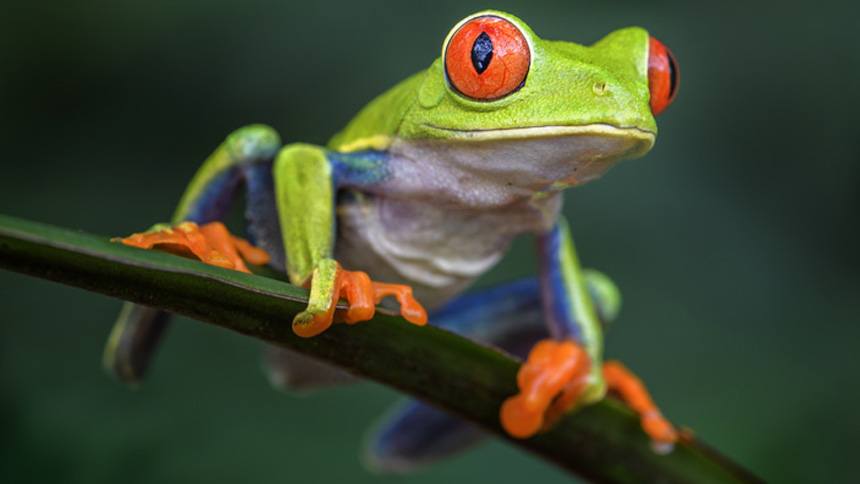
Tell if the item is an abiotic factor or biotic factor.....

Tree Frog

a)

Abiotic

b)

Biotic

8.

Tell if the item is an abiotic factor or biotic.....

Sandy Soil

a)

Abiotic

b)

Biotic

9.
Abiotic factors in the environment are all __________. 
a)
living
b)
nonliving
10.
Lions, birds, snakes and trees are all __________.
a)
abiotic factors
b)
biotic factors
c)
part of a niche
d)
in the same food chain
11.
Grass --> Grasshopper --> Mockingbird represents __________. 
a)
food chain
b)
food pyramid
c)
food web
d)
ecosystem
12.
Energy in an ecosystem is used for growth or lost as __________
a)
light
b)
heat
c)
death
d)
biomass
13.
A trophic level represents a _________. 
a)
consumer
b)
feeding level
c)
speeding level
d)
cooking level
14.
An animal that eats plants and meat is a(n) __________.
a)
herbivore
b)
omnivore
c)
carnivore
d)
decomposer
15.
Which level has the least amount of energy?
a)
producer
b)
decomposer
c)
primary consumer
d)
secondary consumer
16.
The ecosystem is comprised of both ____ and _____factors.
a)
rain and shine
b)
biotic and abiotic
c)
earth and environment
17.
What is the source of energy that flows through most of the food chains on Earth?
a)
plants
b)
the sun
c)
temperature
d)
wind
18.

Snakes eat other animals for food. Snakes are considered __________.

a)

Autotrophs

b)

Prey

c)

Carnivores

d)

Herbivores

19.

Which of the following are producers?

a)

Muscrats

b)

June bugs

c)

Mice

d)

Crab grass

20.

Which of the following is an abiotic factor?

a)

Climate

b)

Precipitation

c)

Wind patterns

d)

All the above

21.

What is the ultimate source of energy in an ecosystem?

a)

The sun

b)

Producers

c)

Glucose

d)

Decomposers

22.

What belongs at the bottom of an energy pyramid?

a)

Producer

b)

Predator

c)

Consumer

d)

Decomposer

23.

____________ is a characteristic that improves an organisms ability to survive in an environment.

a)

Habitat

b)

Biodiversity

c)

Adaptation

d)

Natural Selection

24.

Which of the following would you NOT find at the top of an energy pyramid?

a)

shark

b)

hawk

c)

wolf

d)

rabbit

25.

Plants are producers and make their own food by...

a)

eating other organisms

b)

photosynthesis

c)

cellular respiration

d)

breaking down decaying matter

26.
An individual belonging to a specific species
a)
Biotic
b)
Community
c)
Organism
d)
Reptile
27.
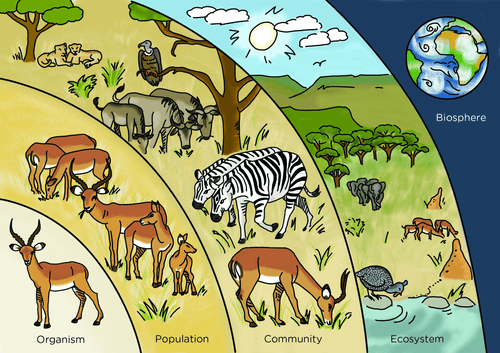
All of the living and nonliving things in an area that interact with each other are called a/an ______.
a)
community
b)
habitat
c)
population
d)
ecosystem
28.
An area where an organism finds food, shelter and water in a specific arrangement
a)
niche
b)
biosphere
c)
biome
d)
habitat
29.
The living part of an ecosystem
a)
Biotic
b)
Abiotic
c)
Mother Earth
d)
Flowers
30.
The study of how living things interact with one another and with their environment.
a)
Biology
b)
Lithology
c)
Ecology
d)
Farmacology
31.
Two or more members of a particular species living and interacting in the same area
a)
Community
b)
Population
c)
Organisms
d)
Biosphere
32.
Different populations living and interacting with each other in the same area
a)
Biome
b)
Ecosystem
c)
Community
d)
Niche
33.
The image provided is an example of a(n):
a)
Carnivore
b)
Herbivore
c)
Producer
d)
Autotroph
34.
The image provided is an example of a(n):
a)
Producer
b)
Autotroph
c)
Consumer
d)
Insect
35.
The amount of energy that usually transfers from one trophic level to the next...
a)
10%
b)
20%
c)
80%
d)
50%
36.
An illustration that uses arrows to show the many possible directions in which matter and energy can pass through the organisms in an ecosystem.
a)
Food chain
b)
Food web
c)
Energy Pyramid
d)
Succession Map
37.
Water temperature would be an example of ...
a)
A biotic factor
b)
An abiotic factor
38.
In the energy pyramid here, which organisms have the most energy available?
a)
Producers
b)
Carnivores
c)
Herbivores
d)
Top Predator
39.

A deer caught and eaten by a panther is an example of which type of relationship

a)

parasitism

b)

competition

c)

predator-prey

d)

biology

40.

Which shows a correct transfer of energy?

a)

grass - sun - rabbit - snake - soil

b)

water - rabbit - flower - hawk - ants

c)

worm - rabbit - snake - hawk - clouds

d)

sun - grass - rabbit - snake - hawk

41.

What best describes a food web?

a)

A less complex food chain.

b)

A more complex food chain that shows how orgainsm digest food.

c)

A combination of food chains.

d)

A single food chain.

42.

Which BEST explains what would happen if decomposers disappeared in an ecosystem?

a)

everything would stop functioning immediately.

b)

everything would function normally.

c)

the ecosystem would become cleaner

d)

the ecosystem would be overrun with dead matter.

43.
What is the ecological role of the krill in this food chain?
a)
Tertiary Consumer
b)
Producer
c)
Primary Consumer
d)
Secondary Consumer
44.
How much energy is passed on to the next trophic level?
a)
100%
b)
10%
c)
1%
d)
0%
45.
What is maximum number of organisms that can live in one population in an ecosystem over time?
a)
Limiting factor
b)
Ecological Succession
c)
10% Rule
d)
Carrying Capacity
46.
What starts every food chain or food web?
a)
Producers
b)
Primary Consumers
c)
Secondary Consumers
d)
The Sun
47.

An ___________ is living communities interacting with their nonliving environment.

a)

Population

b)

organism

c)

community

d)

ecosystem

48.

__________ is the study of the interactions of organisms with each other and their environment.

a)

Psychology

b)

Ecology

c)

Genetics

d)

Herpetology

49.

In this food chain, what is the producer?

a)

bird

b)

aphid

c)

tree

d)

lady bug

50.

In this food chain, what is the primary consumer?

a)

tree

b)

aphid

c)

lady bug

d)

bird

51.

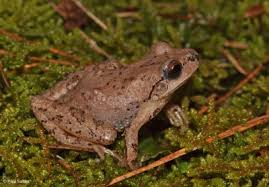
Which of the following would be a biotic factor in an ecosystem?

a)

rocks

b)

air

c)

temperature

d)

frogs

52.
Anything that helps an animal survive in its environment.
a)
counter-shading
b)
mimicry
c)
adaptation
d)
camouflage
53.
_______________ is when an animal blends into its environment.
a)
camouflage
b)
mimicry
c)
warning coloration
54.
When an animal looks like another animal it is called ______________.
a)
camouflage
b)
mimicry
c)
warning coloration
d)
protective resemblance
55.
A Viceroy butterfly looking like a bright colored poisonous Monarch butterfly is an example of __________.
a)
camouflage
b)
mimicry
c)
warning coloration
d)
protective resemblance
56.
Which of these adaptations help an animals to survive?
a)
warning coloration
b)
protective resemblance
c)
mimicry
d)
all of these
57.
How does an outer body covering help an animal survive?
a)
protects internal organs
b)
regulates temperature
c)
is sensitive to pain 
d)
all of these
58.
A resting state through the winter. 
Adaptation: Bear sleeping in a cave during the winter months
a)
Locomotion
b)
Hibernation
c)
Migration
d)
Defense
59.
Traveling done by an animal to find food and water. 
Adaption: birds flying south for the winter
a)
Camouflage
b)
Migration
c)
Hibernation
d)
Locomotion
60.
Color or pattern that helps an animal blend in with its habitat
Adaptation: polar bears in the Artic
a)
Hibernation
b)
Locomotion
c)
Camouflage
d)
Migration
61.

An exotic species is

a)

a species that is not native to a particular region

b)

a newly discovered species in a particular region

c)

a genetically modified species in a particular region

d)

a species that is native to a particular region

62.

a species that is not native to a particular region and has no natural predators and little competition

a)

consumer species

b)

producer species

c)

invasive species

d)

adapted species

63.

A common way to measure biodiversity is to count the total number of ____________ living within a particular area.

a)

Animals

b)

Plants

c)

Species

d)

Cute Puppies

64.
Maintaining ________ is important to keep an ecosystem healthy.
a)
pollutants
b)
biodiversity
c)
sunlight
d)
interactions
65.
What term describes a community of interacting organisms and their environment?
a)
Resource
b)
Ecosystem
c)
Population
d)
Native
66.

What is an invasive species?

a)

An organism that is new to an environment that has positive effects on the environment.

b)

An organism that is native to an environment that has negative effects on the environment.

c)

An organism that is new to an environment that has negative effects on the environment.

d)

An organism that is native to an environment that has positive effects on the environment.

67.
Why do the populations of invasive species grow so quickly? 
a)
Invasive Species are native to an area. 
b)
Invasive species are prey to many animals.
c)
Invasive species have no predators.
d)
Invasive species keep the ecosystems in equilibrium.
68.

What makes a species invasive?

a)
Moving to a new ecosystem and taking resources from natives 
b)

Not being native to the environment

c)
Species that can't adapt
d)
Plants that take up too much space
69.
When taken to a new habitat, non-native plants often threaten native plants of the new habitat.  Why do they do this?
a)
Non-native plants are able to mutate rapidly
b)
Non-native  plants cause native animals to relocate
c)
Non-native plants are able to be used for medicine
d)
Non-native plants compete with native plants for resources
70.
Kudzu has overgrown many parts of southern Missouri and native ground plants have disappeared from the area. This is an example of:
a)
Parasitism between kudzu and the native plants
b)
A predator prey relationship between ground plants and kudzu
c)
Competition occurring between the native and invasive species
d)
Commesalism occurring between the kudzo and native plants