
Font size
 Worksheets
Arya full quiz
Total questions: 90
Worksheet time: 56mins
A rocket has been fired upwards to launch a satellite in its Orbit name the forces acting downwards on the rocket immediately after leaving the launching pad
Propelling force of gases emitted by combustion of fuel
magnetic force of Earth
gravitational force of Earth
no force acting downwards
Identify the agent exerting the force while taking out paste from a toothpaste tube
toothpaste tube
toothpaste filled in the tube
muscles of our fingers
no force required
pressure is defined as
Force
Force x distance
force / area
Force × area
SI unit of force is
Pascal
Newton
Pascal/second
Newton/second
A camel can walk in deserts more easily as compared to horse donkey and others because its
Feet are smaller
Weight is lesser
Feet are broader
Heavier body
The force between two charged bodies is called
electrostatic force
magnetic force
gravitational force
muscular force
Name the pressure exerted by air around us.
Thermal pressure
Adiabatic pressure
Atmospheric pressure
None of these
Force per unit area is called
Pressure
Dencity
Temperature
Atmosphere


In Fig two boys A and B are shown applying force on a block. If the block moves towards the right, which one of the following statements is correct?
Magnitude of force applied by A is greater than that of B
Magnitude of force applied by A is smaller than that of B.
Net force on the block is towards A.
Magnitude of force applied by A is equal to that of B.

A brick is kept in three different ways on a table as shown in Fig. The pressure exerted by the brick on the table will be
maximum in position A
maximum in position B
maximum in position C
equal in all cases.

Watch the tyres of tractor rolling. Rear tyres are broader because
It looks good.
Broader tyres lessen the muscular Force required.
Broader tyres lessen the pressure on ground.
Broader tyres lessen the friction on ground.

Let's say that the box in the picture will move. And it will move in the right direction. This is happening because-
Both the men are pushing it towards right.
Both the push and pull are in the opposite direction.
Both the push and pull are in the same direction.

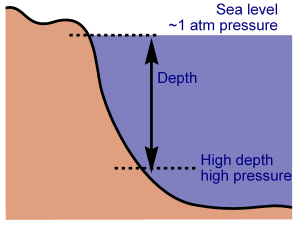
When you increase your depth under water, the water pressure on your body
increases
decreases
stays the same

Diagram shows the design of a dam. Why does the thickness of the dam increase with its depth?
The design of this structure is stronger.
Water pressure increases with depth.
The cost of construction is lower.
Water pressure acts uniformly in all directions.

The given figure is an example of
more area less preesure
less area more pressure
more area more pressure
less area less pressure




Without friction, an object in motion would never stop.
true
false
Which of these materials do you predict would have the MOST amount of friction?
metal
tile
sand paper
denim
How would the absence of friction affect a marble travelling on a long, straight path?
the marble's speed would decrease
the marble would remain at a constant speed
the marble's speed would increase
the marble would stop immediately
When we rub our hands together _________.
frictional force works between them
energy is released
our hands become warm
all off the above
Sound is produced by -----
Heat energy
Low temperatures
Vibrations
Friction
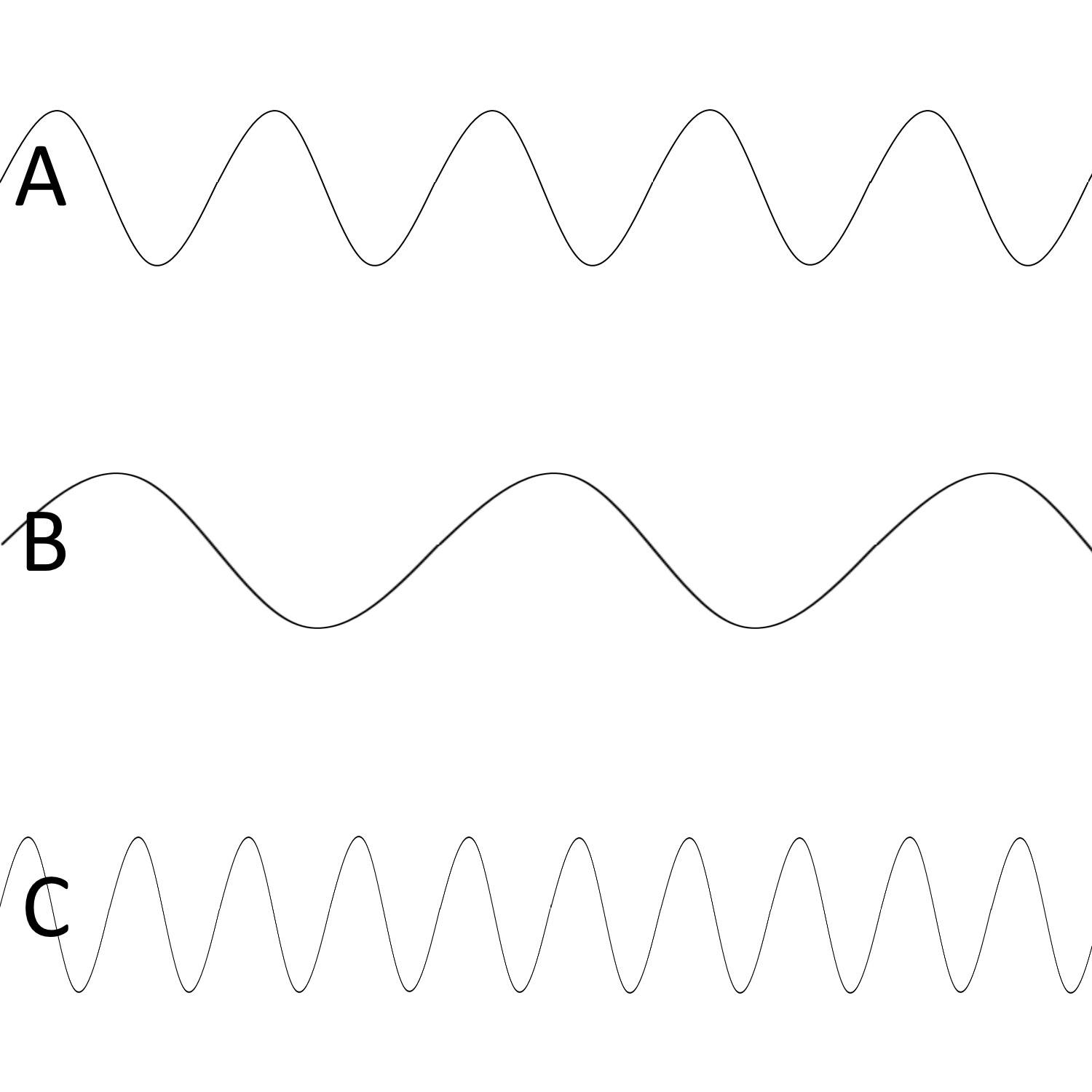
A wave that requires a medium to travel
mechanical wave
chemical wave
electromagnetic wave
pitch
A wave in which the direction of vibration of medium is in the same direction as that in which the wave is traveling
longitudinal wave
ocean wave
transverse wave
mechanical wave
The number of wavelengths that pass a point each second
frequency
wavelength
pitch
amplitude
The unit for measuring frequency is the ---
joule
hertz
gram
newton
what is reference point?
starting point you choose to describe the location
distance and direction from a reference point.
are the base unit of length
the process of changing position.
position know as?
an object's distance and direction from a reference point.
starting point you choose to describe the location , or position , of an object.
are the base unit of length
is the process of changing position.
Meters are used to describe
position.
Motion
Displacement
which of the following best describe Displacement?
is the measure of the distance an object travels in a given amount of time.
the starting point you choose to describe the location , or position , of an object.
the difference between the initial or starting position and the final position.
an object's distance and direction from a reference point.
what is speed?
an object's distance and direction from a reference point.
the starting point you choose to describe the location , or position , of an object.
the difference between the initial or starting position and the final position.
is a measure of the distance an object travels in a given amount of time.
velocity is referred to as a vector
True
False
is a quantity that has both magnitude and direction?
speed
vector
Velocity
Displacement
velocity can either be___
constant
changing
constant and changing
non of the above
When velocity is constant , the object is moving at a constant speed and its direction___
does not change
change
If either the speed or the direction of the object changes , the velocity will
change
do not change
An example of a natural light source is
the moon
a candle
the sun
a torch
When an object blocks light, you get
an eclipse
a surprise
a shadow
darkness
The moon _________ the sun's light.
reflects
absorbs
turns on
dims
Light cannot go around...?
corners
bends
a wall
all of the above
Light travels in
zig zags
waves
straight lines
circles
Which surface would reflect light the best?
light coloured and smooth
dark coloured and smooth
dark coloured and rough
Which object would reflect the most light?
A polished metal knife
A cricket bat
A rusty tin
A blue sheet of paper
Mirrors work by
Absorbing the light
Refracting the light
Reflecting the light
Letting the light through
How do we see an object?
Light reflects off the object and into our eyes.
Light travels from our eyes and reflects off the object
Light reflects off our eyes and enters the object
The object produces its own light
Which of these statements is false?
Light travels very fast
Light can pass through any material
Light travels in straight lines
We need light to see
Light always travels in a straight line. It is known as
(a)
Identify the objects on which regular reflection occurs.
Plane mirror
Wall
tree
still water
Which of the following is used as shaving mirrors?
concave mirror
convex mirror
plane mirror
all of these
Which of the following gives virtual magnified image?
concave lens
concave mirror
convex mirror
plane mirror
_______ is the screen of our human eye.
cornea
optic nerve
lens
retina
(a) is a point at which all rays meet after reflecting from the curved surface of the spherical mirrors.
Splitting up of white light into its seven component colours is called
dispersion
spectrum
refraction
VIBGYOR
When light travels from a rarer to a denser medium,
it bends towards the normal
it bends away from the normal
it does not bend
none of these
Which of the following is used as rear view mirrors in vehicles?
concave mirror
plane mirror
convex mirror
all of these
Which of the following forms real image?
concave lens
convex lens
convex mirror
plane mirror
A curved mirror whose inner side is polished.
(a)
Which of the following gives same size real image?
concave lens
plane mirror
convex mirror
concave mirror
Convex lens is known as converging lens
TRUE
FALSE
Which of the following used as reflectors in street lights?
convex mirror
concave mirror
plane mirror
all of these
The image formed by plane mirror is real image
TRUE
FALSE

