
 Worksheets
MAP REVIEW SCIENCE
Total questions: 93
Worksheet time: 2hrs 47mins
Name
Class
Date
1.
Which of the following is matter?
a)
dust
b)
the moon
c)
strand of hair
d)
all of the above
2.
A graduated cylinder is used to measure
a)
volume
b)
weight
c)
mass
d)
inertia
3.
The volume of a solid is measured in
a)
liters
b)
grams
c)
cubic centimeters
d)
all of the above
4.
Mass is measured in
a)
liters
b)
centimeters
c)
newtons
d)
kilograms
5.
One newton equals about 100g on Earth. How many newtons would a football weigh if it had a mass of 400g?
a)
40 newtons
b)
4 newtons
c)
1 newton
d)
400 newtons
6.
What is the relationship between mass and inertia?
a)
More mass = more inertia
b)
More mass = less inertia
7.
Would an elephant weigh more or less on the moon than it would weigh on Earth?
a)
more
b)
less
8.
What are the two properties of matter?
a)
mass and volume
b)
mass and weight
c)
weight and volume
d)
density and time
9.
Volume is the amount of _______ taken up by an object.
a)
water
b)
space
c)
mL
d)
cm3
10.
The amount of matter in an object is
a)
weight
b)
density
c)
mass
d)
matter
11.
A measure of the gravitational force on an object is
a)
mass
b)
density
c)
volume
d)
weight
12.
The tendency of an object to resist being moved is
a)
mass
b)
matter
c)
inertia
d)
density
13.
Color, smell, taste, texture, density
a)
Chemical properties
b)
Intensive properties
c)
Physical properties
d)
Extensive properties
14.
Center of an atom
a)
nucleus
b)
cloud
c)
shells
d)
energy levels
15.
Positively charged particle
a)
Electron
b)
Neutron
c)
Proton
d)
Isotope
16.
Which particle(s) is/are found in the nucleus?
a)
electron, neutron
b)
only electrons
c)
only protons
d)
proton, neutron
17.
Negatively charged particle in an atom
a)
electron
b)
neutron
c)
isotope
d)
proton
18.
Has no charge
a)
proton
b)
neutron
c)
isotope
d)
electron
19.
The number of protons an atom has
a)
isotope number
b)
mass number
c)
atomic mass
d)
atomic number
20.
The sum of protons and neutrons in the nucleus of an atom
a)
atomic mass
b)
atomic number
c)
mass number
21.

What is an example of a chemical change of matter?
a)
Melting a piece of ice
b)
Burning a piece of wood
c)
Water evaporating from a puddle
d)
Crushing walnuts
22.

Evidence of a chemical reaction includes:
a)
a gas formed and released and bubble appear
b)
salt collecting on the bottom of the pan
c)
using a magnet to separate substances
d)
substances floating on top of a liquid
23.

Which of the following is an example of a physical change of matter?
a)
A rusty nail
b)
Bread rising
c)
Dissolving salt in water
d)
Burning paper
24.

When two or more substances react with one another and new substances are formed, it is referred to as:
a)
Phases of Matter
b)
Conservation of Matter
c)
Physical Change of Matter
d)
Chemical Change of Matter
25.

Which state of matter has its particles so tightly packed that the particles vibrate only slightly in place?
a)
Solid
b)
Liquid
c)
Gas
d)
Ice
26.

Which state of matter has a definite weight and volume, but not definite shape?
a)
Solid
b)
Liquid
c)
Gas
d)
Ice
27.

Science safety practices include:
a)
substituting eye glasses for goggles
b)
trying your own experiment without teacher approval
c)
wearing gloves when handling potentially harmful materials
d)
putting your nose directly into a container to smell a substance
28.

All types of matter:
a)
do not have weight and do not take up space (volume)
b)
take up space (volume)
c)
have weight
d)
have weight and take up space (have volume)
29.
The study of how substances behave and react with one another is called:
a)
Chemistry
b)
Astrology
c)
Astronomy
d)
Palaeontology
30.
The process of turning liquid water into steam is called
a)
Condensation
b)
Evaporation
c)
Sublimination
d)
Melting
31.
The process of turning liquid water into steam is called
a)
Condensation
b)
Evaporation
c)
Sublimination
d)
Melting
32.
The process of turning steam back into liquid water is called
a)
Melting
b)
Liquefying
c)
Steaming
d)
Condensation
33.
The process of turning steam back into liquid water is called
a)
Melting
b)
Liquefying
c)
Steaming
d)
Condensation
34.

1. All the blocks in the diagram below weigh exactly the same. Density measures how much of a substance fits into a volume. Which of the following shows the correct order of densities from highest to lowest density?
a)
Concrete, lead, wood, polystyrene
b)
Lead, concrete, wood, polystyrene
c)
Concrete, wood, lead, polystyrene
d)
Lead, polystyrene, concrete, wood
35.
"Rain puddles disappear as the day heats up"
This is an example of:
This is an example of:
a)
Condensation
b)
Feezing
c)
Evaporation
d)
Boiling
36.

Which graph represents zero acceleration (constant velocity)?
a)
A
b)
B
c)
C
d)
D
37.
Which of the following is a unit for acceleration?
a)
km/s
b)
m/s2
c)
mi/hr
d)
ft
38.
Sam and Javier drove east to New Orleans at 55 miles per hour to visit the WWII museum.
a)
Speed
b)
Velocity
c)
Acceleration
39.

A cyclist is traveling at an initial speed of 10.0m/s. She accelerates at a rate of 0.5m/s2. What is her final speed after 12.0s?
a)
16.0 m/s2
b)
5.0 m/s2
c)
16.0 m/s
d)
5.0 m/s
40.

Which runner won the race?
a)
A
b)
B
c)
C
41.
A cork floats a distance of 17.5 miles downriver after a period of 3 hours and 30 minutes. What was its average speed?
a)
7 mph
b)
10 mph
c)
9 mph
d)
5 mph
42.
Find the speed of the bicyclist who took an hour and a half to travel 10 kilometers.
a)
10 km/h
b)
600 km/h
c)
6.67 km/h
d)
90 km/h
43.

A rocket with an initial velocity of 8 m/s hits the ground at 640 m/s in eight seconds. Find the acceleration.
a)
79 m/s2
b)
80 m/s2
c)
0.0125m/s
d)
80 mi/hr
44.
Why does a car accelerate as it round a corner at a constant speed?
a)
Its direction changes
b)
It doesn't
c)
It slows down
d)
Its speeds up
45.
Acceleration of an object happens when things ________
a)
slow down
b)
go faster
c)
change direction (turn)
d)
All of the above
46.
Acceleration of an object happens when things ________
a)
slow down
b)
go faster
c)
change direction (turn)
d)
All of the above
47.
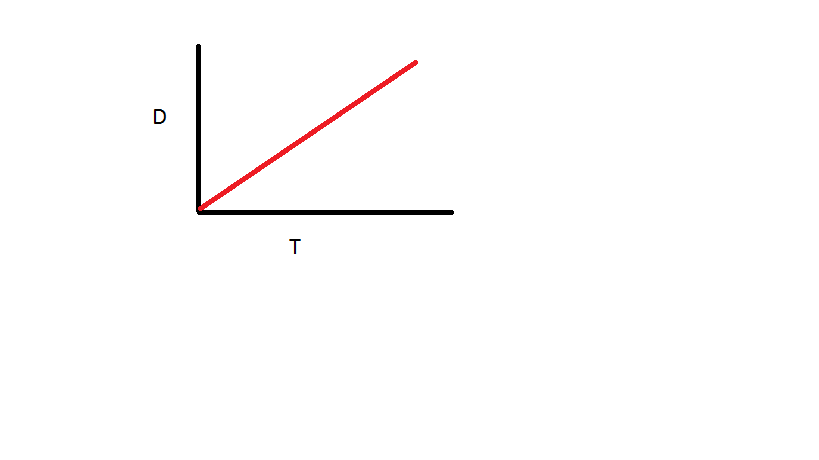
The graph represents
a)
Acceleration
b)
No motion
c)
Deceleration
d)
Constant Velocity
48.

The graph respresents
a)
No motion
b)
Constant Velocity
c)
Acceleration
d)
Deceleration
49.

What is velocity?
a)
the quickness of an object
b)
the location of an object
c)
acceleration
d)
speed in a specific direction
50.

What is the formula to calculate speed?
a)
v = t/d
b)
v = d/t
c)
v = d x t
d)
v = t x d
51.
Heat transfer in currents.
a)
Conduction
b)
Convection
c)
Radiation
52.
Heat transfer through fluids (liquids and gasses).
a)
Conduction
b)
Convection
c)
Radiation
53.
Heat transfer by touch.
a)
Conduction
b)
Convection
c)
Radiation
54.
______ air rises, and ______ air sinks.
a)
Hot, Cold
b)
Cold, Hot
c)
Hot, Hot
d)
Cold, Cold
55.
______ air rises, and ______ air sinks.
a)
Hot, Cold
b)
Cold, Hot
c)
Hot, Hot
d)
Cold, Cold
56.
Mittens help keep your hands warm in winter because:
a)
They are conductors of heat.
b)
They are fuzzy.
c)
They are conductors of electrical energy.
d)
They are insulators.
57.
What is energy?
a)
The ability to cause a change
b)
A force
c)
Electricity
d)
The ability to transform work
58.
Energy of motion is which type of energy?
a)
Potential
b)
Kinetic
c)
Sound
d)
Gravitational
59.

What type of energy is in this picture?
a)
Kinetic
b)
Potential
c)
Chemical
d)
Sound
60.
When plants convert the sun's energy into food, which type of energy is it?
a)
kinetic
b)
chemical
c)
thermal
d)
radiant
61.
The type of energy that allows us to hear is
a)
Mechanical
b)
Sound
c)
Light
d)
Electric
62.

What kind of energy is represented in this picture?
a)
Thermal
b)
Potential
c)
Nuclear
d)
Mechanical
63.

What kind of energy?
a)
Thermal
b)
Electrical
c)
Mechanical
d)
Radiant
64.

A battery converts what type of energy to another?
a)
sound to kinetic
b)
light to heat
c)
mechanical to electrical
d)
chemical to electrical
65.
Energy of motion is which type of energy?
a)
Potential
b)
Kinetic
c)
Sound
d)
Gravitational
66.
Work is:
a)
A transfer of energy by a force to move and object
b)
Something you get paid for
c)
Something you take home
d)
Makes you sweat
67.
On a roller coaster, where is maximum kinetic energy?
a)
At the bottom of a big hill
b)
When going around a corner
c)
When going upside down
d)
At the top of a big hill
68.
On a roller coaster, where is maximum potential energy?
a)
At the bottom of a big hill
b)
When going around a corner
c)
When going upside down
d)
At the top of a big hill
69.
The formula for work is:
a)
d = r x t
b)
p = m x v
c)
f = m x a
d)
w = d x f
70.
According to which law of energy, energy can't be created or destroyed?
a)
First law of motion
b)
The law of tacos
c)
Laws of Energy
d)
law of conservation of energy
71.
Electrical Energy is:
a)
energy caused by the vibrations of an object
b)
energy caused by changes in the nucleus of an atom
c)
energy of moving electrons
d)
energy caused by heat
72.
The sun uses this type of energy to make light and thermal energy (heat)
a)
electrical
b)
nuclear
c)
sound
d)
chemical
73.
Sound energy is caused by
a)
medium
b)
vacuum
c)
vibrations
d)
light
74.

A washing machine receiving power is an example of _________ energy.
a)
mechanical
b)
nuclear
c)
electrical
d)
thermal
75.

At what position does the rock acquire the greatest potential energy?
a)
A
b)
B
c)
C
d)
D
76.

The skater has the greatest __________________ energy.
a)
Potential
b)
Kinetic
c)
Mechanical
d)
Radiant
77.
What is an example of a wheel and axle?
a)
ax
b)
light bulb
c)
skateboard ramp
d)
bus tire
78.
What is an example of an inclined plane?
a)
crane
b)
slide
c)
bike
d)
see-saw
79.
What is a screw?
a)
means attracted to a magnet
b)
an inclined plane that is wrapped around an axle
c)
stiff bar that rests on a fulcrum
d)
made of 2 inclined planes that are back to back
80.

Lightbulb
a)
wedge
b)
pulley
c)
incline plane
d)
screw
81.
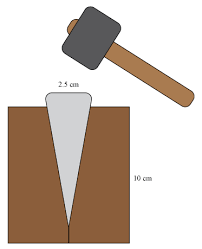
This device
a)
wedge
b)
lever
c)
incline plane
d)
wheel and axle
82.
What is a machine?
a)
Mrs. Herman
b)
Ms. Putirskis
c)
Mrs. Brose
d)
a tool that makes work easier
83.
Two examples of a pulley...
a)
knife & axe blade
b)
lightbulb & screw
c)
flagpole hoist & window blinds
d)
catapult & teeter totter
84.
What do you call a machine made up of two or more simple machines?
a)
complicated machine
b)
compound or complex machine
c)
comprehensive machine
d)
constructive machine
85.
True or False:
Gravity affects all objects on Earth.
Gravity affects all objects on Earth.
a)
True
b)
False
86.

Which of the following is true for the picture?
a)
elephant is the fulcrum, mouse is the effort, triangle is the load
b)
mouse is the fulcrum, triangle is the effort, elephant is the load
c)
triangle is the fulcrum, mouse is the effort, elephant is the load
87.

To increase the mechanical advantage of a lever
a)
make sure the fulcrum is in the middle of the lever
b)
move the fulcrum closer to the load
c)
move the fulcrum closer to the effort
d)
use a bigger fulcrum
88.

A push or pull is a
a)
load
b)
fulcrum
c)
force
d)
work
89.
The unit used to measure work is the
a)
Watt
b)
Newton
c)
Joule
d)
meter
90.
The efficiency of a machine can be increased by reducing __________________________.
a)
effort
b)
resistance friction
c)
fulcrum
d)
friction
91.
The unit used to measure power is the
a)
Watt
b)
Newton
c)
Joule
d)
Newton*meter
92.
A 5000N block is lifted 10 m. How much work was done?
a)
50000 J
b)
5000 J
c)
500 J
d)
50 J
93.
Work done = Force x _________
a)
a. distance
b)
b. acceleration
c)
c. velocity
d)
d. speed
100 %

