
 Worksheets
Reasons for the Seasons Review
Total questions: 55
Worksheet time: 28mins
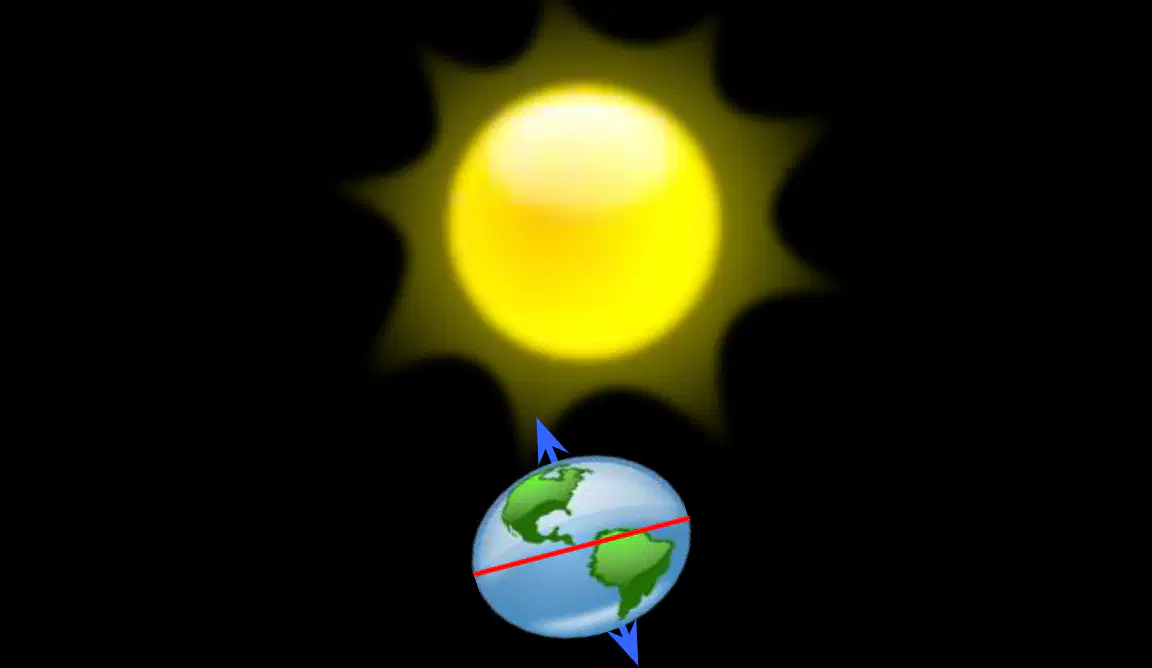
What does the red line running through the Earth represent?
The Prime Meridian
The Tropic of Cancer
The Equator
The International Date Line
What is the Equator?
A circle that divides the Earth into eastern and western hemispheres
A line that marks the change of seasons
An imaginary line that separates the Earth into two halves known as hemispheres
The line that runs from the North Pole to the South Pole
What are the two halves created by the Equator known as?
Quadrants
Meridians
Hemispheres
Segments
What is the area above the equator known as?
Southern Hemisphere
Eastern Hemisphere
Northern Hemisphere
Western Hemisphere
What is the area below the equator known as?
Northern Hemisphere
Eastern Hemisphere
Southern Hemisphere
Western Hemisphere
What is the term used to describe the spinning of objects in space?
Revolution
Orbit
Rotation
Translation
What causes half of the Earth to experience daytime at any given moment?
The Earth's position relative to the Moon
The Earth facing the Sun
The Earth's distance from the Sun
The Moon blocking the Sun's light
What happens to the half of the Earth that is facing away from the Sun?
It experiences daytime.
It experiences a solar eclipse.
It experiences nighttime.
It is the only half that experiences seasons.
How long does it take for the Earth to rotate around one time?
12 hours
24 hours
36 hours
48 hours
What does Earth's rotation cause?
The change of seasons
The tides in the ocean
Day and night
The Earth's orbit around the Sun
What is the Earth's axis of rotation?
The line connecting the Earth to the Sun
The blue arrow running from the North Pole to the South Pole through the center of the Earth
The orbit of the Earth around the Sun
The horizontal line around the Earth's equator
How is the axis of rotation best described?
A physical pole that extends through the Earth
A magnetic field that surrounds the Earth
An imaginary line that an object in space spins around
The path that the Earth takes as it moves around the Sun
What is the main reason for the seasons on Earth?
The Earth is closer to the Sun in summer and farther in winter.
The Earth's axis of rotation is tilted.
The Earth's orbit around the Sun is a perfect circle.
The Sun moves closer to the Earth during summer.
How is the Earth's axis positioned in relation to its orbit around the Sun?
It is positioned at a perfect 90-degree angle.
It is positioned at a random angle.
It is positioned at an angle and rotates at a tilt.
It is aligned parallel to the orbit.
What happens to the Northern Hemisphere when it is tilted away from the sun?
It experiences longer days and shorter nights.
It is fully illuminated by the sun.
It has more shadowed areas, leading to longer nights and shorter days.
It remains neutral with no change in day or night length.
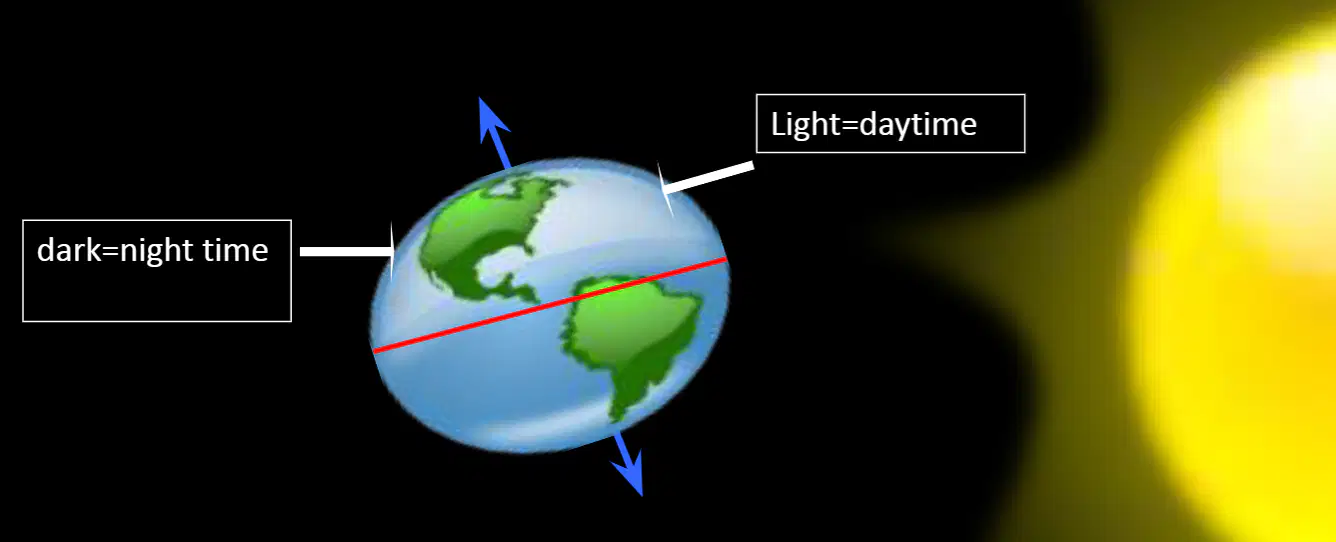
Based on the image, what can be inferred about the Earth's rotation and the occurrence of day and night?
The side of the Earth facing the sun experiences daytime.
The Earth's rotation has no effect on the occurrence of day and night.
Day and night occur randomly, regardless of the Earth's position relative to the sun.
The entire Earth experiences day and night simultaneously.
When is it generally cooler on Earth in relation to the Sun?
When you are facing the Sun
When you are not facing the Sun
When the Sun is at its highest point
When the Sun is below the horizon
What is another cause for cooler temperatures in the Northern Hemisphere according to the text?
The distance of the Earth from the Sun
The time of the day
The angle of sunlight hitting the Earth
The rotation speed of the Earth
Which type of sunlight is hotter?
Sunlight hitting the Earth straight on
Sunlight hitting the Earth at a shallow angle
Sunlight during the night
Sunlight during the winter
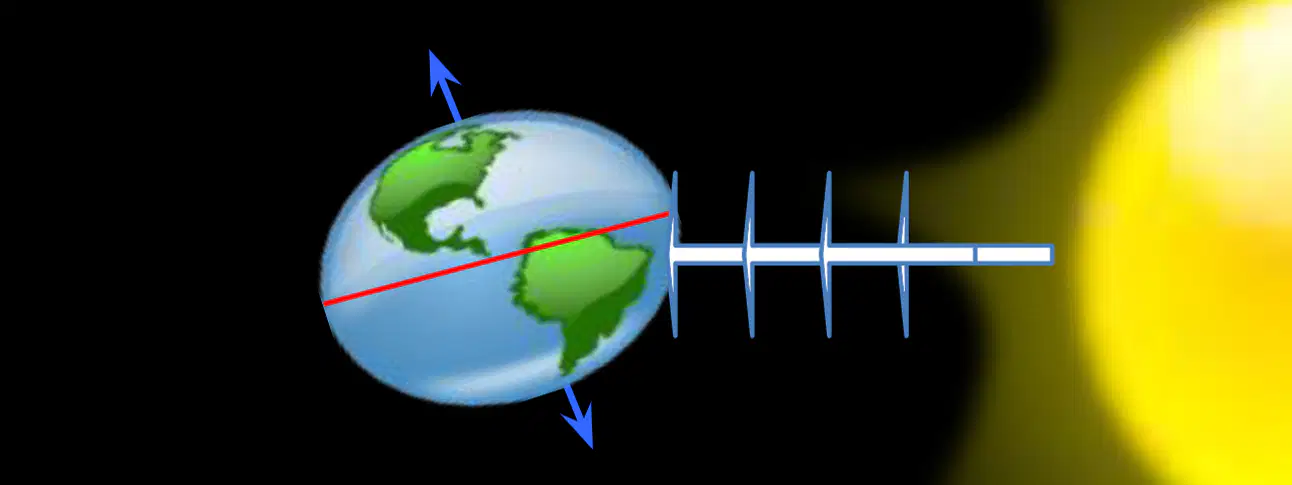
Which hemisphere is receiving the most direct sunlight according to the image?
Northern Hemisphere
Southern Hemisphere
Both hemispheres equally
Neither hemisphere
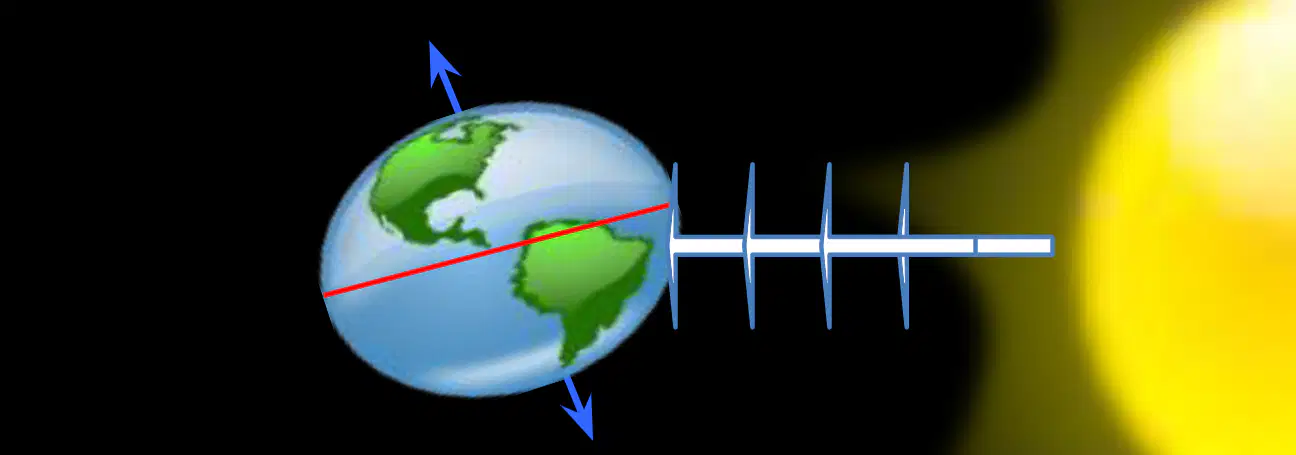
Why does the Northern Hemisphere experience cooler temperatures in the winter?
Because it is closer to the sun
Because it is farther from the sun
Because it receives light at a more direct angle
Because it receives light at an angle
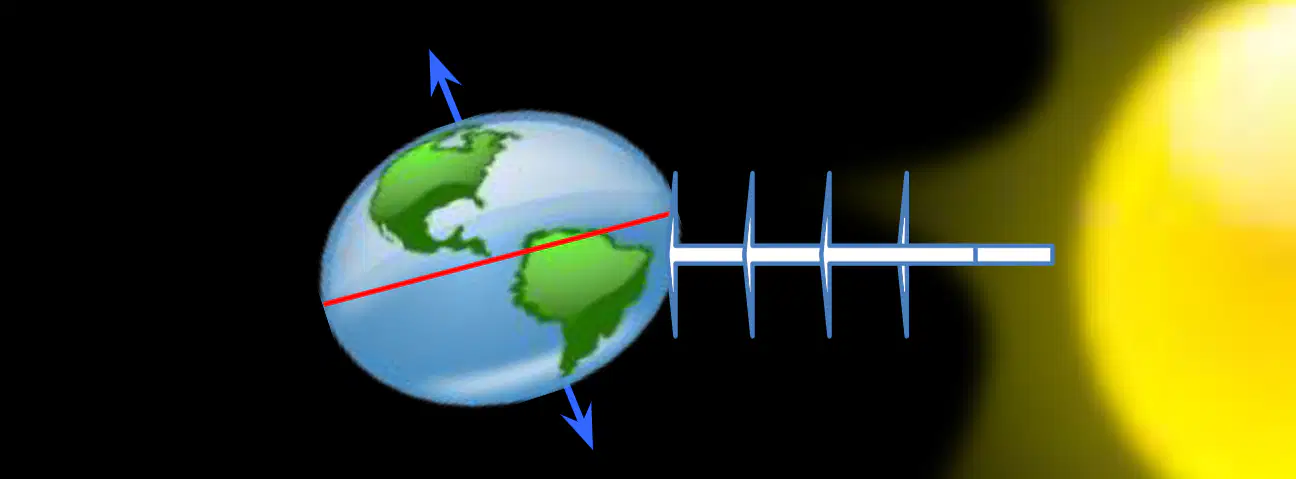
What is the effect of light hitting the Earth at an angle?
It is more concentrated and warmer
It is less concentrated and cooler
It has no effect on temperature
It makes the Earth spin faster
Why does winter happen in the Northern Hemisphere according to the text?
Because the Northern Hemisphere is closer to the Sun.
Because the Northern Hemisphere is tilted towards the Sun.
Because the Northern Hemisphere is tilted away from the Sun.
Because the Earth is farther from the Sun.
What effect does the tilt of the Northern Hemisphere away from the Sun have on the sunlight?
The sunlight hits at a direct angle, making it more concentrated and warmer.
The sunlight hits at an angle which is less concentrated and cooler.
The sunlight is more concentrated, leading to longer days.
The sunlight hits at a direct angle, leading to shorter days.
What is one of the consequences of the Northern Hemisphere being tilted away from the Sun during winter?
There are longer days with more sun.
There are shorter days with less sun.
The days are warmer.
The days are wetter.
What month would it be if the Northern Hemisphere is experiencing winter?
June
March
December
September
When the Northern Hemisphere is experiencing winter, what season begins in the Southern Hemisphere?
Winter
Spring
Summer
Autumn
In December, which hemisphere receives more sunlight?
The Northern Hemisphere
The Southern Hemisphere
Both hemispheres equally
Neither hemisphere
What season is it in the Southern Hemisphere during December?
Winter
Spring
Summer
Autumn
What is a solstice?
A time when the Earth is closest to the sun
A time when sunlight is at a maximum in one hemisphere and a minimum in the other
A time when the Earth's poles are at equal distance from the sun
A time when the Earth's orbit around the sun is fastest
What is the December solstice known as in the Northern Hemisphere?
Summer solstice
Spring solstice
Winter solstice
Autumn solstice
What is the December solstice known as in the Southern Hemisphere?
Summer solstice
Spring solstice
Winter solstice
Autumn solstice
What would happen if the Earth stayed in the same position relative to the Sun?
The Northern Hemisphere would have a permanent summer.
The Southern Hemisphere would have a never-ending winter.
The Northern Hemisphere would have a permanent winter.
Both hemispheres would have moderate temperatures all year.
Why doesn't the Earth stay in a fixed position relative to the Sun?
Because the Earth rotates on its axis.
Because the Earth revolves/orbits around the Sun.
Because the Sun revolves around the Earth.
Because the Earth is stationary in space.
What is a revolution/orbit in the context of celestial bodies?
The spinning of a celestial body on its axis.
The movement of one object in space going around another because of gravity.
The path that a celestial body takes as it moves through space.
The change in seasons experienced by a celestial body.
How long does it take for the Earth to revolve around the Sun?
24 hours
365 days
30 days
7 days
As the Earth revolves around the Sun, how does its tilt change?
It tilts towards the Sun
It tilts away from the Sun
It stays tilted in the same direction
It spins around randomly
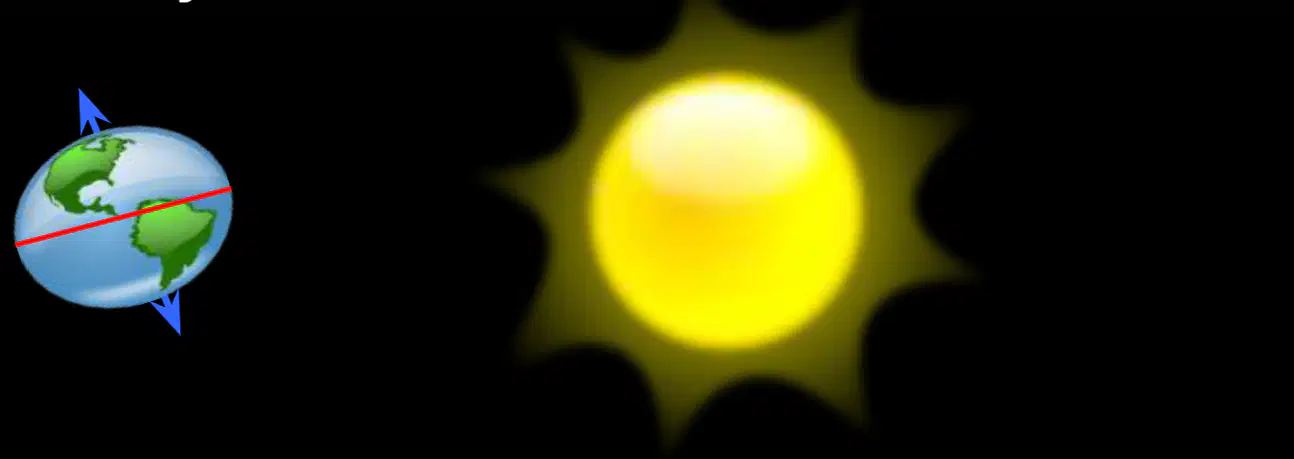
From the perspective shown in the image, in which direction is the Earth tilted?
To the right
To the left
Towards the Sun
Away from the Sun
What season does the Northern Hemisphere experience when it is tilted toward the Sun?
Winter
Spring
Summer
Autumn
Why is it generally warmer during the day than at night?
The Earth is closer to the Sun during the day.
The Sun is larger during the day.
The side of the Earth facing the Sun experiences daylight.
The Earth spins faster during the day.
What is another cause of warmer temperatures in the Northern Hemisphere according to the image?
The angle of the Earth's tilt.
The distance of the Earth from the Sun.
The amount of cloud cover.
The Earth's rotation speed.
Why is direct sunlight hotter than light at an angle?
It travels a shorter distance.
It is more concentrated.
It has a higher frequency.
It is reflected by the atmosphere.
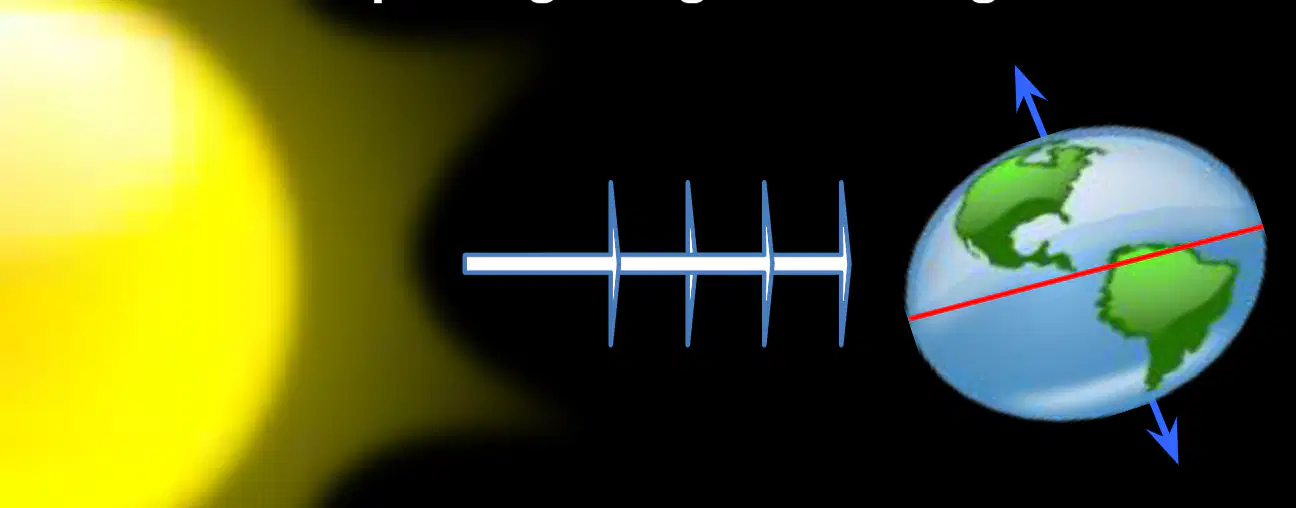
Where is the most direct sunlight hitting according to the image?
Southern Hemisphere
Northern Hemisphere
Eastern Hemisphere
Western Hemisphere
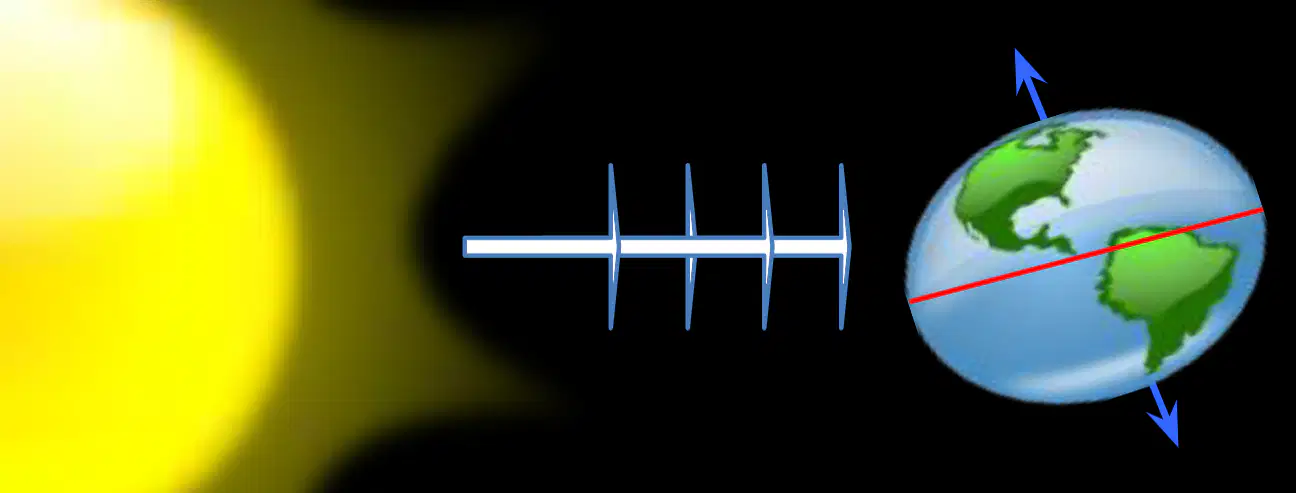
Why does the Northern Hemisphere experience warmer temperatures in the summer?
Because it gets light at an angle
Because of the tilt of the Earth's axis
Because the direct light is more concentrated
Because it is closer to the sun
When does the Northern Hemisphere experience summer?
When it is tilted away from the Sun
When it is tilted toward the Sun
When it is perpendicular to the Sun
When it is parallel to the Sun
What are the effects of the Northern Hemisphere being tilted toward the Sun during summer?
Shorter days with less sun
Longer days with more sun and more concentrated, warmer sunlight
Cooler temperatures and more rain
No change in day length or sunlight concentration
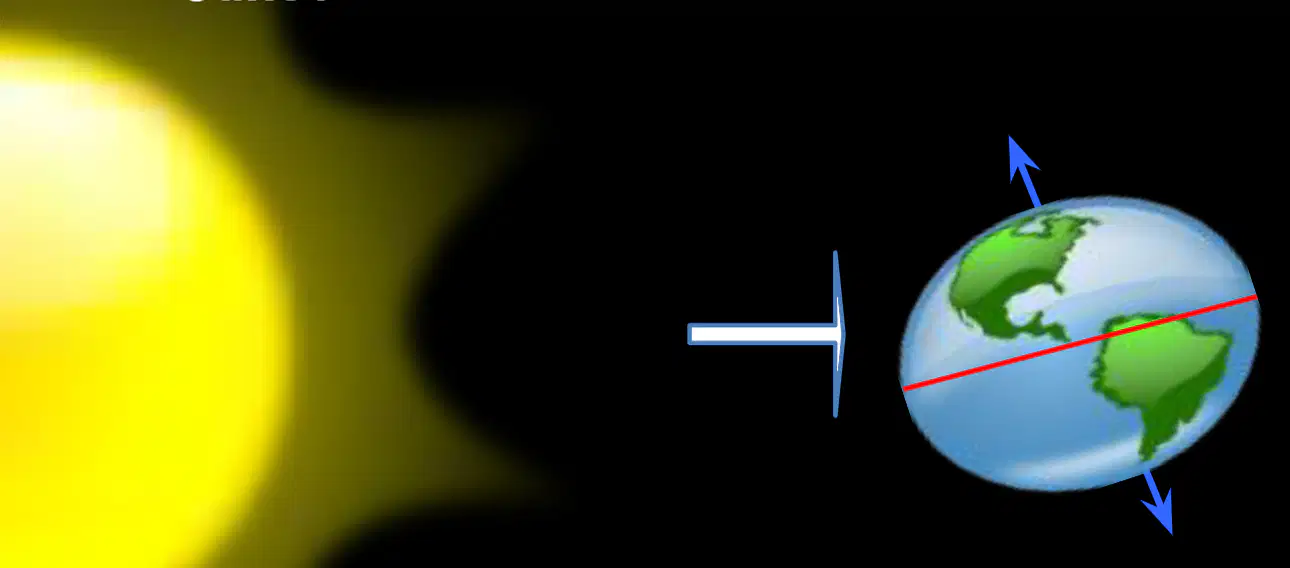
What season is it in the Southern Hemisphere in June?
Summer
Winter
Spring
Autumn
Why does the Southern Hemisphere experience winter in June?
Because it has longer days and receives direct sunlight.
Because it is closer to the Sun than during other seasons.
Because it has shorter days and receives sunlight at an angle.
Because the Earth's axis is perpendicular to the Sun's rays.
What is the effect of sunlight at an angle on the temperature?
It makes the temperature hotter.
It has no effect on the temperature.
It makes the temperature cooler.
It increases the length of the day.
What is the summer solstice for the Northern Hemisphere known as in the Southern Hemisphere?
Summer solstice
Autumn equinox
Winter solstice
Spring equinox
What is an equinox?
The longest day of the year
The shortest day of the year
When the amount of sunlight in the Northern and Southern Hemispheres is equal
When one hemisphere experiences more sunlight than the other
How many hours of daylight and night do both hemispheres experience during an equinox?
10 hours of daylight and 14 hours of night
12 hours of daylight and 12 hours of night
8 hours of daylight and 16 hours of night
14 hours of daylight and 10 hours of night
During an equinox, in which direction is the North pole tilted relative to the Sun?
Towards the Sun
Away from the Sun
In the same direction
In a perpendicular direction to the Sun
What does it mean when the Northern Hemisphere is tilted toward or away from the sun?
It causes equal sunlight throughout the hemisphere.
It signifies that the hemisphere is experiencing winter.
It results in unequal distribution of sunlight in the hemisphere.
It indicates that the hemisphere is closer to the sun than the Southern Hemisphere.
What is true about the hemispheres of Earth in relation to sunlight?
Only one hemisphere can have a dark half at any given time.
Both hemispheres are always fully lit by the sun.
Both hemispheres have a dark half at some point.
The hemisphere facing away from you is always the one in darkness.

