
 Worksheets
Exam 3 Review
Total questions: 20
Worksheet time: 11mins
Which of the following is the correct formula for calculating molarity?
moles/liters of solution
moles/kg of solvent
# particles/Avogadro's #
theoretical yield/actual yield
What are the correct coefficients for this balanced equation?
___Na + ___NaNO3 ___Na2O + ___N2
6; 5; 2; 9
3; 9; 3; 4
10; 2; 6; 1
1; 1; 1; 1
You need to make 10.0 L of 1.2 M KNO3. What molarity would the potassium nitrate solution need to be if you were to use only 2.5 L of it?
6.7 M
4.8 M
5.2 M
7.6 M
LiOH + KCl -> LiCl + KOH
A scientist began this reaction with 20 grams of lithium hydroxide and an unlimited amount of KCl. What is the theoretical yield of lithium chloride (grams)?
10 g LiCl
125 g LiCl
35 g LiCl
58 g LiCl
Is O2 paramagnetic or diamagnetic?
Paramagnetic
Diamagnetic
What is the concentration in molarity (M) of a solution made by dissolving 24 grams of glucose (C 6 H 12 O 6 , Molar mass = 180 g/mol) in enough water to make 2 liters of solution?
0.0667 M
0.133 M
0.267 M
0.533 M
Is the PCl3 molecule non-polar or polar?
Polar
Non-polar
Which of the following is a sign of a chemical reaction?
Change in state of matter
Change in temperature
Dissolving of a substance
Change in volume
Which of the following molecules is nonpolar?
CH4
NH3
H2O
Reactivity (bubbling, fizzing) is a --- property.
Chemical
Physical
Balance the following equation: Fe+O2→Fe2O3
2Fe+23O2→Fe2O3
4Fe+3O2→2Fe2O3
2Fe+2O2→Fe2O3
3Fe+2O2→Fe2O3
Which of the following images represents a Trigonal Planar molecular geometry?


What type of reaction is defined by a hydrocarbon reacting with oxygen to produce carbon dioxide and water?
Addition
Dehydration
Hydrolysis
Combustion
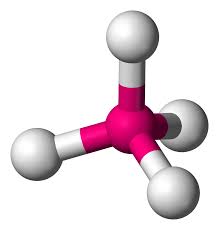
What is the hybridization of this molecule shown above
sp
sp2
sp3
sp4

How many sigma bonds are in the following molecule?
0
1
2
5
6
Solubility, the ability to dissolve, is a --- property.
Chemical
Physical

