
 Worksheets
Livestock Anat and Phys
Total questions: 59
Worksheet time: 39mins

Which of the following is NOT a group of the muscular system?
Skeletal Muscles
Visceral Muscles
Nerve Muscles
Cardiac Muscles
Which of the following systems is made up of the heart, arteries, veins and blood?
Digestive
Respiratory
Circulatory
Immune
Which of the following systems defends the body against infectious organisms and other invaders?
Digestive
Respiratory
Circulatory
Immune
Which system is the largest organ in the body?
Nervous
Immune
Integumentary
Digestive
Which system provides the body with the exchange of oxygen and carbon dioxide?
Circulatory
Respiratory
Nervous
Immune
Which system transmits signals to different parts of the animal’s body?
Nervous
Immune
Skeletal
Digestive
Which system protects the animal’s body from disease by providing a barrier to viruses and bacteria?
Nervous
Immune
Skeletal
Integumentary
In addition to the functions they perform in livestock, which group of body parts supply most of the food that humans eat from livestock?
Bones
Internal Organs
Muscles
Nerves
Which type of tissue in the animal's body holds various tissue together such as bone?
Muscle
Fluid
Nerve
Connective
The type of muscle that makes up the majority of meat consumed by humans is:
striated
smooth
tendons
cardiac
Which livestock part is made up of involuntary muscles?
Ham
Heart
Round
Shoulder
If an animal science student were labeling a picture of a cow's skeleton, where would that student find the scapula?
Front foot
Rear Foot
Shoulder blade
Tail
Muscles in livestock are classified as:
internal or external
pectoral or pelvic
tendons or ligaments
voluntary or involuntary

Identify Part #1
Shoulder
Back
Jowl
Poll
Side

Identify Part #2
Shoulder
Back
Jowl
Poll
Tail

Identify Part #3
Loin
Back
Belly
Rump
Ham

Identify Part #4
Loin
Back
Belly
Rump
Ham

Identify Part #5
Loin
Back
Belly
Rump
Ham

Identify Part #6
Loin
Back
Tail
Rump
Ham

Identify Part #7
Loin
Back
Tail
Rump
Ham

Identify Part #8
Ham
Hock
Rear Flank
Sheath
Stifle Joint

Identify Part #9
Ham
Hock
Rear Flank
Sheath
Stifle Joint

Identify Part #10
Cannon
Hock
Pastern
Fetlock
Stifle Joint

Identify Part #11
Cannon
Hock
Pastern
Fetlock
Dewclaw

Identify Part #12
Pastern
Hock
Rear Flank
Sheath
Stifle Joint

Identify Part #13
Pastern
Fore Flank
Rear Flank
Sheath
Stifle Joint

Identify Part #14
Fetlock
Fore Flank
Rear Flank
Crops
Side

Identify Part #15
Cannon
Knee
Pastern
Fetlock
Dewclaw

Identify Part #16
Cannon
Hock
Knee
Pastern
Fore Leg

Identify Part #17
Hoof
Fore Leg
Knee
Pastern
Dewclaw

Identify Part #18
Cannon
Hock
Pastern
Fetlock
Dewclaw

Identify Part #19
Cannon
Knee
Pastern
Fetlock
Fore Leg

Identify Part #20
Shoulder
Back
Jowl
Poll
Side

Name the external part.
Poll
Forehead
Horns
Muzzle

Name the external part.
Poll
Forehead
Horns
Muzzle

Name the external part.
Eyes
Point of Shoulder
Throat
Dewlap

Name the external part.
Shoulder
Neck
Forearm
Brisket

Brisket
Dewclaw
Forearm
Pastern

Hock
Stifle
Pine Bone
Pastern

Pastern
Quarter
Stifle
Switch

Hook
Loin
Tailhead
Rump

Quarter
Shoulder
Neck
Ribs

Back
Hook
Top of Shoulder
Neck

Forearm
Cannon
Switch
Quarter

Hock
Switch
Pastern
Rear Flank

Ribs
Elbow
Pin Bone
Rump

Muzzle
Poll
Ear
Face

Quarter
Switch
Hock
Pastern
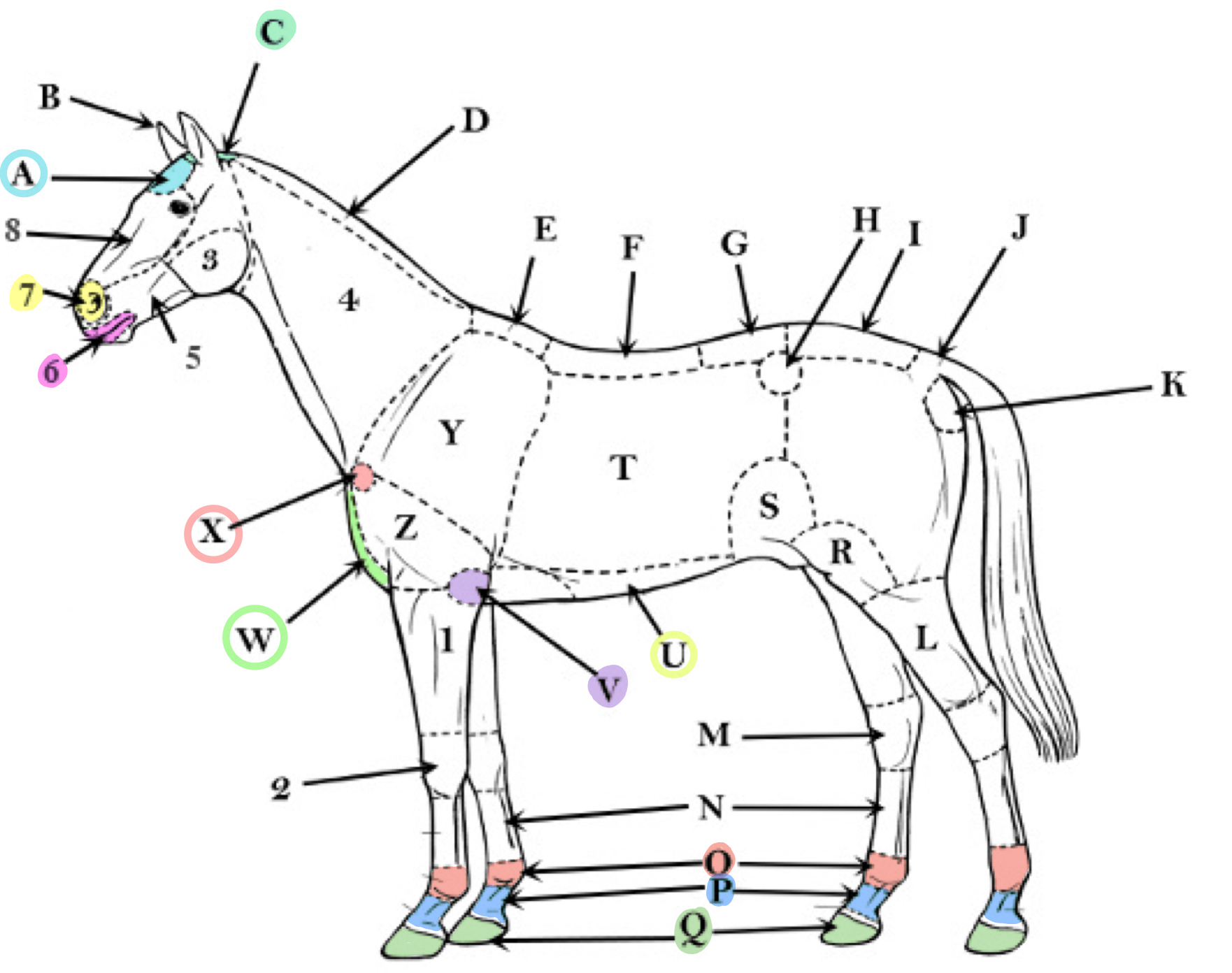
What is feature 4 (neck region)?
poll
neck
crest
jugular groove
withers
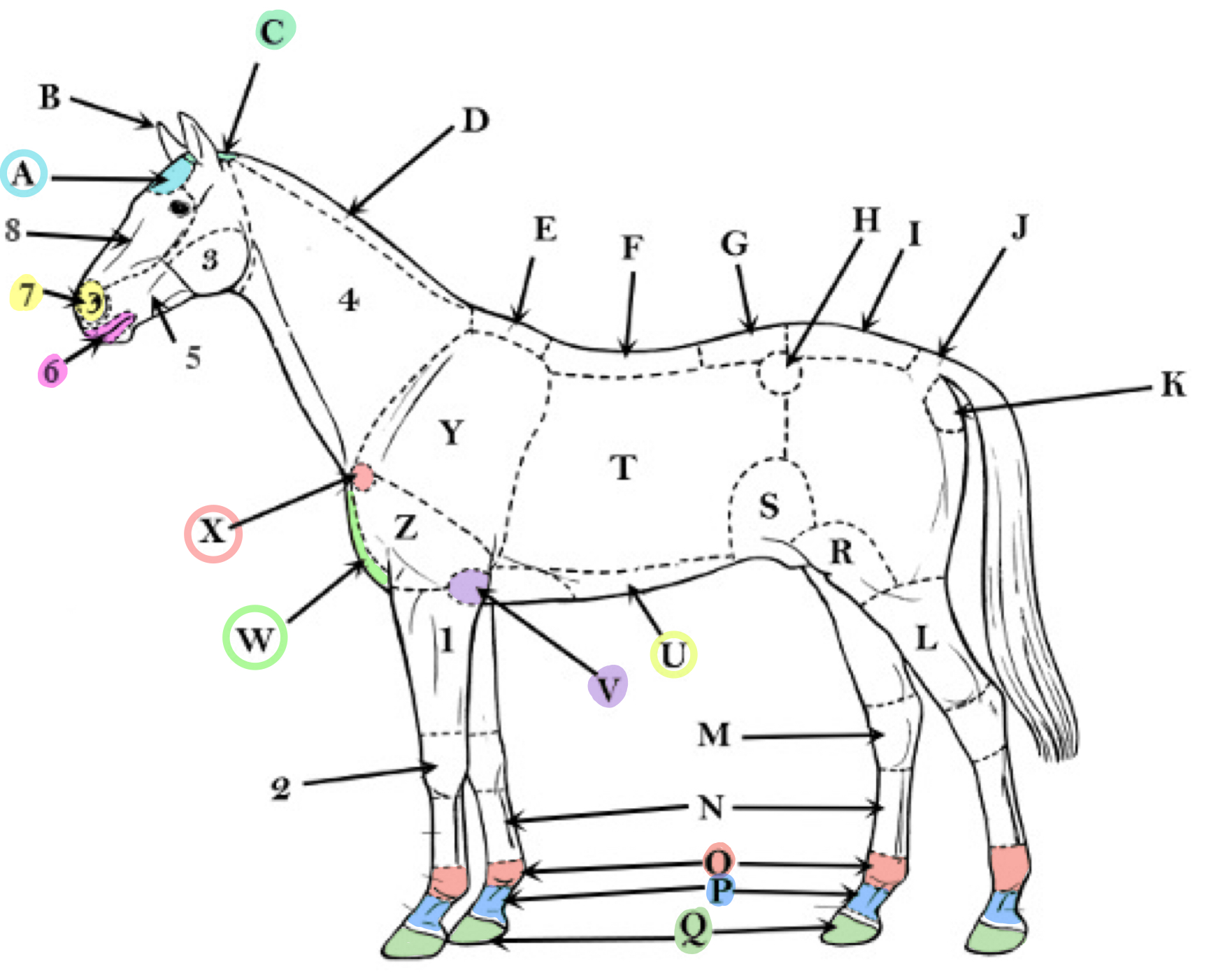
What is feature W (foreleg region)?
shoulder
point of the shoulder
chest
brisket
arm
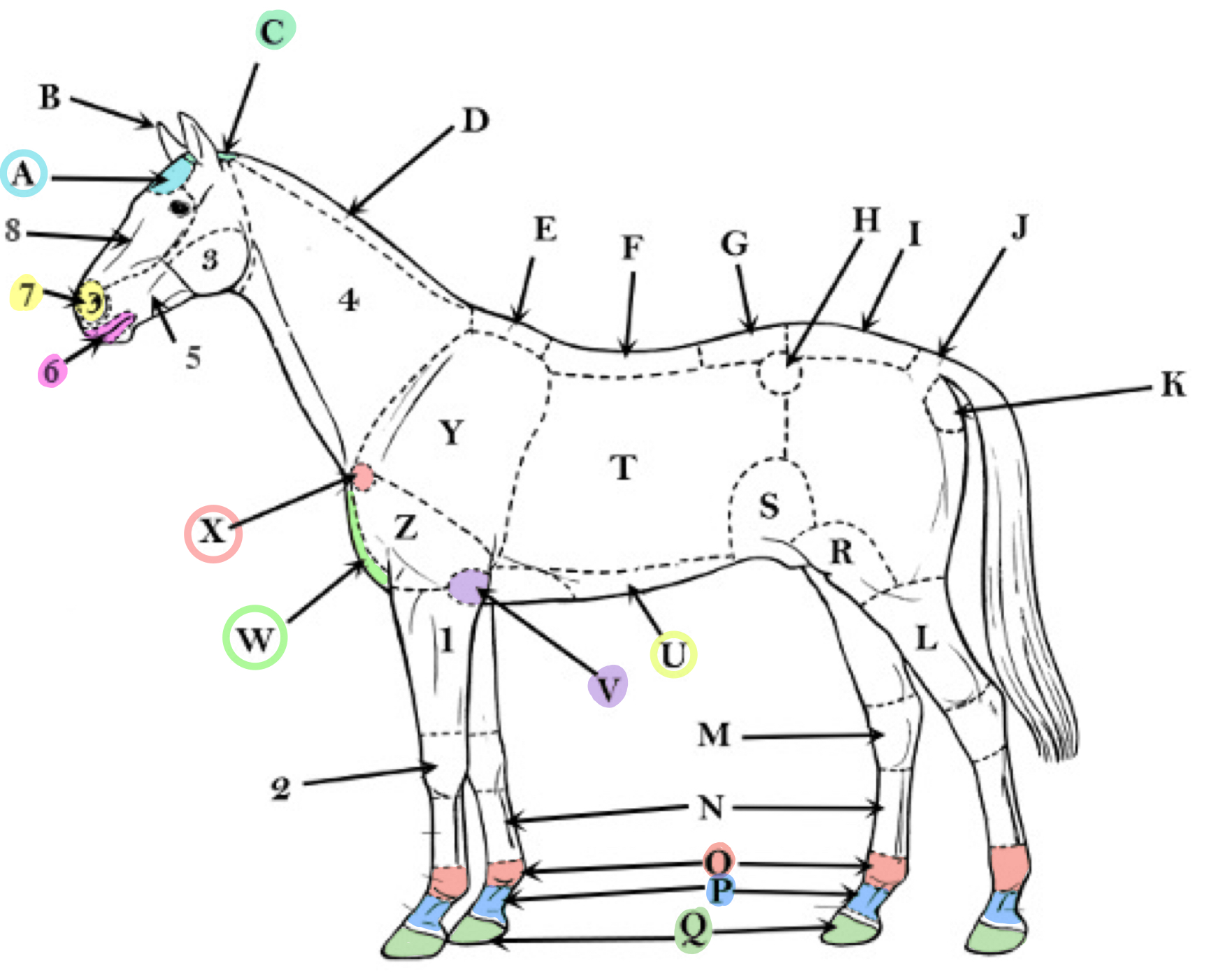
What is feature Y (foreleg region)?
shoulder
point of the shoulder
chest
brisket
arm
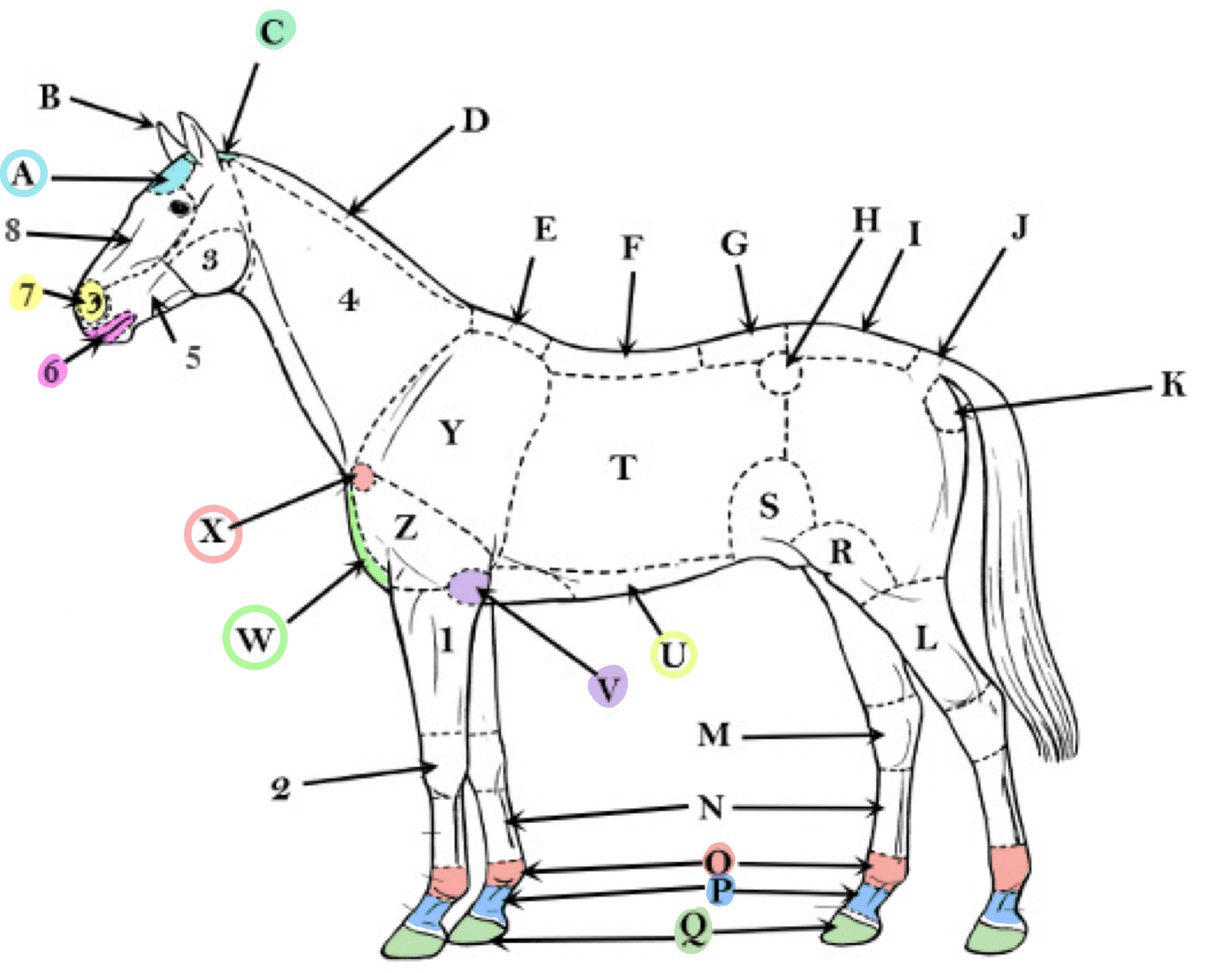
What is feature E (back region)?
withers
crest
back
croup
loin
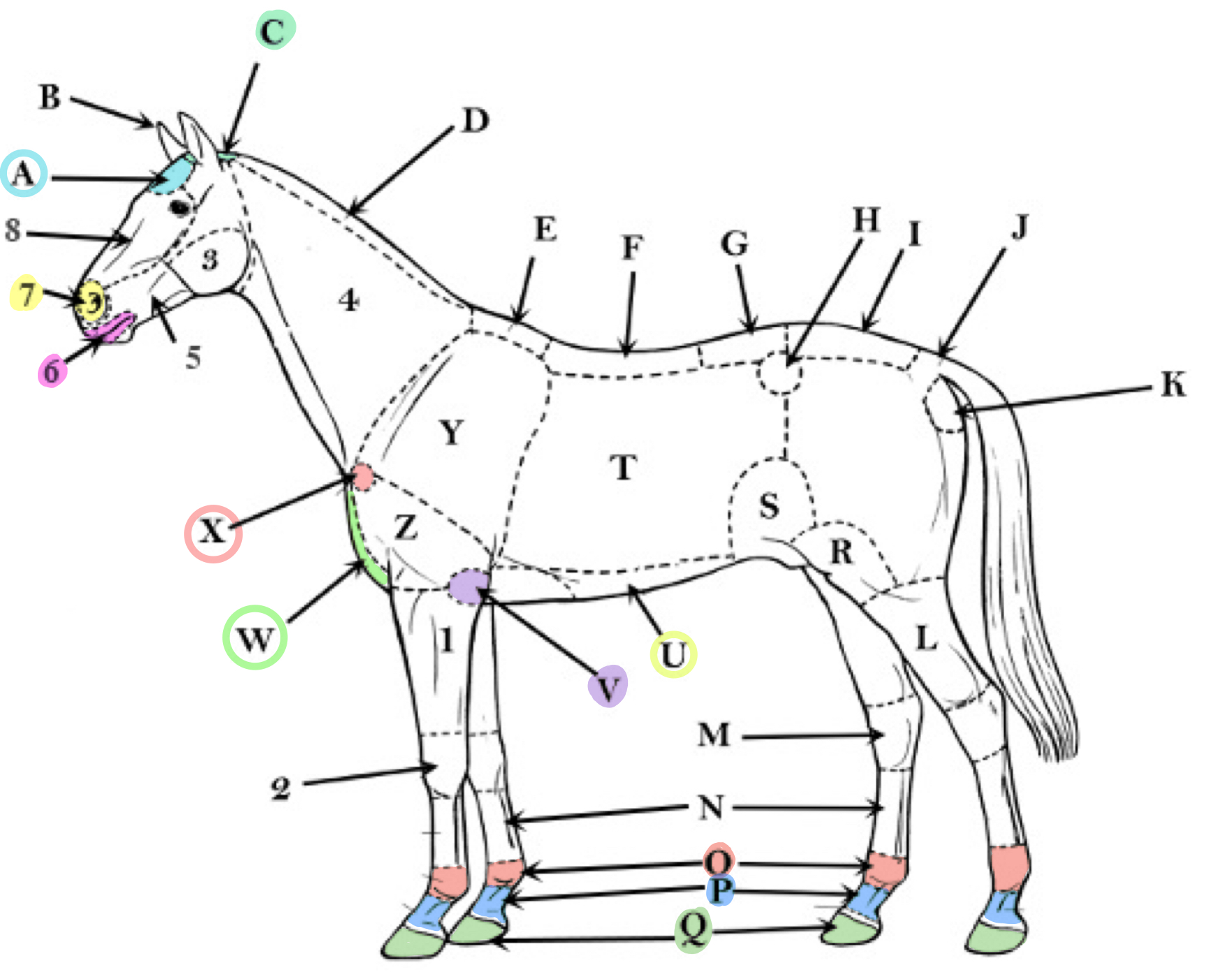
What is feature V foreleg region)?
arm
elbow
forearm
cannon
knee
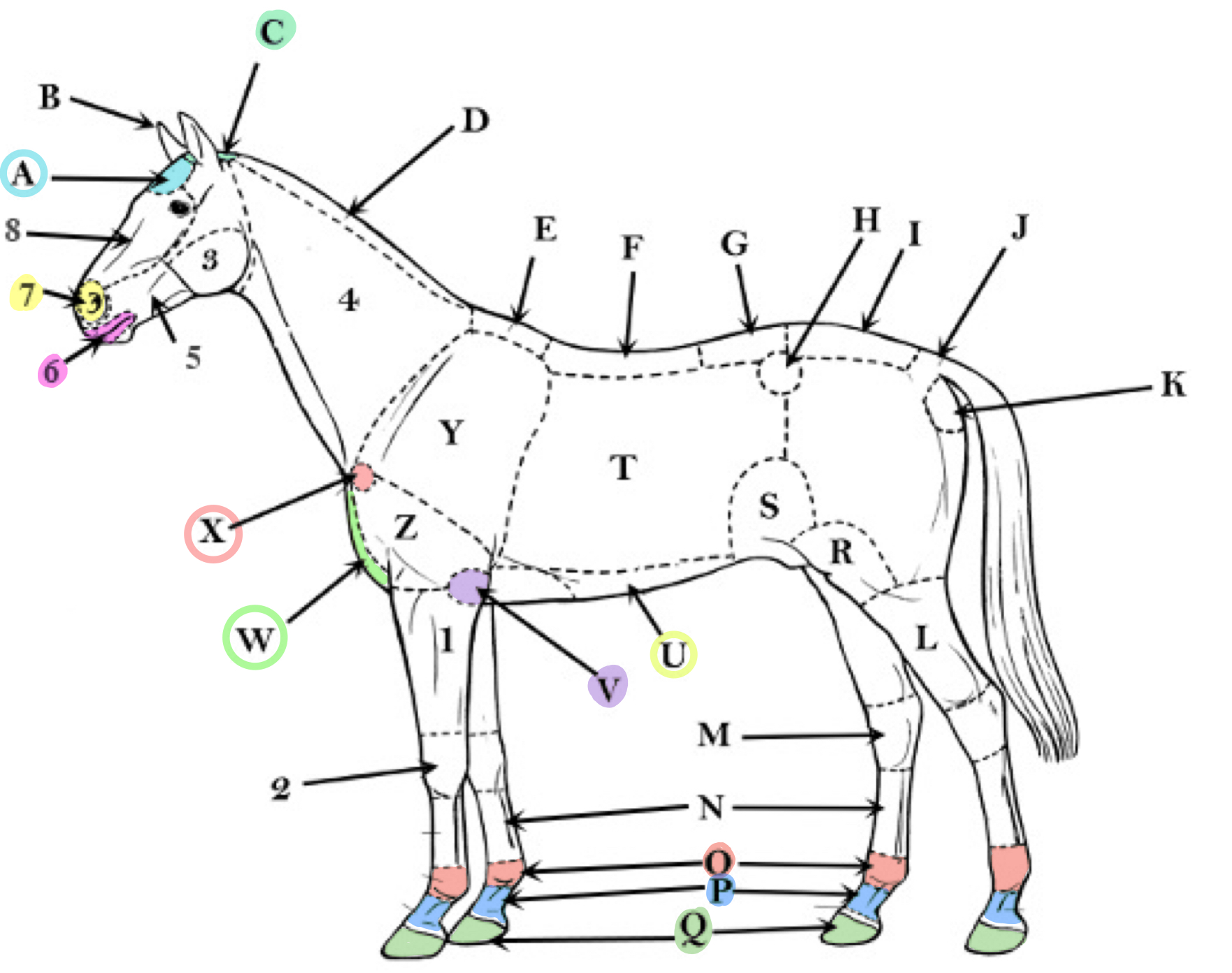
What is feature 1 (foreleg region)?
arm
elbow
forearm
cannon
knee
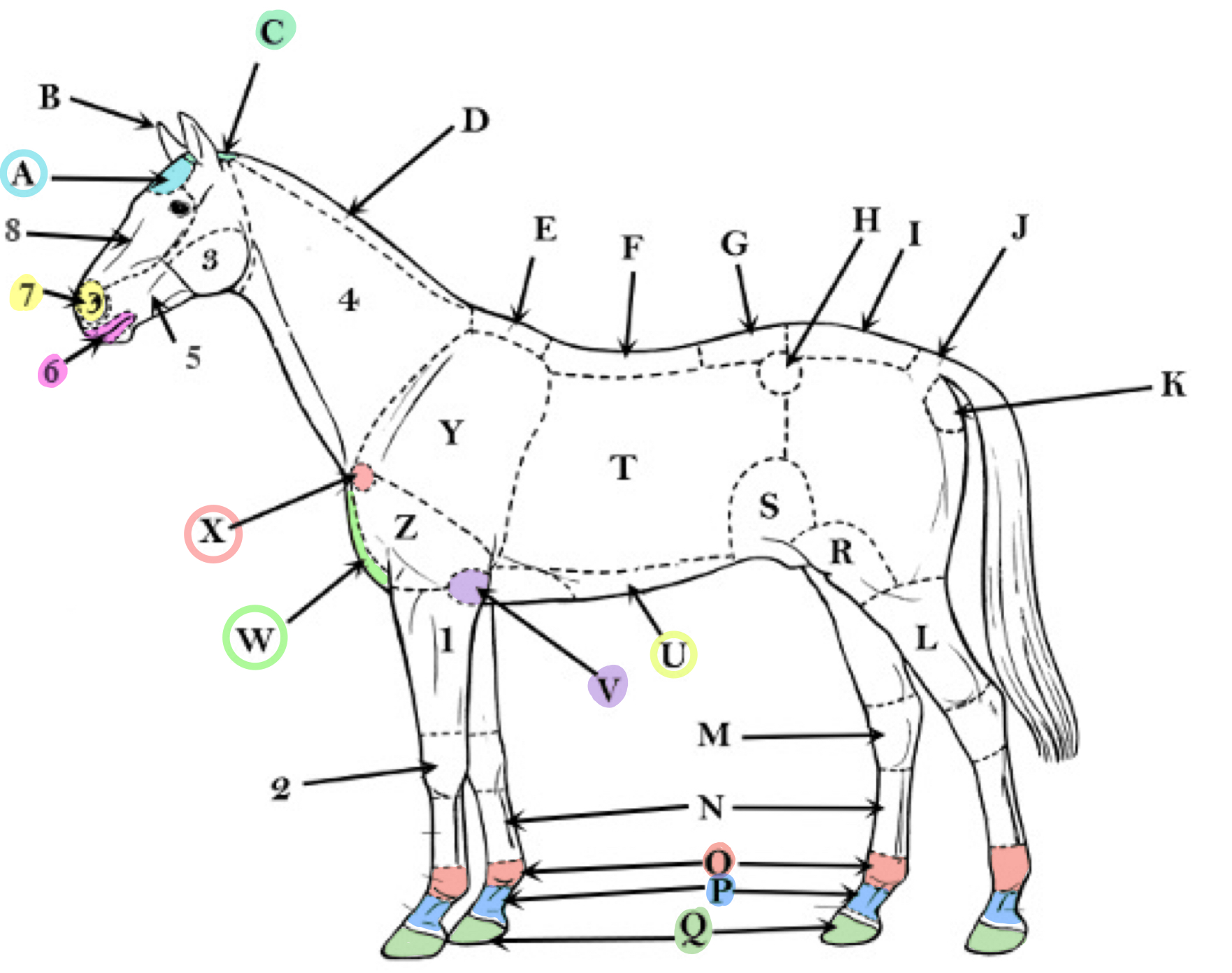
What is feature 2 (foreleg region)?
arm
elbow
forearm
cannon
knee
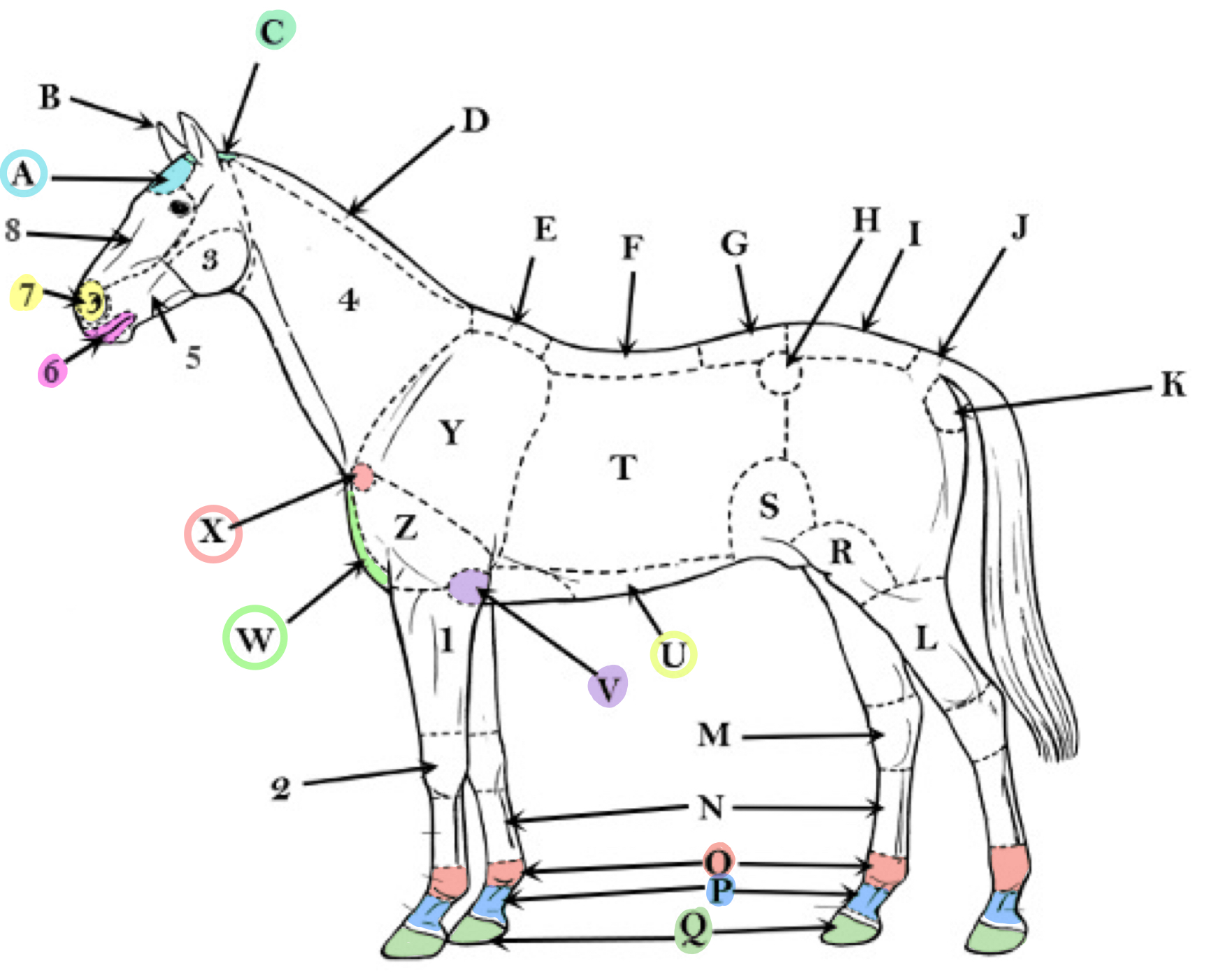
What is feature N (foreleg region)?
arm
elbow
forearm
cannon
knee
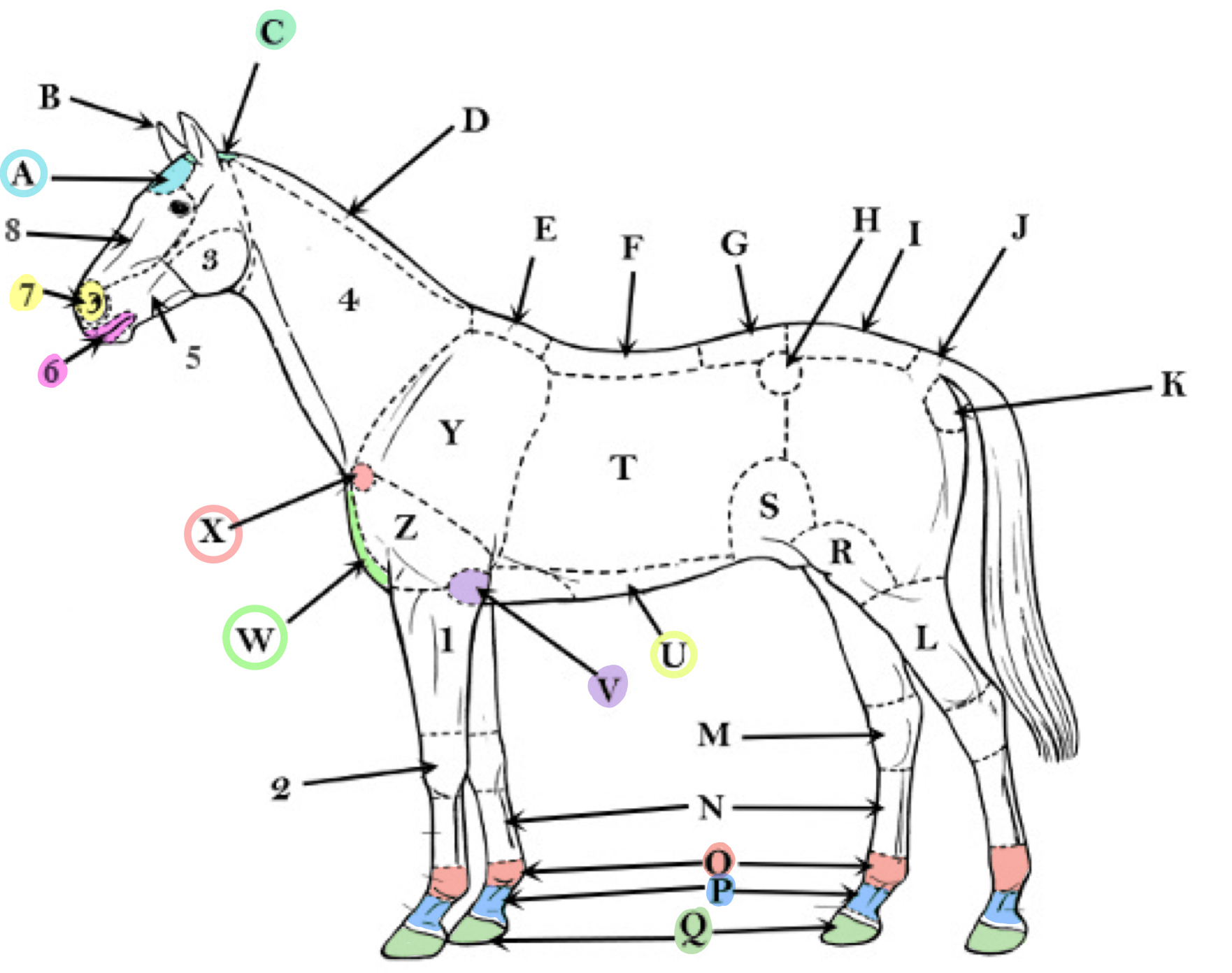
What is feature Q (green)?
forecannon
fetlock
pastern
hoof
coronet
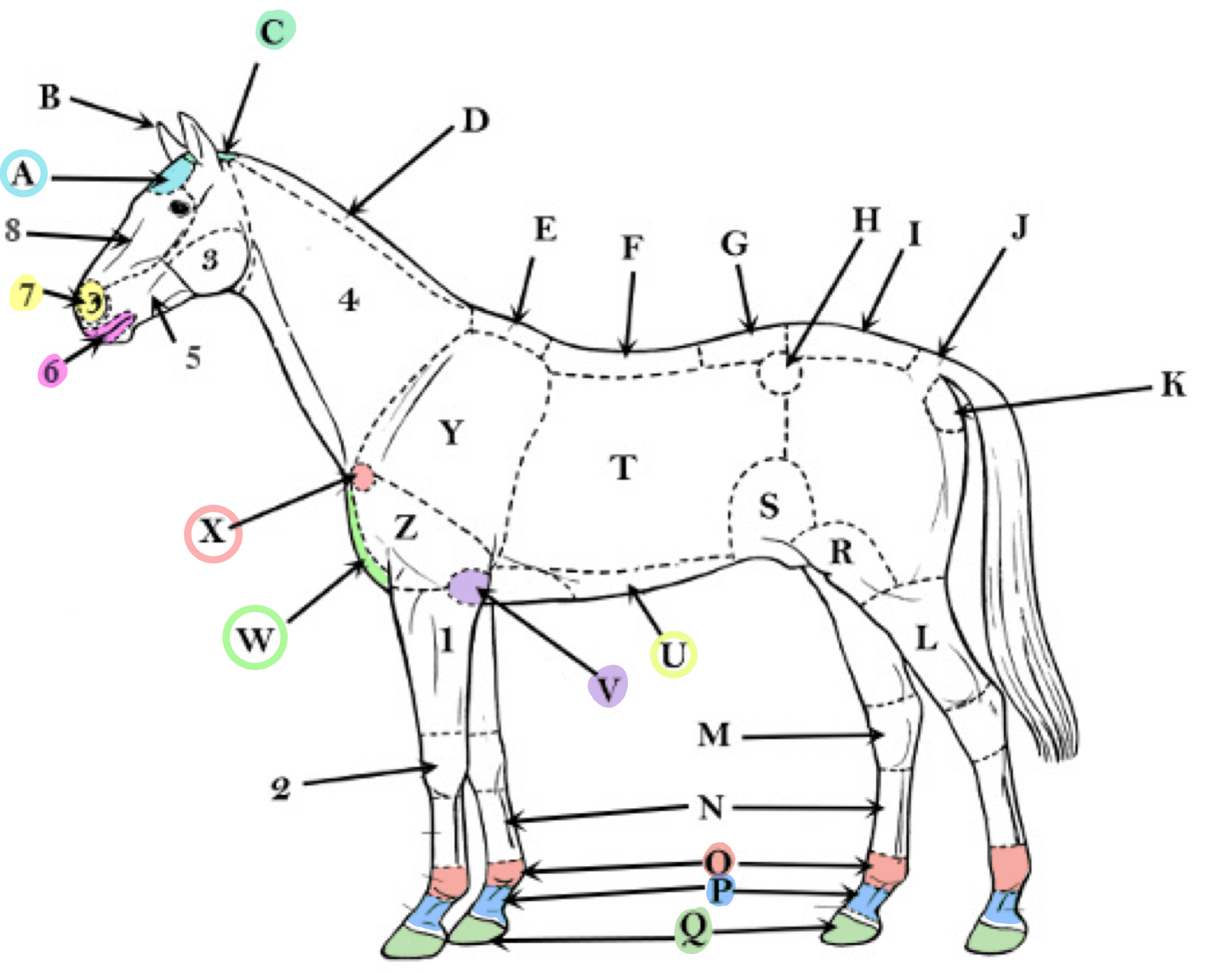
What is feature P ( blue)?
forecannon
fetlock
pastern
hoof
coronet
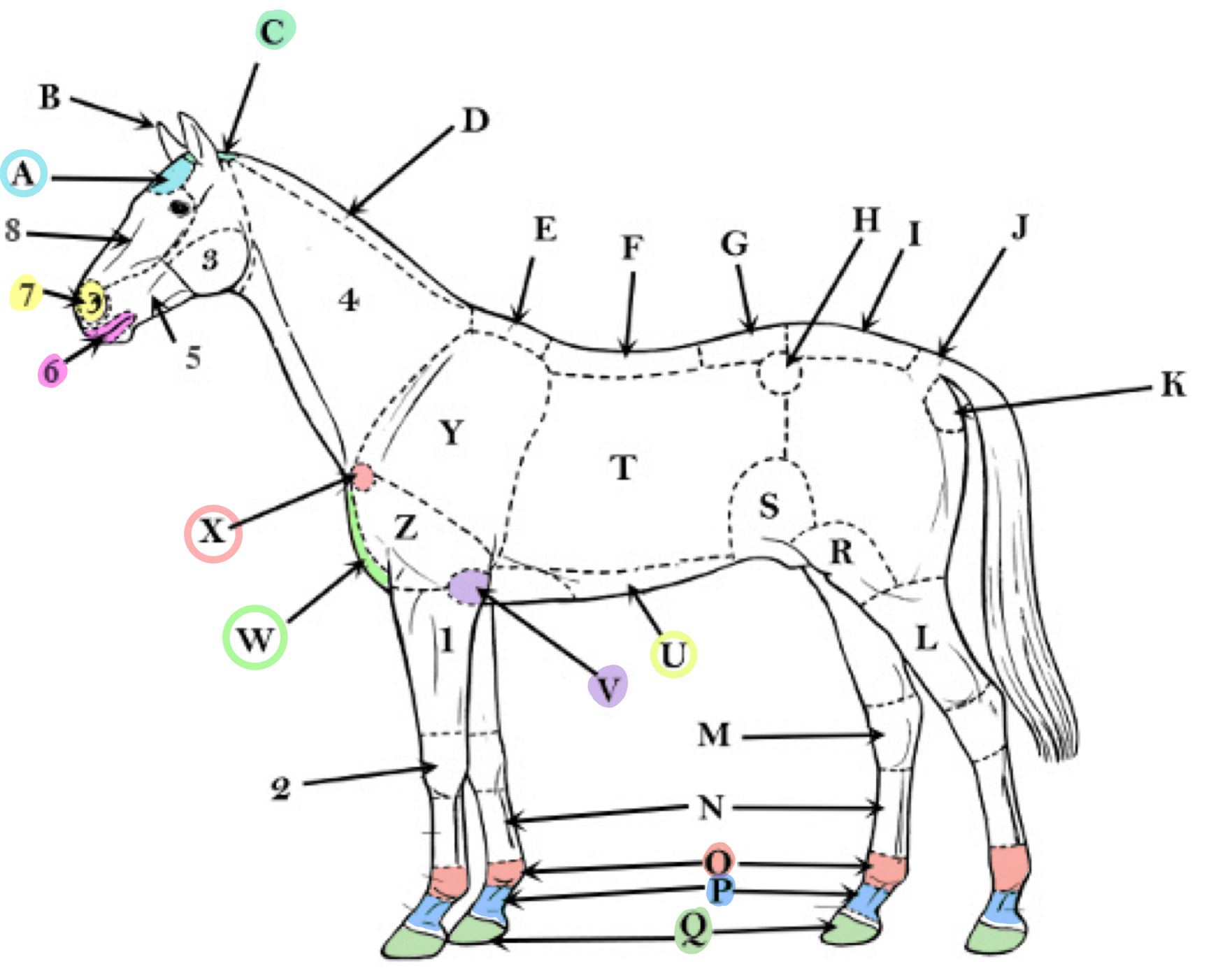
What is feature O (red)?
forecannon
fetlock
pastern
hoof
coronet

