wayground logo

Free Printable Worksheets

Font size

S
M
L
XL
Worksheets

Chemistry 2nd Semester Final Exam Review

Total questions: 190

Worksheet time: 6hrs 25mins

Name
Class
Date
1.
An ionic bond forms when atoms ___________ electrons.
a)
gain
b)
share
c)
increase
d)
transfer
2.
Which type of bond has an equal sharing of electrons?
a)
Polar Covalent 
b)
Non Polar Covalent
c)
Ionic
d)
Metallic
3.
Which type of bond has an unequal sharing of electrons?
a)
Polar Covalent 
b)
Non Polar Covalent
c)
Ionic
d)
Metallic
4.
Bonds that form between two metals are called ______________ bonds.
a)
ionic 
b)
covalent
c)
metallic
d)
pervasive
5.
If an atom loses two electrons what charge will it have?
a)
+ 2
b)
 - 2
c)
+1
d)
-1
6.
What is the number of valence electrons for Oxygen?
a)
8
b)
6
c)
2
d)
1
7.
What elements generally make an ionic bond?
a)
metal and nonmetal
b)
2 nonmetals
c)
metal
d)
none of the above
8.
How many electrons does Si contain? (click to see image)
a)
14
b)
28
c)
2
d)
4
9.
If an oxygen atom has 8 protons (+) and 10 electrons (-), what is it's charge?
a)
O10-
b)
O8+
c)
O2-
d)
O10+
10.
Soluble in Water
a)
Ionic
b)
Covalent
11.
High Melting & Boiling Points
a)
Ionic
b)
Covalent
12.
Why do bonds form?
a)
To fill the valence shell of electrons for the elements involved
b)
to release energy stored in the bonds
c)
because whenever you mix two chemicals, there will be a reaction
d)
because of attraction
13.
What type of bond is illustrated above?
a)
Metallic
b)
Ionic
c)
Covalent
d)
Wiggly
14.
The desire for an element to have 8 atoms around it is called 
a)
Octet Rule
b)
Resonance
c)
Ionization energy
d)
Electronegativity
15.
Which of the following is the correct Lewis dot structure for the molecule fluorine (F2)?
a)
A
b)
B
c)
C
d)
D
16.
A charged particle that has gained or lost electrons is called a _____.
a)
molecule
b)
ion
c)
isotope
d)
element
17.
Nitrogen will form which of the following ions?
a)
N
b)
N-3
c)
N-5
d)
N+5
18.
Magnesium bromide is an ionic compound with the chemical formula MgBr₂.  What does the "2" tell you?
a)
There are 2 bromide ions for every magnesium ion
b)
Bromide has a 2- charge
c)
Bromide has a 2+ charge
d)
There are 2 magnesium ions to every bromide ion
19.
Write the formula for barium + nitrogen
a)
Ba2N3
b)
Ba3N2
c)
BaN
d)
BaN3
20.
What is the VSEPR theory used to predict?
a)
Bond Strength
b)
Polarity
c)
Molecular Shape
d)
Electronegativity
21.
What is the measure of a tetrahedral bond angle?
a)
90 Degrees
b)
109.5 Degrees
c)
120 Degrees
d)
180 Degrees
22.
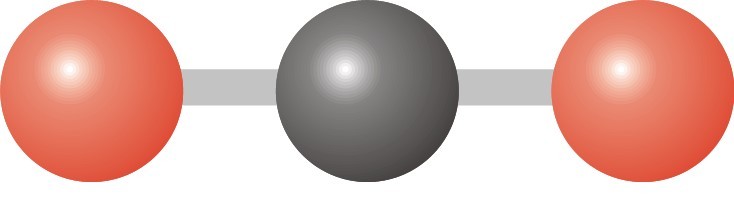
Which molecule would have this shape?
a)
BF3
b)
CH4
c)
PCl5
d)
CO2
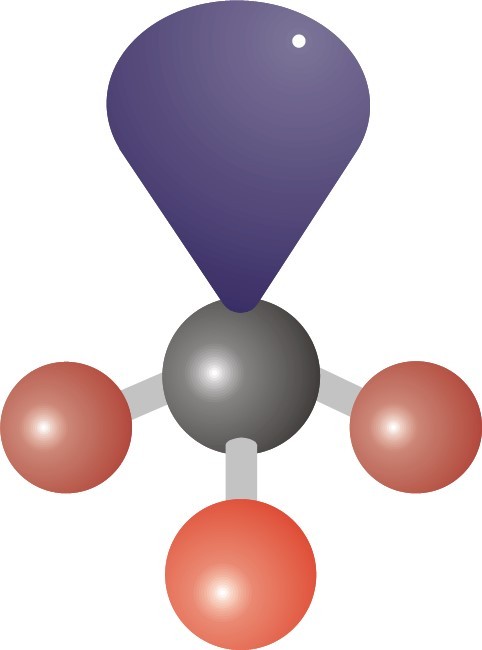
23.
Who could this be?
a)
H2O
b)
NH3
c)
CO2
d)
CH4
24.
The bond angle for a trigonal planar molecule is 
a)
90 Degrees
b)
109.5 Degrees
c)
120 Degrees
d)
180 Degrees
25.
Which of the following is the correct Lewis structure for the compound PBr3?
a)
structure A
b)
structure B
c)
structure C
d)
structure D
26.
Each line in a Lewis Structure represents __________ electron(s).
a)
3
b)
2
c)
1
d)
4
27.
When writing Lewis Structures, only __________ electrons are used.
a)
Inner shell
b)
Core 
c)
Valence
d)
Stable
28.
Which bond type has two electrons shared between two atoms?
a)
covalent bond
b)
ionic bond
29.
Which bond type has stronger bonds?
a)
covalent bond
b)
ionic bond
30.
Which bond type is made of attracted ions?
a)
covalent bond
b)
ionic bond
31.
Which bond type is in water, H2O?
a)
covalent bond
b)
ionic bond
32.
How many electrons does oxygen gain when it bonds?
a)
1
b)
2
c)
3
d)
4
33.
Which type of bond has an equal sharing of electrons?
a)
Polar Covalent 
b)
Non Polar Covalent
c)
Ionic
d)
Metallic
34.

State the electronic geometry , Bond angle and Molecular shape of SO2 Molecule

a)

Tetrahedral ,109.5°, Trigonal pyramidal

b)

Trigonal planar ,120°, Trigonal planar

c)

Trigonal planar , less than 120°, Angular/Bent

d)

None of the above

35.
How many valence electrons are in an atom of phosphorus?
a)
2
b)
3
c)
4
d)
5
36.
How many valence electrons are in an atom of magnesium?
a)
b.
b)
3
c)
d.
d)
5
37.
How many valence electrons does a helium atom have?
a)
2
b)
3
c)
4
d)
5
38.
How many valence electrons are in a silicon atom?
a)
2
b)
4
c)
6
d)
8
39.
What is the name given to the electrons in the highest occupied energy level of an atom?
a)
orbital electrons
b)
valence electrons
c)
anions
d)
cations
40.
How does calcium obey the octet rule when reacting to form compounds?
a)
It gains electrons.
b)
It gives up electrons.
c)
It does not change its number of electrons.
d)
Calcium does not obey the octet rule.
41.
Which of the following elements forms an ion with a 1– charge?
a)
fluorine
b)
hydrogen
c)
potassium
d)
sodium
42.
How many electrons does nitrogen gain in order to achieve a noble-gas electron configuration?
a)
1
b)
2
c)
3
d)
4
43.
Which of the following occurs in an ionic bond?
a)
Oppositely charged ions attract.
b)
Two atoms share two electrons.
c)
Two atoms share more than two electrons.
d)
Like-charged ions attract.
44.
Which of the following is true about an ionic compound?
a)
The chemical formula shows the atoms in a molecule.
b)
The formula unit gives the number of each type of ions in a crystal.
c)
It is composed of anions and cations and yet it is electrically neutral.
d)
The chemical formula shows the ions in a molecule.
45.
How many valence electrons are transferred from the nitrogen atom to potassium in the formation of the compound potassium nitride?
a)
0
b)
1
c)
2
d)
3
46.
How many valence electrons are transferred from the calcium atom to iodine in the formation of the compound calcium iodide?
a)
0
b)
1
c)
2
d)
3
47.
Which of the following pairs of elements is most likely to form an ionic compound?
a)
magnesium and fluorine
b)
nitrogen and sulfur
c)
oxygen and chlorine
d)
sodium and aluminum
48.
Most ionic compounds
a)
are crystalline solids at room temperature.
b)
have low melting points.
c)
conduct an electric current in the solid state.
d)
are composed of nonmetallic elements.
49.
What is the basis of a metallic bond?
a)
the attraction of metal ions to mobile electrons
b)
the attraction between neutral metal atoms
c)
the neutralization of protons by electrons
d)
the attraction of oppositely charged ions
50.
What information does a molecular formula provide?
a)
the number and kind of atoms that are bonded by the transfer of electrons
b)
the simplest whole-number ratio of atoms that are bonded by the transfer of electrons
c)
information about a molecule's structure
d)
the number and kind of atoms present in a molecule
51.
What is shown by the structural formula of a molecule or polyatomic ion?
a)
the arrangement of bonded atoms
b)
the number of ionic bonds
c)
the number of metallic bonds
d)
the shapes of molecular orbitals
52.
Why do atoms share electrons in covalent bonds?
a)
to become ions and attract each other
b)
to attain a noble-gas electron configuration
c)
to become more polar
d)
to increase their atomic numbers
53.
Which elements can form diatomic molecules joined by a single covalent bond?
a)
hydrogen only
b)
halogens only
c)
halogens and members of the oxygen group only
d)
hydrogen and the halogens only
54.
What is the representative unit in a molecular compound?
a)
a molecule
b)
an ion
c)
a formula unit
d)
shared electrons
55.
Once formed, how are coordinate covalent bonds different from other covalent bonds?
a)
They are stronger.
b)
They are more ionic in character.
c)
They are weaker.
d)
There is no difference.
56.
Which of the following bonds is the least reactive?
a)
C—C
b)
H—H
c)
O—H
d)
H—Cl
57.
According to VSEPR theory, molecules adjust their shapes to keep which of the following as far apart as possible?
a)
pairs of valence electrons
b)
inner shell electrons
c)
mobile electrons
d)
the electrons closest to the nuclei
58.
What causes water molecules to have a bent shape, according to VSEPR theory?
a)
repulsive forces between unshared pairs of electrons
b)
interaction between the fixed orbitals of the unshared pairs of oxygen
c)
ionic attraction and repulsion
d)
the unusual location of the free electrons
59.
Which of the following theories provides information concerning both molecular shape and molecular bonding?
a)
molecular orbital theory
b)
VSEPR theory
c)
orbital hybridization theory
d)
Bohr atomic theory
60.
Experimental evidence suggests that the H—C—H bond angles in ethene, C H , are ____.
a)
90
b)
109.5
c)
120
d)
180
61.
What is thought to cause the dispersion forces?
a)
attraction between ions
b)
motion of electrons
c)
sharing of electron pairs
d)
differences in electronegativity
62.
Which of the forces of molecular attraction is the weakest?
a)
dipole interaction
b)
dispersion
c)
hydrogen bond
d)
single covalent bond
63.
What causes dipole interactions?
a)
sharing of electron pairs
b)
attraction between polar molecules
c)
bonding of a covalently bonded hydrogen to an unshared electron pair
d)
attraction between ions
64.
What are the weakest attractions between molecules?
a)
ionic forces
b)
Van der Waals forces
c)
covalent forces
d)
hydrogen forces
65.
What causes hydrogen bonding?
a)
attraction between ions
b)
motion of electrons
c)
sharing of electron pairs
d)
bonding of a covalently bonded hydrogen atom with an unshared electron pair
66.
What coefficient should be used to make the following equation balanced?
N2+O2--> _NO 
a)
1
b)
2
c)
3
d)
4
67.

Which equation is balanced?

a)

PbO2 + 2H2

b)

SO2 + H20 --> H2SO4

c)

2Na + 2H2O --> 2NaOH + H2

68.
How many HCl molecules do you need to balance this equation? 
Mg +  __HCl --->  MgCl2 + H2
a)
1
b)
2
c)
3
d)
4
69.

What law governs the balancing of chemical equations?

a)

Law of Energy

b)

Law of Conservation of Matter/Mass

c)

Law of Gravity

d)

Law of Matter Movement

70.
What is the total number of atoms present in 5Na3PO4
a)
5
b)
40
c)
55
d)
8
71.

Balance this equation

_Al +_HCl --> _H2 +_AlCl3

a)

2,6,3,2

b)

it's already balanced

c)

4,12,3,4

d)

2,1,4,5

72.

What are the coefficients that would properly balance this equation?

__Ca + __H2O --> __Ca(OH)2 + __H2

a)

2,1 --> 2,1

b)

1,2 --> 1,1

c)

1,2 --> 2,4

d)

1,2 --> 2,1

73.
What is the right ratio of chemicals for the BCE (Balanced Chemical Equation)?__CO + __Fe2O3--> __Fe + __CO2
a)
3,1 --> 2,3
b)
3,2 --> 1,1
c)
3,2 --> 2,4
d)
3,2 --> 2,1
74.

What are the coefficients that would properly balance this equation?

__AgNO3 + __H2S --> __Ag2S+ __HNO3

a)

2,1 --> 1,2

b)

1,2 --> 1,1

c)

1,2 --> 1,2

d)

1,2 --> 2,1

75.

What are the coefficients that would properly balance this equation?

__H2 + __S --> __H2S

a)

1,1 --> 1

b)

2,2 --> 2

c)

1,2 --> 1

d)

1,2 --> 2

76.

What are the coefficients that would properly balance this equation?

__Al + __O2--> __Al2O3

a)

4,1 --> 2

b)

4,3 --> 4

c)

3,4 --> 1

d)

4,3 --> 2

77.
What is the total number of atoms present in 5Na3PO4
a)
5
b)
40
c)
55
d)
8
78.

Determine the coefficients to make the following equation balanced?

__N2 + __O2--> __NO

a)

1, 1, 1

b)

1, 1, 2

c)

2, 2, 2

d)

1, 2, 2

79.

Determine the coefficients to balance the equation.

__Al +__HCl --> __H2 +__AlCl3

a)

2,6,3,2

b)

it's already balanced

c)

4,12,3,4

d)

2,1,4,5

80.

Balance the the following equation.

__Zn+__HCl -->__ZnCl2 +__H2

a)

1,1,2,1

b)

1,1,1,2

c)

1,2,1,1

d)

2,1,1,1

81.
Which number should go in the blank?
Mn + _ HNO3 → Mn(NO3)2 + H2
a)
1
b)
2
c)
3
d)
0
82.
Which number should go in the blank?
Al(NO3)3 + _  NaOH -> Al(OH)3 + 3 NaNO3
a)
1
b)
2
c)
3
d)
0
83.
The numbers needed to balance the equation are:
a)
1, 1, 1, 2
b)
1, 1, 2, 2
c)
1, 1, 1, 1
d)
2, 3, 1, 3
84.
The numbers needed to balance the equation are:
a)
2, 7, 6, 4
b)
2, 1, 3, 2
c)
1, 1, 3, 2
d)
2, 3, 1, 3
85.
The numbers needed to balance the equation are:
a)
2, 7, 6, 4
b)
2, 1, 3, 2
c)
3, 1, 1, 3
d)
2, 3, 1, 3
86.

How many particles are in a mole?

a)

602

b)

602 million

c)

602 moles

d)

6.022 x 10²³

87.

Which is the equation to calculate number of moles?

a)

Add all the atomic masses of each element

b)

Mass X Molar Mass

c)

Molar Mass / Mass

d)

Mass / Molar Mass

88.

How do I calculate the molar mass of a compound?

a)

It is always 6.02 x 10²³

b)

Find the atomic mass of every element in total and add them together

c)

It is always 1

d)

Number of moles x mass

89.
What is the molar mass of AuCl3?
a)
96 g
b)
130 g
c)
232.5 g
d)
303.3 g
90.
How many moles are present in 32.3 grams of carbon dioxide (CO2)?
a)
44.01 moles
b)
1421.52 moles
c)
32.3 moles
d)
0.73 moles
91.

Find the mass of 3.5 mols of NiCl2

a)

558.6 g/mol

b)

558.6 g

c)

37.02 g/mol

d)

37.02 g

92.

What is the mass of .072 mols of FeCl3?

a)

162.3 g

b)

11.7 mols

c)

11.7 g

d)

11.7 g/mol

93.

How many moles are in 2.35 g H2O?

a)

0.13 mols

b)

13 mols

c)

1.3 mols

d)

130 mols

94.

How many moles are in 106.3 g of Copper, Cu?

a)

167 mols

b)

1.673 mols

c)

16.73 mols

d)

.167 mols

95.

Silicon dioxide, also known as silica, is an oxide of silicon with the chemical formula SiO2. Silica is one of the most complex and most abundant families of materials, existing as a compound of several minerals and as synthetic product. What is the formula mass of the covalent compound silicon dioxide (SiO2)?

a)

7193.6 amu

b)

30.0 amu

c)

44.1 amu

d)

60.1 amu

96.

Fluorine is added to city water supplies in the proportion of about one part per million to help prevent tooth decay. Several fluoride compounds are added to toothpaste, also to help prevent tooth decay. What is the molar mass of fluorine gas?

a)

18.998 amu

b)

38 amu

c)

9 amu

d)

18 amu

97.

Sodium hydroxide is used in many industries: in the manufacture of pulp and paper, textiles, drinking water, soaps and detergents, and as a drain cleaner. What is the molar mass of NaOH?

a)

40 amu

b)

38.989 amu

c)

23.998 amu

d)

57.004 amu

98.

What is the general formula for the computation of percentage composition of the given element?

a)

% mass of element = mass of element in the compound divided by mass of the compound times 100

b)

% mass of element = mass of element in the compound divided by mass of the compound

c)

% mass of element = mass of element in the compound divided by 100

d)

% mass of element = mass of element in the compound

99.

What is the percent by mass of magnesium in MgO?

a)

20%

b)

40%

c)

50%

d)

60%

100.

Find the percent composition of Cu2S?

a)

%Cu= 67.987 %S= 32.013

b)

%Cu= 79.854 %S= 20.145

c)

%Cu= 35.946 %S= 64.054

101.

How many percent of chlorine is present in chloroform?

a)

10.06%

b)

0.84%

c)

89.09%

d)

99.99%

102.

What is the percent composition of benzene, C6H6?

a)

C = 50.%

H = 50.%

b)

C = 85.7 %

H = 14.3%

c)

C = 92.2%

H = 7.8%

d)

C = 71.9%

H = 28.1%

103.

The mass % of aluminum in aluminum sulfate is:

a)

35.94%

b)

15.77%

c)

45.70 %

d)

21.93 %

104.
What is the percentage of chromium in K2Cr2O7?
a)
38.1%
b)
27.2%
c)
34.7%
d)
100%
105.
What is the percent composition of water?
a)
H = 11.1%
O = 89.9%
b)
H = 66.7%
O = 33.3%
c)
H = 5.6%
O = 89.9%
d)
H = 20%
O = 80%
106.

What percentage of the total atomic mass of carbon monoxide (CO) is composed of carbon?

a)

29%

b)

43%

c)

57%

d)

73%

107.

What is the percent by mass of Na in NaOH?

a)

40%

b)

2.5%

c)

22.9%

d)

57.5%

108.

Find the percentage composition of Mg in Mg3(PO4)2.


a)

27.48% Mg

b)

43.11% Mg

c)

16.00% Mg

d)

12.63% Mg

109.
A compound consists of 72.2% magnesium(Mg) and 27.8% nitrogen(N) by mass. What is the empirical formula?
a)
Mg4N3
b)
MgN2
c)
Mg3N
d)
MgN
110.
You are given the following percentages: 40.05% S and 59.95% O. Find the empirical formula for these elements.
a)
SO
b)
SO2
c)
SO3
d)
SO4
111.
What is the empirical formula if you have 81.82% carbon and 18.18% hydrogen?
a)
C3H8
b)
CH4
c)
C2H2
d)
C4H10
112.
Given the following: 42.07% Na, 18.89% P, and 39.04% O, determine the empirical formula.
a)
 NaPO2
b)
Na2PO3
c)
Na3PO4
d)
NaPO4
113.

What is the empirical formula if you have 36.84% nitrogen and 63.16% oxygen?

a)

NO

b)

N2O4

c)

N2O3

d)

N2O5

114.
What is the percent by mass of sodium in NaCl?
a)
39%
b)
61%
c)
35%
d)
65%
115.
Which pair has the same empirical formula?
a)
NaCrO4 and Na2Cr2O7
b)
C2H4O2 and C6H12O6
c)
C3H6Oand C2H6O2
d)
CH4 and C2H6
116.
A compound consists of 72.2% magnesium(Mg) and 27.8% nitrogen(N) by mass. What is the empirical formula?
a)
Mg4N3
b)
MgN2
c)
Mg3N
d)
MgN
117.
Given the following: 42.07% Na, 18.89% P, and 39.04% O, determine the empirical formula.
a)
 NaPO2
b)
Na2PO3
c)
Na3PO4
d)
NaPO4
118.
How many molecules of sugar (C6H12O6) are in a mole?
a)
24 molecules
b)
180 molecules
c)
180 g
d)
6.02 x 10²³ molecules
119.
How many grams are in 1.2 x 1024 molecules of CO?
a)
28 grams
b)
56 grams
c)
6.02 grams
d)
1.2 grams
120.
How many moles are in 3.01 x 10²² atoms of magnesium?
a)
0.05 moles
b)
1.81 x 1046 moles
c)
5.00 x 10²¹ moles
d)
5 moles
121.
If an atom of Fluorine has an atomic mass of 19 amu, it has a Molar mass of ____
a)
19 lbs.
b)
19 kg
c)
How am I supposed to know?
d)
19 g/mol
122.
What are the units for molar mass?
a)
grams
b)
amu
c)
grams/mole
d)
liters
123.
What is the mass of 0.89 mol of CaCl2?
a)
111 grams
b)
0.008 grams
c)
98.9 grams
d)
none of the choices
124.

(0901) Avogadro’s number is:

a)

6.02 x 10²²

b)

6

c)

6.02 x 10²³

d)

3.01 x 10²³

125.

(0901) How many water molecules are in 5.2 moles of water?

a)

6.0 x 10²³ molecules

b)

5.2 molecules

c)

3.1 x 1024 molecules

d)

8.6 x 10⁻²⁴ molecules

126.

(0902) The mass of one mole of substance is called...

a)

molecular mass

b)

mole constant

c)

molar mass

d)

atomic weight

127.

(0902) What is the molar mass of Ca(NO3)2?

a)

148.096 g

b)

164.086 g

c)

102.055 g

d)

70.084 g

128.
What is the equation for calculating percent composition?
a)
mass of element/mass of compound = x 100
b)
mass of compound/mass of element = x 100 
c)
total mass/molar mass = x 100 
d)
molar mass/molar mass = x 100 
129.

What is the percent composition by mass of magnesium in the compound MgSO4

a)

20%

b)

27%

c)

46%

d)

53%

130.
You are given the following percentages: 40.05% S and 59.95% O. Find the empirical formula for these elements.
a)
SO
b)
SO2
c)
SO3
d)
SO4
131.

How many molecules are there in 31.8 moles of water? (H2O has a molar mass of 18.0 g/mol)

a)

572 g

b)

1.91 x 1025 molecules

c)

5.28x 10⁻²⁵ molecules

d)

1.77 g

132.

How many molecules are present in 135 g of Teflon C2F4

a)

6.13 x 10²³ molecules

b)

5.13 x 10²³ molecules

c)

8.13 x 10 23 molecules

d)

9.13 x 10²³ molecules

133.

What is the molar mass of calcium hydroxide, Ca(OH)2?

a)

74.1 g/mole

b)

57.1 g/mole

c)

58.1 g/mole

d)

57.1 u

134.
How many molecules are in 2.5 mol of NaCl?
a)
1.51x10²³
b)
146
c)
4.15
d)
1.51x1024
135.
How many molecules of sugar (C6H12O6) are in a mole?
a)
24 molecules
b)
180 molecules
c)
180 g
d)
6.02 x 10²³ molecules
136.
How many atoms of carbon are in 6.00g of carbon?
a)
1.20x1024atoms C
b)
6.02x10²³atoms C
c)
3.01x10²³atoms C
d)
1.50x10²³atoms C
137.
How many grams are in 1.2 x 1024 molecules of CO?
a)
28 grams
b)
56 grams
c)
6.02 grams
d)
1.2 grams
138.
How many moles are in 3.01 x 10²² atoms of magnesium?
a)
0.05 moles
b)
1.81 x 1046 moles
c)
5.00 x 10²¹ moles
d)
5 moles
139.

What is the mass of one mole of silver?

a)

32.06 g

b)

107.87 g

c)

14.01 g

d)

22.99 g

140.

How many molecules of water are in a 821.3 g sample?

a)

45.58 molecules

b)

8.232 x 1025 molecules

c)

8.909 x 1027 molecules

d)

2.744 x 1025 molecules

141.

What is the mass of 4.98 x 1024 atoms of Zn?

a)

541 g

b)

8.27 g

c)

.122 g

d)

4.59 x 1046 g

142.

A sample of AlCl3 contains a total of 4.515 x 1027 atoms of chlorine. What must be the mass of this sample?

a)

2.500 x 10⁵ g

b)

1.000 x 10⁶ g

c)

18.75 g

d)

3.333 x 10⁵ g

143.
How many molecules are in 9.44 moles of AlCl3?
a)
5.68 molec AlCl3
b)
5.68x1024 molec AlCl3
c)
0.705 molec AlCl3
d)
1.25x10²³ molec AlCl3
144.

The production of a slightly soluble solid compound in a double-displacement reaction results in the formation of a

a)

gas

b)

precipitate

c)

combustion reaction

d)

halogen

145.

To balance a chemical equation, it is permissible to adjust the

a)

coefficients

b)

subscripts

c)

formulas of the products

d)

number of products

146.

In a chemical equation, the symbol (aq) indicates that the substance is

a)

water

b)

dissolved in water

c)

an acid

d)

insoluble

147.

In the reaction described by the word equation
sodium + water  sodium hydroxide+hydrogen gassodium\ +\ water\ \rightarrow\ sodium\ hydroxide+hydrogen\ gas  

a)

sodium hydroxide is a product.

b)

sodium is a product.

c)

water is a reactant.

d)

sodium hydroxide is a product and water is a reactant

148.

Which of the following indicates that a chemical equation is balanced?

a)

The numbers of atoms of each element are the same on both sides of the equation.

b)

All of the coefficients are the same.

c)

The numbers of molecules on each side of the equation are equal.

d)

The sums of the coefficients on each side of the equation are equal.

149.

From a complete and correctly written chemical equation, you can obtain the

a)

chemical formulas of the reactants and products.

b)

relative amounts of the reactants and products.

c)

physical states of the reactants and products.

d)

All of the answers are correct

150.

To balance a chemical equation, you must

a)

adjust the subscripts.

b)

adjust the number of products.

c)

adjust the number of reactants.

d)

adjust the coefficients.

151.

The formation of a solid product in a chemical reaction is represented by the symbol

a)

(aq).

b)

(g).

c)

(l).

d)

(s).

152.

What symbol indicates a reversible reaction?

a)

\Longleftrightarrow

b)

\uparrow

c)

\rightarrow

d)

\leftarrow

153.

In the expression 3CO2, the numbers 3 and 2 are, respectively,

a)

a subscript and a coefficient.

b)

a coefficient and a subscript.

c)

two subscripts.

d)

two coefficients.

154.

What is the total number of molecules that is represented by the following chemical equation?
NH4NO2N2+2H2ONH_4NO_2\rightarrow N_2+2H_2O  

a)

3

b)

4

c)

8

d)

16

155.

Which equation below violates the law of conservation of mass?

a)

2H2+O22H2O2H_2+O_2\rightarrow2H_2O

b)

KCl+BrKBr+Cl2KCl+Br\rightarrow KBr+Cl_2

c)

2Fe2O3+3C4Fe+3CO22Fe_2O_3+3C\rightarrow4Fe+3CO_2

d)

Na2CO3+2HCl2NaCl+H2O+CO2Na_2CO_3+2HCl\rightarrow2NaCl+H_2O+CO_2

156.

Which of the following equations represents the balanced equation for the reaction of iron and oxygen?

a)

2Fe+O2Fe2O32Fe+O_2\rightarrow Fe_2O_3

b)

Fe+3O2Fe2O3Fe+3O_2\rightarrow Fe_2O_3

c)

4Fe+3O22Fe2O34Fe+3O_2\rightarrow2Fe_2O_3

d)

3Fe+3O22Fe2O33Fe+3O_2\rightarrow2Fe_2O_3

157.

Which coefficients correctly balance the formula equation below?
KClO3(s)KCl(s)+O2(g)KClO_3(s)\rightarrow KCl(s)+O_2(g)  

a)

1, 1, 1

b)

1, 1, 3

c)

2, 2, 3

d)

2, 1, 1

158.

Which equation is not balanced?

a)

2H2+O22H2O2H_2+O_2\rightarrow2H_2O

b)

4H2+2O24H2O4H_2+2O_2\rightarrow4H_2O

c)

H2+H2+O2H2O+H2OH_2+H_2+O_2\rightarrow H_2O+H_2O

d)

2H2+O2H2O2H_2+O_2\rightarrow H_2O

159.

The coefficients in a chemical equation

a)

indicate the number of moles of each substance that react.

b)

show the number of grams of each substance that react.

c)

are the molar masses of the substances.

d)

show the valence electrons for each atom.

160.

In which type of reaction do two or more compounds react to form one product?

a)

synthesis

b)

decomposition

c)

combustion

d)

single-displacement

161.

Which of the following is true regarding single-displacement reactions?

a)

Only one product is formed.

b)

There is only one reagent.

c)

It requires oxygen.

d)

One element replaces another in a compound.

162.

Which of the following is true regarding double-displacement reactions?

a)

Two products are formed.

b)

The ions of the two reactants must be exchanged.

c)

A precipitate may form.

d)

All of the answers are correct

163.

A mixture of propane and oxygen react to form carbon dioxide and water. What type of chemical reaction is this?

a)

synthesis

b)

decomposition

c)

double-displacement

d)

combustion

164.

What type of chemical reaction does the following chemical equation represent?
2HCl(aq)+Cr(s)H2(g)+CrCl2(aq)2HCl(aq)+Cr(s)\rightarrow H_2(g)+CrCl_2(aq)  

a)

composition

b)

single-displacement

c)

decomposition

d)

double-displacement

165.

What type of chemical reaction is represented by the following word equation?
iron+oxygeniron(II)oxideiron+oxygen\rightarrow iron(II)oxide  

a)

synthesis

b)

replacement

c)

combustion

d)

double-displacement

166.

Which of the following equations represents a decomposition reaction?

a)

2Sb(s)+3I2(g)2SbI3(s)2Sb(s)+3I_2(g)\rightarrow2SbI_3(s)

b)

2HgO(s)2Hg(l)+O2(g)2HgO(s)\rightarrow2Hg(l)+O_2(g)

c)

FeS(s)+2HCl(ag)H2S(g)+FeCl2(aq)FeS(s)+2HCl(ag)\rightarrow H_2S(g)+FeCl_2(aq)

d)

Zn(s)+H2SO4(aq)ZnSO4(aq)+H2(q)Zn(s)+H_2SO_4(aq)\rightarrow ZnSO_4(aq)+H_2(q)

167.

What is the following reaction?
2C2H2(g)+5O2(g)4CO2(g)+2H2O(l)2C_2H_2(g)+5O_2(g)\rightarrow4CO_2(g)+2H_2O(l)  

a)

combustion reaction.

b)

synthesis reaction.

c)

decomposition reaction.

d)

double-displacement reaction.

168.

In a single-displacement reaction, an element in the activity series most likely can replace any element

a)

above it on the list.

b)

in the same group.

c)

below it on the list.

d)

in any other group.

169.
Using the following equation:
Fe2O3(s) + 3H2(g) → 2Fe(s) + 3H2O(l)
How many moles of iron can be made from  6 moles H2
a)
4 moles Fe
b)
6 moles Fe
c)
9 moles Fe
d)
2 moles Fe
170.
2H2   +   O2  →  2H2O
How many moles of water can be produced if 8 moles H2 are used?
a)
4 moles
b)
8 moles
c)
16 moles
d)
2 moles
171.
Fe + S --> FeS
If 7.62g Fe react with 8.67g S, what is the limiting reactant?
a)
Fe
b)
S
c)
FeS
d)
none 
172.
Theoretical yield = 73g
Actual yield = 62g
Calculate the percent yield.
a)
1.16%
b)
116%
c)
85%
d)
76%
173.
In a lab, a scientist calculate he should produce 12.3 grams of product in his experiment. When he is finished collecting his product it weighs 10.1 grams. What is his percent yield?
a)
82%
b)
0.82%
c)
10.1 %
d)
100%
174.
If a chemist calculates the maximum amount of product that could be obtained in a chemical reaction, he or she is calculating the
a)
theoretical yield
b)
mole ratio
c)
actual yield
d)
percentage yield
175.
A chemist interested in the efficiency of a chemical reaction would calculate the
a)
mole ratio
b)
rate of reaction
c)
percent yield
d)
energy released
176.
When does a chemical reaction stop?
a)
When the lab is finished
b)
When the excess reactant is used up
c)
When the limiting reactant is used up
d)
Chemical reactions never stop
177.
Mole ratios are obtained from the
a)
balanced chemical equation
b)
periodic table
c)
molar mass
178.
What is the mole ratio of H2O to H3PO4 in the following chemical equation?   P4O10 + 6 H2O --> 4 H3PO
a)
6:4
b)
4:6
c)
1:3
d)
3:1
179.
N2 +  3H2 → 2NH3 
How many moles of hydrogen are needed to react with 2 moles of nitrogen?
a)
6
b)
2
c)
3
d)
1
180.
What is stoichiometry?
a)
The study of how the quantities of reactants and products are related in chemical reactions
b)
The study of the speed of reactions
c)
The study of how chemical reactions occur
d)
The study of types of reactions
181.

The __________ in a balanced equation reveals the mole ratios of the substances involved.

a)

subscript

b)

coefficients

c)

superscript

d)

total number in each compound

182.
Cl2 + 2 KBr → Br2 + 2 KCl
How many grams of potassium chloride can be produced from 356 g of chlorine and 356 g of potassium bromide?
a)
749 g
b)
223 g
c)
479 g
d)
814 g
183.
CH4 + 2 O2 → CO2 + 2 H2O
How many moles of carbon dioxide are produced from the combustion of 110 g of CH4?
a)
13.7 mol
b)
2.75 mol
c)
6.11 mol
d)
6.85 mol
184.
B2H6 + 3O2 -->2 HBO2 + 2 H2O
 What mass of O2 will be needed to burn 36.1 g of B2H6?
a)
13.8 g O2
b)
3.86 mol of O2
c)
124 g O2
185.
4 Al + 3 O2 –> 2 Al2O How much aluminum would be needed to completely react with 45 grams of O2?
a)
1.05 moles
b)
3.75 moles
c)
1.875 grams
d)
1.875 moles
186.

How many g are there in 7.3 moles of boron?

a)

0.68

b)

70.0

c)

1.48

d)

78.8

187.

If 40g of calcium combines with 160g of bromine, what is the formula of calcium bromide? (Relative atomic masses: Ca = 40 and Br = 80)

a)

CaBr3

b)

CaBr2

c)

Ca2Br

d)

CaBr

188.
2 NaClO3 (s) --> 2NaCl (s) +3 O2 (g)  
12.00 moles of NaClO3 will produce how many grams of O2?
a)
256 g of O2
b)
576 g of O2
c)
288 g O2
189.
Mg(s) + 2 HCl(aq)  -->  MgCl₂(aq)   + H₂(g)
How many moles of HCl are consumed in the production of 7.5 moles of MgCl₂?
a)
3.8 moles
b)
15 moles
c)
7.5 moles
d)
23 moles
190.
Use the following equation:
NaIO3(aq) + 6HI(aq) --> 3I2(s) + NaI(aq) + 3H2O(l)
How many moles of iodine can be made from 6.55 moles of NaIO3?

a)
4.55 moles I2
b)
23.18 moles I2
c)
19.65 moles I2
d)
34.99 moles I2