
 Worksheets
Evolution Unit Review
Total questions: 38
Worksheet time: 38mins
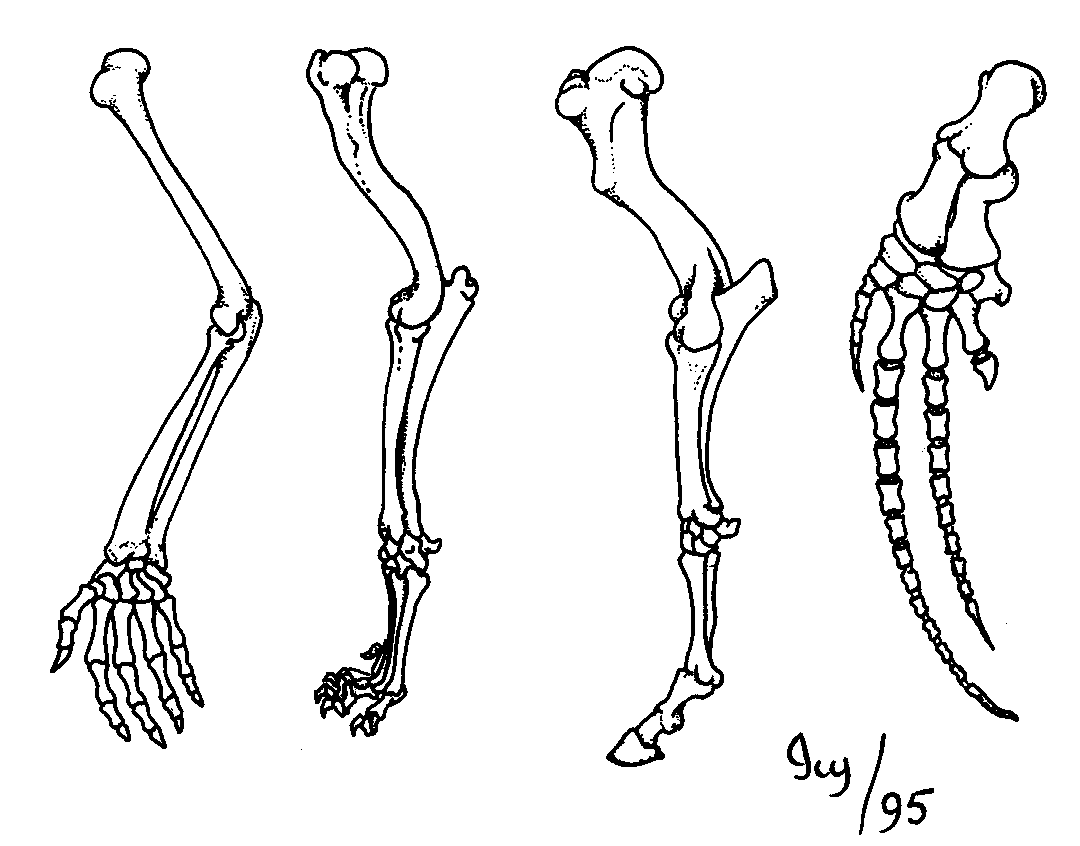


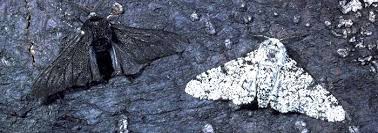

Which of the following can be determined by observing the embryos shown in the diagram
Recently, scientists have been able to use ___________to find common proteins and amino acids to determine how closely related species are.
DNA
Vestigial structures
Fossils
Homologous structures

According to this image, which two domains of life are most related?
Bacteria & Archaea
Archaea & Eukarya
Eukarya & Bacteria
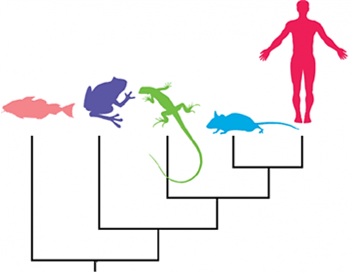
According to this phylogenetic tree, which creature is the least related out of all pictured?
Fish
Frog
Salamander
Human

According to this image, when did the ancestors of Indohyus and Pakicetus diverge?
52 million years ago
56 million years ago
25 million years ago
47 million years ago


Which group of animals on this tree are most closely related to birds?
Saurischian dinosaurs
Ornithischian dinosaurs
Crocodiles
None of these are related to birds

Use the cladogram to determine which of these animals does not have/produce an amniotic egg?
Turtle
Leopard
Lamprey
All three of these animals produce the amniotic egg

Who is most closely related to Taxidea taxus?
Lutra lutra
Panthera pardus
Canis latrans
Canis lupus

Each of the nodes indicated on the cladogram, are described as __________________________.
Derived characteristics
Trait nodes
Branching elements
Clades

If a plant has vascular tissue but no seeds, which of the four plant groups here would it fall into?
Ferns
Cone-bearing plants
Mosses
Flowering plants
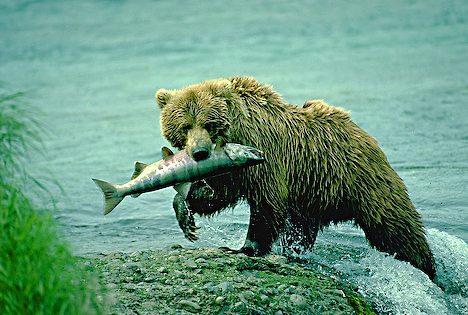
A grizzly bear survives because he is well-adapted to his environment. When he reproduces he passes on those traits to his offspring. this process is called
Natural Selection
Selective Breeding
Random mutations
Variations in a species

The peppered moth's color camouflaged it on the light colored tree bark. It's color was an example of a/n
Variation
Dominant trait
Recessive trait
Adaptation
Why might it be helpful for a species to have a lot of variations?
They can't be seen by predators
If the environment changes, they might be better able to adapt
It is helpful in asexual reproduction
They don't recognize each other
Traits are based on improving the next generation are known as
fitness
physiology
behavior
anatomy
Selective Pressure is the driving force for
Natural Selection
Environments
Adaptations
Mutations
Fitness is best defined as
the ability to survive, reproduce, and have it's own offspring
strength and agility
quickest and biggest competitor
longest living, ability to lead, and hunt
Of the following, which brown bear is viewed as the fittest?
Jeff: lived 13 years, 800 lbs, and had 20 cubs in which 8 survived
Dan: lived 19 years, 1,100 lbs, and had 11 cubs in which 3 survived
Mark: lived 9 years, 1, 000 lbs, and had 15 cubs in which 13 survived
Russ: lived 11 years, 1,300 lbs,and had 14 cubs in which 5 survived
Jeff
Dan
Mark
Russ
The father and discoverer of evolution is
Charles Darwin
Jean Baptiste Lamarck
Alfred Wallace
Charles Lyell
Environmental challenges that dictate which individuals will live or die or can alter evolutionary change is known as
Adaptation
Selective Pressure
Mutations
Foilage
In order for new variations to occur individuals must
be born with new traits.
adapt personally in their environment.
inferior traits change
relocate to a new environment

individuals with alleles for an extreme type are more likely to survive and reproduce
stabilizing selection
directional selection
disruptive selection
genetic drift

the selection pressure favors the extreme phenotypes, dividing the population into 2 distinct groups
directional selection
stabilizing selection
geographic selection
disruptive selection

Individuals with intermediate traits are more likely to survive and reproduce
stabilizing selection
directional selection
adaptive radiation
disruptive selection
Aspen trees that are over 25 m tend to blow over in high winds; aspen that are under 15 m don't get enough sun
directional selection
stabilizing selection
disruptive selection
artificial selection
sexual selection
Labradoodles and cockapoos are different varieties of domestic dogs that can be purchased from dog breeders.
directional selection
stabilizing selection
disruptive selection
artificial selection
sexual selection

