
 Worksheets
23-24 Physical Science Test Questions - OL
Total questions: 145
Worksheet time: 15hrs 56mins

There are 5 grams of carbon on the reactant side of a chemical equation,.
How many grams of carbon will be on the product side of the equation?
(a)

How many atoms of Hydrogen are found on the reactant side?
(a)

How many atoms of Carbon are found on the product side?
(a)

Identify the reactants in the equation below.
(a)

Identify the products in the equation below.
HCl
NaOH
H2O
NaCl

Identify the reactants in the equation below.
CO2
H2O
C6H12O6
O2

Identify the products in the equation below.
AgI
Na2S
Ag2S
NaI

How many total atoms are found on the reactant side?
(a)

How many total atoms are found on the reactant side?
(a)

How many total atoms are found on the product side?
(a)

Is this equation balanced or unbalanced?
balanced
unbalanced

Is this equation balanced or unbalanced?
balanced
unbalanced

Is this equation balanced or unbalanced?
balanced
unbalanced

Is this equation balanced or unbalanced?
balanced
unbalanced

Is this equation balanced or unbalanced?
balanced
unbalanced

Is this equation balanced or unbalanced?
balanced
unbalanced

Is this equation balanced or unbalanced?
balanced
unbalanced

Is this equation balanced or unbalanced?
balanced
unbalanced

According to the Law of Conservation of Mass, how many grams of hydrogen are needed?
(a)

According to the Law of Conservation of Mass, how many grams of sulfur (S) are needed?
(a)

According to the Law of Conservation of Mass, how many grams of hydrochloric acid (HCl) are produced?
(a)

According to the Law of Conservation of Mass, how many grams of Oxygen (O) are needed?
(a)

What number should be placed in the blank in order for this equation to follow the Law of Conservation of Mass?
(a)

In the chemical equation HCl + CaCO → _____, which of the following elements cannot be part of the products?
Carbon
Chlorine
Nitrogen
Oxygen
1
H2SO4
4
How many oxygen (O) are in Al2(SO4)3
What is the total number of atoms in H2O2?
2
4
3
5
What is the total number of atoms in C8H3NaBr12?
18
12
25
24
How many Chlorine (Cl) atoms are in 2CaCl2?
2
4
8
1
What is the total number of atoms in 3CO2?
9
6
12
5
H2SO4

How many total atoms are in this compound?
10
7
12
3

How many total atoms in the compound?
3
5
6
4

How many total atoms in the compound?
18
10
7
3

What is the Coefficient?
4
3
1
0
How many oxygen atoms are found here?
Mg(NO3)2
2
4
6
8
What kind of changes result in the substance changing into a new substance?
Chemical changes
Physical changes
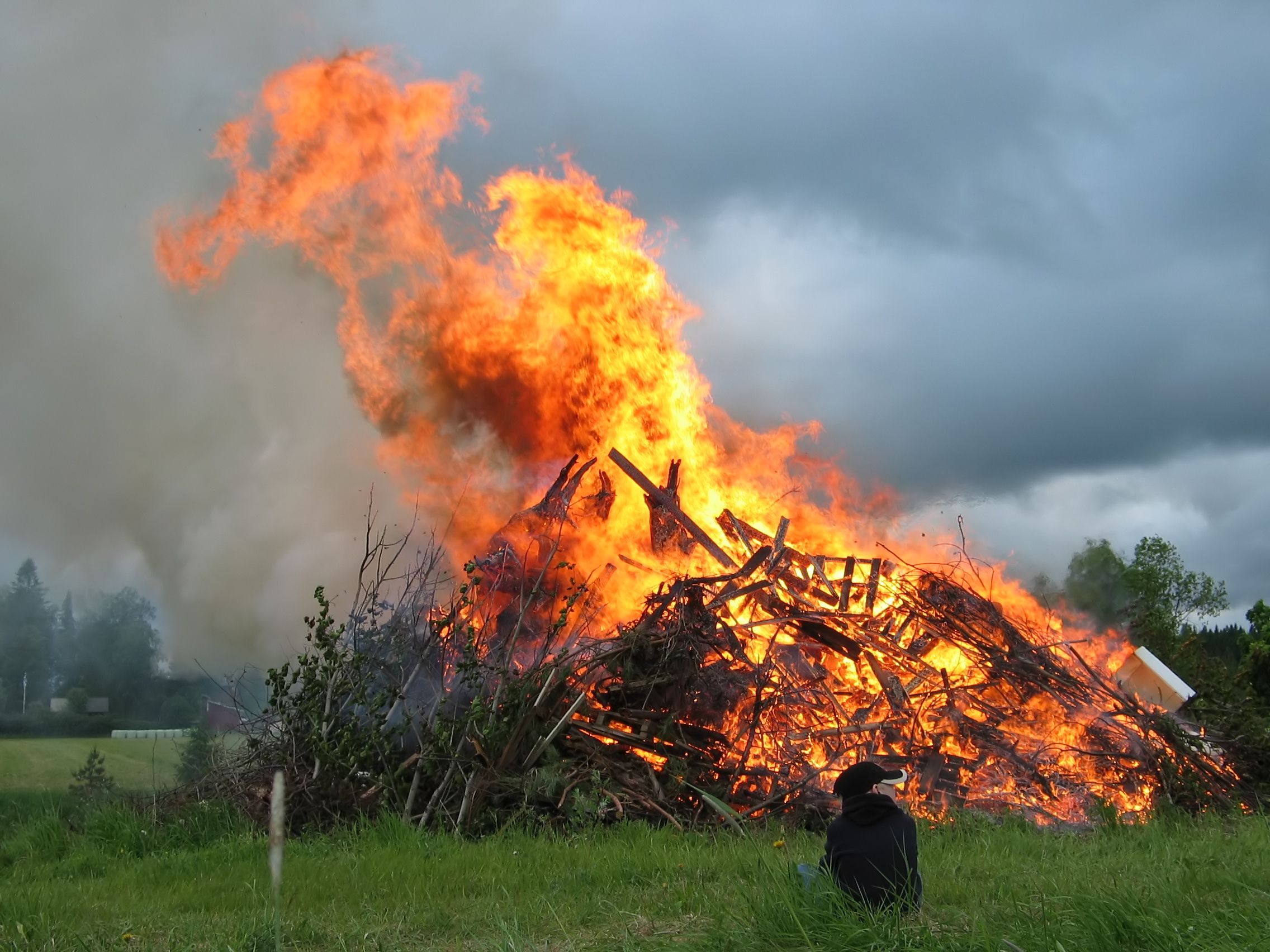
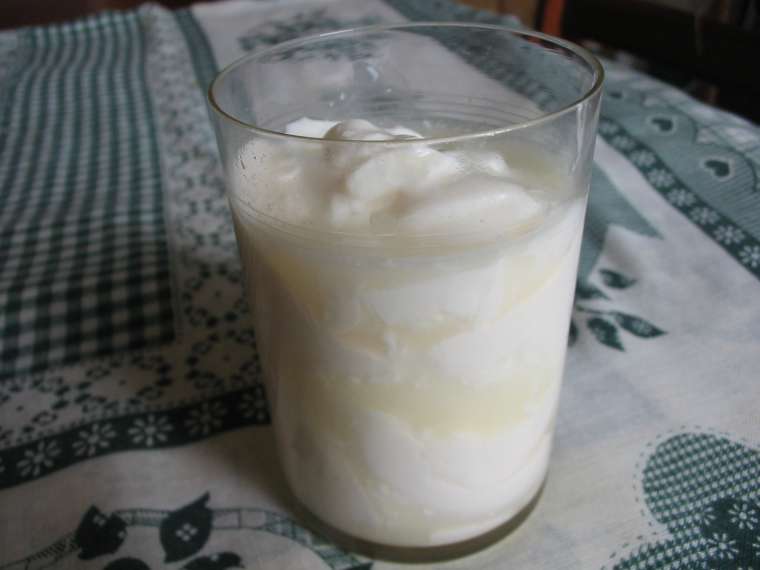

Is squeezing orange juice a physical or chemical change?
Physical
Chemical

Two materials are combined and the solution begins to fizz. What kind of change is this?
Chemical
Physical


Chemical Change or Physical Change?
Chemical
Physical

Chemical Change or Physical Change?
Chemical
Physical

Chemical Change or Physical Change?
Chemical
Physical
How do chemical reactions form new substances?
atoms break apart and combine back together to make new atoms
molecules mix together and change size and position
molecules break apart and combine back together to make new molecules
the molecules dissolve in water to form solutions
Toasting a marshmallow

Fireworks Exploding is a ________ change.
Choose all of the following that are PHYSICAL changes.


Choose all of the following that are CHEMICAL changes.


Which of the following is an Alkaline Earth Metal?
Calcium (Ca)
Lithium (Li)
Phosphorus (P)
Copper (Cu)
Which of the following is a transition metal?
Iron (Fe)
Oxygen (O)
Neon (Ne)
Barium (Ba)
Which of the following is a Halogen?
Bromine (Br)
Rubidium (Rb)
Argon (Ar)
Beryllium (Be)
Which of the following is a Noble Gas?
Krypton (Kr)
Chlorine (Cl)
Radium (Ra)
Gallium (Ga)
Which of the following is the most reactive group of non-metals?
Metaliods
Other Nonmetals
Halogens
Noble Gases
Inert means "does not react". Which of the following groups is inert?
Alkali
Transition Metals
Halogens
Noble Gas

Which color on the image of the periodic table corresponds with the noble gases.
red
black
blue
orange
Which color on the image of the periodic table corresponds with the metalloids.
yellow
red
black
white
Which family of elements react quickly to air and can cause fire or explosions when they come in contact with water?
alkali metals
noble gasses
transition metals
metalloids
The periodic table is mostly comprised of what type of element?
Metals
Nonmetals
Metalloids
What is the most reactive nonmetal?
Fluorine (F)
Cesium (Cs)
Oxygen (O)
Bromine (Br)
Which of the following is the most reactive metal?
Fluorine (F)
Potassium (K)
Mercury (Hg)
Cesium (Cs)
A jewelry maker is designing a unique piece of jewelry for a special client. She should choose an element from which family for this purpose?
Alkali metal
Alkaline earth metal
Transition metal
Metalloid

What is the name of the family group that is highlighted?
Alkali Metal Family
Halogen Family
Noble Gas Family
Transition Metal Family

The image shows a piece of metal being added to water and reacting violently. That material is most likely ___________.
Sodium (Na)
Silver (Ag)
Xenon (Xe)
Fluorine (F)

Aluminum foil was added to a test tube full of a reddish-brown liquid nonmetal from the halogen family. The material in the tube is most likely ___________.
Bromine (Br)
Sodium (Na)
Iron (Na)
Neon (Ne)
Which element would you expect to have properties that are similar to those of Beryllium (Be)?
Strontium (Sr)
Carbon (C)
Aluminum (Al)
Sliver (Ag)
Which element is in the same family as Boron (B)
Gallium (Ga)
Arsenic (As)
Nitrogen (N)
Nickel (Ni)
Gold (Au) is a _______.
Halogen
Poor Metal
The is family has properties of both metals and nonmetals.
Alkali
Halogens
Nonmetals
Metalloids
Rank the following from MOST reactive (5) to LEAST reactive (1).
Cesium (Cs)
Rubidium (Rb)
Potassium (K)
Sodium (Na)
Lithium (Li)

What does this model represent?
(Select the TWO that are correct)
Pure Substance
Mixture
Atoms
Molecules

What does this model represent?
(Select the TWO that are correct)
Pure Substance
Mixture
Atoms
Molecules

What does this model represent?
(Select the TWO that are correct)
Pure Substance
Mixture
Element
Compound

This model shows a MIXTURE of MOLECULES.
What kind of molecules are they?
Elements
Compounds
Both

Which model best represents a MIXTURE of MOLECULES?
A
B
C
D

Which model is a PURE SUBSTANCE made of only ATOMS?
W
X
Y
Z

Which model shows a MIXTURE?
A
B
C
D

Which images show models of pure substances?
A
B
C
D
Which images show models of only molecules?
A
B
C
D

Select the words that correctly describe the model shown here.
Pure Substance
Atoms
Molecules

Select the words that correctly describe the model shown here.
Pure Substance
Mixture
Atoms
Molecules

Which model best represents AMMONIA: 1 Nitrogen (N) atom & 3 Hydrogen (H) atoms?
(Use your notes about the molecules you built during class)
A
B
C
D
Which model best represents METHANE: 1 Carbon (C) atom & 4 Hydrogen (H) atoms?
(Use your notes about the molecules you built during class)
A
B
C
D
Which model shows a MOLECULE of an ELEMENT?
A
B
C
D

A glucose (C6H12O6) molecule is show here.
Is glucose an element or a compound?
1 atom
2 or more atoms
Two or more DIFFERENT TYPES of atoms chemically bonded together are called a
compound

The picture shows a model of ETHANOL.
Select the TWO terms that correctly describe ethanol.
Molecule
Compound
Atom
Element
Match the following molecules to the atoms they are made of

2 nitrogens

1 carbon, 4 hydrogens, & 1 oxygen

1 oxygen & 2 hydrogens

2 carbons & 4 hydrogens

2 oxygens & 2 hydrogens

The picture shows the molecule acetylene built with a molecular modeling kit.
Which of the written models below matches this molecule?


Based on your knowledge and the pictures, which state of matter usually has the highest density?
solid
liquid
gas

The mass of an object is 30 g. The volume is 5 mL. What is the density of this object?
6 g/cm
6 g/mL
6
6 ml/g
Jack has a small fishing weight. The weight has a mass of 14 g and a volume of 2 cm3. What is the density of the weight?

Using water displacement, what is the volume of the fish?
40 ml
6 ml
38 ml
32 ml
What units are used when measuring volume?
(Select ALL that apply)
ml
g
cm3
cm
Mass x Volume
Volume x Mass
What property of matter is measured in grams (g)?
Mass
Length
Volume
Height

Elise wants to classify matter based on a measurable property. Using the tool shown, how could she classify objects?
by mass
by volume
by density
by temperature
A property that describes how tightly packed particles are in a substance
Density
Mass
Volume
Weight
A crayon has a mass of 15g and volume of 5 mL. What is the density?
5 g/mL
3 g/mL

Braeden wants to classify matter based on a measurable property. Using the tool shown, how could he classify objects?
by mass
by volume
by density
by temperature

What is the volume of water in this graduated cylinder?
HINT: Each small line is measuring 0.5 ml
(Remember to read from the bottom of the water line)
22 ml
21.5 ml
21 ml
20.5 ml

What is the length of the screw?
5.0 cm
5.1 cm
51 cm
6 cm

What is the mass on the triple beam balance?
211.1 g
121.2 g
120 g
210.1 g

Aluminum can be pressed and rolled into a flat sheet. What physical property allows aluminum to take this form?
Malleability
Hardness
Brittleness
Conductivity
_________ is an example of an observable property.
Temperature
Volume
Color
Length
_________ is an example of an measurable property.
Temperature
Texture
Odor
Malleability
Matter is anything that has _______ and __________.
volume
malleability
mass
transparency
luster

The ability of a substance to break apart & dissolve in another substance is called _____.
malleability
conductivity
solubility
density
Match the following
how much light passes through a substance
transparency
the ability of a substance to be rolled into a shape
malleability
how easily a liquid drips or spreads out
viscosity
the shininess of a metal
luster
how easily energy moves through a substance
conductivity
Solid particles are...
Tightly packed and vibrating
Sliding past each other and flowing.
Quickly moving in all directions.
Tightly packed and bouncing off the walls
Boiling is when matter changes from a _________.
solid to a liquid
solid to a gas
gas to a liquid
liquid to a gas

Which TWO (2) things happen when a GAS becomes a LIQUID?
the particles slow down
the particles speed up
the particles move further apart
the particles move closer together

Which TWO (2) things happen a liquid vaporizes?
the particles slow down
the particles move faster
the particles move closer together
the particles move farther apart

Slower particles...
have less heat energy
are closer together
have more heat energy
are farther apart
When a solid passes its melting point it becomes ________.
liquid
gas
vapor
condensation
In what state of matter do particles have the most heat energy?
solid
liquid
gas
Which state of matter has particles that take the volume (fill up the entire space available to them) of their container?
solid
liquid
gas
Which state of matter moves and flows to fill the bottom of its container.
Solid
Liquid
Gas
When heat is added to a liquid and the temperature passes its boiling point it becomes ________.
liquid
gas
solid
condensation

Which state of matter has particles arranged like this?
solid
liquid
gas

Which state of matter has particles arranged like this?
solid
liquid
gas

Which state of matter has particles arranged like this?
solid
liquid
gas
Which states of matter have a definite volume?
Solid
Liquid
Gas
Which states of matter have a shape that can change?
Solid
Liquid
Gas
Match the following

Melting

Vaporizing

Condensing

Freezing

