
 Worksheets
Test Review: Cold War and Decolonization
Total questions: 83
Worksheet time: 2hrs 4mins
What was the primary purpose of NATO when it was formed in 1949?
To promote democracy in Eastern Europe
To provide mutual defense against the spread of communism
To establish a new currency for Europe
To promote free trade across the Atlantic
Which of the following countries was NOT a member of the Warsaw Pact?
Poland
France
East Germany
Hungary
What is a key characteristic of a democratic government?
Single-party rule
Planned economy
Free and fair elections
State ownership of property
Communism is best described as a system in which:
The state controls all means of production
Private property is encouraged
The economy is based on free market principles
Political power is distributed among several parties
The Marshall Plan was aimed at:
Military defense of Western Europe
Economic recovery of war-torn Europe
Establishing communist governments in Europe
Promoting free trade agreements between the US and Soviet Union
Comecon was established by the Soviet Union to:
Counter the NATO alliance
Provide military assistance to Warsaw Pact countries
Facilitate economic cooperation and development among socialist countries
Promote democracy in Eastern Europe
Which of the following best describes the political system of West Germany after World War II?
Communist
Democratic
Monarchy
Theocracy
East Germany was characterized by which of the following political systems?
Democratic
Communist
Federal Republic
Constitutional Monarchy
European Recovery post-World War II was significantly aided by:
The Warsaw Pact
The Marshall Plan
Comecon
The establishment of the European Union
Soviet control over Eastern Europe was primarily maintained through:
The Marshall Plan
NATO
The Warsaw Pact
The European Union
Capitalism encourages:
State ownership of businesses
A planned economy
Private ownership and free markets
Single-party political systems
Socialism is characterized by:
Free market economies
Private ownership of property and businesses
State control of the economy
Multiple political parties
In a communist system, who typically owns the means of productions (i.e. land and factories)?
Individual entrepreneurs
Private corporations
The state
Foreign investors
Which country was a key member of NATO during the Cold War?
United States
Soviet Union
East Germany
Poland
The primary goal of the Warsaw Pact was to:
Promote free trade among member countries
Provide mutual defense against NATO
Support democratic governments in Eastern Europe
Establish a single currency for Eastern Europe
What was the main objective of the Marshall Plan?
To spread communism in Europe
To rebuild European economies after WWII
To establish military bases in Europe
To create a European single market
The division of Germany into East and West was a result of:
The Marshall Plan
NATO and the Warsaw Pact
Differences in political and economic systems
The European Union's policies
The Marshall Plan helped Europe recover by:
Establishing communist governments
Providing military aid to resist Soviet expansion
Offering financial aid for economic reconstruction
Promoting free trade agreements between European countries
Soviet control over Eastern Europe was facilitated by:
The Marshall Plan
Economic incentives from the European Union
The military and political alliance of the Warsaw Pact
NATO's strategic interests
What was the primary goal of the Containment Policy during the early Cold War?
To spread democracy in Eastern Europe
To prevent the spread of communism
To encourage free trade globally
To establish military bases around the world
What was the Truman Doctrine primarily aimed at?
Providing economic aid to war-torn Europe
Establishing a new currency in Germany
Supporting countries threatened by communism
Forming military alliances in Asia
The Marshall Plan was designed to:
Rebuild and finance the reconstruction of war-torn Europe
Establish a new government in Japan
Provide military aid to South Korea
Create a trade agreement between the United States and the Soviet Union
What was the significance of the Berlin Airlift (1948-1949)?
It was a military operation to defeat the Soviet Union
It was a response to the Soviet blockade of West Berlin
It marked the beginning of the Korean War
It led to the construction of the Berlin Wall
NATO (North Atlantic Treaty Organization) was formed primarily to:
Promote free trade across the Atlantic
Provide economic aid to Eastern Europe
Serve as a collective defense against the Soviet Union
Encourage cultural exchanges between member countries
The Korean War (1950-1953) is considered part of the Cold War because:
It was a conflict between NATO and the Warsaw Pact
It involved direct military engagement between the US and the Soviet Union
It was a proxy war between the United States (and its allies) and the Soviet Union (and its allies)
It led to the formation of the United Nations
The United Nations was established after World War II primarily to:
Prevent future global conflicts
Promote global economic development
Encourage the spread of democracy
Facilitate international trade agreements
The Yalta Conference (1945) was significant because it:
Led to the formation of the United Nations
Resulted in the division of Germany
Marked the end of the Cold War
Initiated the Marshall Plan
The construction of the Berlin Wall (1961) was primarily intended to:
Encourage tourism between East and West Berlin
Prevent the spread of communism to West Berlin
Stop the flow of refugees from East to West Berlin
Serve as a symbol of peace between the United States and the Soviet Union
What was a key reason for the United States' implementation of the Marshall Plan?
To prevent the spread of communism in Western Europe
To establish military bases in Europe
To promote American culture in Europe
To retaliate against the Soviet Union's actions in Eastern Europe
What was the main purpose of the Truman Doctrine and the Marshall Plan?
To establish a new world order
To contain communism and rebuild Europe
To promote democracy worldwide
To create a military alliance against the Soviet Union
How did the Soviet Union respond to the formation of NATO?
By joining the United Nations
By initiating the Marshall Plan
By forming the Warsaw Pact
By dismantling the Berlin Wall
What was a significant outcome of the Yalta Conference regarding Europe?
The creation of the European Union
The decision to divide Germany into occupation zones
The end of World War II
The establishment of NATO
How did the Berlin Wall symbolize the division of the Cold War world?
It represented the cultural differences between East and West
It was a physical manifestation of the Iron Curtain
It marked the boundary of NATO's influence
It was a defense mechanism against Western invasions
What was the primary reason for the United States' involvement in the Korean War?
To reunify Korea under a democratic government
To support the United Nations' efforts to restore peace
To prevent the spread of communism in Asia
To retaliate against North Korean aggression
Which of the following best describes the impact of the Marshall Plan on Europe?
It led to the rapid spread of communism in Western Europe
It contributed to economic recovery and political stability
It resulted in the division of Germany
It initiated the Cold War
What is the action of changing from colonial to independent status
decolonization
nationalism
colonization
militarism
Which is the policy of extending a country or empire's power and influence over another by taking over its land and/or government
imperialism
decolonization
majority
expansion
Decolonization can best be defined as
"Separateness"; system of racial segregation in South Africa
independence of nations after World War II that were once ruled by European powers
Giving in to an aggressor to prevent conflict
An organization that works to settle disagreements and keep peace following WWII
Mohandas Gandhi’s protests during India’s independence movement were often successful because of his application of
an appeasement policy
civil disobedience
traditional caste beliefs
divide-and-conquer principles
A major problem in post–World War II India has been the
conflict between rival religious groups
alliance with China
lack of unskilled workers for farming
scarcity of mineral resources
What was one reason that India was divided into two nations in 1947?
Indian leaders disagreed about India’s role in the United Nations
Great Britain feared a unified India would be a military threat.
The Soviet Union insisted that India should have a communist government.
Differences between the Hindus and the Muslims created religious conflict.
What was the purpose of the Indian National Congress?
Worked for the eventual independence of India from Britain
Development of rapid industrialization in india for modern trade
Acceptance of Socialism as the next governance sysem in India
Join the Communist bloc and the Soviet Union
The Indian leader who used nonviolent methods to seek independence from Great Britain.
Mohandas Gandhi
Nelson Mandela
Jomo Kenyatta
Fidel Castro
"Don't pay your taxes or send your children to an English-supported school . . . Make your own cotton cloth by spinning the thread at home, and don't buy English-made goods. Provide yourselves with homemade salt, and do not buy government-made salt."
— Mohandas Gandhi
In this statement, Gandhi was expressing his commitment to
armed rebellion
civil disobedience
horns of the bull
blitzkrieg tactics
passive resistance campaign of Mohandas Gandhi where many Indians protested the British tax on salt by marching to the sea to make their own salt.
Salt March
Homespun Movement
Boston Tea Party
Salt Tax Movement
the refusal to comply with certain laws or to pay taxes and fines, as a peaceful form of political protest.
civil disobedience
protest
oppress
freedom
the state of being free from outside control
colonies
nationalism
reform
independence
Jawaharlal Nehru was made the first -----of India
commander
prime minister
general
president
Nehru believed in the principles and ideologies of whom?
Rabindranath Tagore
Indira Gandhi
Queen Elizabeth II
Mahatma Gandhi
What European country controlled Vietnam until World War II?
France
Germany
Great Britain
Spain
Leading Vietnamese nationalist figure, supporting the Communist party
Ngo Dinh Diem
Ho Chi Minh
Viet Cong
Kent State University
If one country falls to communism, the countries around would also fall to communism
Vietnamization
Domino Theory
Tet Offensive
Democratic Republic of Vietnam
During the Cold War, the United States adopted the ___________________ in order to stop the spread of communism around the world.
Domino Theory
Expansionist Policy
Containment Policy
Marshall Plan
Who fought to make Vietnam a Communist country independent from French rule?
Hirohito
Kim Il Sung
Ho Chi Minh
Mao Zedong
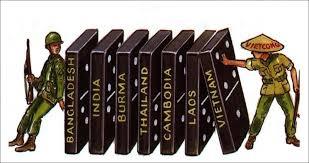
The idea that if South Vietnam fell to communism, other nations would soon follow...
Vietnamization
Communism
Domino Theory
Imperialism
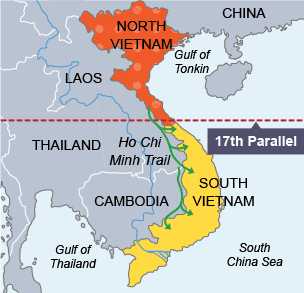
In Africa, a major result of World War II was
an increase in feelings of nationalism
a general decline in the standard of living
an increase in colonization by European nations
a rapid decline in population
One similarity in the actions of Ho Chi Minh and Jomo Kenyatta was that both leaders
introduced Western ideas to their societies
established democratic forms of government
led nationalist movements
supported separation of church and state
The primary goal of the Indian National Congress (1885-1947) was to
reform the Hindu religion
partition India between Muslims and Hindus
create a socialist economy
gain independence from Great Britain
Which description best fits the Salt March conducted by Mohandas Gandhi?
an act of civil disobedience against the British
a statement of support for dividing India
a protest against the Sepoy Mutiny
a rally for the British during World War II

What policy said the U.S. would give military aid to countries that needed to resist communism?
Marshall Plan
Truman Doctrine
Domino Theory
Open Door Policy
During the Cold War, what policy did the U.S. follow to stop the spread of communism?
Open Door Policy
Big Stick Policy
Containment Policy
Dollar Diplomacy
What theory caused the U.S. to enter the Vietnam War in order to stop the expansion of communism across Southeast Asia?
Marshall Plan
Domino Theory
Open Door Policy
Dollar Diplomacy
What phrase describes a goal of U.S. foreign policy after World War 2?
Ending colonial empires
Containing the spread of communism
Revitalizing the Soviet economy
Reducing aid to the British
Which proposal provided massive aid to rebuild Europe?
Marshall Plan
Warsaw Pact
Truman Doctrine
Common Market

Who was the Communist leader of North Vietnam?
Ho Chi Minh
Mao Zedong
Kim Il Sung
Douglas MacArthur
The United States intervened in Korea and Vietnam to stop the spread of:
Facism
Democracy
Socialism
Communism
Which of the following circumstances contributed to the breakdown of the alliance between the United States and the Soviet Union preceding the Cold War
Stalin's nonagression pact with Hitler
Stalin's unfulfilled promise of free elections
Stalin's promise to aid in the war against Japan
United States inclusion in the Security Council
Primary Source:
"From Stettin in the Baltic to Trieste in the Adriatic, an iron curtain has descended across the continent. Behind that line lie all the capitals of the ancient states of Central and Eastern Europe... All these famous cities and the populations around them lie in the Soviet sphere and all are subject in one form or another, not only to Soviet influence but to a very high and increasing measure of control from Moscow"
-Winston Churchill, "Iron Curtain" speech, March, 5, 1946
Churchill's phrase "iron curtain" came to represent Europe's division into...
Northern and Southern geographic regions
mostly democratic Western Europe and Communist Eastern Europe
Christian and Muslim religious blocs
monarchies and republics based on forms of government
Primary Source
"One way of life is based upon the will of the majority, and is distinguished by free institutions, free elections, and freedom from political oppression. The second way of life is based upon the will of a minority forcibly imposed upon the majority. It relies upon terror and oppression, fixed elections, and the suppression of personal freedoms. I believe it must be the policy of the United States to support free people.. resisting attempted subjugation by armed minorities or outside pressure."
-President Truman, speech to Congress, March 12, 1947
In Truman's speech to Congress asking for foreign military aid for Turkey and Greece, Truman is contrasting...
European colonial powers and their former territories
democracy with communism
capitalist and socialist economic systems
What idea was the Marshall Plan based on?
North and South Korea should be unified
military force was the best way to contain communism
nations should maintain large arsenals of nuclear weapon
communism succeeded only in countries with economic problems.
What influenced the independence movements of colonial countries?
the spread of democratic ideas
during WWII, the occasional defeat of Europeans by Japanese
the expense of maintaining and governing distant colonies
all of the above
The dividing of India into two nations was referred to as
the civil war
the partition
the seperation
all of the above
The Mau Mau was
a secret society that wanted to liberate Kenya from British rule
a Communist organization that wanted to rule Kenya
an alliance of tribes that wanted to liberate Kenya from French rule
an organization that wanted to set up a democratic government in Kenya
Under which program to Gorbachev attempt to modify the economic structure of the Soviet economy by allowing some private enterprise?
glasnost
perestroika
shock therapy
modernization
What was apartheid?
a South African policy separating the races
a policy of open discussion proposed by Gorbachev
an abrupt shift to free market economics in Soviet Union
a gradual opening of the Soviet political system
The purpose of perestroika was to
reduce criminal activity
revive the Soviet economy
allow a free exchange of ideas
open up the Soviet political system
Which opposing economic philosophies led to a global competition between after WWII between the two superpowers- the US and the Soviet Union, competing for influence and power?
Imperialism and colonization
perestroika and glasnost
capitalism and communism
democracy and communism
Which opposing political philosophies led to a global competition between after WWII between the two superpowers- the US and the Soviet Union, competing for influence and power
glasnost and perestroika
Truman doctrine and Marshall Plan
democracy and communism
West Germany and East Germany
. . . I mention all these details, which I remember so clearly, in order [to] give a sense of the shock that we suffered when The Wall came upon us one night. There we were in Berlin, at the crossroads between East and West, at the juncture of two fundamentally different cultures, and suddenly we were locked up like canaries in a cage. Literally from one day to the next. From being a vibrant and cultured city, Berlin subsided into the drowsy torpor [dullness] of a midsummer afternoon in the provinces. We were imprisoned in a dull, flat country. . . . -- Jens Reich, “Reflections on becoming an East German dissident, on losing the Wall and a country,”
in Gwyn Prins, ed., Spring in Winter: The 1989 Revolutions
Which historical event is directly reflected in this passage?
building of a barrier between East and West Berlin
formation of the Warsaw Pact with the Soviet Union
occupation of Germany by France and Great Britain
operation of the Berlin Airlift by the United States

