
 Worksheets
Late World History Review Bench mark 3
Total questions: 144
Worksheet time: 1hrs 22mins

1. Which group was most responsible for spreading this cultural characteristic?
Roman soldiers
Islamic traders
Egyptian pharaohs
Sumerian bureaucrats

Which institution held the most power in Western Europe during the Middle Ages?
The Church
merchant guilds
the feudal system
Roman universities

The cause of the split in Islam after Muhammad's death was a difference in opinion concerning -
expansion
leadership
prayer
pilgrimages
The earliest followers of Islam lived in
the Arabian peninsula
West Africa
China
Southeast Asia

Which religion uses the Vedas and the Upanishads as their holy texts?
Hinduism
Buddhism
Christianity
Judaism
Which religion follows the Eightfold Path and the Four Noble Truths as a way to achieve "nirvana," or enlightenment?
Hinduism
Buddhism
Christianity
Islam
Which religion believes Jesus Christ to be the Son of God, and part of the Holy Trinity?
Hinduism
Buddhism
Christianity
Islam
Which religion calls God "Allah," center their beliefs on the Five Pillars, and follow the Koran (Qur'an) as their holy text?
Hinduism
Buddhism
Christianity
Islam
A type of government with laws based on religious principles, usually led by a religious leader.
monarchy
republic
theocracy
dictatorship
A type of government where people elect their representatives, then those representatives choose who will lead the government.
constitutional monarchy
parliamentary republic
direct democracy
presidential republic
The Enlightenment was a period in world history where thinkers argued that governments should...
have even more power over their subjects.
make laws according to the teachings of the Catholic Church.
represent the wishes and protect the rights of citizens.
be led by kings and queens with absolute power.
During the Meiji Restoration, under the reign of the Emperor, Japan...
adopted a communist economic system.
went through a period of violent religious wars.
modeled political, social, and economic practices after the West.
violently resisted American and European attempts to open trade.
A type of economy where the government owns all property and makes all economic decisions.
Command Economy
Market Economy
Mixed Economy
Traditional Economy
In a market economy...
all economic decisions are made by buyers and sellers freely interacting.
all economic decisions are made by the government.
most economic decisions are made by tribal elders and based on tradition.
Enlightenment thinkers like John Locke and Jean-Jacques Rousseau challenged the idea of the divine right of kings. Based on their ideas, many people around the world...
remained firm in their support of absolute monarchs.
looked for leaders who would exercise dictatorial powers.
engaged in revolutions to establish democratic governments.
called for new governments based on religious law.
Why was the Treaty of Versailles ultimately a failure?
Allied nations failed to enforce the rules it set up, allowing Germany to get away with violating them.
It allowed Germany to keep its large military and begin expanding.
It created an alliance between Germany and the USSR right after WWI, which would last until WWII.
Which was NOT one of the reasons why European nations built empires in the late 19th and early 20th centuries?
They needed more raw materials to fuel their growing industry.
They wanted to increase markets, to sell more things to more people.
They were suffering from overcrowding, and needed places to settle people.
They wanted to show how powerful they were by adding colonies.
The writing of the "Declaration of the Rights of Man" in France and the "Declaration of Independence" in the United States both accomplished which political goal of the Enlightenment?
They both expanded the slave trade.
They both restored the power of monarchies.
They both drafted constitutional protections for people's rights.
They both increased the power of the church in government affairs.
What effect did European imperialism of the 19th century have on the people in Africa that were conquered?
It increased respect for African human rights.
It led to the loss of political independence of African groups.
It created an appreciation for African religious freedom.
It helped transform African colonies into modern, industrial powers.
Which of the following was NOT a way that industrialization impacted the working conditions in 19th century Britain?
Long hours and low pay.
Dangerous machinery that frequently caused injuries.
Led to laws that prohibited child labor.
Caused overcrowded housing in Britain's cities.
What was the primary goal of the United Nations, created after WWII?
Intervene in world conflicts to prevent another world war like WWII.
Restore world trade disrupted by WWII.
Establish policies to help pay for WWII debts.
Attempt to stop the spread of communism in the world.

What is one way that the migrations of European colonists to South America changed the character of the region?
men an women gained equality
economic practices reverted to traditional methods
religion and language patterns changed significantly
native groups switched from terrace to field farming

which technology led to a diffusion of culture fromEurope to Latin America in the late 1400's to 1500's?
railroads
caravel ships
printing press
telegraph lines
The natives in Latin America died from warfare and diseases, so the Europeans had to go to ___________________ to find a cheap labor source.
Europe
Asia
Australia
Africa
What are the two most common languages spoken in Latin America today?
French and English
Spanish and Portuguese
Spanish and Italian
Arabic and French

This map shows the Middle East around 1600. Which region was ruled by the Ottoman emperor?
A
B
C
D
This map shows the Middle East around 1600. Which region was ruled by the Safavid emperor?
A
B
C
D
This map shows the Middle East around 1600. Which region was ruled by the Mughal emperor?
A
B
C
D
What was the achievements of Mehmed II?
He weakened the Ottoman Empire
He conquered Constantinople and established the Ottoman Empire
He wrote the Koran and spread Islam
How did the Ottomans grow wealthy?
By taxing travelers and traders on the Silk Road
By sailing to the New World and conquering the Aztec Empire
By becoming involved in the West African slave trade
Which is the largest denomination of Islam?
Sunni Islam
Shi'a Islam
Safavid Islam
Which empire was ruled by Shi'a Muslims?
Ottoman Empire
Safavid Empire
Mughal Empire
Why did the governments of Spain and Portugal sponsor overseas exploration in the late 1400s and into the 1500s?
They were competing with Ming China.
They sought alliances with African kingdoms.
They desired spices from the Indies.
They wanted to discover new continents.
What was a significant consequence of European exploration through the Columbian exchange for American Indians?
Introduction of the potato
Millions of deaths from diseases
Formation of powerful confederacies
Improved agricultural methods
What social changes were happening in Europe during the period between 1450 and 1700?
The rise of powerful empires
Improvements in shipbuilding and gunpowder weapons
The Renaissance, the Protestant Reformation, and the Scientific Revolution challenging traditional authority
The forced migration of African people to work on sugar plantations
What was one of the key characteristics of the Ming and Qing dynasties in China during the period between 1450 and 1700?
A strong civil service system
A diverse population with many different cultures
The establishment of colonies in Europe
The forced migration of African people to work on sugar plantations
The wealth and prosperity of Mali and Songhai were dependent on controlling the trade in
Gold and Salt
Water and Coal
Lumber and Coal
Iron and cotton
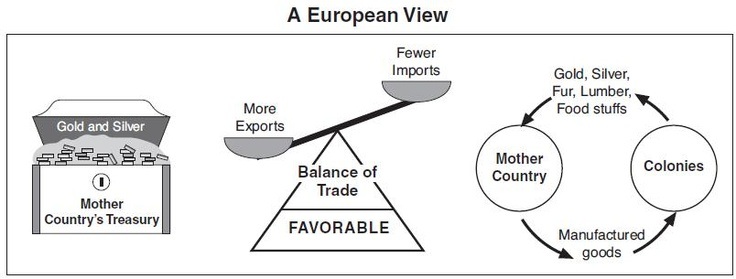
What is mercantilism?
A system where a mother countries gains money and power from natural resources that come from its colonies.
where colonies trade gold and silver with each other.
Wars that start over money.
Plantation colonies trading slaves for money.
What method was the most often used means of execution during the Reign of Terror in France?
Guillotine
Hanging
The Infinity Gauntlet
Firing squad

What was the Industrial Revolution?
Increased purchase of land by wealthy landowners to cultivate larger fields.
Increased output of machine-made goods that began in England during the 18th-century
A widespread use of teenagers as factory laborers who worked 14 hour days, 6 days a week.
Increased populations of urban areas during the 1800s.
Which of the following best describes warfare during World War I?
Naval battles between ships fighting over trade routes
Quick attacks with coordinated aircraft, artillery, and infantry
Guerrilla combatants attacking from behind trees and in cities
Soldiers digging in trenches and coming out over the top to attack


What was the U.S. strategy for attacking the smaller islands and skipping the larger islands held by the Japanese in the Pacific called?
trench warfare
island hopping
blitkrieg
freeze-tag
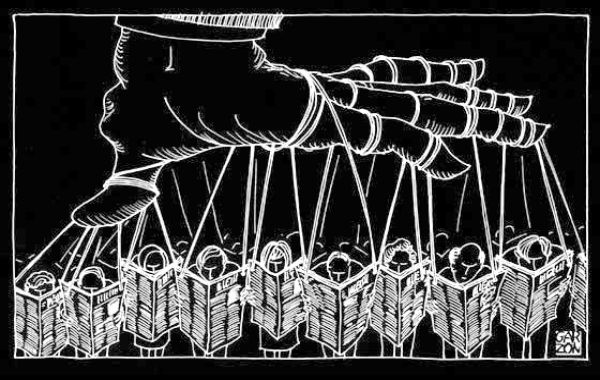

What was the main goal of the USSR after WWII?
Encourage Democracy and Control Eastern Europe
Encourage Communism and Control Eastern Europe
Gain access to raw markets and materials to fuel booming industries
Get the Guardians of the Galaxy to deliver them the Power Stone and use as a weapon in a result that WWIII would happen

During the Renaissance, there was a revival of interest in what?
perspective art
humanist practices
Greek and Roman Civilizations
individual achievement


The Major 16th century European movement initiated by Martin Luther which was geared to reform the beliefs and practices of the Roman Catholic Church.
Protestant Reformation
Roman Catholic Church
Counter-Reformation
Imperialism
This person united the German people in 1871.
Bismarck
Hasselhof
Hitler
Garibaldi
This man freed much of South America from the Spanish
Simon Bolivar
Diego Maradona
Vasco de Gama
Pablo Escobar
This country drove out the French with a slave revolt
Haiti
Mexico
Cuba
Brazil
At this meeting in 1885, the European powers divided up Africa on a map.
Berlin Conference
Munich Agreement
Hamburg Concession
Tennis Court Oath
Pride in ones country
Nationalism
Liberalism
Conservatism
Socialism
Nationalism not only united new countries but it also began to DIVIDE empires. Which of the two following empires began to divide or break apart because of Nationalism?
The Ottoman Empire
The Russian Empire
The British Empire
The Austro-Hungarian Empire
During the Industrial Revolution, a new social and economic class that developed was the
serfs
rich, or the upper class
expanded lower class
middle class
China and Britain fought a war over:
the Korean peninsula
conquests along the Nile River
opium production and distribution
the elimination of the samurai
Imperialism led to political tensions between European countries?
True
False
What was the name of the war where Britain sent navy to force China to allow Britain to sell opium in China
Opium War
War of 1812
War of the worlds
English war
Who benefited most from imperialism?
European nations
Native Americans
African Kingdoms
Indian Kingdoms
Which foreign policy allowed for multiple nations to trade with China?
Open Door Policy
Dollar Diplomacy
Moral Diplomacy
Big Stick Policy
• Austro-Prussian War, 1866
• Franco-Prussian War, 1870–1871
These events led directly to
"A country is not merely a geographic territory. A country is also the idea given birth by the geographic territory. A country is a sense of love that unites, as one, all sons and daughters of that geographic territory..."
This quotation supports the idea of...
Mercantilism
Nationalism
Imperialism
Totalitarianism
One way in which Otto von Bismarck and Camillo Cavour are similar is that both leaders
followed a policy of isolationism
adopted papal policies
led an African independence movement
promoted unification to form a new nation-state
How did nationalism emerge in Europe during the 19th century?
Using napoleons conquests to make France weak
During the French Revolution, spreading by napoleons conquests
Surrounding Europe with weak countries so it would make napoleon look stronger so he could prevents further aggression
"Realpolitik" means _____________________.
Politics of theory
Politics of reality
Politics of make believe
Politics of honesty
Prussian prime minister in charge of uniting Germany.
Cavour
Garibaldi
Bismarck
Wilhelm I
The Italian city-state of Piedmont-Sardinia was led by who?
Cavour
Garibaldi
Otto Von Bismarck
Napoleon III
The harsh conditions created by the Industrial Revolution gave rise to what system of government?
socialism
democracy
aristocracy
republicanism
HELPED ITALY UNIFY.
BISMARCK
MARTIN LUTHER
GARIBALDI
CAVOUR
The revolutionary outbursts in Europe in the 1830s and the 1840s were sparked by attitudes of
romanticism
conservatism
nationalism
religious intolerance
James Watt created the first working steam engine
True
False
During the Agricultural Revolution of the 1700’s, wealthy landowners increased food production by
giving peasants bonuses for their work
using chemical fertilizers
leaving the land fallow
practicing enclosure
Islam's primary sacred text, regarded by Muslims as the direct words of Allah.
Qur’an القرآن
A follower of Islam, means "one who has submitted".
Muslim مسلم
A Muslim place of worship.
Mosque مسجد
The most sacred temple of Islam, located at Mecca.
Ka’aba كعبة
Arabic word for God.
Allah الله

Define: Qur’an القرآن
Things Muslims did that never made it into the scriptures.
Islamic religion in which people worship Allah.
A place of worship.
Islam's primary sacred text, regarded by Muslims as the direct words of Allah.
The U.S. entered World War II on the side of the Allies which included...
Britain and France
Britain, France, and Austria-Hungary
Germany and Austria-Hungary
France and Germany
What was the Zimmerman Telegram
A German communication promising not to use U-boats
A German communication encouraging Mexico to side against the U.S.
A German communication promising to recognize American neutrality
A British communication urging the U.S. to enter the war
How did U-boat warfare lead to the U.S. entering WWI?
The U.S. Navy wanted to protect territory in the Pacific
Unrestricted warfare resulted in the sinking of American ships
The U.S. wanted to prevent other countries from getting technologically superior navies
The U.S. wanted German territory for itself
What treaty ended WW1?
Treaty of Ghent
Treaty of Berlin
Treaty of Versailles
Great Treaty of 1919
Choose THREE principles contained in Woodrow Wilson's 14 Points
Self-determination
Disarmament
Free Trade
Forcing Germany to pay reoperations
Which Estate included government and military leaders?
First
Second
Third
None
The bourgeoisie (middle class) belonged to which of the three Estates?
First
Second
Third
None
A bishop (city church leader) belonged to which Estate?
First
Second
Third
None
Select the choices that are causes of the French Revolution.
Inspiration from American Revolution
Enlightenment Ideas
Strong economy
Low food prices
Inequality among the 3 Estates
What was the Estates-General?
France's hospital system
A meeting of representatives from 3 Estates
France's military leader
the Assembly that executed the king
What was the purpose of the National Assembly's Tennis Court Oath?
To raise taxes of the the Third Estate
Write a constitution for France and limit the king's power
To make plans to storm the Bastille
In a constitutional monarchy...
Monarch shares power with lawmakers
Monarch shares power with all citizens who vote on all laws
Elected officials represent the citizen body
A monarch has all power
Declaration of the Rights of Man...
... explained why the British colonies should be free
... listed the natural rights of citizens in revolutionary France
... abolished the monarchy
Which event marked the beginning of the French Revolution?
The execution of King Louis XVI
The Storming of the Bastille
The execution of King Charles X
The Reign of Terror
In a republican form of government...
a party that favors limited government rules
a monarch shares power with lawmakers
Elected officials represent the citizen body
What organization was established by Robespierre to find and eliminate critics of the Revolution?
National Assembly
Committee of Public Safety
Estates General
Nickname for Robespierre's period of rule that ended when he was executed?
100 Days
National Assembly
Reign of Terror
Old Regime
Robespierre dies & the Reign of Terror ends. What government takes over?
The Directory
Napoleon Bonaparte's
The Parliament
The House of Bourbon
Who overthrew The Directory in a coup d'etat?
Robespierre
King Louis
Jean Valjean
Napoleon Bonaparte
M. Luther thought people could reach heaven through _____ alone.
deeds
words
scripture
faith
Invented the printing press:
Gutenberg
Mendel
daVinci
Luther
English King Henry VIII broke away from the Church so he could give himself:
a promotion
a divorce
a better passport
a tax break
The Church of England is also known as the _____ Church.
Presbyterian
Eastern Rite Catholic
Anglican
Saxon
What did an indulgence from the Church provide?
Freedom of religion
The right to vote in papal elections
A pardon for a sin
Church sacraments
John Calvin believed in
Predestination
Free will
Papal infallibility
Democracy
What was the time in history when the Roman Catholic Church was questioned?
Middle Ages
Renaissance
Reformation
All of the Above
What was the list of complaints against the Church called?
95 Theses
Peace of Augsburg
Magna Carta
New Testament
Which was NOT an effect of the Protestant Reformation?
Counter Reformation
Peace of Augsburg
Lutheranism and other protestant forms of Christianity
Luther being troubled by the sell of indulgences
France and Britain initially adopted this policy in response to Hitler's territorial expansion
appeasement
praise
extermination
interventionism
Congress passed these acts to prevent US involvement in WW2
neutrality acts
isolationist acts
Roosevelt Acts
nuclear acts
Japan attacked the US at Pearl Harbor because the US refused to
declare war on China
sell Japan oil, scrap metal, etc.
drop atomic bombs
buy oil from Japan

What was the name for the German tactic of overwhelming your enemy with force using tanks and planes?
Kamikaze
Super Fast Attacks
Blitzkrieg
Bombs Away
What is the agreement between Hitler and Stalin in 1939?
Non-Aggression Pact
Treaty of Versailles
Cool Kids Club
Appeasement



