
Font size
 Worksheets
9th Grade End of Level Review
Total questions: 76
Worksheet time: 38mins
A day on Saturn takes about 10 Earth hours. Which fact would best explain this short day?
Saturn is less dense than Earth.
Saturn is much farther from the Sun than Earth.
Saturn rotates more rapidly than Earth.
Saturn’s orbit has greater eccentricity than Earth’s.
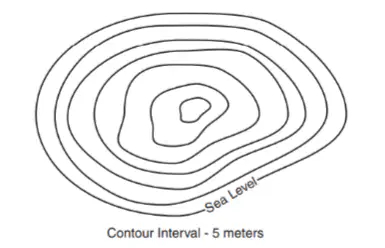
The highest elevation on this topographic map can be no more than about:
25 meters.
34 meters.
45 meters.
49 meters.
In an area where a river has cut deep into Earth, there are several layers of very different rock exposed. The oldest rock layer is most likely to be the layer that is:
below the other layers.
the thickest layer.
the most rich in fossils.
igneous intrusive rock.
Which of the following statements best describes how the planets of the solar system formed?
They are condensed rings of matter thrown off by the young Sun.
They are the remains of an exploded star once paired with the young Sun.
The Sun captured them from smaller, older nearby stars.
They formed from a nebular cloud of dust and gas.
Evidence suggests that Earth is about 4.6 billion years old, even though no Earth rocks have been found that can be dated at more than 4 billion years old. This discrepancy is most likely caused by Earth’s original crust being:
difficult to date so precisely.
subject to extensive erosion.
blasted away during Earth’s formation.
destroyed by solar radiation.
Which of the following is the best evidence that Earth’s continents were once in vastly different positions than they are today?
Penguins are found only in the Southern Hemisphere.
Fossils of tropical plants are found in Antarctica.
Volcanoes encircle the Pacific Ocean.
Major rivers form deltas from continental erosion.
Early telescopes showed stars as only points of light, while the planets appeared to be much larger, providing evidence that stars must:
be more plentiful in our solar system than planets.
travel in elliptical orbits like planets.
be much farther from Earth than planets.
reflect much more light than planets.
Although many ancient civilizations designated certain patterns of stars as constellations, they never included planets in their constellations. What feature of planets, as opposed to stars, explains this?
They look bigger than stars.
They are more difficult to see than stars.
There are not enough of them to form a constellation.
They do not maintain fixed positions relative to other planets or stars.
What is the source of energy for the Sun?
nuclear fusion
internal combustion
nuclear fission of metals
burning of solar gases
Fusion is a form of nuclear reaction resulting in an enormous release of heat energy. The fusion of hydrogen to helium is a reaction that commonly occurs in:
the Sun and other typical stars
the ionosphere and thermosphere
Earth’s outer core of molten iron
a comet’s tail of ionized gases
The surfaces of planet Mercury and our moon contain some very large craters that are most likely the result of:
giant lava flows
asteroid impacts
nuclear explosions
large collapsed caves
As part of the modern theory of the origins of the elements, it is hypothesized that before the formation of the stars, most of the matter in the universe consisted of what atoms?
hydrogen and helium
nitrogen and carbon
silicon and lithium
uranium and radium
Stars begin their life cycle in:
a black hole
a nova
a nebula
a supernova
Astronomers have discovered vast differences in stars through their observations. One theory used to explain these differences is that
the distances between stars are vast.
stars are at different points in their life cycles.
Which of the following provides evidence for plate tectonics?
sea-floor topography
ocean currents
Coriolis effect
atmospheric temperature
A rift valley is evidence of which kind of plate boundary?
convergent
divergent
transform
uniform
The convergence of two continental plates would produce
island arcs
rift valleys
folded mountains
trenches
Earthquake vibrations are detected, measured, and recorded by instruments called
sonargraphs
seismographs
Richter scales
magnetometers

At which location would earthquakes be least likely to occur?
1
2
3
4
The Richter scale measures which of the following earthquake characteristics?
intensity
magnitude
frequency
probability
Which of the following energy sources is most likely to be abundant in California due to its position on a plate boundary?
wind
nuclear
solar
geothermal
Geothermal energy is possible where there is
wind
oil
coal
magma
Earthquake activity in California is primarily caused by
the lowering of aquifer levels
the interaction of tides with the coast
mining activity during the nineteenth century
plates grinding past each other along active faults
About 50% of the solar energy directed toward Earth penetrates directly to the surface. What happens to the rest of the radiation?
It is absorbed or reflected by the atmosphere
It loses energy traveling through space
It is reflected off the Moon and back into space
It loses energy overcoming the Sun’s gravity
The Moon is very hot on the side facing the Sun and very cold on the dark side. This extreme temperature difference is primarily due to the Moon’s
mineral composition
thin atmosphere
reflective rocks
lack of volcanic activity
Venus is warmed by solar radiation, but its thick cloud cover increases the temperature because the clouds
prevent the escape of heat into space
convert solar radiation into heat
absorb short light wavelengths, leaving heat
produce heat as they are pushed by strong winds
Which of these could increase average global temperatures?
increased use of fossil fuels
increased ocean algal blooms
decreased carbon dioxide emissions
increased numbers of animal species
More solar energy reaches the equatorial regions than the polar regions because the equatorial regions:
are covered by a greater area of land.
have more vegetation to absorb sunlight.
have days with more hours of light.
receive sun rays closest to vertical.
What causes the wind deflection from the north and south poles?
the rotation of Earth on its axis
the oblate shape of Earth
the tilt of Earth’s axis relative to its orbital plane
the difference in total land mass of the two hemispheres
Air moving from the poles toward the equator turns west. The primary cause of this global deflection is:
the shape and size of land masses
larger cities surrounded by farmlands.
changes in the magnetic field.
the rotation of the planet.
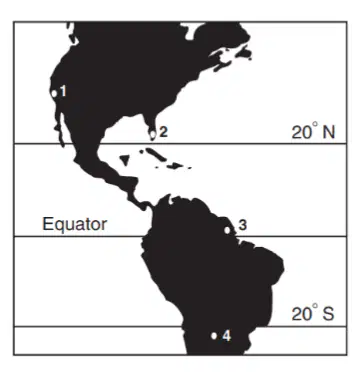
At which location on the map would a rain forest most likely be found?
1
2
3
4
Which of these effects generally occurs as the result of a warm air mass and a cooler air mass converging at Earth’s surface?
The sky becomes clear.
Winds die down.
Cloud formation decreases.
Stormy weather patterns develop.
Snow on the ground prevents polar climates from gaining heat by what mechanism?
heating by greenhouse gases
heat spread from the equator
reflection of solar radiation
release of heat from Earth’s core
Scientists have found fossils of tropical plants in Antarctica. How could tropical plants have grown in Antarctica?
At one time, Earth’s entire surface was a tropical rainforest
At one time, Antarctica was located closer to the equator
The rotation of Earth has increased, causing cooling of the atmosphere
Catastrophic volcanic eruptions melted the ice and exposed the soil to sunlight
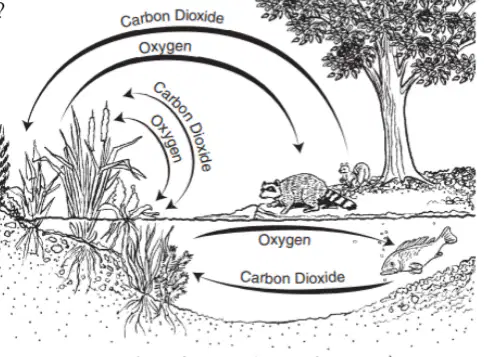
Which of these statements is best illustrated by this diagram?
Animals under water eat plants
Land animals exhale oxygen into water
Water-dwelling animals breathe carbon dioxide
Plants can take in carbon dioxide from air or water
From Earth’s atmosphere, carbon dioxide is used by plants, algae, and cyanobacteria during the process of ___?
photosynthesis
respiration
decomposition
nitrogen fixation
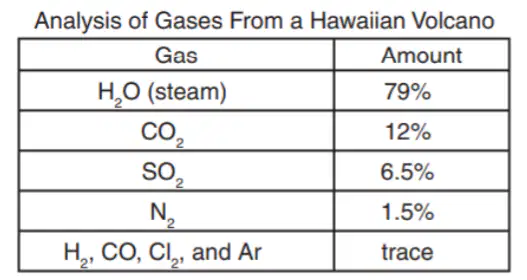
The table below lists the gases coming from a modern Hawaiian volcano. If ancient volcanoes gave off the same gases, which gas would have been most helpful in the development of early life-forms that could carry out photosynthesis?
N2
SO2
CO2
Cl2
Carbon in the atmosphere is most often found as which of the following compounds?
stratospheric ozone
fossil fuel
carbon monoxide
carbon dioxide
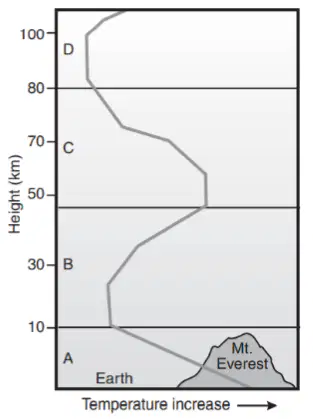
The diagram above shows four layers of Earth’s atmosphere. Which of the following correctly labels the layers represented by A, B, C, and D (from Earth moving upward) in the correct sequence?
troposphere, stratosphere, mesosphere, thermosphere
thermosphere, mesosphere, stratosphere, troposphere
troposphere, mesosphere, thermosphere, stratosphere
mesosphere, troposphere, thermosphere, stratosphere
The primitive atmosphere of Earth was deficient in free oxygen. What process was primarily responsible for the development of the present percentage of free oxygen in the Earth’s atmosphere?
outgassing
photosynthesis
volcanic eruptions
oxidation of iron-based minerals
Most of the molecular oxygen in the early atmosphere of Earth resulted from
photosynthesis in primitive plants
decaying primitive plants and animals
volcanic eruptions
lightning striking Earth
Which of the following human activities reduces the level of ozone in the atmosphere?
using artificial lighting in scientific polar stations
using large banks of solar cells for energy production
releasing chlorofluorocarbons from aerosol cans
destroying large areas of the equatorial rain forests
Which layer of the Earth is the thinnest?
Crust
Mantle
Inner core
Outer Core
Weathering is best defined as:
effects of shadows and light
long term climate changes
hot magma seeping from the Earth
breakdown of rocks into minerals
Approximately how long does it take the moon to revolve around the Earth?
one day
one month
one week
one year
The hydrosphere of the Earth is best described as:
a relatively thin layer of rock found in the Earth’s crust
a layer of iron and nickel located in Earth’s inner core
hot magma found in the mantle of the Earth
water on the Earth’s crust and atmosphere
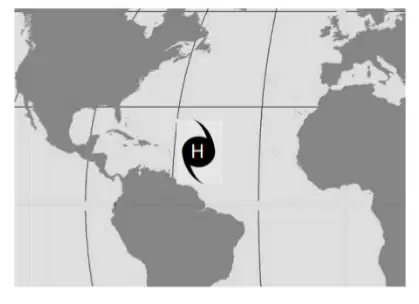
A hurricane has formed in the Atlantic Ocean as shown in the diagram below. The hurricane is forecast to move towards the southern coast of the United States. What general direction is the hurricane traveling?
Northwest
Southeast
Southwest
Northeast
The planet Earth is approximately ___ water
30%
90%
20%
The gas in the atmosphere that has the greatest effect on weather conditions is:
water vapor
carbon dioxide
Oxygen
Nitrogen
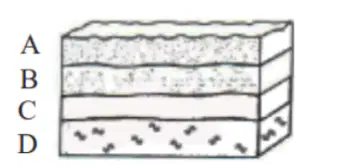
The diagram below shows layers in the crust of the Earth. Layer A represents the surface of the Earth. Which is true about layers in the diagram?
Layer C is younger than layer B
Layer D is older than Layer C
Layer A is older than layer B
Layer D is younger than layer C

The diagram represents the Earth and its orbit around the Sun. The arrow labeled F represents the force that keeps the Earth in its orbit. What is the name of the force that keeps the Earth in its orbit?
Electromagnetic
Gravity
Centripetal
Friction
One year on Earth is equal to the time it takes
the Earth to revolve once
the moon to rotate once
the sun to revolve once
the Earth to rotate once
The majority of earthquakes that occur on Earth are caused by
electromagnetic and solar radiation
the weathering of rock in the Earth’s crust
warming and cooling of the Earth’s surface
the movement of large rocks along faults
Most scientists agree that an increase in the amount of carbon dioxide and other gases entering Earth’s atmosphere causes
a decrease of average surface temperatures
a decrease in tectonic plate activity
fewer hurricanes but more tornados
an increase of average surface temperature
The mixture of gases surrounding the Earth is called the
Lithosphere
Atmosphere
Hydrosphere
Ionosphere
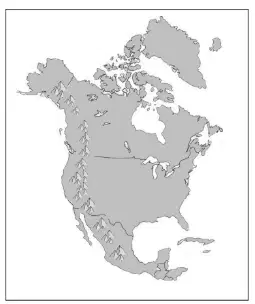
The map shows long mountain ranges on the west coast of North America. What caused the formation of these mountain ranges?
convection currents in the mantle of the Earth
the collision of tectonic plates
erosion of rocks and minerals
large ocean swells
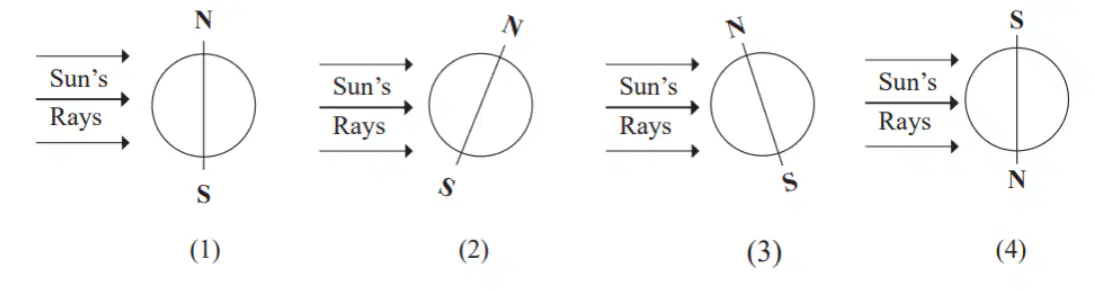
Which diagram best represents the tilt of Earth’s axis in June?
(1)
(2)
(3)
(4)
When you look up in the night sky and are able to see the moon, it is because the moon:
produces its own light
reflects sunlight
transmits light from space
absorbs sunlight
Which energy resource is considered non-renewable?
Cattle
Wind
Agriculture
Which type of air mass is likely to form over the ocean near the equator?
dry and warm
moist and warm
moist and cool
dry and cool
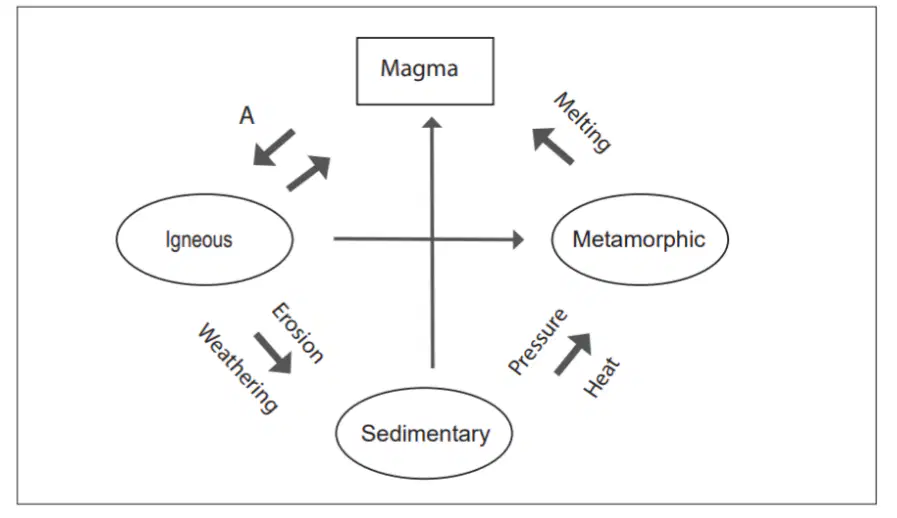
Use the diagram of the rock cycle to answer: What most likely happens at point A in the diagrams?
Cooling
Weathering
Melting
Evaporation
What conditions will cause sedimentary rocks to form metamorphic rocks?
Pressure and erosion
Heat and pressure
Erosion and weathering
Melting and cooling
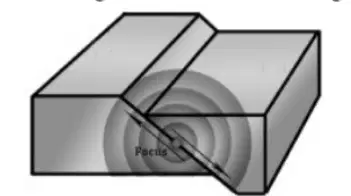
The diagram below shows the movement of two large blocks of rock along a crack. What is the diagram illustrating?
Formation of mountains
A volcanic eruption
The weathering of rock
How an earthquake forms
Rocks are classified as sedimentary, metamorphic or igneous on the basis of the:
Age of the rocks
Way the rocks were formed
Types of fossils the rocks contain
Number of minerals found in the rocks
The energy for the water cycle is provided by the
thermal energy from the mantle of the Earth
gravity of the sun and moon
the Earth’s rotation
energy of the sun
Which type of weather usually accompanies a cold front?
Precipitation
warm temperatures
dry air
calm winds
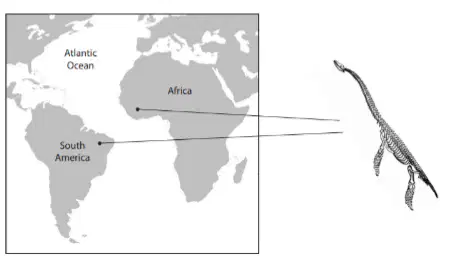
The diagram below shows two locations where fossils of a dinosaur were found. The fossils dated back to 250 million years ago. Which statement best explains why these dinosaur fossils are found today in both South America and Africa?
the fossils were carried by birds to both continents
The continents were once connected as a single landmass
the dinosaurs swam across the Atlantic ocean
both fossils formed from sedimentation
The thin layer of rock on top of the mantle is called the
Hydrosphere
Atmosphere
Lithosphere
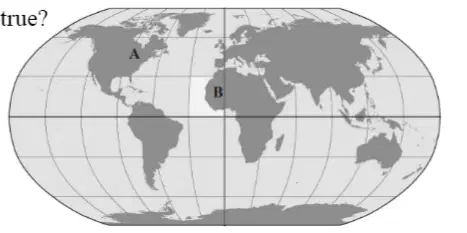
Base your answers to question 69 on the map below which shows longitude and latitude lines. A and B represent the locations of two cities. Which statement is true?
both cities are below the equator
city B has a higher latitude than city A
city A has a higher latitude than city B
city B has a higher longitude than city A
The tilted axis of the Earth as it revolves around the sun is the reason why there are
day and night
Seasons
Tides
northern lights
The movement of (a) is the main cause of volcanic eruptions.
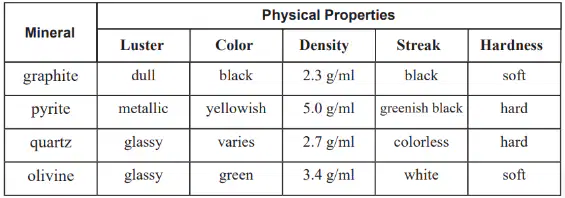
Base your answers to question on the table below. The table shows the physical properties of four minerals. Which mineral is soft and has the same color and streak?
Pyrite
Olivine
Quartz
Graphite
Which layer of the Earth contains convection currents that are responsible for the movement of Earth’s tectonic plates?
inner core
outer core
Mantle
Crust
The atmosphere of the Earth is best described as
mostly nitrogen with some oxygen and carbon dioxide
mostly carbon dioxide and oxygen
mostly oxygen with some nitrogen and carbon dioxide
mostly hydrogen with some carbon dioxide and helium
Which evidence has led scientists to conclude that the Earth is composed of different layers?
analysis of rock samples taken from each layer
measuring the circumference of the Earth
analysis of seismic waves
thermal energy decreases as the layers get deeper
What type of rock are you most likely to find fossils?
Sedimentary
Metamorphic
Igneous

