
 Worksheets
Biomolecules Review
Total questions: 81
Worksheet time: 2hrs 2mins
Spring, Summer, Fall, and Winter
Which biomolecule forms animal tissues such as muscle and hair?
Nucleic Acid
Carbohydrate
Protein
Lipids
What is the function of nucleic acids such as DNA and RNA?
Stores energy
Stores genetic information
Movement
Physical structure

Which biomolecule makes up the cell membrane and hormones?
lipids
protein
nucleic acid
carbohydrate
An advertisement for a health supplement for dogs claims to build lean muscle and strengthen tendons and ligaments, as well as provide energy. Which two biomolecules must the supplement contain to provide these benefits?
Carbohydrates and lipids
Proteins and carbohydrates
Nucleic acids and carbohydrates
Lipids and nucleic acids
Beeswax is a waxy substance that is produced by bees and then harvested by humans for a variety of uses. Ancient Romans used beeswax as a waterproofing agent because it is not water-permeable. Beeswax is which of the following types of organic molecule?
carbohydrate
lipid
nucleic acid
protein
Which biomolecule is in pastas and breads?
Which macromolecule has carbon
Carbs
Lipids
Nucleic acid
Protein
All biomolecules have carbon
Which are examples of a carbohydrate?
glucose, pasta, bread
fats, oils, waxes
meats, enzyme, lactase, eggs
DNA, RNA
Which are examples of lipids?
glucose, pasta, bread
fats, oils, waxes
meats, enzyme, lactase, eggs
DNA, RNA
Which are examples of proteins?
glucose, pasta, bread
fats, oils, waxes
meats, enzyme, lactase, eggs
DNA, RNA
Which are examples of Nucleic Acids?
glucose, pasta, bread
fats, oils, waxes
meats, enzyme, lactase, eggs
DNA, RNA
Which is not a monomer?
Lipids
nucleotide
monosaccharide
amino acid
Which molecule is a polymer?
Monosaccharide
glycerol & fatty acids
Protein
Nucleotide

The complex carbohydrates pictured below are made by linking molecules of glucose.
In all three complex carbohydrates, the subunits of glucose are bonded together differently. Because they have different structures, they most likely —
contain different chemical elements
form different proteins
carry different nucleotides
perform different functions
Many land plants store energy in starch. When energy is needed, the starch molecules can be broken down quickly. This chemical reaction produces which of the following?
amino acids
lipids
monosaccharides
RNA chains

Line B in the given graph represents the reaction with an enzyme added to substrates. How did the enzyme affect the reaction?
Increased the activation energy
Increase the energy change
Lowered the energy change
Lowered the activation energy

Taq polymerase is an enzyme used in the polymerase chain reaction (PCR) to replicate fragments of DNA. A study published in 1976 examined the properties of Taq polymerase after the enzyme was isolated from Thermus aquaticus, a thermophilic bacterium that lives in the hot springs of Yellowstone National Park. The graph shows one of the results of the study.
Which statement about enzyme activity is best supported by this graph?
An enzyme must be composed of multiple polypeptides, or subunits, to be active
An enzyme’s rate of activity increases with time until it becomes inactive
An enzyme functions best under specific temperature conditions
An enzyme works equally well in bacteria that are adapted to high temperatures and in eukaryotic cells such as human cells
_________ are utilized as a form of fast energy source. ________ provide longer term energy and storage.
carbohydrates, lipids
lipids, carbohydrates
protein, carbohydrates
What is the monomer of Lipids?
Monosaccharides
Amino Acids
Nucleotides
Glycerol/Fatty Acids
Many carbohydrates tend to end in......
"ose"
"ase"
"ing"
"ain"

Plant cell walls consist of cellulose, what is it best classified as.
Carbohydrate
Protein
Nucleic Acid
Lipids
Functions can include building cell wall and being a form of quick energy....
Carbohydrates
Proteins
Nucleic Acid
Lipids

Cholesterol contains chains of C,H,and O. It helps with the fluidity of the cell membrane it would best be classified as a?
Lipid
Nucleic Acid
Protein
Carbohydrate
Monomers are....
the smaller building blocks for biomolecules
the complex components for biomolecules
the finalizing step to building biomolecules
Biochemical reactions that require high temperatures to proceed are able to take place at body temperature within the cells of living organisms. Which factor is mainly responsible for allowing biochemical reactions to proceed at body temperature?
The cellular enzymes act as catalysts.
The small size of cells keeps reactants together.
The pH of the cytoplasm increases reaction rate.
The reactants are present in small quantities in the cell.
Many people are lactose intolerant and cannot digest dairy products. What enzyme are their bodies most likely lacking?
lipase
lactase
maltase
protease
Which best describes how an enzyme affects the rate of a chemical reaction?
It increases the temperature of the reaction.
It lowers the activation energy of the reaction.
It changes the products created in the reaction.
It causes the reaction to proceed in an unfavorable direction.
Which statement BEST explains why enzymes bind to specific substrates?
An enzyme can be inhibited so its active site is altered.
An enzyme folds differently in the presence of different substrates.
Different amino acid sequences cause variations in the shapes of an enzyme’s active sites.
Enzyme-substrate binding is based on size so only large enzymes can bind to large substrates.
Which type of substance serves as a catalyst for reactions that break large food molecules into smaller useful molecules?
enzymes
vitamins
lipids
nucleotides
Estella spilled tomato sauce on her shirt. When she washed her shirt, she noticed that the detergent she used contained enzymes. Enzymes are added to detergents to break down proteins from food and other substances that may stain clothing. Which would MOST likely inhibit the ability of the enzymes to remove the stain on her shirt?
the amount of dissolved minerals in the water
the type of fibers from which her shirt was made
the temperature of the water
the fragrances in the detergent
Which is a function of lipids?
to supply cells with quick–release energy
to provide the body with insulation
to store genetic information
to regulate cell processes
Fats are specialized lipid molecules, and enzymes are specialized protein molecules. How do the functions of fats and enzymes differ?
Fats are structural building materials, while enzymes are transportation molecules.
Fats provide support for cells, while enzymes lower the pH of gastric fluids.
Fats regulate body functions, while enzymes denature invasive bacteria.
Fats are storage molecules, while enzymes are catalytic molecules.
Which is a general characteristic of lipids?
Lipids contain nitrogen.
Lipids are soluble in water.
Lipids are insoluble in water.
Lipids contain chains of amino acids.
Which organic molecule is primarily used by cells as a source of energy?
amino acid
fatty acid
glucose
protein

Why is the structure/order of proteins important?
A change in structure causes a change in the function
The order of proteins is not important
The order determines the effectiveness of the protein
The structure of proteins determines the structure of carbohydrates

Which molecule reacts with itself to form this polypeptide chain?
amino acids
glucose
starch
nucleotide

The structure labeled E represents-
Products
Enzyme
Substrate
Reactants
Which pair of answers correctly matches the monomer and the polymer?
Glucose- Protein
Amino Acid- Nucleic Acid
Nucleotide - Nucleic Acid
Fatty Acid- DNA
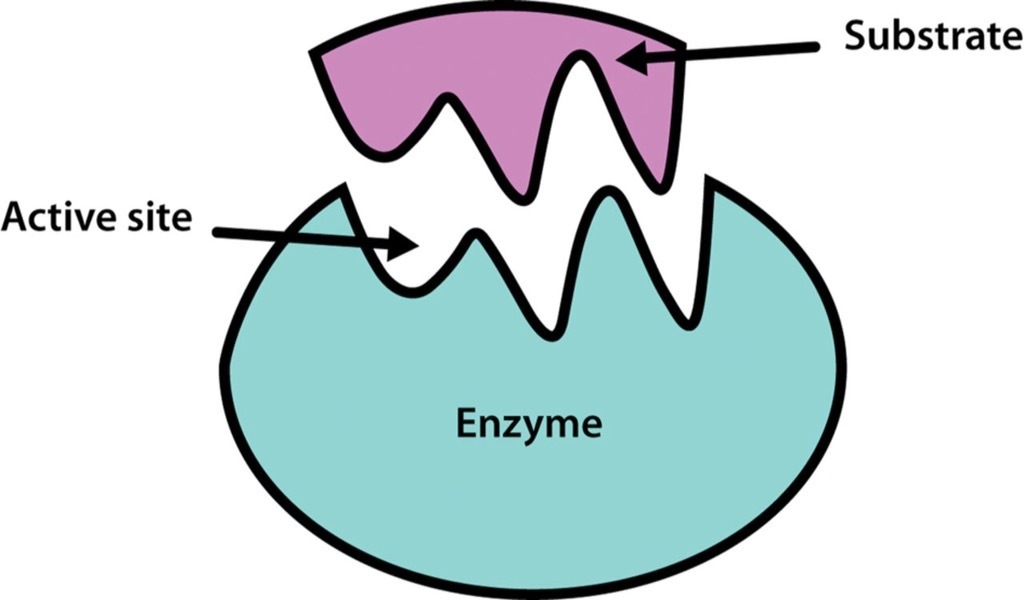
For enzymes to work, it has a spot where molecules dock in. What do we call this spot?
active site
substrate
inhibitor
Water is a _________ molecule.
nonpolar
polar
What makes water important to life?
Check all that apply.
The polarity of water makes it good at dissolving things.
Water can move nutrients around.
Water dehydrates our body.
This is the attraction of water molecules for each other.
cohesion
adhesion
hydrogen bonding
Of all the elements, ________ is the most significant to life.
carbon
hydrogen
nitrogen
These are molecules that contain carbon covalently bonded to other elements.
inorganic compounds
organic compounds
Below are the organic compounds.
Check all that apply.
carbohydrates
lipids
protein
water
nucleotides
All matter is made of _________.
If an atom loses electrons, it becomes a negative ion.
True
False
If an atom gains electrons, the charge will be positive.
true
false
How do covalent bonds form?
by sharing electrons between atoms
by donating or receiving electrons
What type of bond is responsible for bonding water, keeping DNA stranded, and for antibodies in a human?
Any chemical bond
Ionic Bonds
Covalent Bonds
Hydrogen Bonds
A chain of repeating units (called monomers)
monomer
dimer
replicate
polymer
Define polymer
circular molecule made with many repeating units
short molecule made of a few repeating units
long, chain-like molecule made of repeating units
chain-like molecule that contains hydrogen and oxygen
What kind of chemical bonds create polymers?
ionic
covalent
hydrogen
metallic



