
 Worksheets
8.1 Organisational structures and functional areas
Total questions: 25
Worksheet time: 13mins
The process by which decision making in a business organisation is pushed down the chain of command and away from the centre of the organisation.
Authority
Centralisation
Decentralisation
Distribution
A process where major decisions are made at the centre or core of the organisation and then passed down the chain of command
Authority
Centralisation
Decentralisation
Distribution
The willingness of any member of staff to take credit or blame for their actions.
Accountability
Authority
Chain of Command
Span of Control
The power or right to give orders and make decisions.
Accountability
Authority
Management
Responsibility
The number of subordinates who report directly to a manager
Chain of Command
Organisational structure
Span of Control
Subordinate Span
A formal system of task and reporting relationships that coordinates and motivates organisational members so they work together to achieve organisational goals.
Chain of Command
Organisational structure
Span of Control
Subordinate Span
The line of authority that moves from the top of a hierarchy to the lowest level
Authority Line
Chain of Command
Organisational Structure
Span of Control
A unique area or section within an organisation specifically designed to perform a specific task.
Chain of Command
Functional Area
Organisational Structure
Span of Control

A formal or traditional structure where the organisational chart has many layers of authority.
Flat Organisational Structure
Functional Organisational Structure
Hierarchical Organisational Structure
Matrix Organisational Structure
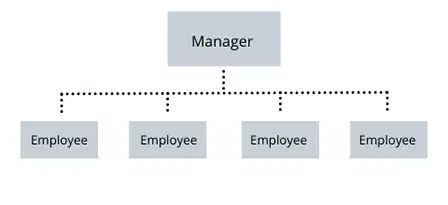
An organisational structure with a wide span of control and few levels of hierarchy (a short chain of command).
Flat Organisational Structure
Functional Organisational Structure
Hierarchical Organisational Structure
Matrix Organisational Structure

An organizational structure that facilitates the horizontal flow of skills and information. It is used mainly in the management of large projects or product development processes, drawing employees from different functional disciplines for assignment to a team without removing them from their respective position.
Flat Organisational Structure
Functional Organisational Structure
Hierarchical Organisational Structure
Matrix Organisational Structure
An organizational structure that facilitates the horizontal flow of skills and information. It is used mainly in the management of large projects or product development processes, drawing employees from different functional disciplines for assignment to a team without removing them from their respective position.
Flat Organisational Structure
Functional Organisational Structure
Hierarchical Organisational Structure
Matrix Organisational Structure
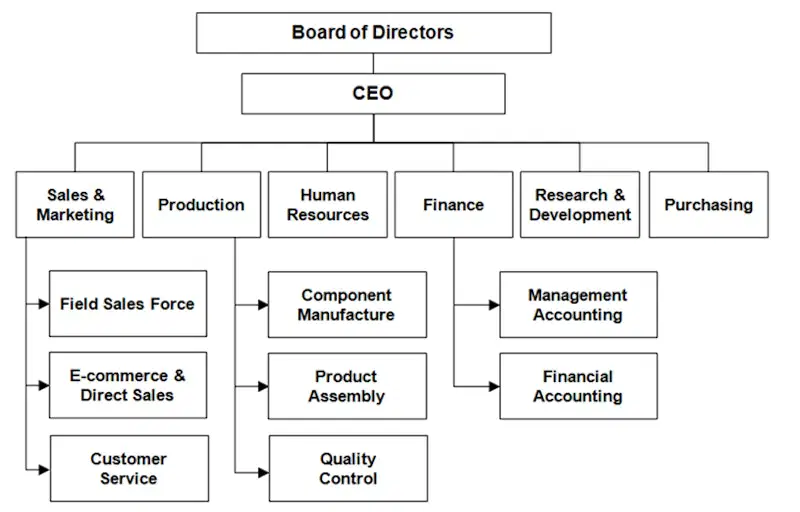
A common type of organisational structure in which the organisation is divided into smaller groups based on specialised functional areas, such as marketing, production, finance, IT and others.
Flat Organisational Structure
Functional Organisational Structure
Hierarchical Organisational Structure
Matrix Organisational Structure
The department of a business which is responsible for generating revenue by selling products or services to customers.
Customer Service
Distribution
Marketing
Sales
The department of a business which is responsible for manufacturing goods or producing services by establishing production processes, quality control measures, and the efficient utilisation of resources to meet customer demands.
Customer Service
Distribution
Production
Research & Development
The department of a business which is responsible for acquiring goods and services for the business.
Administration
Production
Purchasing
Sales
The department of a business which is responsible for providing support to other functional areas by managing various tasks.
Administration
Customer Service
Human Resources
ICT
The department of a business which is responsible for the interaction between a business and its customers before, during, and after a purchase.
Administration
Customer service
Purchasing
Sales
The senior members of staff who have been elected by shareholders of a company to run the company on their behalf
Directors
Senior management team
Supervisor / Team Leader
A manager whose main job is to direct the work of employees.
Directors
Senior management team
Supervisor / Team Leader
he managers who run the company on a day to day basis.
Directors
Senior management team
Supervisor / Team Leader
The department of a business which is responsible for promoting and selling products or services.
Administration
Marketing
Research & Development
Sales
The department of a business which is responsible for managing an organisation's employees.
Administration
Customer Services
Human Resources
ICT
The department of a business which is responsible for ensuring products reach customers efficiently.
Administration
Customer Services
Distribution
Purchasing
The department of a business which is responsible for innovation and staying competitive in the market by creating new products, improving existing products, conducting market research, and analysing customer needs to drive business growth.
Administration
Marketing
Production
Research & Development

