
 Worksheets
Ecology review
Total questions: 53
Worksheet time: 1hrs 11mins
A producer
Eats grass
Makes its own food
Does not need food(energy)
Is a primary consumer
A primary consumer
makes its own food
eats other animals
is a carnivore
consumes the producer
An animal that only feeds on plants is called
Vegetarian
Herbivore
Carnivore
Vegan
tertiary consumers
Eat the primary consumer
Eat plants and animals
Consume the producer
eat the secondary consumer
How much energy is moved from one trophic level to the next trophic level?
100%
1/2
10%
25%


As you increase in trophic levels
Only 10% of the energy is passed on
There are more organisms
Energy increases
All of the above

Which trophic level has the most energy?
Producers
Primary consumers (herbivores)
Secondary consumers (carnivores)
Tertiary consumers (top carnivores)
Which trophic level has the lowest population?
Producers
Primary consumers (herbivores)
Secondary consumers (carnivores)
Tertiary consumers (top carnivores)

Why are decomposers an essential part of any ecosystem?
They recycle nutrients back into the food web
They are the most efficient producers
Without them primary consumers population would drastically increase
All of the above
Which ecosystem is where saltwater and freshwater meet?
Open Ocean
Intertidal Zones
Wetlands
Estuary
Which of the following is common of lake and pond ecosystems?
they are saltwater
they have a current that flows in one direction
the water on top is often warmer than the water on the bottom
they house whales and dolphins
Fill in the levels of the ecological pyramid with the organisms in the food web.

Which of the following is a possible food chain in this food web?
Rabbit, mountain lion, fox
Grass, grasshopper, frog, snake, hawk
Grass, caterpillar, robin, mountain lion
Tree, deer, mountain lion, fox

Match the following:
Producer
Plant
Secondary Consumer
Bird
Tertiary Consumer
Snake
Quaternary Consumer
Owl
Primary Consumer
Grasshopper

In the energy pyramid pictured here, if the producers generate 100 units of energy, how much of that energy would be passed on to the herbivores?
100 units
50 units
10 units
1 unit

If there is 2000 kcal (units) of energy at the producer level in this particular ecosystem, how many kcal of energy will be available for hawk?
2000 kcal
200 kcal
20 kcal
2 kcal
0.2 kcal
How do ecologists classify aquatic ecosystems?
Salinity
Depth
Movement
All of the above
Salinity refers to
how many plants are in the water
how many organisms live in the water
how much salt in is water
All are freshwater ecosystems except
marshes
lakes
eustary
rivers
Aquatic life is abundant, diverse, and full of sunlight at which zone?
littoral zone
benthic zone
limnetic zone

Populations consist of
a single species
multiple species
the biotic and abiotic factors of an environment
a grouping of ecosystems

What decreases the size of a population
immigration
emigration

primary succession
secondary succession

This would lead to
primary succession
secondary succession

exponential growth curve
logistic growth curve

b
exponential growth
logistic growth
A population of mice lives in the northeastern United States. Over the last 50 years, the size of the mouse population decreased. What best explains the decrease in the size of the mouse population?
Fewer mice were born than died
All the mice die and no mice were born
More mice were born than died
Lots of mice immigrated into the population
When an environment has reached its carrying capacity for a certain population, which of the following is true?
Birth rate and immigration rate are equal death rate and emigration rate
Birth rate and immigration rate are greater than death rate and emigration rate
Birth rate and immigration rate are less than death rate and emigration rate
Birth rate is exponential

What is the approximate carrying capacity for the deer population in the graph?
100
80
60
20
Which of the following describes how an abiotic factor can impact the population in an ecosystem?
A parasite that invades a host can reproduce and cause a decline in the host species population.
Organisms that compete for the same resources will keep each other from overpopulating.
Predators will prevent herbivores from depleting the plants and other resources in an ecosystem.
Seasonal variations in temperature can cause some of the individuals in a population to die.
Which pair of factors is most likely to increase the size of the population?
births and deaths
births and immigration
deaths and emigration
immigration and emigration
A population of kangaroos grows briefly and then stabilizes. What does the leveling off indicate?
The population has reached the carrying capacity of the environment.
The population has exceeded the carrying capacity of the environment.
The population is affected by a density-independent limiting factor.
The population is no longer able to adapt to environmental changes.
Corals live near the surface of the ocean in some warm regions of the world. The corals provide a home for algae. The algae, in turn, produce food that is used by the corals. Which is a biotic factor in this ecosystem?
a. The temperature of the water
b. The (salinity (salt content) of the water
c. The size of the algae population
d. The amount of sunlight that reaches the coral.
The temperature of the water
The (salinity (salt content) of the water
The population of algae
The amount of sunlight that reaches the coral.
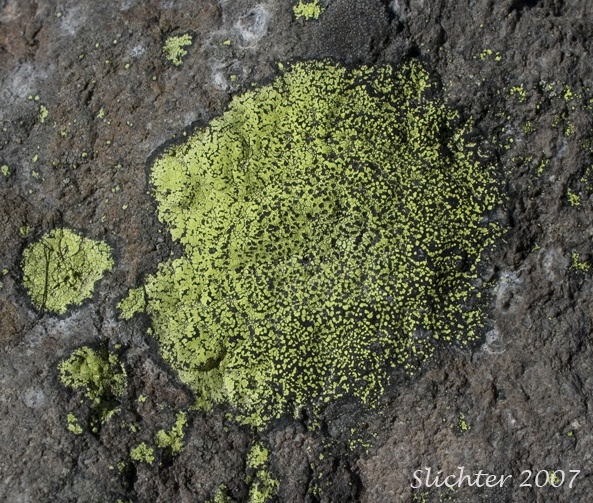
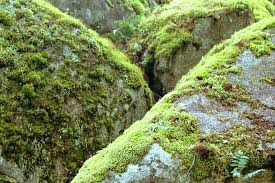
What are examples of pioneer species in a primary succession?
Bushes and Shrubs
Oak trees
Mossess and Lichens
A rose Bush
After a volcanic eruption, lava covers the land. What is the order that plants grow to repopulate the area?
Lichens → Shrubs → Grasses → Trees
Lichens → tree → shrubs→Grasses
Grasses → Lichens → Shrubs → Trees
Lichens → Grasses → Shrubs → Trees
Which of the following is evaporation of water from plants?
Precipitation
Nitrification
Transpiration
upllift
Carbon Dioxide (CO2) is released in which of the following processes?
photosynthesis
decomposition
combustion
cellular respiration
Animals get the carbon they need by
Nitrogen fixation
photosynthesis
cellular respiration
ingestion of plants and animals
In the carbon cycle, the only process that removes CO2 from the atmosphere is
combustion
cellular respiration
decomposition
photosynthesis

Which cycle are fossil fuels (oil, coal, natural gas) part of?
carbon
water
nitrogen
phosphorus


How are the molecules shown in the model used in the process of photosynthesis?
Carbon dioxide is taken in by the plant and oxygen is released.
Water and oxygen are used to produce glucose and carbon dioxide.
Oxygen and carbon dioxide are used to produce glucose and water.
Glucose is taken in by the plant and water is released.
If excess nutrients enter an aquatic ecosystem, it can cause the algae to form a thick bloom on the surface of the water. How does the bloom affect the amount of oxygen in the water?
It increases the amount of oxygen because fish perform more respiration.
It increases the amount of oxygen because plants receive more nutrients.
It decreases the amount of oxygen because plants are unable to perform photosynthesis.
It decreases the amount of oxygen because fish release more carbon dioxide.
The reactants for photosynthesis are:
O2
C6H12O6 + O2
CO2 + H2O + Sunlight
The products of respiration are:
O2 + Food
CO2 + H2O + Energy
CO2 + H2O + Sunlight

