
 Worksheets
Nervous 5/9/24
Total questions: 68
Worksheet time: 3605secs

What is a Neuron?
A cell
A transmitter to transmit messages to cells
A receiver for information
a gland
What does the axon carry?
Nerve Impulses away from the cell body
Impulses to the cell body
chemicals
messages
What do the motor neurons do?
carry messages from the brain and spinal cord to muscles and glands
carry impulses from skin and sends to organs the to spinal cord and brain
carry impulses from sensory neurons to motor neurons
store messages
What part of the brain is responsible for conscious thought, learning, memory, language, speech and voluntary body movements?
Cerebellum
Hypothalamus
Cerebrum
Thalamus
The medulla oblongata controls
vision and speech
hearing
heart rate and blood pressure
respiration


axon endings


Which system carries impulses from the (CNS) to the heart and other internal organs?
What part of the brain is responsible for visual processing?

This part of the neuron receives chemical messages from the neurotransmitters of other neurons. It is labeled A in the diagram.
Dendrite
Axon
Axon Terminal
Cell Body
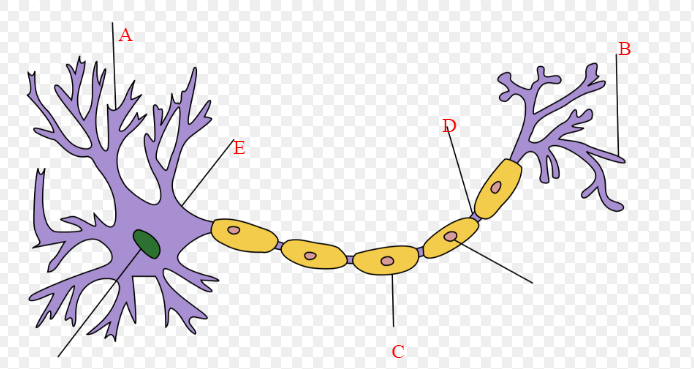
Which part sends nerve impulse to the next cell?
Dendrite
Axon
Axon Terminal
Cell Body

The long, fiber like part of a neuron which the cell sends information to receiving neurons. Labelled D in diagram.
Synapse
Axon
Axon Terminal
Dendrite

What is this? It coordinates muscle movements.
Cerebrum
Cerebellum
Brain Stem
Diencephalon
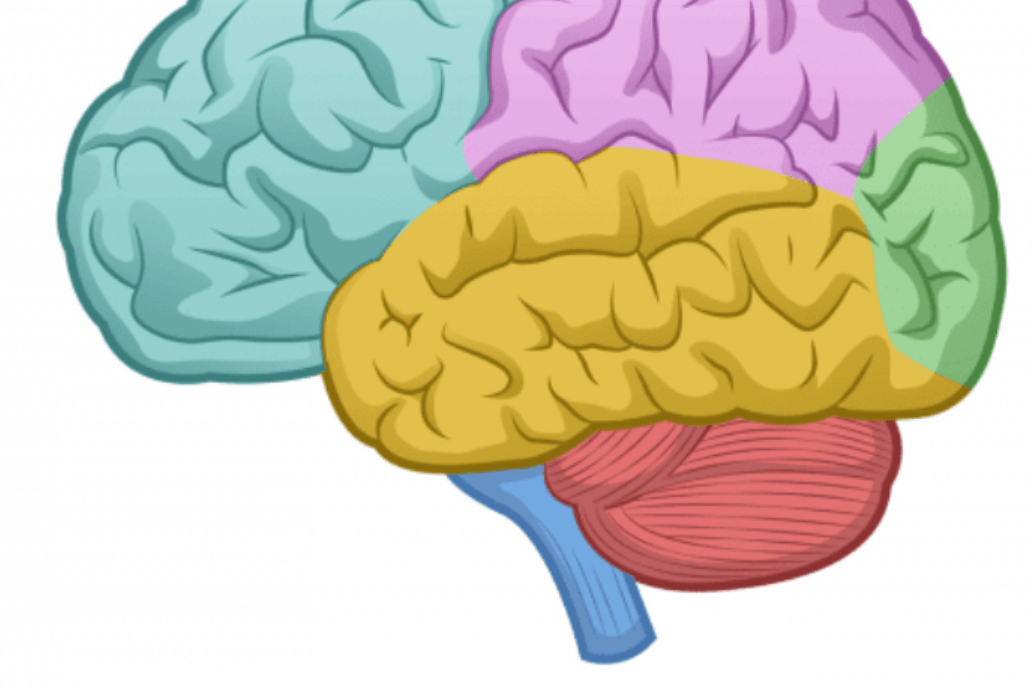
What structure is bright blue and located at bottom of the brain and controls the information sent between brain and rest of the body?
Cerebrum
Cerebellum
Brain Stem
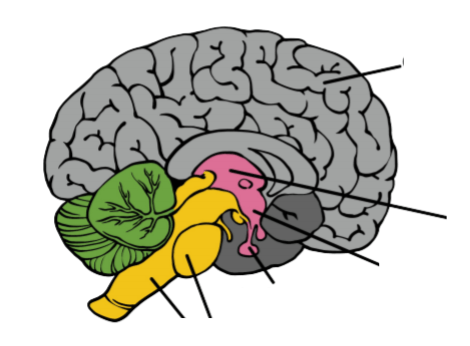
What structure is grey in this picture. It controls conscious thought and memory?
Cerebrum
Cerebellum
Brain Stem

Which part of the brain controls your blood pressure and heart rate?
brain stem
cerebrum
cerebellum
adrenal gland
What is the gap between two neurons called?
Impulse
Synapse
CNS
Inter neuron
These type of cells are responsible for transmitting electrical signals from nervous system to various parts of the body.
Neuron
Nerve
Villi
Somatic
A type of nerve cell that sends messages around your body so you can move.
motor neuron
dendrite
axon
synapse
neurochemical
What is the function of the nervous system?
to control and coordinate body functions and systems.
to protect the body from harm.
to identify pain and begin healing.
to break down food.
The basic unit of structure and function in the nervous system is a nerve cell. Nerve cells are also called-
Osteocytes
Dendrites
Neurons
Spinal Cords
What is the function of a nerve?
To transport needed food around the body
To control body movement for reflexes.
To carry messages (impulses) to and form the Central Nervous System
All of the above

A neuron has three parts: The cell body, the __________________, and the dendrites.
electrical circuit
axon
spinal cord
none of these answers are correct


The nervous system is made up of all the following EXCEPT
Brain
Nerves
Muscles
Spinal Cord
The nervous system is broken into 2 major parts, the
Central Nervous System
Pedestrian Nervous System
Peripheral Nervous System
Whole Nervous System
The left side of your brain controls the _______ side of your body.
Right
Left
Front
Back
When you want to go for a run, your nervous system tells your ________ system what to do.
Respiratory
Digestive
Skeletal
Muscular
When you need to use the bathroom, your excretory system sends a signal to your ________ system to let your body know that it's time....
Skeletal
Nervous
Circulatory
Respiratory
Match the following part of the brain with the description.
smallest lobe of the cerebrum, located in the back, helps us understand what we see
occipital
lobe of the cerebrum in the front of the brain that is responsible for thinking and reasoning and shapes our personality
frontal
lobe of the cerebrum found in the middle and receives information from all 5 senses
parietal
lobe of the cerebrum on the side of the brain that helps identify sounds and is used in memory, language and speech
temporal
this part of the brain is divided into 4 main sections.
cerebrum
The brain weighs...
4-5 pounds
10-11 pounds
2-3 pounds
6-7 pounds

Identify the stimulus
Thirsty
drinking water
blinking
eating

Identify the response
hunger
thirst
drinking water
smelling

largest part of the brain; is divided into two hemispheres and carries out higher thought processes involved with language, learning, memory, and voluntary body movements
Central nervous system
Cerebrum
Peripheral nervous system
Medulla oblongata

consists of sensory and motor neurons that transmit information to and from the central nervous system
Central nervous system
Cerebrum
Peripheral nervous system
Medulla oblongata

part of the brain stem that helps control blood pressure, heart rate, and breathing rate
Central nervous system
Cerebrum
Peripheral nervous system
Medulla oblongata

part of the peripheral nervous system that transmits impulses to and from skin and skeletal muscles
Somatic nervous system
Hypothalamus
Autonomic nervous system
Sympathetic nervous system
part of the peripheral nervous system that transmits impulses to and from skin and skeletal muscles
Somatic nervous system
part of the brain that regulates body temperature, appetite, thirst, and water balance
Hypothalamus
part of the peripheral nervous system that transmits impulses from the central nervous system to internal organs
Autonomic nervous system
branch of the autonomic nervous system that controls organs and is most active during emergencies or stress
Sympathetic nervous system
branch of the autonomic nervous system that controls organs and is most active when the body is at rest
Parasympathetic nervous system
The PNS (peripheral nervous system)
contains the brain and spinal cord
contains all the nerves of the body
is divided into the somatic and autonomic systems
is divided into the sympathetic and parasympathetic divisions

Nerves that receive messages from the brain and spinal cord are:
sensory
associative
interneurons
motor

Cranial nerves and spinal nerves are part of the:
Central nervous system
sensory nervous system
Peripheral nervous system
Associative nervous system

Nerves that send messages from the outside world to the brain are:
motor
associative
sensory
interneurons

Which organ is represented by letter A?
Brain
Spinal Cord
Nerves
Which organ is represented by letter B?
Brain
Spinal Cord
Nerves
Which organ is represented by letter C?
Brain
Spinal Cord
Nerves
Match the following parts of the brain to the description.
called the little brain and important in balance and coordination
cerebellum
controls the body's temperature and makes most of the body's hormones
hypothalamus
master gland that produces and releases hormones and tells our bodies when to grow
pituitary
part of the brain stem and is responsible for coordinating movement and plays a part in our mood.
medulla oblongata
part of the brain stem responsible for sleeping and dreaming, communicates between hemispheres
pons
Match the following part of the brain with the description.
smallest lobe of the cerebrum, located in the back, helps us understand what we see
occipital
lobe of the cerebrum in the front of the brain that is responsible for thinking and reasoning and shapes our personality
frontal
lobe of the cerebrum found in the middle and receives information from all 5 senses
parietal
lobe of the cerebrum on the side of the brain that helps identify sounds and is used in memory, language and speech
temporal
this part of the brain is divided into 4 main sections.
cerebrum
The 3 main parts of the nervous system are the
brain
spinal cord
nerves
lobes

