
 Worksheets
GA Biology EOC Review #2 (Units 3-5)
Total questions: 100
Worksheet time: 1hrs 25mins
Ecology is the study of .
life
Interactions among organisms and their environments
interactions among organisms
how traits are passed from parents to offspring
Which of the following is abiotic?
A tree in a forest.
Wood from the tree on the forest floor.
A termite on the tree.
The soil the tree is growing in.
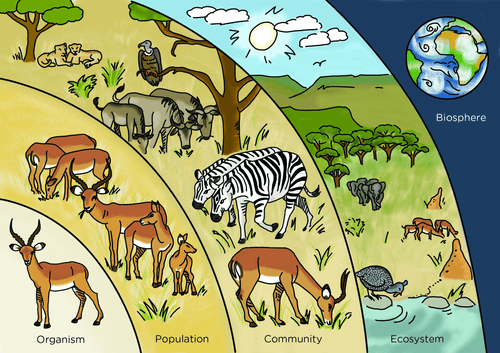
What is made up of all the populations in an area?
Habitat
Niche
Community
Ecosystem
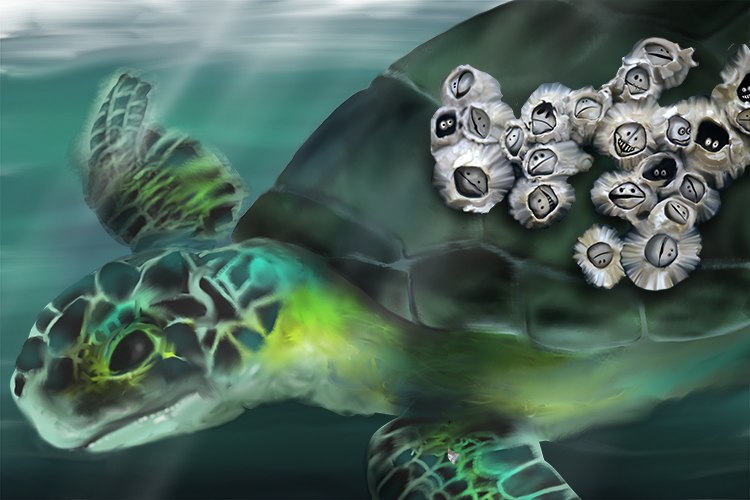
A close, ongoing relationship between species in which at least one is benefiting and the other is not helped or harmed.
Commensalism
Symbiosis
Predator & Prey
Mutualism
There are birds that eat the food from between the teeth of alligators, leaving the alligators with clean teeth and the birds with a meal. What type of ongoing relationship is this?
A. Predator & Prey
B. Mutualism
C. Commensalism
D. Parasitism
Which of the following is a predator and prey relationship?
A. Cow and grass.
B. Vulture and a dead lion.
C. Tick and a deer.
D. Spider and a fly.
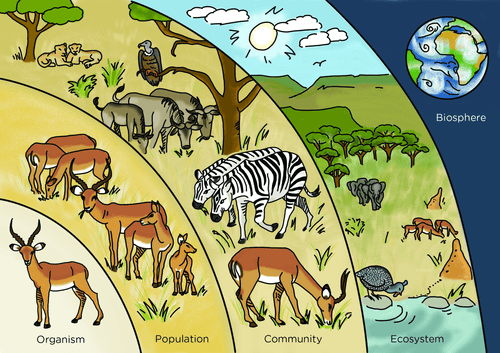
The living world is organized in levels. Biotic and abiotic factors also can be arranged into levels of biological organization. Put the words below in order from the least complex to the most complex
Community, Organism, Biome, Population, Biosphere, Ecosystem
Organism, Population, Community, Ecosystem, Biome, Biosphere
Organism, Biome, Population, Community Biosphere, Ecosystem

Why do fish swim in schools?
for fun
to conserve energy
to learn
for protection


Which is an example of where primary succession could occur?
a glacier melts and exposes new rocks
natural fire burns a prairie
a corn field is abandoned and left to overgrow
flood covers a piece of land

Barnacles do not affect whales as they grow, but receive the benefit of a food source. This is
parasitism
mutualism
commensalism
neutralism
Which event would not cause secondary succession?
forest fire
flooding of a valley
volcanic lava flow
tornado
What would happen within a few months after the formation of a volcanic island?
pioneer species would grow
no pioneer species would grow
trees and large plants would grow
rich, organic soil would be present

A bee receives nectar from a flower and carries the pollen to other flowers:
predation
parasitism
mutualism
commensalism
90% of the energy that gets lost as you move up a food pyramid or chain gets lost as
Pollution to the environment
Energy for decomposers
Heat to the environment
Gets recycled

The diagram above shows an energy pyramid for an aquatic ecosystem.
Which of the following statements best explains why the energy pyramid is narrowest at the top?
The organisms at the top of the pyramid are the most efficient feeders.
The organisms at the top of the pyramid have the largest population sizes.
The organisms at the top of the pyramid need only a small amount of energy for their metabolism.
The organisms at the top of the pyramid receive only a small fraction of the energy that originally enters the system

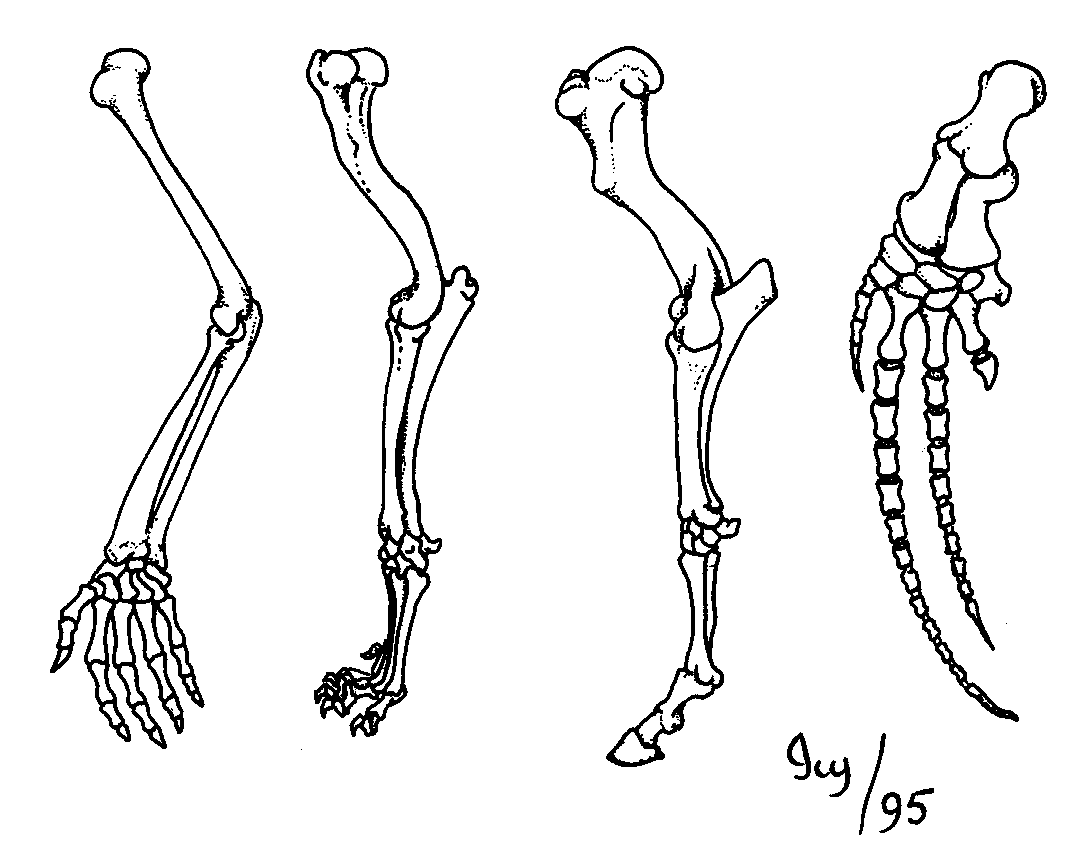
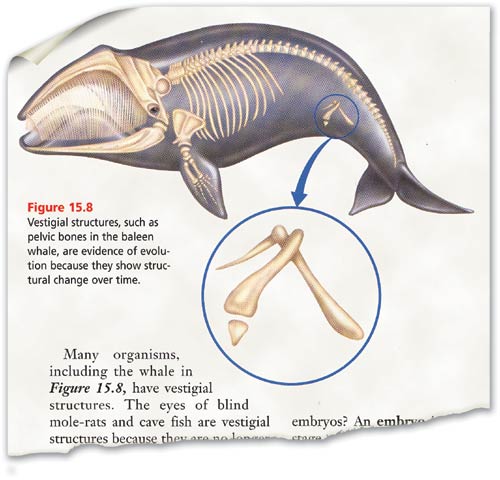
What do we call a change in a species over time?
Adaptation
Evolution
Extinction
Environmental influences
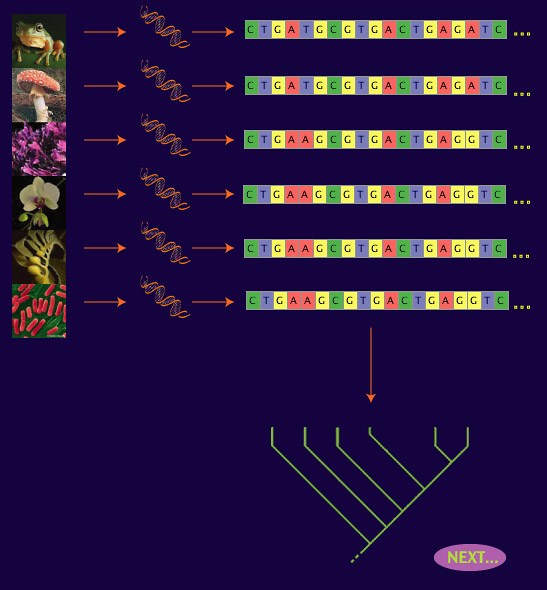


When looking at two birds of the same species, you notice that one has darker feathers than the other one. You also notice that one has a beak that is just a little longer. These slight differences within members of the same species are called.....
Fossils
Extinction
Meiosis
Variations
A new river forms and splits two populations, causing ______________ speciation
Sympatric
Allopatric
Extreme
Convergent
A speciation in which new species evolve from a single ancestral species while inhabiting the SAME geographic region.
Sympatric speciation
Allopatric speciation
Complex speciation
Divergent speciation
Which of the following is required for a population to diverge into two separate species?
The two populations must have evolved different physical appearances.
The two populations must have mutated at least 10 times.
The two populations must have become reproductively isolated.
The two populations must have evolved analogous structures.
Which of the following statements accurately describes the role of mutations in evolution
Mutations are the raw material for evolution, but most mutations do not result in evolution.
Most mutations result in a species becoming more dangerous or aggressive.
An organisms can decide to mutate if the environment makes a mutation necessary for survival.
Mutations are almost always beneficial for an individual.
Which best describes punctuated equilibrium?
Speciation occurs due to natural selection
Speciation occurs due to isolation
Speciation occurs slowly in geologic time, followed by long periods with very fast evolutionary change.
Speciation occurs suddenly and rapidly in geologic time, followed by long periods with little evolutionary change.
The emergence of new rivers or streams is a type of ____________ isolation.
Temporal
Mechanical
Behavioral
Geographic

To be a species, a group of organisms must be able to ...
experience gene flow.
interbreed.
produce infertile offspring.
move and breathe oxygen.
A female peacock of one species refuses to mate with a male peacock from a different species because she is not attracted to his feather display. This is an example of ____ isolation.
Temporal
Behavioral
Geographic
Allopatric
Who is called the "Father of Taxonomy?"
Charles Darwin
Carlos Lindberg
Carolus Linnaeus
Watson and Crick
Find the mistake in the binomial nomenclature name below:
puma concolor
The name is not in Latin/Greek.
The species isn't capitalized.
The genus isn't capitalized.
The name should be underlined, not italicized.
Which taxa is broader: Class or Family?
Class
Family
If three different organisms all share the same genus ...
they must not be closely related.
they must be part of the same species.
they share the same order, family, and class.
they do not have any similar traits.
The three domains are bacteria, archaea, and ____.
eukarya
animalia
plantae
protista
The scientist who came up with the current classification system
Darwin
Newton
Mendel
Linnaeus
The taxonomic level that would include the MOST number of species
class
kingdom
phylum
genus
What characteristics are used to divide organisms into kingdoms?
number of cells, nucleus, obtaining energy
number of legs, mammal, reptile
obtaining energy, habitat, nucleus
number of cells, eggs or live birth, aquatic or terrestial
Which of the following is the CORRECT form of a scientific name?
canis lupus
Canis Lupus
Canis lupus
canis lupus
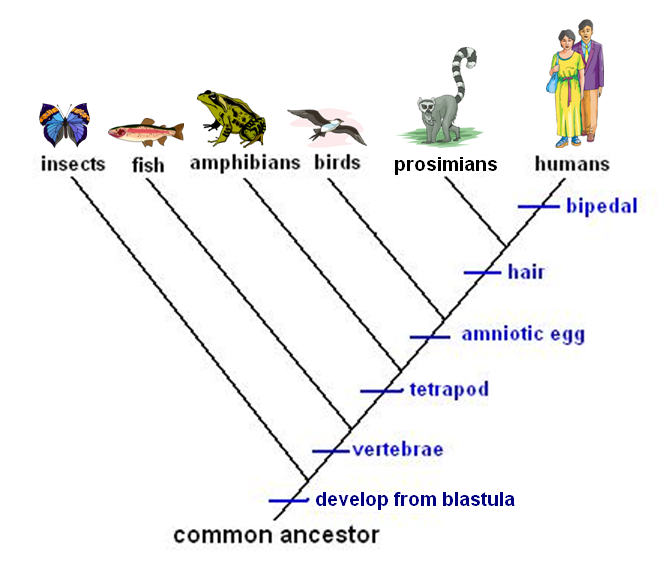
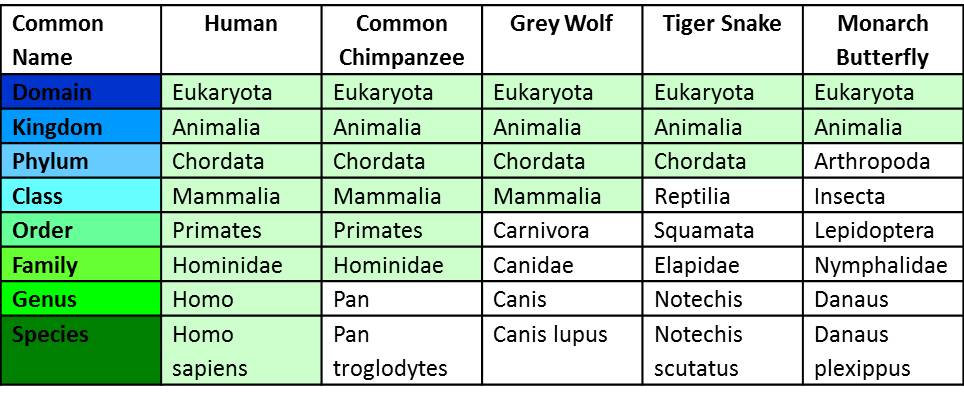

I am prokaryotic and am found everywhere that's not extreme. What kingdom do I belong to?
Eubacteria
Archaebacteria
Fungi
Protista
I'm motile (I can move) and have no cell walls. What kingdom do I belong to?
Animalia
Archaebacteria
Eubacteria
Plantae
The flu, which is caused by Influenza, is caused by a?
Bacteria
Virus
Which contain genetic information in the form of both DNA and RNA?
Viruses
Bacteria
Both viruses and bacteria
Composed of a protein coat called a capsid which contains DNA or RNA, or never both?
Viruses
Bacteria
Both viruses and bacteria
These are considered to be living organisms _________________.
Viruses
Bacteria
Both viruses and bacteria
Which one(s) reproduce by hi-jacking a host cell machinery?
Viruses
Bacteria
Both viruses and bacteria
Which is a concern of scientists when genetically modifying plants?
Plants will pass on diseases to animals.
There will be a decrease in biodiversity.
Plants will have a longer growing season.
There will be a decrease in revenue for pesticide manufacturers.
Which area of biotechnology would most likely create ethical issues within human society?
insulin production by bacteria
organ cloning for use in transplants
genetic engineering to improve agricultural yields
DNA and forensic testing of crime scene evidence
Which DNA technology would best help endangered species?
sequencing
cloning
electrophoresis
antibody production
What type of cells contain plasmids?
eukaryotes
animal cells
prokaryotes
plant cells
The Human Genome Project is an attempt to
make a DNA fingerprint of every person's DNA.
identify, sequence and catalog all human DNA.
create human-like creatures.
identify alleles in human DNA that are recessive.
What is the function of gel electrophoresis?
to separate DNA fragments according to size and charge
to cut DNA
to recombine DNA
to extract DNA
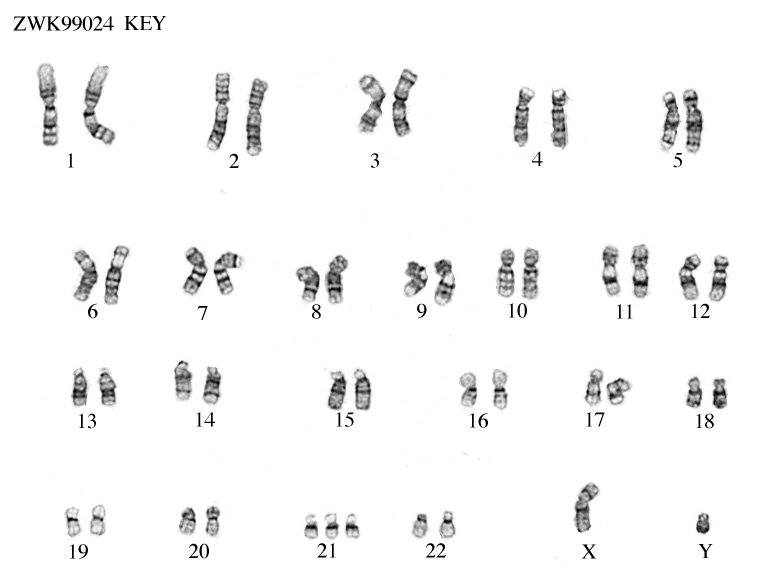
What is the mutation in this persons chromosomes?
There is only one X
7 is shaped like a hockey stick
There's an extra 21
1 is too curved
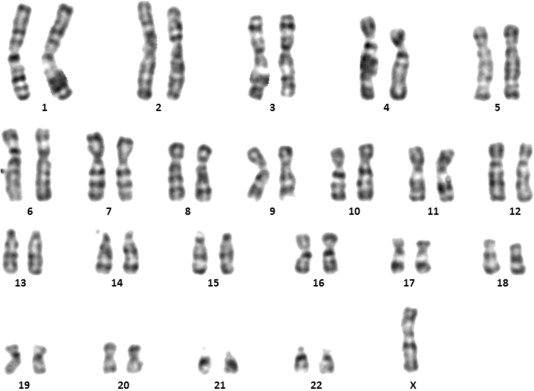
This is called Turners syndrome, can you notice the mutation in the chromosomes?
Both chromosomes 1 are bent
There are too many chromosomes
There are too many of chromosome 3
There is no Y chromosome

What is the gender of this rat?
Male
Female
Cannot be determined


How many TOTAL CHROMOSOMES does this plant have?
24
10
12

What is the biological gender of this individual?
Male
Female
Cannot be determined
Pairs of similar chromosomes are called...
homologous chromosomes
sister chromatids

What is an organized picture of all of an organism’s homologous chromosome pairs lined up with each other?
Pedigree
Karyotype

Failure of homologous chromosomes
to separate during meiosis.
Results in gametes with either one extra or one missing chromosome.
Translocation
Nondisjunction
Replication
Transcription

