Wayground logo

Free Printable Worksheets

Font size

S
M
L
XL
Worksheets

Respiratory and Cardiovascular Systems

Total questions: 50

Worksheet time: 25mins

Name
Class
Date
1.
How many chambers in the heart?
a)
1
b)
2
c)
3
d)
4
2.
____________carry blood away from the heart
a)
bronchioles
b)
arteries
c)
veins
d)
capillaries
3.
________carry blood back to the heart
a)
arteries
b)
capillaries
c)
veins
d)
arterioles
4.
Which of the following delivers oxygen to cells?
a)
Red Blood cells
b)
White blood cells
c)
Platelets
d)
Plasma
5.
Which of the following fights infection?
a)
Red Blood cells
b)
White blood cells
c)
Platelets
d)
Plasma
6.
What is the name of the part labelled 1?
a)
Right Atrium
b)
Left Atrium
c)
Right Ventricle
d)
Left Ventricle
7.
What is the name of the part labelled 2?
a)
Right Atrium
b)
Left Atrium
c)
Right Ventricle
d)
Left Ventricle
8.
The smallest blood vessels of the body are the _____________
a)
arterioles
b)
venules
c)
capillaries
d)
aorta
9.
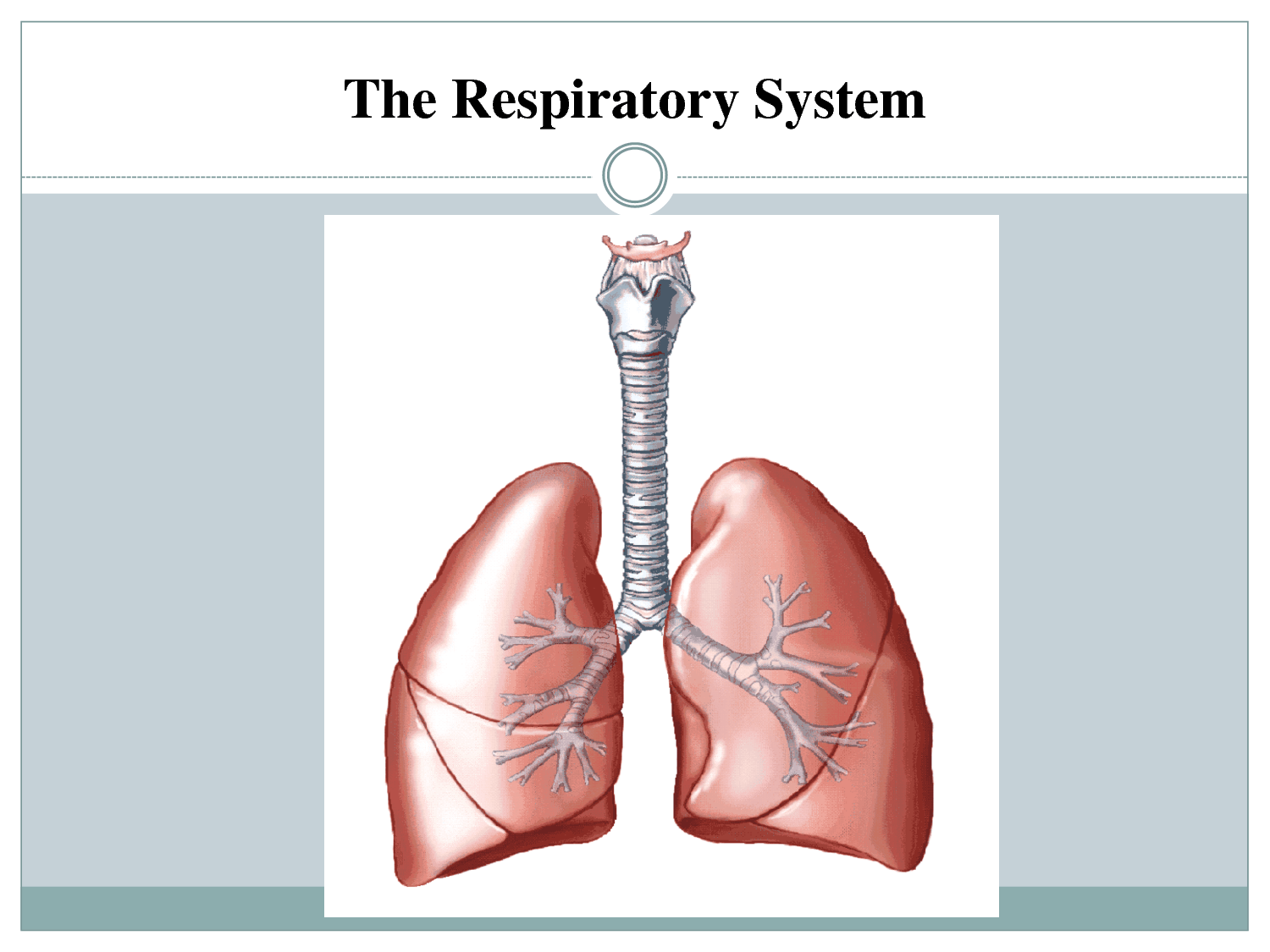
What is the main function of the respiratory system?
a)
to provide oxygen and remove carbon dioxide from the body
b)
to bring oxygen to the body
c)
to break down food and absorb nutrients
d)
to remove oxygen from the body and deliver carbon dioxide
10.
What are the main organs of gas exchange in the respiratory system?
a)
diapragm
b)
lungs
c)
trachea
d)
bronchi
11.
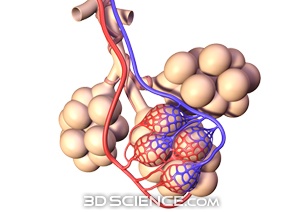
The air sacs that are covered with capillaries where gas exchange takes place
a)
bronchi
b)
lungs
c)
oxygen
d)
alveoli
12.
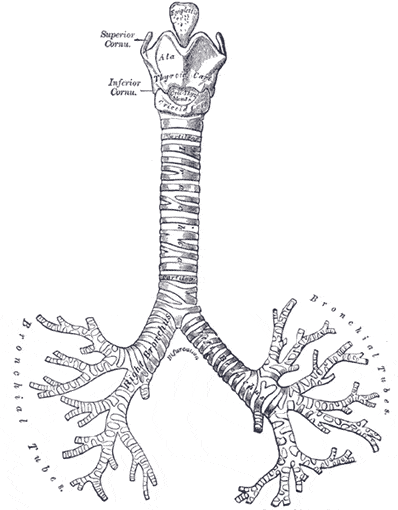
What is tube that is also known as your wind pipe?
a)
esophogus
b)
bronchi
c)
trachea
d)
alveoli
13.
Which chamber of the heart is the thickest?
a)
right atrium
b)
left atrium
c)
right ventricle
d)
left ventricle
14.
The right side of the heart forces blood to flow  
a)
to the body 
b)
to the lungs
c)
through the systemic circulation 
d)

to the brain 

15.

Which of the following helps your blood clump together in the cut to form a plug to stop bleeding?

a)

plasma

b)

white blood cells

c)

platelets

d)

red blood cells

16.

The system that transports blood around your body is?

a)

lymphatic system

b)

blood

c)

cardiovascular system

d)

respiratory sytem

17.

The fluid that carries gases, nutrients, and wastes throughout the body is?

a)

artery

b)

vein

c)

plasma

d)

blood

18.
_______ circulation takes blood from the heart to the lungs and back.
a)
Systemic
b)
Pulmonary
c)
Body
d)
Blood
19.
The bottom chambers of the heart are called
a)
ventricles
b)
atria
c)
vena cava
d)
valves
20.

Which of the following types of blood vessels have valves?

a)

arteries

b)

veins

c)

capillaries

21.

The top two smaller chambers of the heart are called

a)

atria

b)

ventricles

c)

topicals

d)

bottomicals

22.

The largest artery of the human body that takes oxygenated blood from the left ventricle to all organ systems is called

a)

inferior vena cava

b)

pulmonary veins

c)

superior vena cava

d)

pulmonary artery

e)

aorta

23.

What is the main function of the heart?

a)

To prevent blood from moving in the wrong direction

b)

To regulate body temperature

c)

To pump blood throughout the body

d)

To replace oxygen with carbon dioxide

24.

Why does the blood turn dark red as it circulates through the body?

a)

Because the heart is pumping blood to the brain

b)

Because Oxygen is replaced with Carbon Dioxide

c)

Because there are no platelets

d)

Because Carbon Monoxide is replaced with Oxygen

25.

What is the main function of valves in the circulatory system?

a)

To pump blood throughout the body

b)

To prevent blood from moving in the wrong direction

c)

To prevent platelets from clotting the blood

d)

To keep the body stable

26.
Inhale!!!!
Your lungs are ___________  air
a)
taking in
b)
letting out
27.
EXHALE!!!
My lungs are __________________ air. 
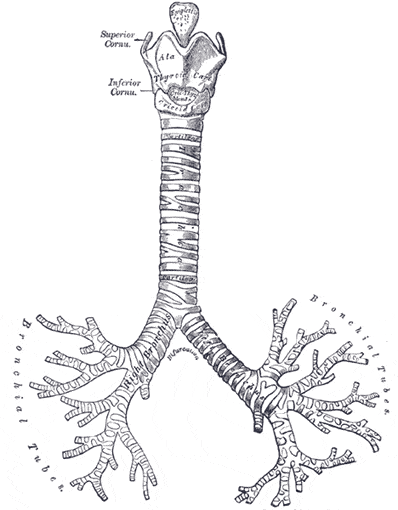
a)
taking in
b)
letting out
28.
When you breathe, your lungs take in ___ and remove ___. 
a)
air/oxygen
b)
oxygen/carbon dioxide 
c)
carbon dioxide/waste 
d)
waste/air 
29.
What is the function of the bronchi?
a)
Transport air from nose to lungs
b)
Transport air from trachea to lungs
c)
Transport air from lungs to alveoli
d)
Transport air from alveoli to blood
30.
The two main branches from the trachea (one to each lung)
a)
bronchi
b)
alveoli
c)
capillaries
d)
bronchioles
31.

The right lung has three lobes, but the left lung has only two.

a)

True

b)

False

32.

How is fresh oxygen delivered to cells throughout the body?

a)

by gland secretion

b)

by hormone regulation

c)

through nerve stimulation

d)

by the blood

33.

Structure to which vocal chords are attached

a)

larynx

b)

alveoli

c)

bronchi

d)

pharynx

34.

Which part of the blood helps heal cuts by clotting the blood?

a)

red blood cells

b)

platelets

c)

white blood cells

d)

plasma

35.

Which chamber of the heart receives deoxygenated blood from the body?

a)

right atrium

b)

left atrium

c)

veins

d)

right ventricle

36.

Which chamber of the heart receives oxygenated blood?

a)

right atrium

b)

left atrium

c)

veins

d)

left ventricle

37.
a dome shaped sheet of muscle, the _________, separates the chest from the abdomen
a)
diaphragm
b)
epiglottis
c)
alveoli
d)
bronchial tubes
38.
What is the function of hemoglobin?
a)
to carry iron
b)
to carry wastes
c)
to carry oxygen
d)
to produce oxygen
39.
Which blood type can receive any other blood type?
a)
Type-A
b)
Type-B
c)
Type-O
d)
Type-AB
40.
What blood type is the "universal donor" because it can be donated to anyone?
a)
A
b)
B
c)
AB
d)
O
41.
What structure is responsible for closing the entry to the airway during swallowing?
a)
Epiglottis
b)
Thyroid cartilage
c)
Soft palate
d)
Vocal folds
42.

Plasma

a)

Are red blood cells

b)

are clotting cells

c)

is the liquid part of blood

d)

is the heaviest part of blood

43.

How do your circulatory and respiratory systems work together?

a)

Your heart protects your lungs

b)

Lungs bring food into the body for your blood

c)

Oxygen and carbon dioxide are exchanged between your lungs and blood.

d)

The respiratory system makes blood for your circulatory system

44.

What does our body use oxygen for in cellular respiration?

a)

to react with glucose in order to get energy

b)

To absorb the CO2

c)

To react with water

d)

To help blood flow

45.

What is the purpose of the mucus produced in the respiratory system?

a)

Trap and remove dust and particles

b)

Produce sound during breathing

c)

Facilitate gas exchange in the lungs

d)

Aid in the contraction of the diaphragm

46.
Blood that flows between the heart and lungs is known as the
a)
Pulmonary circulation
b)
Systemic circulation
47.
arteries, veins, and capillaries are three types of __________
a)
heart valves
b)
blood vessels
c)
cells
d)
veins
48.

The blood that leaves the lungs travels directly to the _____.

a)

tissues

b)

muscles

c)

brain

d)

heart

49.

Which bones protect the lungs?

a)

ribs

b)

radius and ulna

c)

cranium

50.

Which respiratory disorder often causes the muscles around the bronchial tubes to tighten more than normal, making it hard for a person to breathe?

a)

pneumonia

b)

the flu

c)

asthma

d)

a cold