
 Worksheets
INTDSP 101 Final Quiz_ OpenStax _ Fall 2025
Total questions: 100
Worksheet time: 3hrs 20mins
Reese keeps sifting through syllabi to find the next assignment due every week. Which strategy would help the most?
to do list
priority matrix
weekly schedule
monthly plan
A Japanese inventor created a technique that can be used to discover the underlying cause of a problem or the underlying reason for a decision. This technique is called:
Sakichi Toyoda
Semi Sicho
The Five Whys
Know Why
What is the relationship between education and income?
Improved health and wellness
Investment
Lower-pay scale
Fewer opportunities
Which of the following can be referred to as the "contract of the course"?
Book
Encyclopedia
Syllabus
Transcript
Professors will likely expect you to read the textbook before class, take notes during class, and study between classes. These expectations are unwritten assumptions, which sociologists refer to as
Open
Hidden Curriculum
Policies
Laws

What is the number that represents the average of all your grades in a semester?
GPA
SAT
FAFSA
What kind of a Mindset is this: "Failure is an opportunity to grow".
What kind of a Mindset is this: "I'm either good at it or I'm not".

Time management requires prioritizing tasks.
True
False

Time management tools include planners, apps, and smartphones.
True
False
If you make a plan to study for each of your exams for one hour each evening, which time management tip are you using?
Using a planner or diary
Starting strategies
Timing your tasks
Writing tasks in a logical order
Which one should be prioritized when your time is very limited?
a. Must do activities
b. Need to do activities
c. Nice to do activities
d. Hard to do activities
To spend your time productively, you need to have set some _____.
possibilities
ideas
boundaries
goals
Alex is wondering how to fit in studying and gym time everyday. Which strategy would help the most?
to do list
priority matrix
weekly schedule
monthly plan
Procrastination can lead to
Stress
Loss of Self-Esteem
Loss of Goals
Loss of Time
all of the above
Why do we procrastinate?
All of the above
Fear of Failure
Lack of Focus
Lack of energy

Which of the following best defines procrastination?
act of delaying some task that needs to be completed
An attitude of getting things done.
Approaching your homework with a proactive attitude
None of these answers are correct.
Which of the following can help overcome procrastination?
Beat yourself up for not completing a task.
Ask the instructor for an extension of the deadline.
Reward yourself for completing the task.
Wait till Saturday to do the homework.
Overcoming procrastination can be accomplished by
Get Organized
Put aside Distractions
Reward Yourself
All of the above.
Be Accountable
Productivity can be increased by
complete task in time without having any rest
focus to complete your task during your best time at your highest energy level
procrastinate on tasks until overdue
having enough rest, sleep more than ten hours to recharge
What is time management?
The process of planning and organizing how much time you spend on various activities in order to maximize productivity and achieve your goals.
The process of working for long hours without taking any breaks
The process of randomly allocating time to various activities without any planning
The process of procrastinating and delaying tasks until the last minute
Name one time management technique that can help in balancing work and personal life.
Multitasking
Procrastination
Overworking
Prioritization
What is the first level of Bloom's Taxonomy?
Analyzing
Remembering
Creating
Applying
What is the second level of Bloom's Taxonomy?
application
analysis
knowledge
understanding
What is metacognition?
the awareness of your own learning processes
Questioning the text
Using reading strategies
Rereading the text
Using clues around a "tricky" word to figure out what it means is called?
an inference
using context clues
predicting
decoding
Purposeful engagement with the text is called:
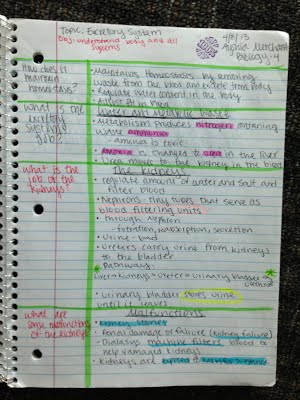
1. You should take notes while you’re reading _________.
so you can show your future teachers your notes so that they know what you’ve already learned
because it will help you not get bored when you’re sitting in class
because you can’t rely on your short-term memory to remember everything you read
because notes will be helpful for any classmates or friends who need to copy your work

What kind of note-taking method is this?
Cornell notes
outline
mind map

What kind of note-taking method is this?
Cornell notes
outline
mind map
What should you do when you find a word you don't know?
Ignore it
Guess what it means and move on
Define it using a dictionary or context clues
Write a catchy song about it
What is cramming?
The practice of learning large amounts of information in a short amount of time
The practice of studying over a long period of time
The practice of taking breaks while studying
The practice of collaborating with classmates
Which of the following is the best way to study material?
Cramming and staying up all night
Re-reading the textbook and highlighting key information
In short bursts of 30 minutes
None of these.
Which study technique involves reviewing material immediately after learning it, then again after a short period of time, and then at increasing intervals?
Cramming
Highlighting
Skimming
Spaced repetition
Which study technique involves using acronyms or rhymes to remember information?
Acoustics
Anagrams
Mnemonics
Palindromes
What is a study technique that involves marking important information in a text with a pen or highlighter?
Underlining
Highlighting
Erasing
Scratching
Studying in a quiet place - preferably the same place - every day helps you concentrate and learn more effectively.
True
False
Thinking about how you think is called
long term memory
working memory
Metacognition

Sleep plays a vital role in improving mental health and is a form of self care.
Absolutely right!
I disagree
Sleeping is harmful for health
I don't have time to sleep
Self care = physical, emotional, environmental and spiritual well being.
true
false
I am confused.
Let me think
What is an example of taking care of your body?
coloring
exercising
writing
What is self care?
An activity to take care of your mind and body.
Eating sweets
getting a hair cut
playing on your iPad
What term refers to how much a person respects and likes himself or herself?
self-actualized
identity
personality
self-esteem

Self esteem is ....
negative messages
not believing in yourself
confidence and pride you have of yourself
pressure from peers

Social media can effect your self esteem.
True
False
Negative thinking means:
How does having a positive self-concept impact our community?
It values the uniqueness of each individual.
It doesn’t have any impact at all.
It only has an impact if everyone does it.
It can’t have an impact because it’s very personal.
What is the point of working in a group?
Achieve a goal through collaboration
Work is easier
Find new friends
Have one person do everything

What is resilience?
The ability to recover from, or adjust easily to, misfortune or change.
Giving up and not trying to make the situation better.
Being inflexible and unwilling to change.
Becoming sensitive and taking changes in the workplace personally.
Why is it important to control your Emotions?
To take better decisions and without emotion.
To control the World with your mind.
To be sad more often.
To make happy teacher Alex.
"Stop and think before reacting" is an example of Managing Emotions.
True
False
What does "reframe your thinking" mean?
Buying picture frames
Working to be more positive and not stress out so much
Thinking like someone else
Training your brain
What are coping skills?
Skills to learn math
Ways to refocus on the day or task you're doing
Strategies to get out of doing work
Breathing exercises
Physical activity can help to …………………….. stress.
Increase
Reduce
What does 'positive self-talk' refer to?
Constant self-criticism
Belief that positive thinking is unnecessary
Ignoring one's own thoughts and feelings
Using positive statements and affirmations to improve self-esteem and overall well-being.
What is the purpose of identifying different emotions?
To understand and manage our own emotions, and empathize with and support others.
It is a waste of time.
It is only important for psychologists.
It has no purpose.
How can positive self-talk improve emotional well-being?
Positive self-talk promotes self-confidence, reduces stress and anxiety, increases resilience, and fosters a positive mindset.
Positive self-talk has no impact on emotional well-being.
Positive self-talk only works for certain individuals.
Positive self-talk can worsen emotional well-being.
Self-Efficacy is defined as...
The ability to be self reliant and not need any help
The belief in your abilities
The belief that an individual's achievement and intelligence is rigid
The ability to be correct in most to all situations
A growth mindset is the belief that
mistakes mean failure.
skills can't be improved.
your intelligence can't change.
ability to reconsider situations and find positive ways forward is
When you have a growth mindset,
you automatically have strong neural connections.
you push yourself and learn from mistakes.
people always think that you're smart.
you always do well on tests.
What is Mindfulness?
Meditating
Things that bring our mind to the present
Exercise Technique
Things that distract our mind
Select the true statement:
Stress is a mental issue
Stress is a physical issue
Stress is neither mental nor physical
Stress is both mental and physical
A plan for spending is a:
What is Borrowed Money called? *
Interest
Loans
Savings
Investment
Putting Money Away for Later
Savings
Net Pay
Loan
Interest
What is in a Credit Report?
Personal information, previous addresses, social security number
Current and previous employers, and estimated income
Detailed information about each credit card account, balance owed & payment history
All the Above
What is emergency savings?
Transferring money into your savings before you pay your bills
Original amount of money saved or invested
Cash set aside to cover the cost of unexpected events
Maximizing your return by selling stocks at a higher price than what you paid for
How much money should you save for emergencies?
2 months worth of expenses
6 months worth of expenses
Cash in whatever stocks you have to pay for an emergency
As a neighbor for a loan if needed
What is the highest credit score you can achieve?
800
1000
850
550
Which is NOT a credit agency that calculates your credit score?
Experian
Federal Reserve
Trans Union
Equifax
When is interest paid?
When the company you have bought stock in has earned you a profit
When you borrow money from a lender and they charge you for the convenience of giving you a line of credit
When you put money into your savings
When you over withdrawal in your bank account and you are charged a fee
What is the difference between a want and a need?
A want is something necessary to live
A need is something necessary to live
What is the best advice if you are going to use credit cards?
Pay off the entire balance every month
Get as many as you can
Pay only the minimum balance each month
Get a card with a high interest rate
How is your credit score calculated?
payment history
Amount & type of debt
Length of credit history
All of the above


The ability to perform a task based on training and experience.
Ability
Job
Series
Skill
A temporary paid or unpaid position that involves direct work experience in a career field.
pursue
internal
internship
interests
Networking
The act of following another worker for a few days on a job.
Job suitable for a worker who is new to a job, field, or subject
The practice of building informal relationships with people whose friendship could bring advantages such as job or business opportunities.
Work history of one or more jobs in the same or related fields of interest.
The goal of a resume is to...
Make a good first impression
Get an interview
How long should your resume be?
As long as you need it to be
2 pages
1/2 page
1 page
Always __________ your resume!
Proofread
Include a picture on
Sign
Use fancy fonts in
The ______________ resume is the most commonly used type of resume. Time frames are the key to this type of resume.
Chronological
Functional
Combination
What should a resume always include?
Contact information, education, and qualifications
Age, religion, and race
Education and GPA
An honest and reflective account of your criminal record

