
 Worksheets
SEHS Paper 1 (9)
Total questions: 15
Worksheet time: 8mins
Which movement involves bones of the axial skeleton?
Extension of the elbow when pitching a baseball
Rotation of the neck to breathe while swimming freestyle
Flexion of the knee when rowing
Pronation of the radius and ulna joint to apply topspin in tennis
Which correctly matches the connective tissue to its function?
Ligaments are the connections between muscles and bones.
Cartilage reduces friction between bones and helps absorb shock.
Tendons are the connections between bones and bones.
The synovial membrane provides stability to the joint.
Which is the origin of a muscle?
The attachment of a muscle to a stationary bone
The attachment of a muscle to a joint
The attachment of a muscle to a moveable bone
The attachment of a muscle to a bursa
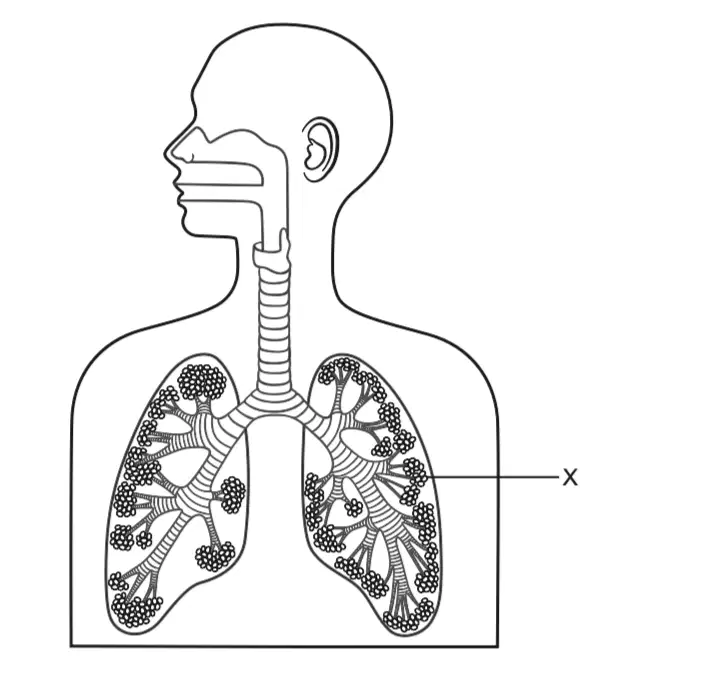
The diagram shows the ventilatory system.
What is the structure labelled X?
Larynx
Bronchi
Trachea
Alveoli
An athlete is exercising outside in a temperature of 20°C. What is the role of the nose in the respiratory airway?
To cool air in the respiratory airway
To filter dust particles in the inhaled air
To dry the air in the respiratory airway
To reduce mucus secretions to the trachea
What is the name of the heart valve between the left atrium and left ventricle?
Vena cava
Aortic
Bicuspid
Tricuspid
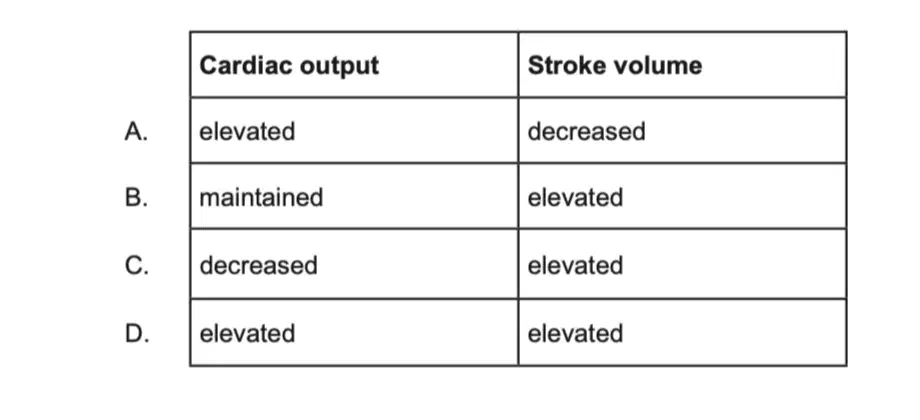
What is the relationship between cardiac output and stroke volume during a warm-up?
A
B
C
D
Which defines the term diastolic blood pressure?
The force exerted on arterial walls during atrial contraction
The force exerted on venous walls during atrial contraction
The force exerted on arterial walls during ventricular contraction
The force exerted on venous walls during ventricular contraction
An athlete has a high maximal oxygen consumption level (VO2max). What information does this provide?
The athlete has poor aerobic capacity.
The athlete has good aerobic capacity.
The athlete’s oxygen carrying capacity is reduced.
The athlete has a greater reliance on anaerobic respiration.
Which is a micronutrient?
Lipids
Carbohydrates
Proteins
Minerals
Which contains the most saturated fat?
A spoon of vegetable oil
A portion of red meat
A piece of fruit
A cup of grains
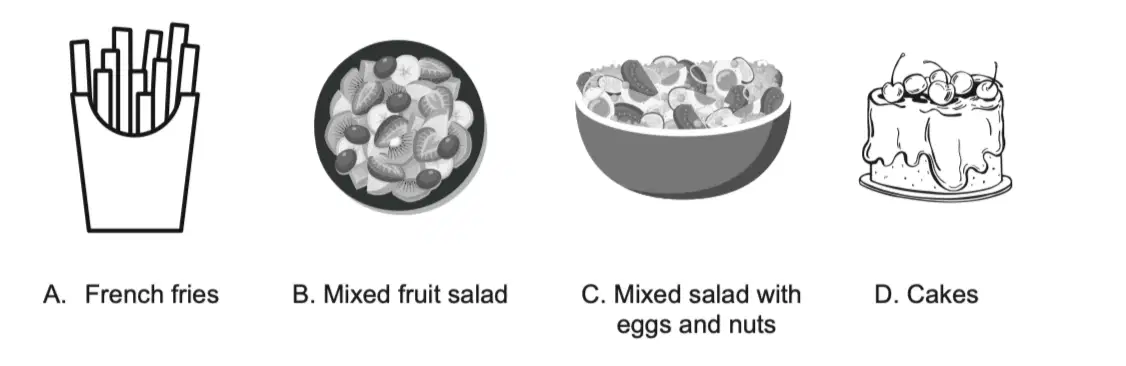
Which plate represents a balanced diet?
A
B
C
D
Which is a major storage site for glycogen?
Muscles
Gallbladder
Which processes metabolize glucose and fat?
I. Krebs cycle
II. Glycolysis
III. Oxidative phosphorylation
I and II only
I and III only
II and III only
I, II and III
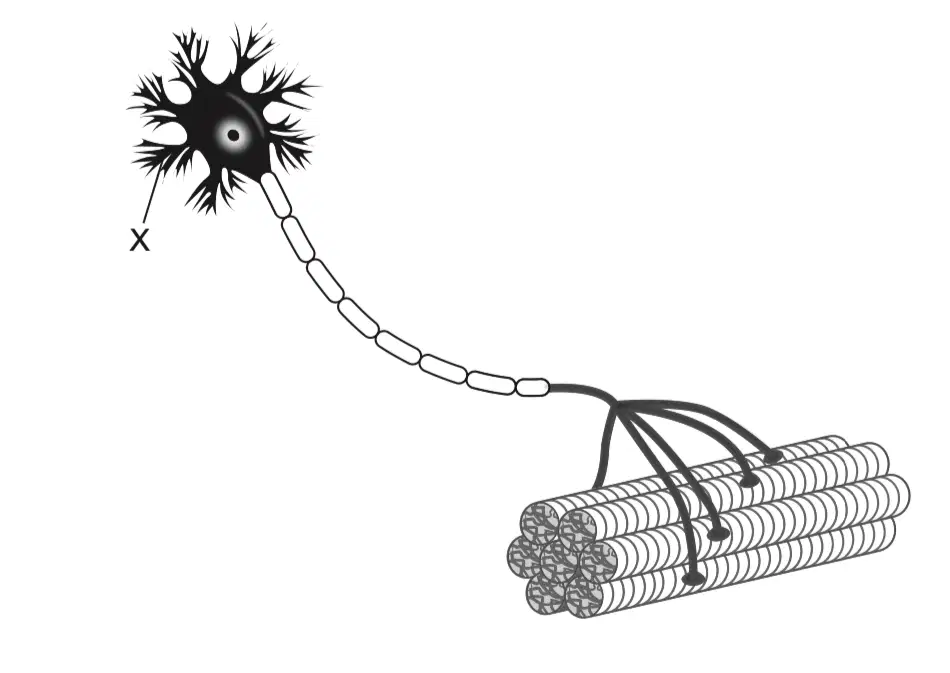
The diagram shows a motor unit. What is the structure labelled X?
Dendrites
Axon
Motor end plate
Synapse

