
 Worksheets
Unit 9 Electricity (II)
Total questions: 100
Worksheet time: 1hrs 15mins

Which part of the simple electrical circuit provides electricity?
battery
wire
light bulb
switch

The ________________ is the path for electrons to flow.
battery
wire
switch
light bulb

The part of the simple electrical circuit that opens or closes the circuit is the (a) . Type your answer.
An insulator allows current to pass through it easily.
true
false
Give ONE example of an insulator. Type your answer.
(a)
A flow of electric charges is called a/an _________________
electric wire
battery
electric current
switch
What THREE things are needed to make a path for negative charges to flow?
battery
bulb
wire
switch
Choose the correct answer. When a switch is on, the path is complete/incomplete, so the light bulb comes on. Type your answer
(a)
Choose the correct answer. When the switch is off the path is broken, so the circuit is now open/closed. Type your answer.
(a)
Which TWO materials can be used to create light.
bulb
battery
wire
nail
What is the unit for resistance?
volts
amps
coulombs
ohms
If the battery produced 12.6 Volts and there was a 6 Ohm resistor, what would be the current?
2.1 Amps
2.4 Amps
1.71 Amps
15 Amps
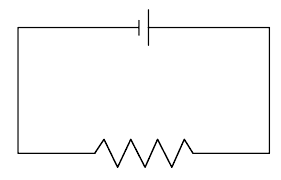
What unit is used to measure voltage?
Ohms
Omega
Volts
Amps
What unit is used to measure current?
Ohms
Omega
Volts
Amps
What unit is used to measure resistance?
Ohms
Omega
Volts
Amps
Which is the right form of Ohm's Law?
V=I/R
V=R/I
I=V/R
I=R/V
What is not needed in order to create a working circuit?
battery (power source)
lightbulb
current
closed circuit
What is the voltage of a circuit with 4 ohms of resistance and 3 amps of current?
12 V
21 V
4/3 V
3/4 V
What is the current in a circuit with 6 ohms of resistance and a battery containing 24 Volts?
1/4 A
144 A
4 A
0.4 A
What is the resistance of a lightbulb that experiences 9 Volts and 3 amps of current?
1/3 ohms
3 ohms
27 ohms
9 ohms
If a circuit had 4 D-Cell batteries (each 1.5 V) and a lightbulb with resistance of 2 ohms, what is the current that flows through the circuit?
2 A
3 A
6 A
8 A
What is voltage?
the amount of push the electrical source supplies to the circuit
how much a given device resists the flow of electric current
flow of electric charge
none of the above
What is current?
the amount of push the electrical source supplies to the circuit
how much a given device resists the flow of electric current
flow of electric charge
none of the above
What is resistance?
the amount of push the electrical source supplies to the circuit
how much a given device resists the flow of electric current
flow of electric charge
none of the above
According to Ohm's Law, current equals the voltage divided by the _________.
Resistance
Inductance
Capacitance
Power
Conductance
If the current in an electrical circuit is constant, what will happen to the voltage if the resistance is increased?
The voltage will decrease
The voltage will increase
The voltage will stay the same

What is the Voltage, V in the circuit shown?
6.5 V
26 V
0.15 V
If there are 40 Volts and 5 Amps running through an electrical circuit, what is the resistance of the circuit?
1 Ohm
2 Ohms
4 Ohms
6 Ohms
8 Ohms

The circuit with higher resistance will allow less charge to flow, meaning the circuit with higher resistance has less current flowing through it.
True
False
If you increase the size of the resistor and keep the voltage the same, what will happen to the current?
The current will decrease
The current will increase
The current will stay the same

When the second bulb is added, they get
brighter
dimmer
broken
cold
What is the measuring device shown?
bulb
cell
ammeter
voltmeter
What can you say about the current in the series circuit?
it splits across the components
it changes constantly
it is different in different places
it is the same everywhere
Which component provides the energy for the charges?
cell
bulb
switch
ammeter
If the ammeter says the current is 5A, what is the current flowing through one bulb?
2.5A
10A
5A
0
If one bulb was broken, what would happen?
current would no longer flow, so everything would be off
the ammeter would measure a current from the other bulb
the switch would keep the current flowing
the cell would burn out and catch fire
What is the name of the device which measures current?
(a)
Current is measured in
Volts
Watts
Seconds
Amps
If the switch was opened, what would happen?
the ammeter would measure a current flowing
current would no longer flow, so everything would be off
the bulbs would stay on because they're connected to the cell
the bulbs would burn out and catch fire
Name the charged particle, which is part of an atom, that flows in a circuit
proton
electron
neutron
elepton
What causes a decrease in current?
Adding another bulb
increasing resistance
decreasing voltage from the supply
decreasing the resistance
If the current flowing through the cell is 2A, what is the ammeter reading?
5A
1A
6A
2A


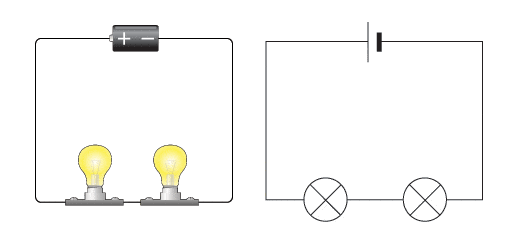
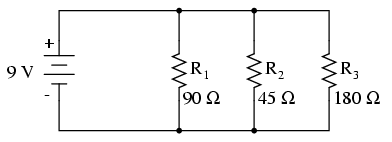


Which item(s) in the circuit will work?
light bulb
buzzer
battery
none of the items will work

Students constructed a circuit using different-colored lightbulbs. What will happen if Switch 3 is closed and the other switches are left open?
Only the white bulb will operate
None of the bulbs will operate
Only the white and yellow bulbs will operate
Only the red and blue bulbs will operate
When the second bulb is added, they get
brighter
dimmer
broken
cold
What is the measuring device shown?
bulb
cell
ammeter
voltmeter
What can you say about the current in the series circuit?
it splits across the components
it changes constantly
it is different in different places
it is the same everywhere
If the ammeter says the current is 5A, what is the current flowing through one bulb?
2.5A
10A
5A
0
If the current flowing through the cell is 2A, what is the ammeter reading?
5A
1A
6A
2A

If bulb #1 in this series circuit broke, bulb #2 would
stay on
go off
What is Current?
Rubber, styrofoam, cotton
The flow of electrons in a circuit
A material that stops heat and electric current from flowing
Paperclip, penny, pencil lead


When more light bulbs are added they all remain bright.

If another bulb is added in a parallel circuit, each bulb would
stay the same
get dimmer

Does this circuit have one or two paths?
one path
two paths
Is this circuit a series or parallel circuit?
series
parallel
In parallel circuit, there are _________ pathways for charge to flow.
One
Two or more
None
Zero
In a parallel circuit, if we remove one of the light bulb, what will happen to the other light bulb?
The other light bulb will stay on.
The other light bulb will be off
Both light bulb will be on
Both light bulb will be off
If we add more light bulbs into a parallel circuit, how will the brightness of the bulbs change?
It will get dimmer
It will get brighter
The brightness will stay the same
None of the light bulb will be on

Which one is the circuit diagram of this picture?


In a parallel circuit the current flowing into or out of the parallel branches is equal to the sum of the individual current in each of the parallel branches.
false
true
According to Ohm's Law, current equals the voltage divided by the _________.
Resistance
Inductance
Capacitance
Power
Conductance
What is the Voltage, V in the circuit shown?
6.5 V
26 V
0.15 V
If there are 40 Volts and 5 Amps running through an electrical circuit, what is the resistance of the circuit?
1 Ohm
2 Ohms
4 Ohms
6 Ohms
8 Ohms

States that the current flowing through a conductor is directly proportional to the voltage and inversely proportional to the resistance.
You can use this law to calculate the current in a wire when the resistance and the voltage are known.
Newton's 1st Law of Motion
Bernoulli's Principle
Ohm's Law

