
Font size
 Worksheets
SC Ready Review
Total questions: 48
Worksheet time: 39mins

The function of the nervous system is to? What is the main organ it includes?
Break down food. stomach
Help the body move. muscles
Send and receive messages. brain
Pump blood around the body. heart

How do the respiratory an circulatory systems work together?
The respiratory system removes waste and the circulatory system moves it around.
The respiratory system breaks down food, and the circulatory system moves it around.
The circulatory system brings in oxygen, and the repiratory system moves it around.
The respiratory system brings in oxygen, and the circulatory system moves it around.
Which two body systems work together to allow you to move? (Choose two)
Digestive System
Excretory System
Muscular System
Skeletal System
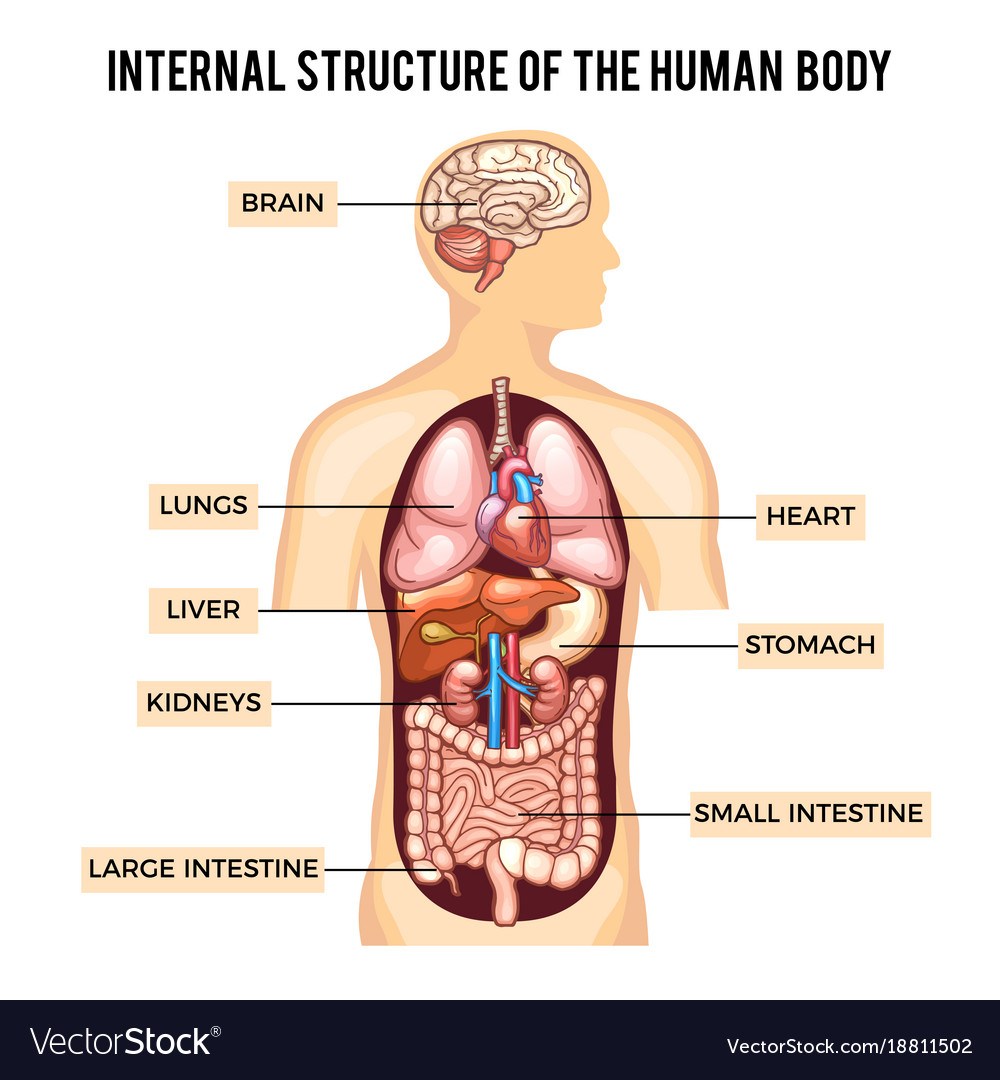
What is an organ?
A group of tissues that work together to perform closely related functions.
the network of nerve cells and fibers that transmits nerve impulses between parts of the body.
all of the bones and muscles in your body and responsible for body structure and movements.
responsible for providing your body with nutrients from food.
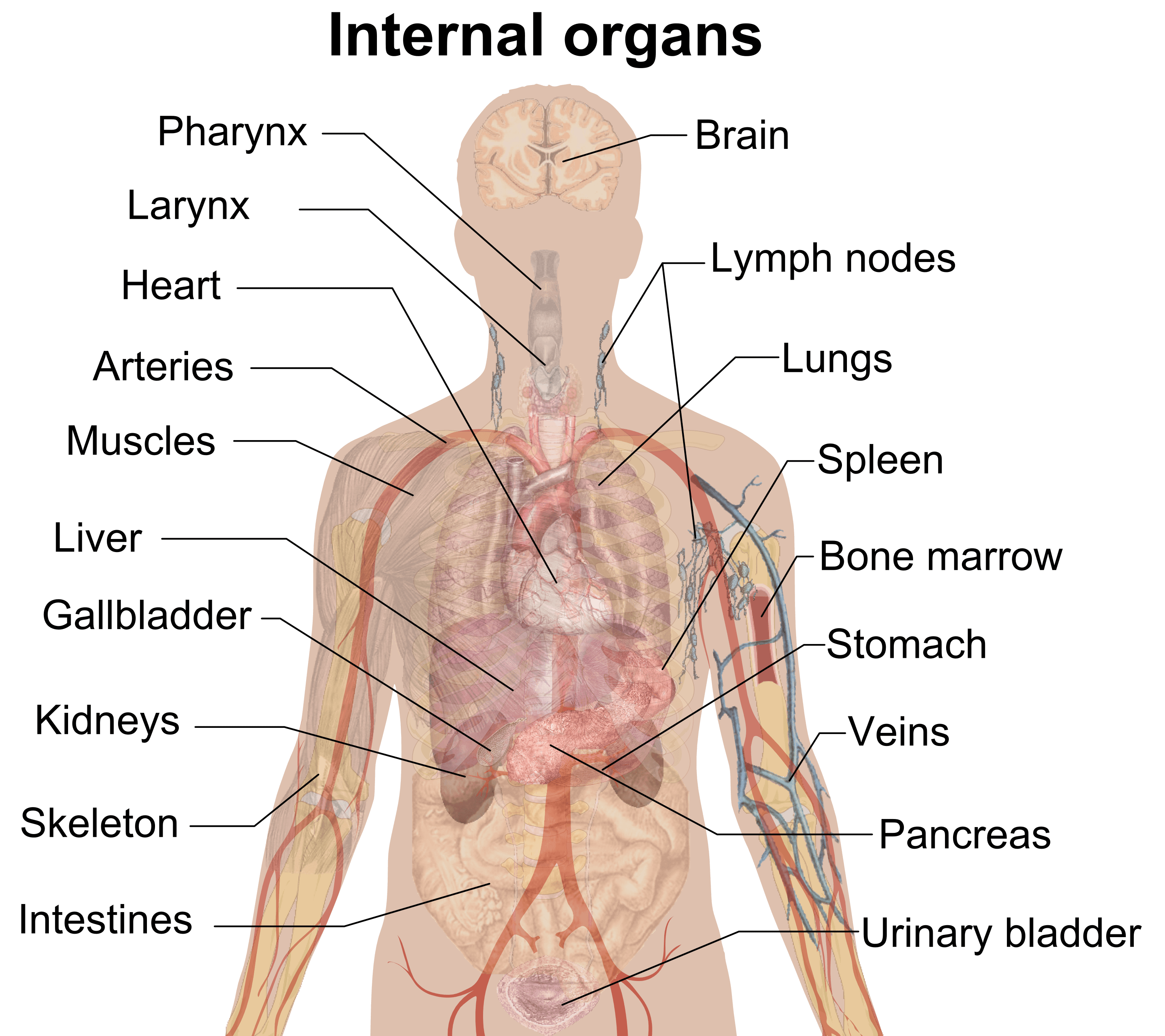
What is an organ system?
the network of nerve cells and fibers that transmits nerve impulses between parts of the body.
A group of similar cells that perform the same function.
A group of organs that work together in performing vital bodily functions.
all of the bones and muscles in your body and responsible for body structure and movements.
Thermal energy is transferred from————-
A cooler object to a hotter one
A hotter object to a cooler one
Everything has thermal energy
False
True
A hot air balloon rises is an example of
Conduction
Convection
Radiation
Plasma


What is matter?
Thermal energy from plasma that is created by stars
The change from one state of matter to another
Anything that has mass and takes up space by having volume
A change in the motion of particles
When the state of matter is changed from a gas to a liquid the process is called________________________________.
Evaporation
Condensation
Solid
Liquid
What happens to the motion of particles when freezing occurs?
The motion of the particles decreases(move slower).
The motion of the particles stops.
The motion of the particles freezes.
The motion of the particles increases(move faster).
What happens to the motion of the particles when going from a solid to a liquid?
The motion of the particles decreases(moves slower).
The motion of the particles increases (moves faster).
The motion stops.
The motion decreases and increases.
After a heavy rainstorm puddles form on the ground. After a couple of hours on a hot day, the puddles disappear. What happened to the puddles?
The puddles froze into water vapor.
The puddles condensed into ice.
The puddles vaporized into water vapor.
The puddles stayed the same and did not change in size.

Which letter represents amplitude? (a)
6. Which of the following can act as media for a wave? (a)
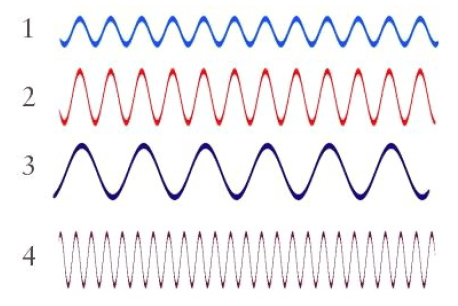
When a wave bounces off of something and moves in a different direction (a)
Light bending as it passes through a raindrop is an example of (a)
Light bending as it passes through a raindrop is an example of (a)
sound can travel through all of the following EXCEPT _____________.
solid
Liquid
Gas
Vacuum

This is an example of__________________.
Reflection
Refraction
Absorption


Loudness of waves is measured in
Hertz
Decibels
Watts
Sound waves CANNOT travel through which of these:
Paper
Milk
Outer space
What is an air mass?
A large body of air with uniform temperature and humidity
A small pocket of air that changes temperature rapidly
A cloud formation found in the stratosphere
A high-pressure system that brings sunny weather
What is the main energy source for a hurricane?
Cold air from the poles
Warm ocean water
High atmospheric pressure
Lightning storms
What is the scale called that is used to measure the intensity of tornadoes?
Richter Scale
Saffir-Simpson Scale
Fujita Scale
Beaufort Scale
Which type of front occurs when a warm air mass and a cold air mass meet and no movement occurs?
Warm front
Cold front
Stationary front
Occluded front
Tornadoes are most likely to occur in which of the following conditions?
During a high-pressure system
When there is a significant temperature difference between two air masses
In the center of a hurricane
During a warm front
A typhoon is another name for a....
hurricane
tsunami
earthquake
flash flood
What event happens when there is a sudden, violent shaking of the earth?
earthquake
deposition
construction
flowing rivers
Very few earthquakes happen along plate boundaries.
True
False
When scientists map the location of earthquakes, where do they find that most earthquakes happen?
middle of plates
in the core of the earth
near the sun
plate boundaries
What do we call scientists who study earthquakes?
quakers
seismologists
shakeologists
waveologists
Which scale measures the magnitude, or size, of an earthquake?
Mercalli
fish
Richter
weight

The place where the earthquake is felt on the Earth's surface is called the...
Epicenter
Hypocenter (focus)
Surface
Crust
What is a dormant volcano?
molten rock
the center of a volcano
will never erupt again
a volcano that is sleeping, but could erupt agian
What is magma?
pieces of the Earth's crust
molten rock inside of a volcano
small rock
plates that meet
What is lava?
Molten rocks inside a volcano
Molten rock outside a volcano
small rocks
magma
what are plates?
the center of the Earth
molten rock
rocks
pieces of the Earth's crust
What is the definition of an extinct volcano?
the volcano is active
the volcano is sleeping
will never erupt again
could erupt again

