
 Worksheets
Astronomy Review: Earth in Space + Moon
Total questions: 64
Worksheet time: 42mins




What is the basic difference between ultraviolet, visible, and infrared radiation?
Wave velocity
wavelength
half-life
temperature

Which color of the visible spectrum has the shortest wavelength?
red
blue
yellow
violet
Which of these characteristics identify an Earth surface that is likely to be the best absorber of insolation?
dark colored and rough
light colored and rough
light colored and smooth
dark colored and smooth
Equal masses of granite, iron, copper, and lead are placed in sunlight. Based on specific heat, which
material will warm up the fastest?
granite
iron
copper
lead
Two major greenhouse gases that absorb outgoing long-wave radiation within the atmosphere are
methane and oxygen
methane and carbon dioxide
nitrogen and oxygen
nitrogen and carbon dioxide

Which diagram best represents how greenhouse gases in our atmosphere trap heat energy?


Which method of energy transfer is primarily responsible for energy being lost from Earth into space?
Conduction
Convection
Radiation
Solidification


Select the word that is not part of the word Insolation.
Convection
Radiation
Solar
Incoming
Which location on Earth receives a 90 degree Angle of Insolation on the Equinox?
Tropic of Cancer
Equator
Tropic of Capricorn
South Pole

As the angle of light decreased (when you started to angle the flashlight closer to the paper) what happened to the size of the circle of light?
The size of circle of light increased.
The size of the circle of light decreased
There was no change in the circle of light.

In which position will the Sun give of the most solar energy?
A
B
C

Imagine you drew a dot on the paper. At which angle would the dot receive the LEAST intense amount of light?
90 degrees (shown as A in the image above)
60 degrees (shown as B in the image above)
30 degrees (shown as C in the image above)

At which angle would the dot be warmed the LEAST by the sunlight?
90 degrees (shown as A in the image)
60 degrees (shown as B in the image)
30 degrees (shown as C in the image)

At which angle would the imaginary dot on the paper be warmed the MOST by the flashlight?
90 degrees, as shown by A in the image.
60 degrees, as shown by B in the image.
30 degrees, as shown b C in the image.

On which latitude is the vertical ray striking on June 21st?
Tropic of Cancer
Equator
Tropic of Capricorn
On which latitude is the vertical ray striking on December 21st?
Tropic of Cancer
Equator
Tropic of Capricorn

Study the diagram. Where is the Sun's highest angle sunlight?
North Pole
South Pole
Equator
Study the diagram. Where is the Sun's lowest angle sunlight?
North Pole
South Pole
Equator

Which path represents the Sun's path across the sky in Summer?
A
B
Which path represents the Sun's path across the sky in Winter?
A
B
How many degrees per day does Earth revolve in its orbit?
23.5 degrees per day
15 degrees per day
1 degree per day
360 degrees per day
About how many degrees per hour does the earth rotate?
15 degrees/hour
23.5 degrees/hour
1 degree/hour
360 degrees/hour
How many degrees is earth tilted on its axis?
15 degrees
1 degree
360 degrees
23.5 degrees
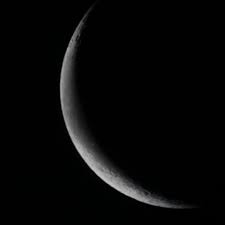
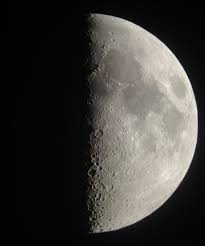
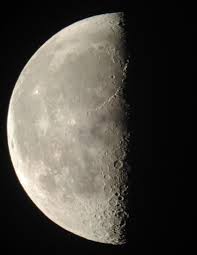
How many days does it take for the moon to complete one cycle of phases (from new moon back to new moon?)
27.3 days
29.5 days
360 days
23.5 days
The diagram of our solar system represents a
geocentric model, Sun near center
geocentric model, Earth near center
heliocentric model, Sun near center
heliocentric model, Earth near center
The estimated age of the Sun and solar system is
13.8 billion years old
4.6 billion years old
30 billion old
1 billion years old
How many days of the year is the Sun directly overhead in NYS at noon?
0 days
1 day
365 days
15 days
If the altitude of Polaris is 35 degrees above the Northern horizon, what is your latitude?
55 degrees North
35 degrees North
55 degrees South
46 degrees North

When a solar eclipse is viewed from Earth, the moon must be in which phase?
new moon
full moon
first quarter moon
third quarter moon
Why do we always see the same side of the moon as observed from earth?
The moon rotates and revolves at the same rate.
The moon does not rotate.
The moon revolves while the earth is rotating.
The moon rotates at the same rate as earth revolves.
During the Spring and Fall equinoxes, every point on Earth experiences
12 hours of daylight
15 hours of daylight
The sun rising north of east
The sun setting north of west
Insolation, incoming solar radiation, is
radiated from the Sun and absorbed by but not reflected by the Earth
absorbed by the Sun and radiated by the Earth
is radiated by the Sun and absorbed and reflected by the Earth
is radiated by the Sun and ONLY reflected by the Earth

The diagrams, labeled A, B, and C, represent equal-sized portions of the Sun’s rays striking Earth’s surface at 23.5° N latitude at noon at three different times of the year. The angle at which the Sun’s rays hit Earth’s surface and the relative areas of Earth’s surface receiving the rays at the three different angles of insolation are shown. As viewed in sequence from A to B to C, these diagrams represent which months and which change in the intensity of insolation?
The length of time that daylight is received at a location
during one day is called the location's
intensity of insolation
angle of insolation
eccentricity of insolation
duration of insolation

