
Font size
 Worksheets
Evolution and Ecology Review
Total questions: 65
Worksheet time: 1hrs 17mins

Similarities in bone arrangements, like those in the picture, support the hypothesis that...
these organisms are not well adapted
these organisms share a common ancestor
these organisms all share the same DNA sequences
these organisms are members of the same species
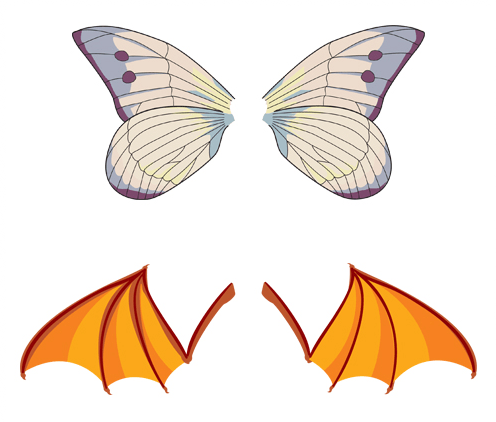
What is this an example of?
Homologous structure
Analogous structure
Vestigial organs
Functional adaption
For an organism's traits to be naturally selected for, which of these is it most important for it to be able to do?
The organism needs to be able to acquire more food
The organism needs to be able to fight off predators
The organism needs to be able to reproduce
The organism needs to be able to do photosynthesis
If an organism has a trait which shows it has common ancestry with other organisms, what kind of trait is it?
Homologous trait
Analogous trait
Biological trait
Common trait
Which of these is an example of the bottleneck effect?
Most of a group of tapirs is wiped out by a disease, leaving only a handful alive
A small group of pigs are left on an island by humans, establishing a new population
A population of field mice is entirely destroyed by predators
Which of these is an example of the founder effect?
A group of starlings fly to a new island and are killed by local predators
Only a few walruses were able to reproduce because their breeding grounds were destroyed
A group of bison is isolated on an island after the ice they crossed on receded
Which of the following is NOT true of analogous structures?
Similar embryonic development
Structures that perform the same function
Different structural characteristics
Different embryonic development
Darwin and Lamarck agreed that changes in species are linked to
Genetics
Environmental conditions
use or disuse of physical features
acquired characteristics
Natural selection causes the frequency of favorable alleles to
decrease in a population
remain constant in a population
Increase in a population
vary widely in a population
Gradualism
The hypothesis that evolution of different species occurs gradually over time.
The inability of formerly interbreeding groups to mate.
Structures that are similar in structure, function and characteristics
Members of the same species that differ genetically because they have adapted to different living conditions.
Speciation
structures that no longer function/serve a purpose
The accumulation of differences between species or populations
The hypothesis that evolution of a species occurs in periods of rapid
change separated by periods of little change.
The process by which new species form
Punctuated equilibrium
The hypothesis that evolution of a species occurs in periods of rapid
change separated by periods of little change
Members of the same species that differ genetically because they have adapted to different living conditions.
The inability of formerly interbreeding groups to mate.
The hypothesis that evolution of different species occurs as a slow
constant rate.
What do we call a change in a species over time?
Adaptation
Evolution
Extinction
Environmental influences
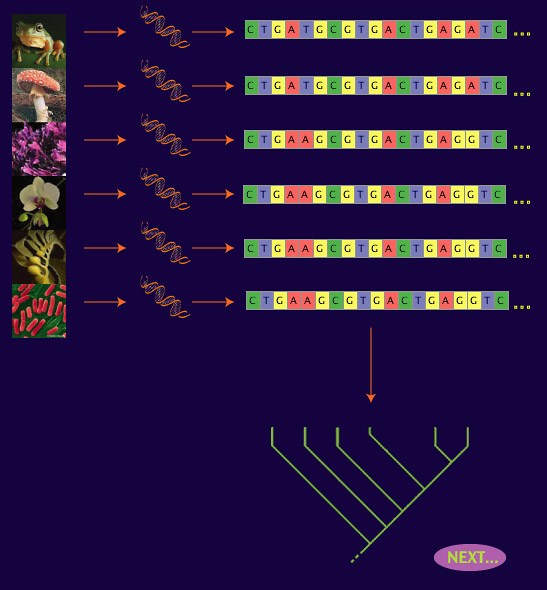


This diagram is called a:
karyotype
pedigree chart
cladogram
heterozygous tree
Pattern of macroevolution when two or more species that live in close contact may affect how each species evolves:
adaptive radiation
gradualism
coevolution
convergent evolution
Pattern of macroevolution when species living in similar environments evolve similar adaptations:
adaptive radiation
gradualism
coevolution
convergent evolution
Movement of individuals into, out of, or between populations that can change the numbers and types of alleles
mutation
migration
punctuated equilibrium
genetic drift
Process when breeders select individuals that have desirable traits that can be inherited by offspring
natural selection
artificial selection
adaptation
embryonic development
Genes that are beneficial to the species will....
evolve a new species
will not be passed down to its' offspring
become more common over time
cause the extinction of a species
Which of the following is not a principle of natural selection?
Competition for resources
Older organisms are more wise
Variation via mutations
Adaptations
A number of different species arise from one common ancestor
- New environments caused differences to evolve in populations
Convergent Evolution
Divergent Evolution
Coevolution
Gradualism
Where do adaptations come from?
The individual organism decides to adapt
Mutations that give an organism an advantage in its environment
Genetic recombination during meiosis
Both mutations and genetic recombination are sources of adaptation
Mutations are important because they bring about
death of the organism in which they develop
genetic variation needed for a population to evolve
benefits for the individual, not for the population
changes in genotype, but not phenotype
What is the definition of fitness?
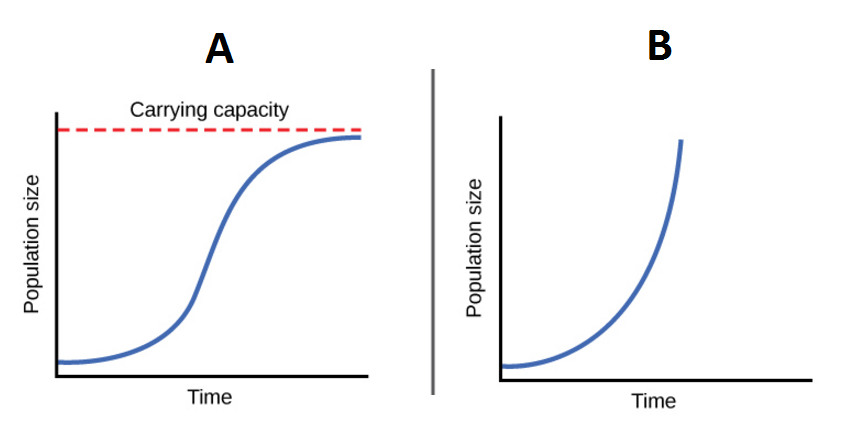
What type of growth model is shown in image B?
Exponential
Logistic
What type of growth model is shown in image A?
Exponential
Logistic

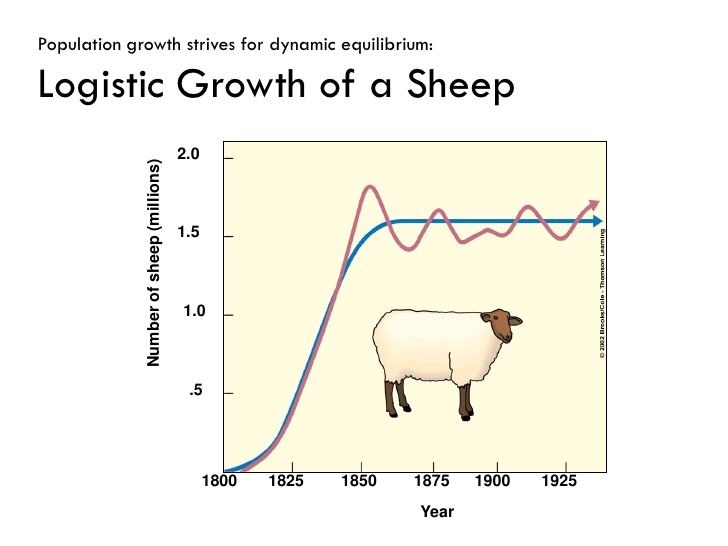
This graph shows ....
When one population increases, the other decreases.
When one population decreases, the other increases.
When one population increases, the other increases instantly.
When one population increases, it causes the other to increases shortly after.
Which of the following are density dependent factors?
competition for resources
predation
disease
natural disasters
Which of the following are examples of a density independent factors?
forest fire
seasonal cycles
storms
disease
The pattern of spacing a population within an area.
dispersion
emigration
migration
immigration
The maximum number of individuals moving into a population.
limiting factor
carrying capacity
fluctuation
dispersion
What is a producer?
Organism that makes its own energy
Organism that breaks down dead organisms
Organism that eats other organisms for food & energy
The ___% rule states that only ____% of energy is transferred to the next trophic level.
10%
25%
50%
100%
What are "trophic levels"?
Levels in a food web/food chain
Levels of land in a mountain
Animal diets

What would happen to the rabbit population if the fox population moved out of the area represented by the food web?
The rabbit population would increase
The rabbit population would decrease
The rabbit population would neither increase nor decrease

Air is a mixture of colorless gases. Air is an example of which type of factor?
BIOTIC
ABIOTIC

Plants release water vapor into the air through their leaves, this is called
condenstion
evaporation
transpiration
precipitation
How nitrogen is "fixed" into usable form for plants
through respiration
through eating
through action of bacteria

Select all of the storages of the carbon cycle
Atmosphere
Living organsisms
Clouds
Ocean
Fossil fuels
What are the two main reservoirs for carbon dioxide?
Ocean, fossil fuels
Ocean, atmosphere
Atmosphere, fossil fuels
Calcium Carbonate, ocean

What is an invasive species?
An organism that is new to an environment that has positive effects on the environment.
An organism that is native to an environment that has negative effects on the environment.
An organism that is new to an environment that has negative effects on the environment.
An organism that is native to an environment that has positive effects on the environment.
Kudzu has overgrown in many parts of Tennessee. What type of relationship does Kudzu have with the native ground plants?
Competition
Predator-Prey
Commensalism
Mutualsim

What separates rodents and primates from crocodiles on this cladogram?
Bony Skeleton
Vertebrae
Eggs with shells and hair
Four Limbs

The lizard has all these derived characteristics EXCEPT
Jaws
Lungs
Bipedal

