wayground logo

Free Printable Worksheets

NEW

Font size

S
M
L
XL
Worksheets

DNA Replication & Protein Synthesis

Total questions: 69

Worksheet time: 1hrs 13mins

Name
Class
Date
1.
Which of the following best describes a DNA molecule?
a)
double helix
b)
contains ribose
c)
made of amino acids
d)
contains Uracil
2.
Which of the following units are repeatedly joined together to form a strand of DNA? (This is the MONOMER of DNA.) 
a)
amino acids
b)
nucleotides
c)
fatty acids
d)
polysaccharides
3.
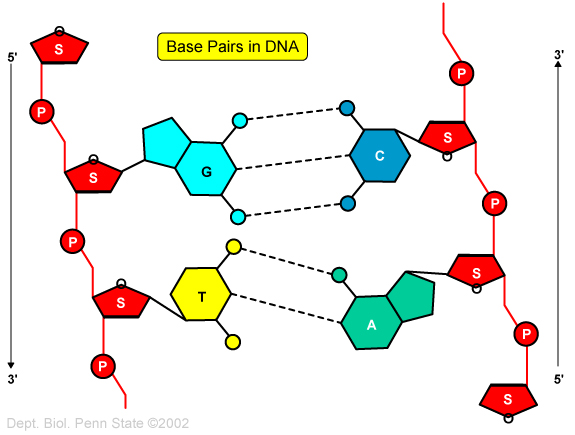
Adenine bonds with ______________.
a)
Guanine
b)
Thymine
c)
Cytosine
d)
Adenine
4.
Guanine bonds with ______________.
a)
Adenine
b)
Guanine
c)
Cytosine
d)
Thymine
5.
Why is DNA important?
a)
it is very small and very complicated
b)
it's in everything
c)
it serves as the blueprint for traits of all living things
d)
because we eat it every day for energy
6.
What are the 4 nitrogen bases?
a)
adenine, thymine, cytoplasm, and guanine
b)
adenine, thymine cytosine, and guanine
c)
adenine, thymine, cytosine, and gylcerol
d)
adenine, thymine, cytosine, and glucose
7.
Which 2 molecules forms the sides (backbone) of the DNA ladder?
a)
deoxyribose and adenine
b)
deoxyribose and a hydrogen bond
c)
sugar and the nucleus
d)
deoxyribose (sugar) and phosphate
8.
Which enzyme is responsible for adding nucleotides?
a)
Topoisomerase
b)
DNA Polymerase
c)
Ligase
d)
Primase
9.
Which sequence of DNA bases would pair with this partial strand
ATG TGA CAG
a)
ATG TGA CAG
b)
TAC ACT GTC
c)
GTA AGT GAC
d)
CAT TCA CTG
10.
A process in which DNA has the unique ability to make an exact copy of itself.
a)
Replication
b)
Translation
c)
Transcription
11.
Which organelle is DNA usually found in?
a)
cell membrane
b)
vacuole
c)
chloroplast
d)
nucleus
12.
Nitrogenous bases are joined by which type of bond?
a)
polar bonds
b)
ionic bonds
c)
covalent bonds
d)
hydrogen bonds
13.
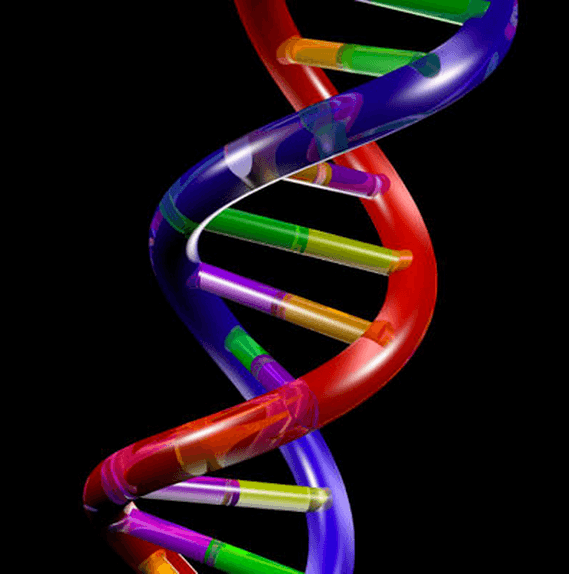
The drawing shows the structure of what molecule?
a)
A DNA molecule
b)
A lipid molecule
c)
A carbohydrate molecule
d)
A protein molecule
14.
In a molecule of double-stranded DNA, the amount of Adenine present is always equal to the amount of
a)
cytosine
b)
guanine
c)
thymine
d)
uracil
15.
What determines the code, or information, of a DNA molecule?
a)
the shape (structure) of the nitrogen bases
b)
the order (sequence) of the nitrogen bases
c)
the color of the nitrogen bases
d)
the frequency (number) of nitrogen bases
16.
The enzyme that unzips the DNA to prepare for replication
a)
helicase
b)
replicase
c)
polymerase
d)
synthase
17.
DNA replication results in two DNA molecules,
a)
each one with two original strands
b)
each one with two new strands
c)
each one with one new strand and one original strand
d)
one with two new strands and the other with two original strands
18.
order of replication
a)
3, 2, 1, 4
b)
2, 1, 4, 3
c)
2, 3, 1, 4
d)
3, 4, 1, 2
19.
What are the three components of a nucleotide?
a)
sugar, hydrogen, nitrogen base
b)
sugar, oxygen, nitrogen base
c)
sugar, phosphate, nitrogen base
d)
sugar, phosphate, protein
20.
What sugar is in DNA?
a)
deoxyribose
b)
ribose
c)
oxyribose
d)
deoxyose
21.
Which enzyme proofreads the DNA after replication to catch any mistakes?
a)
primase
b)
proof-read-ase
c)
DNA polymerase
d)
helicase
22.

A gene gives the instructions for protein synthesis. Which type of molecule is responsible for "reading"the instructions and then creating the protein?

a)

rRNA

b)

mRNA

c)

tRNA

d)

ATP

23.
In RNA, Uracil pairs with ______. 
a)
cytosine
b)
adenine
c)
guanine
d)
thymine
24.
The process to go from DNA to mRNA is _______
a)
translation
b)
transcription
c)
replication
25.
The process to go from mRNA to a protein is called ____
a)
transcription
b)
rRNA
c)
replication
d)
translation
26.
DNA holds the code for
a)
lipids
b)
carbohydrates
c)
protein
d)
sugar
27.
Choose the nucleotide sequence of the RNA strand that would be complementary to the following strand: 
GTAGTCA
a)
UATUAGA
b)
ACGACTG
c)
CAUCAGU
d)
CATCAGT
28.
The main function of tRNA is to...
a)
carry a message that, when translated, forms proteins
b)
form a portion of ribosomes
c)
string together complementary RNA and DNA strands
d)
bring amino acids from the cytoplasm to the ribosomes
29.
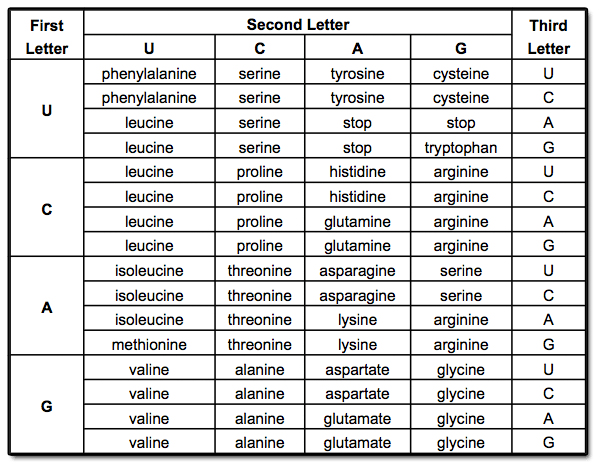
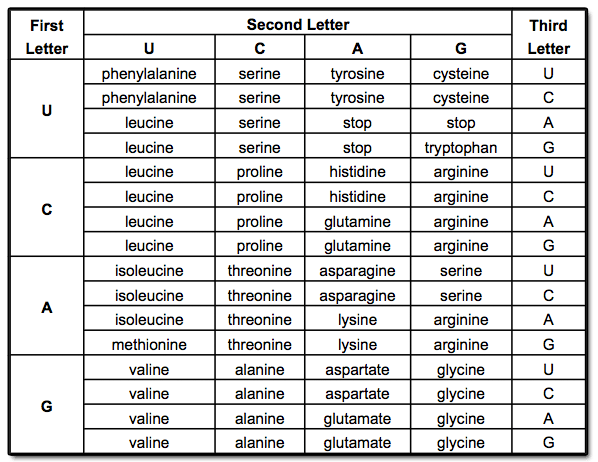
What amino acid is represented by the codon UUA?
a)
Phenylalanine
b)
Tyrosine
c)
Leucine
d)
Stop codon
30.
Which component of DNA determines the traits of an organism? 
a)
Nitrogen Bases
b)
Sugar-Phosphate Backbone
c)
Hydrogen bonds
31.

What is the location in the cell for translation?

a)

ribosome in the nucleus

b)

mitochondria in the cytoplasm

c)

ribosome in the cytoplasm

d)

chloroplast nucleus

32.
How many amino acids are coded for by this sequence of nucleotides:
ATG GGA ACT CCA
a)
4
b)
2
c)
6
d)
12
33.
What is the correct amino acid sequence for the mRNA code AUGCCAGUAUGA
a)
Met-Pro-Ala-Val
b)
Met-Pro-Val
c)
Tyr-Gly-His
d)
Tyr-Gly-Arg-His
34.
Which is the mRNA molecule that would be transcribed from this DNA template:
TGGCAAGTACGT
a)
ACCGTTCATGCA
b)
UGGCAAGUACGU
c)
UCCGUUCUUGCU
d)
ACCGUUCAUGCA
35.
What is the start codon?
a)
AUG
b)
STOP
c)
GUA
d)
UUU
36.
What are small segments of a chromosome that help code for a trait?
a)
Genes
b)
Nucleotides
c)
Proteins
d)
Carbohydrates
37.
The process represented in the diagram produces a molecule that is complementary to the template strand of DNA. What type of molecule is produced?
a)
New DNA
b)
Polypeptide
c)
Messenger RNA
d)
Carbohydrate
38.
what does mRNA do?
a)
carry info from genes to ribosomes
b)
carry amino acids to ribosomes
c)
help with RNA splicing
d)
make up ribosomes
39.
True or false:  RNA is double-stranded.
a)
true
b)
false
c)
it depends on the type
40.

What is the building block of proteins?

a)

Monosacchrides

b)

Polysaccharides

c)

amino acids

d)

Triglycerides

41.
Does the order of amino acids in a protein matter?
a)
YES!
b)
NO!
42.
How many different amino acids are there?
a)
15
b)
20
c)
40
d)
100
43.

Brings the amino acids to the ribosome, using the anticodon

a)

mRNA

b)

tRNA

c)

rRNA

d)

DNA

44.
What would be the tRNA anticodon for the mRNA codon CAG?
a)
GTC
b)
GUC
c)
CUG
d)
CAG
45.
What is the term for a three-nucleotide sequence that codes for an amino acid?
a)
base
b)
codon
c)
amine
d)
serine
46.
What type of bonds are forming during translation?
a)
Peptide bonds
b)
Hydrogen bonds
c)
Acid bonds
47.
Which phase of which process does this picture show?
a)
Transcription
b)
Translation
c)
Replication
48.

What is transcription

a)

RNA to DNA

b)

DNA to RNA

c)

RNA to RNA

d)

DNA to DNA

49.

What is the correct order to make a protein?

a)

Protein, DNA, RNA

b)

RNA, DNA, Protein

c)

DNA, RNA, Protein

d)

Protein, RNA, DNA

50.

RNA contains which sugar?

a)

deoxyribose

b)

Ribose

c)

glucose

d)

fructose

51.

What enzyme does transcription use?

a)

DNA polymerase

b)

ligase

c)

RNA polymerase

d)

helicase

52.

Which RNA carries the message?

a)

mRNA

b)

rRNA

c)

tRNA

53.
When does DNA replication happen?
a)
Before Mitosis begins
b)
During prophase
c)
During metaphase
d)
During anaphase
54.

The DNA Helicase has created a ......

a)

Replication fork

b)

Replication exchange

c)

Replication carry code

d)

Replication spoon

55.
A triplet of mRNA is called a
a)
codon
b)
anticodon
c)
amino acid
d)
peptide bond
56.
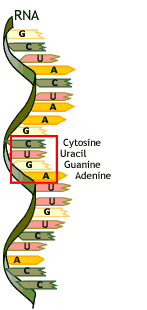
What is this a picture of?
a)
mRNA
b)
tRNA
c)
rRNA
d)
pRNA
57.
What is the relationship between a protein, the cell, and DNA?
a)
DNA is produced by protein which is produced in the cell
b)
Protein is composed of DNA which is produced in the cell
c)
DNA makes RNA which produces protein in the cell
d)
A cell is composed of DNA and protein
58.
Which structure reads the mRNA codons?
a)
Nucleus
b)
Ribosome
c)
Golgi Body
d)
Enzyme
59.

What is the correct sequence of protein synthesis?

A. tRNA brings amino acids to the ribosome

B. DNA molecules serve as the templates for mRNA.

C. mRNA molecules move to ribosomes.

D. Polypeptides are formed on ribosomes.

a)

A-B-C-D

b)

B-C-A-D

c)

C-B-A-D

d)

D-B-A-C

60.
The mRNA leaves the ________ to find the ribosome to make proteins.
a)
cell
b)
nucleotide
c)
nucleus
61.
How many codons are needed to specify for five amino acids?
a)
3
b)
5
c)
15
d)
30
62.

Set of triplicate nitrogen bases found on tRNA that are complementary to one codon

a)

peptide bond

b)

polypeptide

c)

anti-codon

d)

amino acid

63.
Discovered that A=T and C=G
a)
Griffith
b)
Chargraff
c)
Hershey & Chase
d)
Watson & Crick
64.

How was Rosalind Franklin's photo 51 use in the discovery of DNA?

a)

It was used to determine the physical structure of DNA

b)

It was used to identify the four bases that make up DNA

c)

It was used to determine the theory of independent assortment

d)

It was used to show DNA was the molecule of inheritance

65.

Which scientist(s) were the first to create a physical model of DNA?

a)

Chargraff

b)

Hershey and Chase

c)

Rosalind Franklin

d)

Watson and Crick

66.

ATTATTATTCGCGTA Complimentary strand?

a)

TAATAATAAGCGCAT

b)

TAATATTTAACGCGC

c)

CAACAACAATCTCCTA

d)

TAATAATAAGCCGTA

67.

If a genetic sequence has 20% Adenine, how much thymine?

a)

40%

b)

20%

c)

10%

d)

30$

68.

If a genetic sequence has 20% Adenine, how much Guanine?

a)

20%

b)

30%

c)

60%

d)

40%

69.

DNA: ATCGCGTTTATAATT, mRNA: UAGCGCAAAUAUUAA, tRNA: AUCGCGUUUAUAAUU. Using the necessary code, identify the correct amino acid sequence.

a)

Met-Pro-Ala-Val-Iso

b)

Tyr-Arg-Lys-Tyr-Stop

c)

Iso-ala-Phe-Iso-Iso

d)

Tyr-Gly-Arg-His-Stop