
Font size
 Worksheets
AI for Education
Total questions: 95
Worksheet time: 2hrs 42mins
What is machine learning?
Algorithm
systems the ability to automatically learn and improve
Deep Learning
A.I
Which one is correct?
Deep Learning<A.I.< Machine Learning
Machine Learning<Deep Learning<A.I
Deep Learning<Machine Learning<A.I.
A.I. > Deep Learning> Machine Learning
What is Artificial Intelligence?
Code people created
Robots that are smarter than us
Robots that act like human being
Fake intelligence
Which are the examples of A.I. in daily life?
Virtual Characters ( Hologram etc.)
Siri
Regular Vacuum
Amazon Alexa
The intelligence displayed by humans and other animals is termed?
Real Intelligence
Natural Intelligence
Cognition
Artificial Intelligence
Which of these is a tool used in Artificial Intelligence?
Design
Neural Networks
Input
Art
Which of these is a field that is closely related to AI?
Drawing
Wiring
Mathematics
HIstory
The study of computer algorithms that improve automatically through experience is termed?
Ability
Machine Learning
Formulation
Compilation
What is AI used for?
Healthcare
Education
Transportation
All of the Above
What can Ai do that humans can't?
Make no mistakes
Think Quickly
Do the same thing for a long time without getting bored/tired
Sleep
Everything
Which of the following is NOT a goal or feature of AI?
Decision making
Forward Planning
Showing Emotions
Natural Language
Which of the following is NOT a goal or feature of AI?
Learning
Perception
Creating Art
Moving and manipulating objects
Which of these does NOT use machine learning/AI?
Siri/Alexa
Face recognition on your phone
Driveless Car
Wireless Speaker
What is intelligence?
Understanding
Storing or keeping lots of information
Being heartless
Being Emotional
Which of these is NOT an AI technology
Animation
Facial Recognition
Robotics
Image recognition
Which of the following statements are FALSE? (choose as many as are appropriate)
An AI might be placed in a position where it has to make a life or death decision
AI's use the same criteria as humans, when making decisions
AI's can learn from the mistakes that they make
No machine has ever passed for a human being
Why haven't scientists been completely successful when developing AI?
They do not have the time or money
The human brain is very simple
The human brain is very complex
They are trying to replicate the human heart
Many people question whether an AI can make ethical decisions. What do we mean by ETHICS?
The laws of particular country
The rules of behavior imposed by a programmer or the AI creator
A set of moral principles
Human Emotions
What is the science of training machines to perform human tasks?
Virtual Reality
Robotics
Blockchain
Artificial Intelligence
Which of the following is a specific subset of AI that trains a machine how to learn?
Deep Learning
Neural Networks
Machine Learning
Natural Language Processing
What is the method behind how machines learn from data?
Data Analysis
Predictive Modeling
Algorithmic Processing
Machine Learning
What does AI stand for?
Automated Inference
Artificial Intelligence
Automated Interpretation
Advanced Integration
What is the concept that a computer can mimic human abilities?
Virtual Reality
Machine Learning
Artificial Intelligence
Blockchain
Main difference between AI and ML?
AI trains machines for human tasks, while ML trains machines how to learn.
AI and ML are the same.
AI mimics human abilities, while ML solves problems based on data.
I uses algorithms, while ML uses speech interfaces.
Purpose of machine learning models?
Create human-like properties in machines.
Develop algorithms to solve problems.
Look for patterns in data and draw conclusions.
Program computers explicitly.
Example of AI in the medical field?
Developing self-driving cars.
Scanning and detecting tumors.
Collecting data from IoT devices.
Reading stock market numbers.
Why do AI and ML need large volumes of data?
To understand the environment.
To train algorithms and improve accuracy.
To emulate human abilities.
To solve problems based on data.
Main message of the video?
AI and ML are confusing concepts.
Machines can perform human tasks through AI.
Algorithms can solve problems based on data.
AI and ML can solve various problems.
What is Teachable Machine?
Teachable Machine is a web-based tool for training machine learning models without coding.
Teachable Machine is a physical device for teaching artificial intelligence.
Teachable Machine is a programming language for machine learning.
Teachable Machine is a software for creating online courses.
What is the process of training a Teachable Machine model?
Collecting and labeling a dataset, selecting a machine learning model, testing the model, and evaluating the model's performance.
Collecting and labeling a dataset, selecting a machine learning model, fine-tuning the model, and evaluating the model's performance.
Collecting and labeling a dataset, selecting a machine learning model, training the model, and evaluating the model's performance.
Collecting and labeling a dataset, selecting a machine learning model, evaluating the model's performance, and deploying the model.
What are some applications of Teachable Machine?
image classification, gesture recognition, sound classification
handwriting recognition, emotion detection, spam filtering
face recognition, sentiment analysis, anomaly detection
speech synthesis, object detection, text recognition
What are the three main steps involved in training a Teachable Machine model?
Collecting training data, training the model, and testing the model
Collecting test data, optimizing the model, and validating the model
Creating a dataset, fine-tuning the model, and visualizing the results
Gathering training data, evaluating the model, and deploying the model
What types of inputs can be used to train a Teachable Machine model?
numbers, colors, and shapes
text, videos, and gestures
images, sounds, and poses
smells, tastes, and temperatures
What is the purpose of Teachable Machine?
The purpose of Teachable Machine is to automate repetitive tasks.
The purpose of Teachable Machine is to enable users to train their own machine learning models without coding.
The purpose of Teachable Machine is to analyze data and generate insights.
The purpose of Teachable Machine is to create virtual reality experiences.
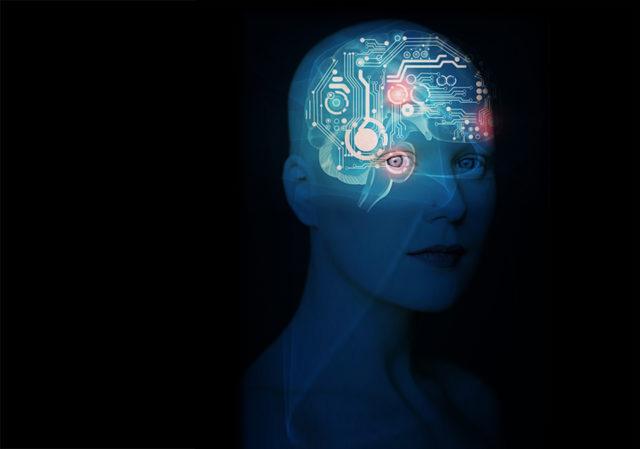
The term A.I is short for?
Anatomy Insector
Astrology Iselin
Anh Intelligence
Artificial Intelligence
Antificial Intelligence
The G in 5G stands for?
Gigabit
Gigahertz
Generation
Good to Go
(Multiple Choose) Choose AI Factors
Data
Sophia
Machine Learning
Natural Language Processing
Robotics
Autonomous Vehicles are one example of AI Future
True
False
Which one of the following is an application of AI?
Remote controlled Drone
Self-Driving Car
Self-Service Kiosk
Self -watering plant system
This language is easy to learn and is one of the most popular language for AI today:
C++
Python
Ruby
Java
Alexa is an example of AI.
True
Flase
Voice- based command systems use (a) to understand and interpret the commands.
Most chatbots use (a) to answer user queries.
Which was the first chatbot ever made?
Eliza
Alexa
Siri
Google Assistant
What does NLP stand for in AI?
Neutral Learning Projection
Neuro-Linguistic Programming
Natural Language Processing
Neural Logic Presentation
Strong AI attributes consciousness to computers
True
False
Captcha can be cracked by a computer
True
False
Which of these is NOT an AI technology
Facial recognition
Image recognition
Robotics
Animation
Which of these jobs COULD be taken by a robot using AI?
Teacher
Doctor
Nurse
Bank clerk

How does A.i work?
Combining large amounts of data with fast processing and intelligent algorithms, allowing the software to learn automatically from patterns or features in the data.
The computation, mostly on computers, of antiderivatives and definite integrals in term of formulas
It just works you know??
Another super duper long answer to fool you guys to prove that not all longest answers are the correct ones, how is my quiz going anyway, i hope it is good, hope it is not too long though, thank you for not clicking

What is this?
artificial intelligence
algorithm
neural network
What is Deep learning?
A variation of neural networks where many layers are used in the network to solve a problem
When a computer is especially intelligent.
Which of the following statements best describes the difference between robots and humans?
Robots move differently and made up of metal.
Robots do not have feelings and emotions as compared to humans.
Robots are too smart as compared to humans.
Robots are more effective than humans.
Field of study that gives computers the ability to learn without being explicitly programmed.
Deep Learning
Machine Learning
Data Science
A major benefit of an machine with AI is
it could do a job too dangerous for a human
it could love you like a brother
it could chop up your vegetables
Many people question whether an AI can make ethical decisions. What do we mean by ETHICS?
The laws of particular country
The rules of behaviour imposed by a programmer or the AI creator
A set of moral principles
Human emotions
3. Identify TWO problems with 2D facial recognition from the list below.
A It is not effective if a picture is dark.
B The person in the photograph must face the camera.
C Facial curves change over time.
D Nodal points cannot be measured
In which year do you think the term 'Artificial Intelligence' was coined?
1950
1960
1966
1956

Applications such as Apple’s iPhone facial recognition have become more mainstream,
while concerns over facial recognition and biometrics used for airport security applications have raised concerns over _ _ _ _ _
Privacy
Safety
Safety and Privacy
Security
One downside of using AI is that if you train it incorrectly, the AI can show preference for one group over another. For example, only recognizing the x-rays of men and not women. This is called (a) .
The name of AI designed to beat humans at the game "Go" is ...
GoAI
AIOverHumans
AlphaGo
GoItAlone
What is the controversy created by the increased use of facial recognition technology. What is the heart of this controversy?
Some cell phones rely on facial recognition which makes them harder to hack.
Americans must decide how much privacy we are willing to give up in order to feel secure.
Facial recognition technology can help schools be safer places to be for students.
Airports use facial recognition technology during the check in process of TSA.
Why are Americans worried about facial recognition technology? Select all that apply.
Facial Recognition technology has helped track criminals.
Facial recognition technology has some accuracy issues.
Facial recognition technology could be used to track people who are not doing anything illegal.
Facial recognition technology creates issues of privacy.
S (a) e is the process of carefully watching people who might be involved in criminal activity.
a way of recognizing a human face through technology; it uses biometrics to map facial features from a photograph or video (a)
NLP stands for
National Language processing
Natural Language processor
No Language Processor
Natural Language Processing
The autonomous cars developed by Google is called Waymo
False
True
AI has --------- domains
5
7
3
1
Siri uses NLP Domain
False
True
Rule based model is having _________ rules.
flexible
ground rules
intelligent
non applicable
______ has large number of layers.
ML
DL
None of these
Ai powered small organic compounds that circulate in our body are called
chat bot
multibot
nanobot
aibot
AI will allow ----------- learning for for each student.
transparent
personalised
non personalised
AI can benefit society if implemented ______
smoothly
anyway
responsibly
Autopilot mode will come under the ethics:
justice
explicability
autonomy
beneficence
Privacy breach comes under_______ ethics
justice
autonomy
non maleficence
beneficence
The system of moral principles are called
AI black box
AI bias
AI ethics
Autonomy of the machines should be
increased
no change
limited
none of these
____ is a process to produce meaningful sentences in natural language.
NLU
NLS
NGL
NLG
Name the retail showroom without cashiers or checkout stations.
Amazon prime
Amazon GO
Amazon Come
Amazon Bye
James is working on a project and needs to use a chatbot for assistance. He comes across ChatGPT. What is ChatGPT?
ChatGPT is a chatbot developed by Google.
ChatGPT is a language model developed by OpenAI.
ChatGPT is a programming language.
ChatGPT is a video game developed by OpenAI.
How can Liam, Grace, and Henry implement ChatGPT in their classroom project?
Require their classmates to memorize ChatGPT's responses for exams.
Print out ChatGPT responses and distribute them to their classmates as handouts.
Use ChatGPT as a replacement for their teacher in the classroom.
Integrate ChatGPT into a chatbot platform or use it as a virtual assistant for their classmates.
Samuel, Avery, and Mia are discussing the benefits of using ChatGPT in their study group. According to them, what are some benefits of using ChatGPT in their education?
ChatGPT can provide personalized learning experiences, assist with homework and assignments, offer instant feedback, and enhance creativity and critical thinking skills.
ChatGPT can only provide generic information and cannot cater to individual learning needs.
ChatGPT can replace teachers and eliminate the need for human interaction in education.
ChatGPT is not reliable and often provides incorrect answers in an educational context.
Zoe, Mia, and Luna are discussing about AI in their classroom. Luna mentioned about ChatGPT and its potential uses. Can you provide an example of successful implementation of ChatGPT in their classroom discussion?
No, ChatGPT has not been successfully implemented in the classroom.
Yes, there have been successful implementations of ChatGPT in the classroom.
There is no evidence of successful implementation of ChatGPT in the classroom.
ChatGPT is not suitable for classroom implementation.
Grace, Elijah, and Rohan are discussing the challenges they might face while using ChatGPT in their online learning sessions. What challenges might they encounter?
Some challenges that might arise when using ChatGPT in education include: lack of personalized feedback, potential for misinformation, difficulty in assessing learning outcomes, and concerns about data privacy and security.
ChatGPT may not be able to engage students effectively
ChatGPT may provide incorrect or misleading information
ChatGPT may not be able to understand complex educational concepts
How can teachers effectively utilize ChatGPT to enhance student learning in a scenario where David, Avery, and Ethan are working on a group project?
Teachers can utilize ChatGPT for personalized feedback, support, discussions, and collaborative activities to enhance student learning for David, Avery, and Ethan.
Teachers can use ChatGPT as a substitute for individualized attention and support for David, Avery, and Ethan.
Teachers can use ChatGPT to provide generic and impersonal responses to queries from David, Avery, and Ethan.
Teachers can use ChatGPT to replace traditional teaching methods and eliminate the need for classroom interaction between David, Avery, and Ethan.
Elijah, James, and Jackson are planning to use ChatGPT for their group project in the classroom. What precautions should they take?
Precautions for using ChatGPT in the classroom include: banning its use, restricting access to the internet, ignoring any inappropriate responses, allowing unlimited use without supervision
Precautions for using ChatGPT in the classroom include: educating students about its limitations, monitoring interactions, promoting responsible use, encouraging critical thinking, and updating guidelines.
How can ChatGPT assist Avery, Samuel, and Harper in their learning process during their group study sessions?
ChatGPT can assist Avery, Samuel, and Harper in their group study sessions by giving incorrect answers and misleading explanations.
ChatGPT can assist Avery, Samuel, and Harper in their group study sessions by providing irrelevant and distracting information.
ChatGPT can assist Avery, Samuel, and Harper in their group study sessions by providing personalized and interactive support.
ChatGPT can assist Avery, Samuel, and Harper in their group study sessions by being unresponsive and not providing any support.
Elijah, James, and Hannah are discussing the future of ChatGPT in education. They are brainstorming some potential developments. What ideas might they come up with?
personalized tutoring, automated grading, and virtual classroom assistants
Automated note-taking, personalized study plans, and AI-based essay feedback
Real-time language translation, interactive learning games, and virtual reality field trips
AI-powered textbooks, virtual study groups, and automated homework assignments
Maya, Evelyn, and William are using ChatGPT in their classroom for a group project. What are the ethical considerations their teacher should keep in mind?
Using ChatGPT as the sole source of information and instruction for Maya, Evelyn, and William's project
Ensuring Maya, Evelyn, and William's privacy and data protection, avoiding bias and discrimination, promoting critical thinking and responsible use of AI, and addressing potential misuse or overreliance on AI technology.
Ignoring Maya, Evelyn, and William's concerns about privacy and data protection
Encouraging Maya, Evelyn, and William to rely solely on AI technology for their project
Concerns about AI in the Classroom
English teachers have raised several concerns regarding the use of Artificial Intelligence (AI) in the classroom. These concerns revolve around the effectiveness of AI in language learning, the integration of AI into the curriculum, and the ethical implications of AI.
One major concern is the effectiveness of AI in language learning. While AI can provide personalized feedback and assistance to students, there is a worry that it may not fully understand the nuances of language. Teachers fear that relying too heavily on AI may hinder students' ability to develop critical thinking and communication skills.
The integration of AI into the curriculum is another concern. English teachers worry that incorporating AI into lesson plans may lead to a loss of human interaction and personalized instruction. They believe that face-to-face interactions with teachers and peers are crucial for language development and building social skills.
Ethical implications of AI also raise concerns among English teachers. They worry about issues such as data privacy, bias in AI algorithms, and the potential for AI to replace human teachers. Teachers emphasize the importance of maintaining ethical standards and ensuring that AI is used responsibly in the classroom.
In conclusion, English teachers have valid concerns about the use of AI in the classroom. While AI has the potential to enhance language learning, it is important to address concerns regarding its effectiveness, integration into the curriculum, and ethical implications. By carefully considering these concerns, educators can ensure that AI is used as a valuable tool while still prioritizing human interaction and ethical practices.
English teachers worry that incorporating AI into lesson plans may lead to a loss of human interaction and personalized instruction. They are concerned about the potential (a) of AI in the classroom.
What are some concerns English teachers have about the use of AI in the classroom?
Lack of personalization in learning
Increased reliance on technology
Decreased student engagement
Improved student outcomes
What are some concerns about the effectiveness of AI in language learning?
Teachers emphasize the importance of maintaining ethical standards and ensuring that AI is used responsibly in the (a)
What concerns do teachers have about relying too heavily on AI in the classroom?
What is a concern for English teachers regarding AI integration into the curriculum?
Lack of resources for implementing AI in the classroom
Resistance from students towards AI technology
Difficulty in adapting teaching methods to incorporate AI
Lack of support and training for teachers in using AI

