
 Worksheets
Heat and Particles - Revision Questions
Total questions: 40
Worksheet time: 29mins

In which state of matter are the particles least able to move?
A
B
C

Which of these three states represents a liquid?
A
B
C

Which of these three states would you expect to be the most affected by the volume of its container?
A
B
C
It is the amount of matter in an object.
volume
mass
weight
density
It refers to the space that matter occupies.
volume
mass
weight
density
Matter is
Anything that has volume
Anything that has mass
Anything that has mass and volume

What state of matter does the picture below represent?
solid
liquid
gas
plasma
What is a Solid?
Matter that has a fixed shape and size.
Matter that has a fixed size and no fixed shape
Matter that has no fixed shape or size
Matter that has no fixed shape and size
The state of matter that keeps its shape and volume when it is placed in a different container is called ______.
gas
liquid
solid
The state of matter that expands to fill its container is called ______.
gas
liquid
solid
What is matter made up of?
particles that are too large to be seen
tiny butter particles
particles that are too small to be seen
tiny water particles
Which state of matter has its own shape
Gas
Solid
LIquid

The diagram shows arrangement of particles in a
Solid
Liquid
Gas
Define a liquid.
Matter that has fixed shape but no fixed volume
Matter that has fixed shape and fixed volume
Matter that has fixed volume, but no fixed shape

The particles in the picture are tightly held together with very tiny movement. They have shape and fixed volume. Therefore, the picture represents _________.
solid
liquid
gas
plasma
In which state of matter will there be the LARGEST space between molecules?
Solid
Liquid
Gas
The measure of how much space something takes up is ______.
matter
mass
volume
density
What is a gas?
Matter that has fixed shape but no fixed volume
Matter that has no fixed shape and no fixed volume
Matter that has no fixed shape but fixed volume
compounds

What state is represented in the gif?
Solid
Liquid
Gas
When a substance is heated, particles will
Move further apart
Get larger
Move closer together
Be unaffected
The process when a solid turns into a liquid
Evaporation
Sublimation
Freezing
Melting
The process when a gas turns into a liquid
Condensation
Sublimation
Freezing
Evaporation
The process when a liquid turns into a gas
Evaporation
Melting
Condensation
Deposition
The process when a solid turns into a gas
Sublimation
Condensation
Evaporation
Melting
True/False: Evaporation and condensation are opposite processes.
FALSE
TRUE
As particles are exposed to warmer temperatures they __________
speed up
slow down
stay the same
vibrate at fixed positions

Number 2 represents a ________
solid
liquid
gas
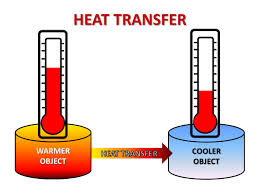
How does heat energy reach the Earth from the Sun
Convection
Radiation
Conduction
Insulation

A cat is hanging out several feet from a fire in a fireplace. This causes the kitty cat to get warm. The kitty cat is warm because of...
Convection
Conduction
Radiation
The fur sweater he's wearing!

Near the ceiling of a room, the air is warmer. The warmer air is rising because of
Convection
Conduction
Radiation
It was told to by this crazy fool!

As you hold a piece of ice, it begins to melt from the warmth of you hand on it. This is because of
Convection
Conduction
Radiation
the fact that you are the Human Torch from the Fantastic Four.

Hot coffee is stirred with a spoon; the spoon gets hot due to...

Taking a hot air balloon ride is an example of what?
Radiation
Conduction
Convection

