
NEW
Font size
 Worksheets
BSCS 1A - GEC 4 - FINAL EXAMINATION
Total questions: 50
Worksheet time: 17mins
A) A measure of the highest value in a data set.
B) A statistical measure that expresses the extent to which two variables are linearly related.
C) A method to determine the mean of two variables.
D) A type of graph used to plot data points.
Which of the following is an example of a positive linear relationship?
A) The number of hours worked and the amount of fatigue felt.
B) The total number of years of school completed and average annual salary.
C) The speed of a car and the time it takes to stop.
D) The temperature outside and the number of layers of clothing worn.
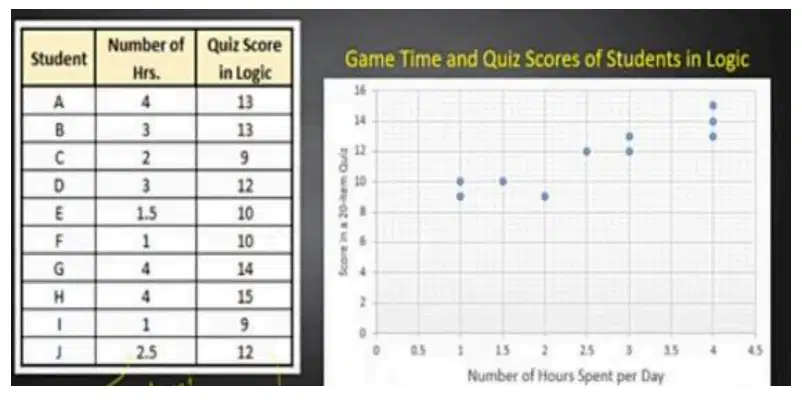
What does a Scatter Plot represent?
A) The probability distribution of a data set.
B) A graph of the ordered pairs (x,y) consisting of data from two data sets.
C) The difference between expected and observed values.
D) A pie chart showing the percentage breakdown of a variable.
A) A coefficient that determines the nonlinearity of a relationship.
B) A number that describes how close to a linear relationship there is between two variables.
C) A measure of the central tendency of a data set.
D) The slope of the line in a scatter plot.
What is the purpose of testing a hypothesis in statistics?
a. To prove a theory without doubt
b. To test an assumption regarding a population parameter
c. To calculate the mean of a sample
d. To summarize data from a population
What does a statistical hypothesis represent?
a. A known fact about a sample
b. A prediction for future experiments
c. A claim about one or more population parameters
d. The outcome of a statistical test
Which of the following best defines a population in statistics?
a. A group of samples taken from a larger dataset
b. The total number of observations in a given study
c. The total number of people, animals, or things under consideration
d. A subset of data used for analysis
a. A statement that there is a significant difference between groups
b. A statement of what is being investigated, assuming no effect or difference
c. A hypothesis that is always true
d. The opposite of the alternative hypothesis
What is an alternative hypothesis?
a. The hypothesis that is accepted by default
b. The hypothesis that is contrary to the null hypothesis
c. A statement that there is no difference or effect
d. A hypothesis that cannot be tested
In the context of the provided PDF, what does a t-value of 0.11555 indicate?
a. There is a significant difference between the groups
b. There is no significant difference between the groups
c. The null hypothesis is rejected
d. The alternative hypothesis is rejected
What is the usual level of significance chosen in hypothesis testing?
a. ( \alpha = 0.1 )
b. ( \alpha = 0.05 ) or ( \alpha = 0.01 )
c. ( \alpha = 0.5 )
d. ( \alpha = 1 )
When comparing the computed t-value to the critical value, what action is taken if the computed t is less than the critical value?
a. Reject the null hypothesis
b. Accept the null hypothesis
c. Increase the sample size
d. Perform a different test
What do you call the table of critical values used in hypothesis testing?
a. Z-table
b. Y-table
c. T-table
d. Independent table
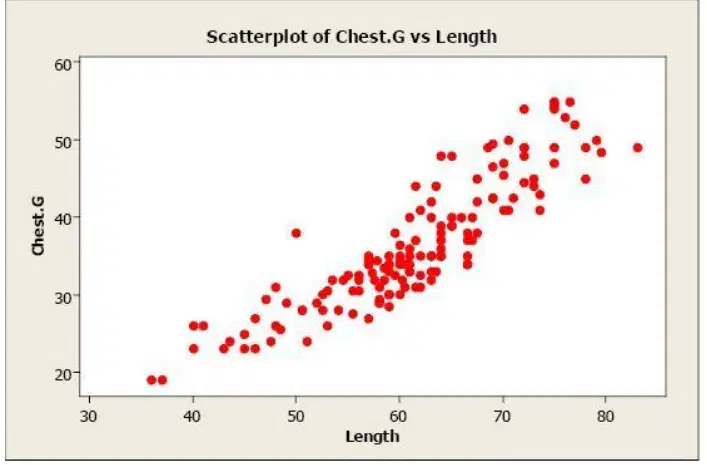
What does the first table in the document represent?
A) The relationship between two unrelated variables
B) The covariance of two variables
C) The values of x and y axes for a set of data
D) The calculation of the correlation coefficient
How do you calculate the value of ‘xy’ as mentioned in the Regression Report
A) By adding the values of x and y
B) By multiplying the values of x and y
C) By dividing the value of x by y
D) By finding the square root of x and y
What is the range of the correlation coefficient?
A) 0 to 1
B) -1 to 1
C) -1 to 1, including the extremes
D) 0 to -1
What does a positive correlation coefficient indicate?
A) The variables change in opposite directions
B) The variables change together in the same direction
C) There is no relationship between the variables
D) The relationship between the variables is nonlinear
What does the absolute value of the correlation coefficient tell you?
A) The slope of the line of best fit
B) The direction of the relationship
C) The magnitude of the correlation
D) The exact values of the variables
What does the correlation coefficient fail to show?
A) The strength of the linear relationship
B) The slope of the relationship
C) Nonlinear relationships
D) Both B and C
A) Isaac Newton
B) Albert Einstein
C) Leonhard Euler
D) Carl Friedrich Gauss
What is an Euler Circuit?
A) A path that starts and ends at different vertices
B) A closed path that uses every edge exactly once
C) A path that uses each vertex only once
D) A path that can use an edge twice
According to the Eulerian Graph Theorem, a connected graph is Eulerian if:
A) It has at least one vertex of odd degree
B) Every vertex has an even degree
C) It contains no cycles
D) It is disconnected
An Euler Path differs from an Euler Circuit because:
A) It cannot use all edges
B) It starts and ends at the same vertex
C) It does not start and end at the same vertex
D) It uses an edge more than once
The Konigsberg Bridges Problem showed that:
A) An Euler Circuit is possible with odd degree vertices
B) An Euler Circuit is not possible if all vertices have odd degrees
C) An Euler Path is not possible with even degree vertices
D) An Euler Path and Circuit are the same
What condition must be met for a graph to contain an Euler Path according to the Euler Path Theorem?
A) All vertices must have even degrees
B) There must be exactly two vertices of odd degrees
C) There must be no vertices of odd degrees
D) The graph must be disconnected
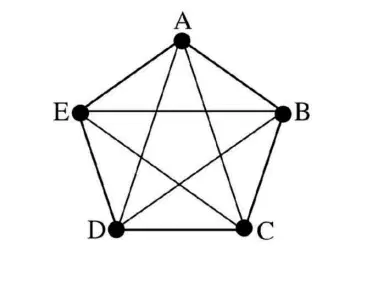
In Example, why is the graph considered Eulerian?
A) It has a vertex of degree 4
B) It has vertices of both odd and even degrees
C) All of its vertices have even degrees
D) It has more than one circuit
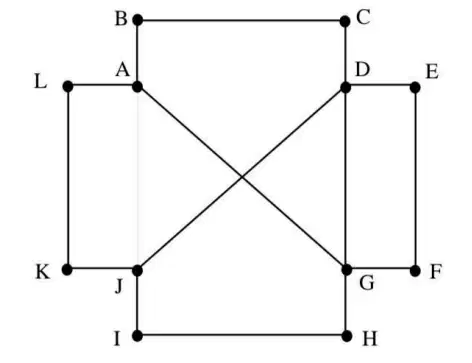
In Example, why does the graph contain an Euler Path?
A) It has an Euler Circuit
B) It has vertices A and J with odd degrees
C) It starts and ends at the same vertex
D) It uses edges more than once
For a biker to traverse all trails in a national park exactly once, the graph must show:
Can the biker return to the starting point without repeating any trail?
A) Yes, if the graph is Eulerian
B) Yes, if the graph has an Euler Path
C) No, if the graph has vertices with odd degrees
D) No, if the graph is disconnected
What is a Hamiltonian Path?
A) A path that visits each vertex more than once.
B) A path that visits some vertices exactly once
C) A path that visits each vertex exactly once.
D) A path that visits no vertex more than once.
What is a Hamiltonian Circuit?
A) A cycle that visits some vertices exactly once.
B) A cycle that visits each vertex exactly once.
C) A cycle that can be repeated.
D) A cycle that does not return to the starting vertex.
Which example illustrates a Hamiltonian Path?
A) Jasmine visiting houses starting with E and ending with A.
B) A delivery route planned as 1,2,6,3,4,5.
C) A cycle starting and ending at the same vertex.
D) Jasmine’s route starting and ending at E.
What is the difference between a Hamiltonian Path and a Hamiltonian Circuit?
A) There is no difference; they are the same.
B) A Hamiltonian Path is in a directed graph, while a Circuit is in an undirected graph.
C) A Hamiltonian Path does not need to end at the starting vertex, but a Circuit does.
D) A Hamiltonian Circuit cannot be a part of a graph.
In the context your classmates reports, what is the purpose of finding a Hamiltonian Path or Circuit?
A) To find the shortest path between two vertices.
B) To plan a route that visits each location exactly once.
C) To determine the number of vertices in a graph.
D) To calculate the total distance of the path or circuit.
What is a tree in mathematical terms?
A) A type of graph with directed edges
B) A connected, undirected graph without cycles
C) A collection of nodes with hierarchical levels
D) A graph where each node has exactly two children
What does it mean if a tree is ‘undirected’?
A) Each edge has a specific direction
B) The edges do not have a specific direction
C) The tree can only expand in one direction
D) The tree does not connect any vertices
What is a full m-ary tree?
A) A tree where each vertex has exactly m children
B) A tree with m levels
C) A tree that is completely balanced
D) A tree where m represents the number of vertices
What is the height of a rooted tree?
A) The number of vertices
B) The number of edges along the longest path from the root to the farthest child
C) The number of leaves in the tree
D) The depth of the root
In a single-elimination tournament, how is the tree used?
A) To schedule the games
B) To determine the number of matches
C) To represent the teams as vertices
D) All of the above
If a binary tree represents a tournament with 16 teams, how many matches are needed to determine a champion?
A) 8 matches
B) 15 matches
C) 16 matches
D) 32 matches
What does the term ‘internal vertex’ refer to in a tree?
A) A vertex with no children
B) The root vertex
C) A vertex with at least one child
D) The last vertex in a path
For a tournament with 8 teams, how many games must be played to determine the champion?
A) 4 games
B) 7 games
C) 8 games
D) 14 games
Which of the following properties does a tree possess?
a) Directed
b) Disconnected
c) Connected
d) Cyclic
In a full m-ary tree, what is the defining characteristic of all external vertices?
a) They are at the same depth
b) They have exactly m children
c) They are connected to every other vertex
d) They are isolated from the rest of the tree
What is the height of a rooted tree?
a) The number of vertices in the tree
b) The number of edges along the longest path from the root vertex to the farthest child vertex
c) The depth of the root vertex
d) The total number of children vertices
In a single elimination tournament with 16 teams, how many matches must be played to determine the champion?
a) 16
b) 15
c) 14
d) 8
How many children does each vertex have in a full binary tree?
a) 1
b) 2
c) 3
d) 4
What is the primary purpose of determining the number of matches in a single elimination tournament?
a) To maximize spectator engagement
b) To minimize the number of matches played
c) To determine the champion efficiently
d) To prolong the tournament duration
What is the maximum number of children per vertex in a full ternary tree?
a) 1
b) 2
c) 3
d) 4
How many internal vertices are there in a full m-ary tree with 16 terminal vertices and m = 2?
a) 15
b) 16
c) 17
d) 18

